Imaginary dialogue between Louis Jouvet and Jean Anouilh
by Charactorium · Jean Anouilh (1910 — 1987) · Literature · 5 min read

It is in the dim light of the Théâtre de l'Athénée one spring morning in 1950 that Louis Jouvet meets Jean Anouilh among the still-covered seats and the smell of warm dust from the extinguished spotlights. Twenty years earlier, this shy boy was his secretary, copying out the lines of Siegfried in a corner of the dressing room. The master, gruff and affectionate, has made him sit on the stage, near the servant — that single lamp that never goes out. He comes to ask him for an account — not of his nascent glory, but of the craft they share.
—Anouilh, I can still see the kid I hired around 1929 to copy my texts. What were you looking for in my dressing room?
You know better than anyone, Jouvet: I was a poor boy hungry for theater, and you opened the wings for me like one opens a cathedral. I copied your lines, yes, but above all I watched you work, redoing a gesture twenty times, hunting down the false. What was I looking for? To understand how a written sentence comes alive on a stage. No book could have taught me that. In your dressing room, I grasped that theater is not literature laid down on paper, but a thing that breathes, lies and tells the truth at the same time. I entered as your secretary; I left determined to become a playwright.
I entered as your secretary; I left determined to become a playwright.
—You claim you decided everything after reading a play by Giraudoux, long before you knew me. Is that revelation true?
It is the exact truth, and the coincidence has always moved me. Long before I stepped through the door of your theater, I had happened to read a play by Giraudoux, and it was a dazzling revelation: I knew, in one evening, that I would devote my life to writing for the stage. Imagine my vertigo when I found myself copying Siegfried, that same Giraudoux, in the dressing room of the man who was directing it! I felt as if a hand were pushing me. Theater, you see, appeared to me as the only art capable of making life both more beautiful and more true. I have never wavered from that, and it is partly your fault.
The only art capable of making life both more beautiful and more true.
—I hear you now classify your plays by color — the pink ones, the black ones. Where does this mania for cataloguing your theater come from?
Don't see it as a bookkeeper's mania, I beg you! I simply need to know what color I am dipping my pen in. My black plays seek to show the impossibility of purity in a compromised world — that's how I put it at the head of their collection. My pink plays, on the other hand, are bubbles of fantasy where I grant myself a little tenderness, knowing full well it won't last. Between the two lies everything I am: a man who oscillates from despair to lightness, sometimes in the same day. Classifying my plays is admitting that I never write the same thing depending on whether I look the world in the face or turn my eyes away.
My black plays show the impossibility of purity in a compromised world.
—The same man writes Le Bal des voleurs, as light as a bubble, and La Sauvage, as black as ink. How do you do it?
Because I am double, and you already knew that back when I annoyed you in your dressing room. In the morning, I write Le Bal des voleurs laughing, thieves who disguise themselves, a fantasy that weighs nothing. In the afternoon, I take up La Sauvage again, where a poor girl refuses the happiness offered to her because it is sullied by money and lies. It is the same man, yes, but they are the two sides of the same mountain. Fantasy saves me from despair, and despair prevents fantasy from becoming silly. If I wrote only pink plays, I would be lying; if I wrote only black ones, I would become unbearable. I need both to breathe.
Fantasy saves me from despair, and despair prevents fantasy from becoming silly.
—Let's talk about Antigone. You created it in 1944, under the Germans, at the Atelier — not at my theater. How did you get it past the censors?
Ah, Antigone... I created it in February 1944, at André Barsacq's, at the Atelier — forgive me for being unfaithful! The miracle, or the ruse, was that the audience divided each evening into two. Some saw in Creon a reasonable head of state saving order; others heard only Antigone, her stubborn little voice: 'I am here to say no and to die.' I left that ambiguity open deliberately. The German censors looked for slogans; I offered them only a tragedy. You don't condemn a young girl who dies for a law she cannot name. That is how my play was able to live, applauded by the very people it accused.
The censors looked for slogans; I offered them only a tragedy.
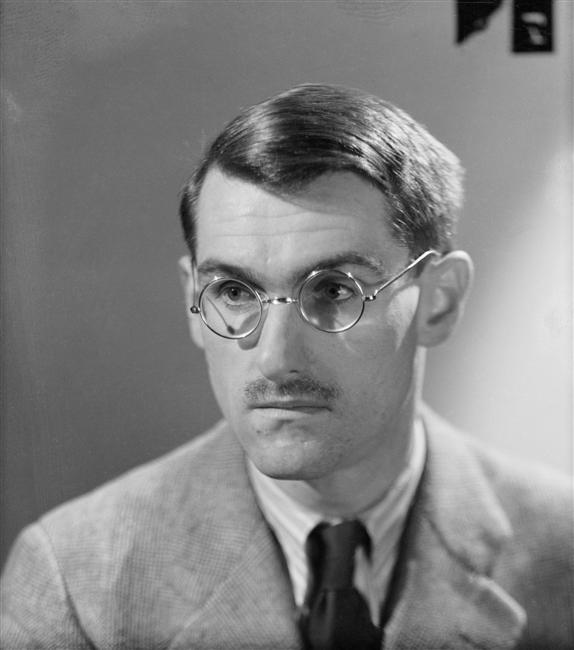
—You have been criticized that your Creon is too convincing, almost too reasonable. What do you say to those people?
They criticize me for it, and I fully accept it. If Creon were a monster, Antigone would have no merit in saying no to him — you would just have to hate him. The whole force of the play lies in the fact that Creon is right, reasonably right: he governs, he does what must be done, he wants to save the city. And it is precisely against that reason that Antigone rises up, in the name of something that cannot be debated. Refusal has value only if it costs everything and defies a worthy opponent. A hero who is too easily right does not interest me. I wanted people to leave the theater torn, unable to decide. That was my real subject: discomfort.
Refusal has value only if it costs everything and defies a worthy opponent.
—Why go dig up Sophocles and the Greeks to talk about us? Isn't the present enough for you?
The present is too talkative, my dear Jouvet; it shouts, it dates itself, it becomes obsolete. The Greeks, on the other hand, have already cleared the way for us. When I open my Sophocles — a copy I have covered with notes even in the margins — I find not a museum but a mirror. Antigone, Creon, these names two thousand years old speak of our time better than newspapers. By starting from a myth, I strip my subject of anecdote and costume; only the essential remains, what you taught me to seek in a line: the bone, the nerve, the naked truth. Myth is a proven framework; I just have to put a man of today into it.
Myth is not a museum, but a mirror.
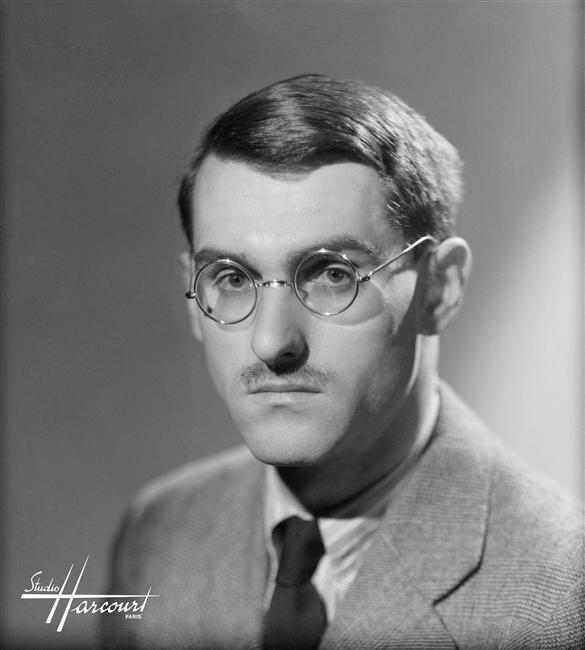
—You once told me you dreamed of another figure of refusal — a little one who also says no. Which one haunts you?
You know me too well. Yes, another little one haunts me: Joan, the Maid. A child of nothing who hears voices and stands up to bishops, to kings, to all the learning of her time — and who says no all the way to the stake. She is my Antigone in French flesh, do you understand? I don't yet know when I will dare to write her, or how; the subject frightens me as much as it attracts me. But the idea of a freedom of conscience that stands alone against all the powers combined — that keeps me awake at night. All my heroines are sisters: they refuse to live at any price. Joan will perhaps be the purest of them all.
All my heroines are sisters: they refuse to live at any price.
—You who touch on History — Joan, the kings of old — does the truth of the chronicles weigh on you, or do you not care?
Chronicles? I read them, I plunder them, then I forget them without remorse. If I had to choose between the accuracy of a clerk and the truth of a human heart, I would always choose the heart. A historian will restore the dates; that is not my job. Mine is to make one feel what it was, for a man, the moment when he had to betray or die. What do I care if a battle took place on a Tuesday rather than a Thursday, if I miss the soul of the one who fought it? Theater is not a history lesson; it is a lesson in humanity. I give myself the right to lie about facts in order never to lie about people.
I give myself the right to lie about facts in order never to lie about people.
—One last thing. When you think back to my dressing room, to those years when you copied my texts — what did you learn from me that books could not teach?
Everything, Jouvet, you taught me everything that cannot be learned from books. You showed me that a misplaced line sounds false, that a silence sometimes says more than a tirade, that a tired actor can ruin the most beautiful sentence. I understood in your dressing room that theater is life with what is unbearable about life: clarity. No treatise could have taught me that exactingness, that way of hunting down the lie even in the light of the spotlights. When people think I am harsh at rehearsals, it is you I am imitating, less well. I owe you my craft and the little probity I bring to it. The rest — glory, quarrels — I gladly leave to you.
Theater is life with what is unbearable about life: clarity.
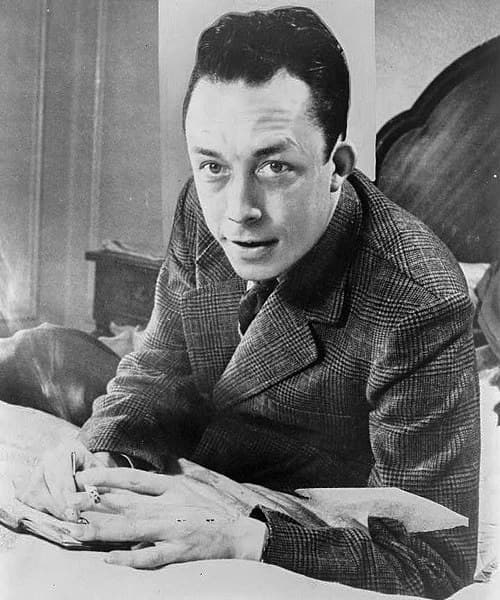
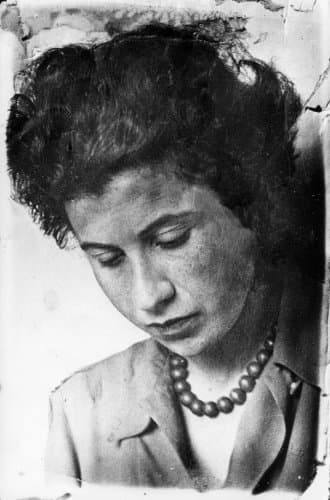
This imaginary interview was generated by artificial intelligence from sources documented in Jean Anouilh's profile. It dramatises what the figure might have said based on what we know about them, but does not constitute attested historical testimony. For primary sources and factual documentation, refer to the full profile.