Imaginary interview with Jean Anouilh
by Charactorium · Jean Anouilh (1910 — 1987) · Literature · 6 min read

Lausanne, autumn 1986. In a bright sitting room where the lake laps at the windows, Jean Anouilh receives, courteous and slightly distant, a cup of strong coffee within reach. He speaks softly, with the cautious irony of a man who has spent his life making his characters say "no."
—How did you come to the theater?
By accident, as one falls in love: without seeking it. As a teenager, I stumbled upon a play by Giraudoux, read by chance, and I understood at once that it was there, and nowhere else, that I wanted to live. Later, in 1929, I obtained a modest post as secretary to Louis Jouvet. People think a secretary files papers; in reality, I learned the craft through the back door, standing in the wings, watching a great man wrestle with a text and actors. There I acquired a taste for exactingness — and the conviction that a misplaced line shows like a wrong note. It's a harsh school, the wings: you can't cheat for long.
People think a secretary files papers; in reality, I learned the craft through the back door.
—Do you remember the opening night of Antigone, in the middle of the Occupation?
February 1944, at the Théâtre de l'Atelier, with André Barsacq. The house was full, and that's when everything became strange: some applauded my Creon, that overwhelmed head of state who must keep the machinery of order running at all costs; others stood up for my little Antigone, who says no and dies. The same evening, under the same chandeliers, two Frances recognized themselves in the same play. I didn't take sides — I was careful not to. The set was simple, almost bare, and the German censors, looking for a slogan, found only a dialogue. That is perhaps my only wartime ruse: having let everyone take home the Antigone they deserved.
The same evening, under the same chandeliers, two Frances recognized themselves in the same play.
—Wasn't this double game dangerous, even ambiguous, under the occupier?
Of course it was. Much was said after the Liberation about what I should have made my characters say. But theater is not a pamphlet. My Creon is not a villain: he is a tired man who tells Antigone that it's easy to say no. And she retorts that no, not always. The whole play rests on that tiny gap. If I had made Antigone a flawless heroine and Creon a monster, I would have written a poster, not a tragedy. The truth is, I distrust sides that are always right. I preferred to leave the spectator alone, uneasy, with his conscience — which is, I believe, the true work of a stage.
If I had made Antigone a flawless heroine, I would have written a poster, not a tragedy.
—Why go to Sophocles for a story twenty-five centuries old?
Because it was already written, precisely, and that freed me. My copies of Sophocles are covered in notes, erasures, little wars in the margins: I wasn't translating, I was arguing with him. A myth is a framework you already know — the spectator knows Antigone will die, just as he knows Joan will burn in L'Alouette, in 1953. So the suspense is no longer about the ending, but about the why, about the quality of the refusal. That's precisely what interests me: not what happens, but how a being stands upright in the face of what will crush him. The Greeks invented that mechanism. I only reassembled it with our own springs.
I wasn't translating Sophocles: I was arguing with him in the margins.
—What connects your Antigone to your Joan of Arc?
The same stubbornness, the same heroic condition — that word I use for those who refuse compromise to the point of death. Antigone wants to bury her brother against the edict; Joan, in L'Alouette, defends her inner voice against judges who also have their good reasons. They are not plaster saints. They are very young girls who discover that they can be offered their lives on condition of renouncing themselves — and they answer no. That no has always fascinated me, because it is absurd, economically absurd, and yet it is what distinguishes us from rational animals. My plays revolve around that madness: the purity that refuses to bargain.
The purity that refuses to bargain: that is the madness I have never stopped writing.
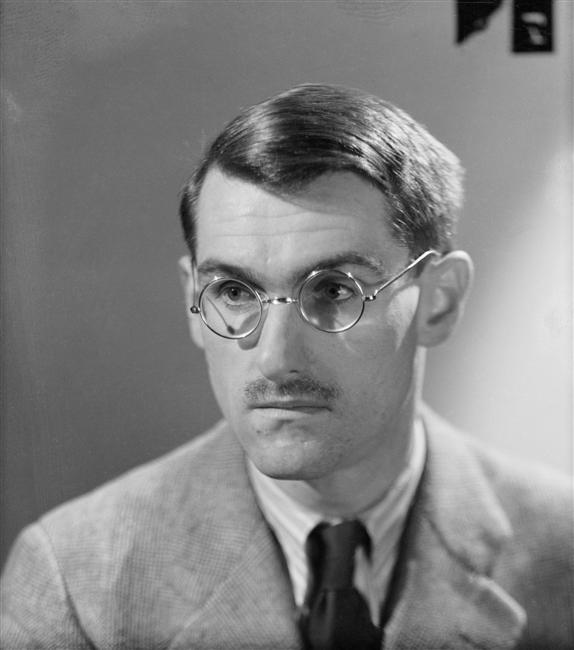
—Why did you classify your own plays by color?
First for fun, then out of lucidity. I sorted my theater into pink plays, black plays, brilliant plays, and grating plays, and I even published that classification, which made people smile. But it tells the truth about me: I constantly shift from fantasy to despair. The same man wrote Le Bal des voleurs, where disguised crooks dance in a comedy light as a bubble, and La Sauvage, where a young woman realizes she can never marry into others' happiness. Pink or black, my plays always talk about the same thing, deep down — about a world where you get dirty living. The color is only the lighting I choose that day to look at the same wound.
Pink or black, my plays talk about the same world where you get dirty living.
—What were you seeking in your "black plays"?
The impossibility of purity in a compromised world — that's roughly what I tried to explain at the beginning of my Black Plays, published by La Table Ronde. The black hero, in my work, is not the one who succeeds, but the one who refuses to dirty something within himself. Consider Le Voyageur sans bagage: an amnesiac who is offered to reclaim his past, his family, his name — and who discovers that this past is murky, mediocre, and prefers to remain without baggage. What luck, he says in essence, to have no memory! That is the Anouilh black: not misery for misery's sake, but the vertigo of a man who sees clearly and, precisely because he sees clearly, can no longer accept living like everyone else.
The black hero is not the one who succeeds, but the one who refuses to dirty something within himself.
—It is said that while writing Becket, you relied on a faulty historical source. Did that bother you?
Not as much as one might think. For Becket or the Honor of God, in 1959, I had plunged into English medieval chronicles, and I discovered, too late, that the historian I was following had muddled certain facts. I could have started over. I went on. Because what mattered to me was not the exact date of a council, but what happens between two men who loved each other and whom power separates: Henry II and his chancellor turned archbishop. The honor of God, says Becket, is a heavy burden — the burden of those who have no other honor. That sentence is truer than any manuscript. I leave accuracy to scholars; I seek the truth of hearts.
I leave accuracy to scholars; I seek the truth of hearts.
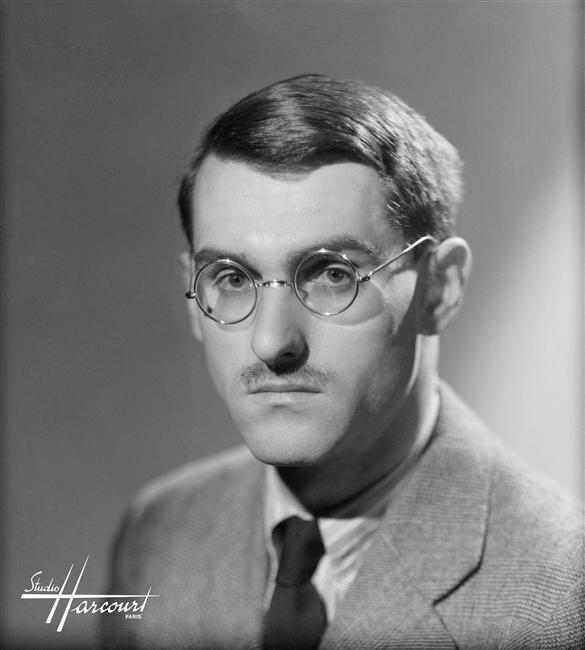
—The historian would say you are betraying the past. What do you answer him?
That we do not have the same job, and that's just as well. Theater is not a court weighing evidence; it is a place where you bring a figure to life for tonight, under the lights, before people who breathe. When I put Henry II and Becket on stage, I do not claim to reconstruct the 12th century stone by stone — I want a spectator in 1959 to feel, in his gut, what fidelity costs. If for that I must move a battle or invent a silence between two lines, I do it without remorse. The false in the service of the true is not a lie: it is all of art. History keeps the facts; theater keeps the warmth.
The false in the service of the true is not a lie: it is all of art.
—What did your days as a playwright look like, concretely?
Like very little, from the outside. I got up late — theater is a night craft, you live the opposite of honest folk. The morning for newspapers and mail; the afternoon for the real work, typed on a portable typewriter, often in a café or a corner of an office, sometimes several plays in progress at once. And the evening, rehearsals. That's where an author discovers if he was wrong: a line that sounded right on paper becomes hollow in an actor's mouth. I had, it seems, a reputation for being demanding at rehearsals. Let's say I had learned at Jouvet's that you don't lie to a stage, and I never unlearned it.
Theater is a night craft: you live the opposite of honest folk.
—At the end of the journey, here, far from Paris, how do you view your work?
With the distance offered by this Lake of Lausanne, where I have retired far from the bustle of the Parisian boulevards. I have left behind the wings, the opening nights, the quarrels; the texts remain, and that is the essential. I never believed in avant-gardes that claim to start everything over; I preferred the old craft, that of the Boulevard theaters that I both loved and betrayed, by slipping in more darkness than expected. If they still perform Antigone in high schools, and laugh at Le Bal des voleurs, then I will have won my bet: to bring a little despair into entertainment, and a little play into tragedy. The rest belongs to the auditoriums, in the evening, when the curtain rises.
To bring a little despair into entertainment, and a little play into tragedy.
This imaginary interview was generated by artificial intelligence from sources documented in Jean Anouilh's profile. It dramatises what the figure might have said based on what we know about them, but does not constitute attested historical testimony. For primary sources and factual documentation, refer to the full profile.