Imaginary interview with Jean-Baptiste Lamarck
by Charactorium · Jean-Baptiste Lamarck (1744 — 1829) · Sciences · 5 min read
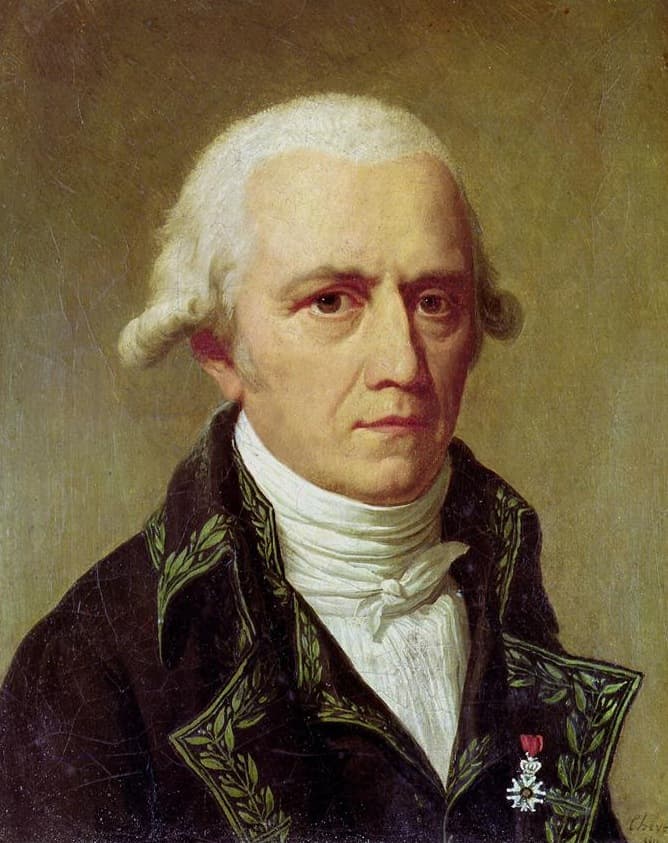
Paris, winter 1827. In a modest apartment adjoining the Jardin des Plantes, an old man nearly blind receives visitors near the window, a blanket over his knees and his daughter Cornélie sitting nearby, pen ready. He was the scholar who dared to say that nothing in the living world remains still — and that nature has all the time in the world.
—You were known as a respected botanist. How did you end up studying worms and insects?
At over fifty, you see, one hardly expects to start one's life over. I had built my reputation on the Flore française, in 1778 — a work supported by the comte de Buffon, which opened the doors of the Academy for me. I was the man of plants, pressed herbariums, identification keys. And then I was entrusted, at the brand-new Muséum, with the chair of the humblest animals: insects, worms, those creatures no one deigned to classify. A field I knew, I admit, almost nothing about. I could have declined. I preferred to see it as a virgin continent. Thirty years later, those despised creatures taught me more about life than all the flowers of my youth.
I was entrusted with the creatures no one deigned to classify — I saw a virgin continent.
—You coined the word 'invertebrates'. Why did you want to name an entire branch of the animal kingdom that way?
Because a poorly chosen word chains thought. People used to speak of 'inferior' animals, as if nature apologized for producing them. Yet there is nothing inferior in a mollusk shell, which I held between my fingers at the Muséum and tirelessly compared to its fossil cousins. These creatures merely lack a backbone: that is the fact, without judgment. So I said invertebrates, and grouped there that immense multitude. My Système des animaux sans vertèbres, in 1801, was my first attempt to give them an order worthy of them. To name correctly is already to see correctly: as long as one despises a creature, one forbids oneself from understanding it.
—You claim that species are not fixed. What led you to such an idea, contrary to your time?
Shellfish, again. By lining up living species and their fossil ancestors, I saw series, transitions, forms that slide imperceptibly from one to another. Fixism, that doctrine which holds that each species was born as is and remains so forever, no longer held up before my jars. In my Philosophie zoologique, in 1809, I wrote it plainly: "when circumstances become very different, they bring about, over time, proportional changes in the form and organization of animals". The environment shapes the living, slowly, as water wears away stone. This was called transformism. As for me, I merely looked at what nature shows to those willing to follow.
The environment shapes the living, slowly, as water wears away stone.
—Your law of use and disuse has been much discussed. How would you summarize it to a layperson?
Simply: an organ that is used strengthens; an organ neglected atrophies and eventually disappears. The beast that constantly stretches its neck toward high leaves lengthens it a little, and bequeaths to its offspring what it has gained — these are acquired characteristics. My giraffe has been much ridiculed, I know. My colleague Cuvier, so powerful, so sure of the immutability of species, never wanted to hear any of it. But I maintain that life responds to its conditions, that it adjusts, that it works on its own material. That I was mistaken about the mechanisms, that is possible; about the principle — that living forms have a history — I am at peace.
—You are credited with inventing the word 'biology'. What did you mean by it?
A name was missing for something immense. Botany studied plants, zoology studied animals — but who studied life itself, that phenomenon common to everything that breathes, grows, and reproduces? I proposed biology, in 1802, in my Hydrogéologie. I later learned that a German naturalist, Treviranus, had the same idea at almost the same time, without our having consulted each other — proof that the word was ripe, that it floated in the air of the century. For me, life is nothing supernatural: it is a physical fact, subject like everything else to laws that can be sought. Giving a name to this science was affirming that it could exist.
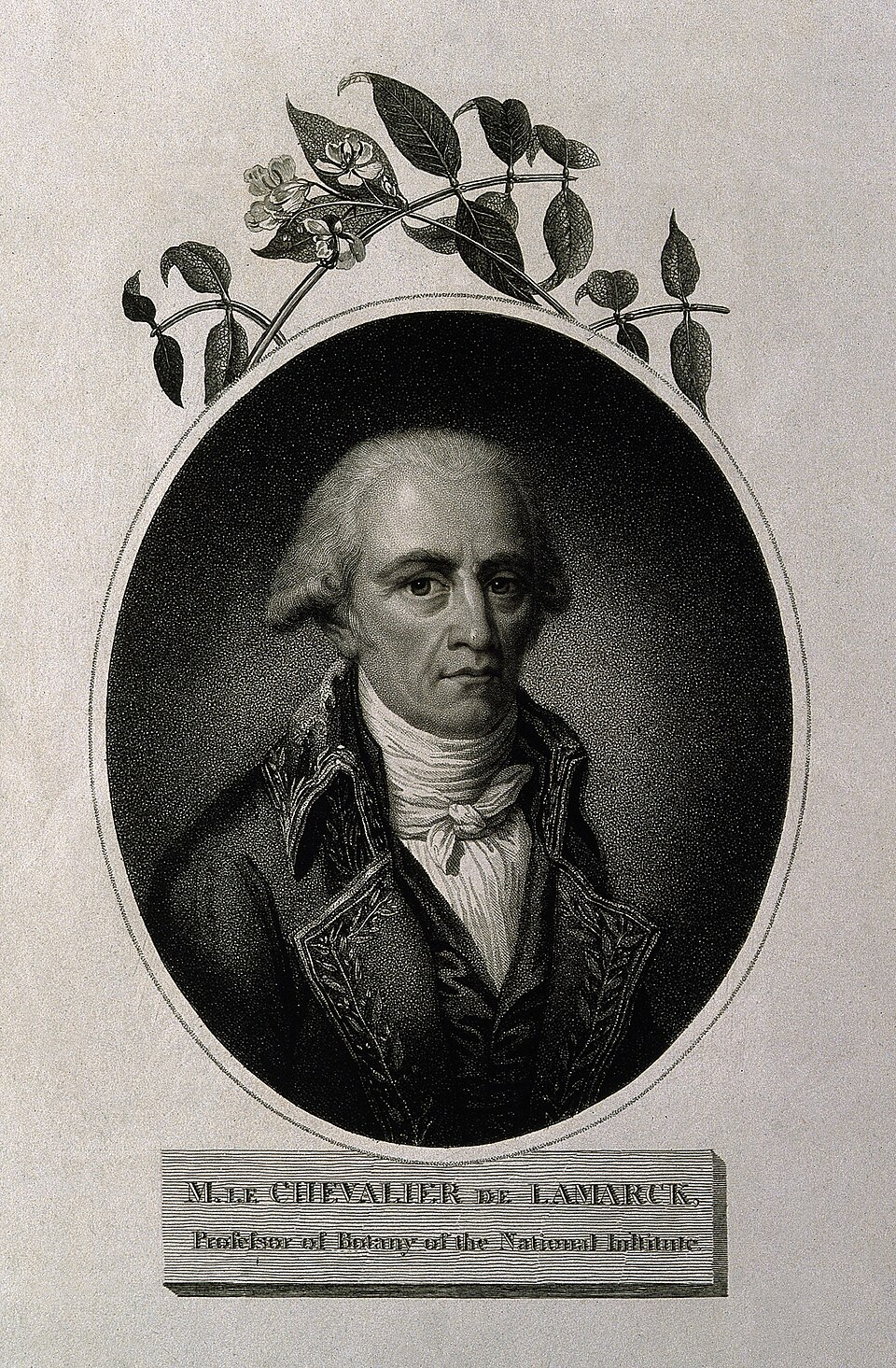
—You also defended the idea of an extraordinarily ancient Earth. Was that not audacious in your time?
An audacity, and almost a scandal. People then counted the age of the world in a few thousand years, according to Scripture. Yet my transformations of species, my slow erosions, required a very different stage: durations incommensurate with a human life. In my Hydrogéologie, I dared to write: "Time has no limits for nature; it is man alone who feels its necessity, because his duration is bounded." Water, drop by drop, reshapes the face of the Earth; it takes millions of years, and it has them. Long after me, geologists like Lyell will make this thought respectable. In my lifetime, I was mostly taken for a dreamer.
Time has no limits for nature; it is man alone who feels its necessity.
—Do you remember the reception the Emperor gave to one of your works?
I will remember it until my last breath. It was in 1809. I had sent Napoleon my Tableau encyclopédique et méthodique, hoping for a word, an encouragement, some sign that my work mattered to the nation. The Emperor took the volume, barely leafed through it, and said to me before the court: "It is your old age I pity." He probably thought he was receiving a work of circumstance, not a scientific work. I confess without shame: I burst into tears, there, before everyone. He saw grandeur only in sciences that serve cannons and factories. The patient classification of worms weighed nothing in his balance.
—Did power, under the Consulate and then the Empire, seem hostile to your kind of research?
Indifferent, rather than hostile — which amounts to the same for a scholar without fortune. Since 18 Brumaire and the rise of Bonaparte, sciences were expected to be useful, immediate, tangible: chemistry for gunpowder, mechanics for bridges and armies. A zoology that questions the origin of forms, that speaks of millions of years and transformation of species, was considered speculation, almost an idle luxury. Yet I taught free of charge at the Muséum, open to all, convinced that understanding life was worth understanding ballistics. But the century wanted results, not principles. I continued my path in this lukewarmness, knowing that I would be truly read, perhaps, only long after my time.
—Your final years were marked by blindness. How did you continue to work?
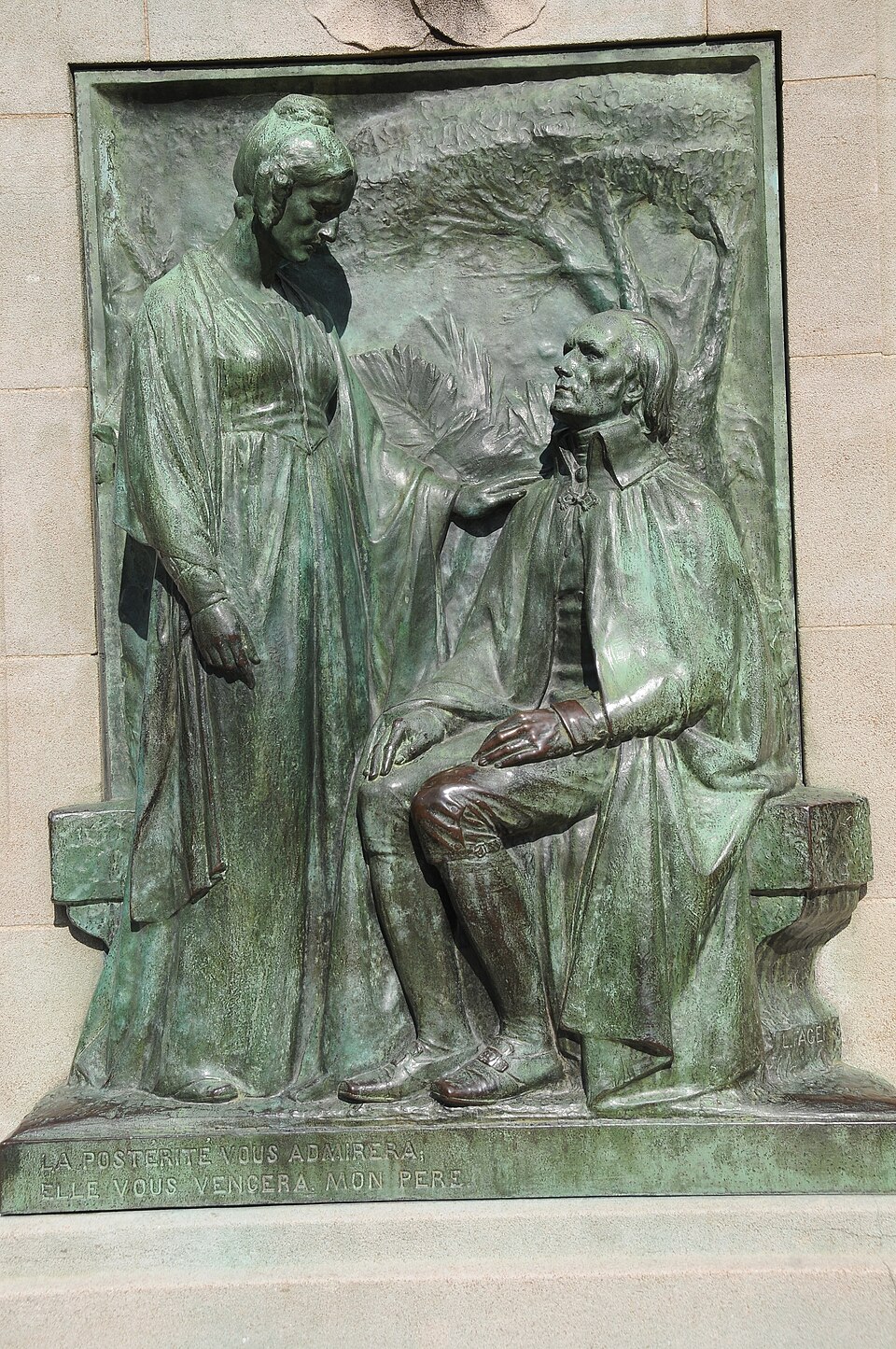
My eyes left me for good around 1818, and with them the use of microscopes and magnifying glasses that were my lifelong tools. Believe me, it is a strange thing for a man who spent his life looking — at shells, herbariums, tiny creatures — to end up in the dark. But the mind, it still sees. My daughter Cornélie became my eyes and my hand: she reads to me, I dictate to her, she transcribes my thoughts on the living world that I still carry within me. The goose quill, it is she who now holds it. Without this faithful child, my Histoire naturelle des animaux sans vertèbres would have remained unfinished in my head.
—You live modestly, almost in destitution. What would you say to those who will read you in a century?
That recognition often arrives when one is no longer there to enjoy it. I know well how it will end: my meager possessions sold, my debts barely covered, and no doubt a common grave for this chevalier de Lamarck who claimed to rewrite the history of life. So be it. I do not complain about having been right too early. If I could imagine being read in a hundred years, I would say this: never confuse the silence of your contemporaries with a refutation. Nature does not rush, I have said it enough; nor do true ideas. Let them correct me, surpass me — I wish it. But let them not forget that I am the first who said that species have a history.
Never confuse the silence of your contemporaries with a refutation.
Read further
This imaginary interview was generated by artificial intelligence from sources documented in Jean-Baptiste Lamarck's profile. It dramatises what the figure might have said based on what we know about them, but does not constitute attested historical testimony. For primary sources and factual documentation, refer to the full profile.