Kids interview Jean-Baptiste Lamarck
by Charactorium · Jean-Baptiste Lamarck (1744 — 1829) · Sciences · 5 min read
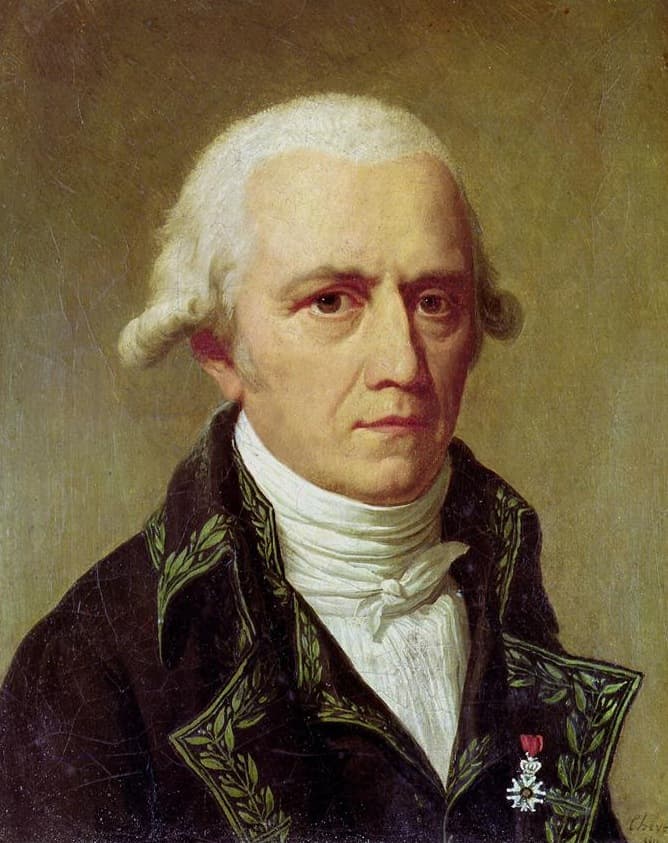
Two 12-year-old students, on a school trip to the Jardin des Plantes, push open the door of an old study cluttered with shells and jars. A blind old man waits for them, seated by the window. He smiles: at last, someone is asking him questions.
—Is it true that you changed careers at age 49?
Yes, my child, and you know, it scared me! I was a botanist, you see: I studied plants, flowers, herbs. I had written a great Flore française in 1778, a book that made me famous. Then, in 1793, the Museum of Natural History was created, and they told me: you will be professor of animals without bones! Worms, snails, insects. A world I hardly knew. Imagine being asked to suddenly speak a language you never learned. I gritted my teeth, and I learned. I even invented the word to name them all: invertebrates, those without a backbone.
I was entrusted with a world I did not know, and I made it my own.
—Who helped you become a scientist at the start?
A great man, my child: the Count of Buffon, the director of the King's Garden. He was the most respected man in everything to do with nature. When he saw my Flore française, he recommended me. Do you know what it means to be recommended? It's when someone powerful tells others: trust this boy. Without him, I might have remained an unknown pressing flowers in notebooks. Thanks to him, I entered the Academy of Sciences. That's why I always say: a scientist never grows alone. Someone, one day, reached out a hand to him.
A scientist never grows alone; a hand was once extended to him.
—Why do you say the giraffe has a long neck?
Ah, my famous giraffe! Listen carefully. I thought a simple thing: an animal that uses a part of its body a lot makes it stronger. And the part it doesn't use, it weakens. Imagine the giraffe stretching, stretching its neck to reach the leaves at the top of the trees. By dint of stretching, its neck lengthens a little. And its young are born with a longer neck already. That's what I call the law of use and disuse. I wrote all this in my Philosophie zoologique, in 1809. I was wrong about some things, it has been shown since. But I understood the essential: animals change over time.
What is used strengthens; what is forgotten fades.
—Did you really believe that animals could change?
Yes, and in my time, it was almost forbidden to think so! Most scientists believed that every animal had always been exactly the same, since the first day of the world. As for me, I observed the circumstances — that is, everything that surrounds an animal: cold, water, food. And I could see that it influenced their form. In my books, I wrote it: when circumstances become very different, they bring about changes over time in the form of animals. This is called transformism. It was a huge idea, almost fifty years before a certain Mr. Darwin you will hear about.
Change the world around an animal, and over time, you will change the animal.
—Is it true that you invented a word all by yourself?
More than one, my child! But there is one I am proud of. In 1802, in a book I called Hydrogéologie, I needed a word to designate the science of everything that is alive: plants, animals, humans, all together. So I coined it: biology. Today that word is everywhere, but at the time, it didn't exist. The funniest thing is that a German scientist, Treviranus, invented it almost at the same time, each on our own, without knowing. Like two people who find the same idea on the same night, each in their own house.
A word was needed for all that lives; so I created it: biology.
—Did you think the Earth was very old?
Very, very old, my child — far older than what people dared to say. In my time, many thought the world was only a few thousand years old. As for me, watching water slowly wear down rocks, I told myself: all this takes immense time. I even wrote that time has no limits for nature; it is man alone who feels its necessity. Do you understand? We live short lives, so we think everything goes fast. But nature has all the time in the world. Millions of years to transform a mountain, or a species. That was such a bold idea that for a long time I was thought a bit mad.
Time has no limits for nature; it is man alone who is in a hurry.
—Is it true that Napoleon made fun of you?
Alas, yes, and that day I cried. It was in 1809. I wanted to offer one of my works to Emperor Napoleon, hoping for a kind word, an encouragement. Imagine an old man offering his life's work, heart pounding. And he, barely flipping through the pages, said to me: 'It is your old age I pity.' In front of everyone. I felt tears rising, I could not say anything. You see, Napoleon liked sciences that served to make war or machines. My animals without bones, my ideas about the living, did not interest him. A powerful man can wound a scientist with a single word.
A powerful man can wound a scientist with a single word.
—Did you have an enemy among the other scientists?
A rival, yes: Georges Cuvier. A brilliant, powerful man, listened to by all. But he defended fixism — the idea that species never change, that they are fixed forever. The complete opposite of me. And since he had the ear of the powerful, he was the one people believed. The hardest part? After my death, it was he who gave my eulogy at the Academy of Sciences. A eulogy should honor the dead. His was full of little jabs, reducing my work to almost nothing. Imagine someone speaking well of you while slipping mockeries between each sentence. That's what I got.
Being right is not enough, my child; you also need to be heard.
—Who wrote for you at the end?
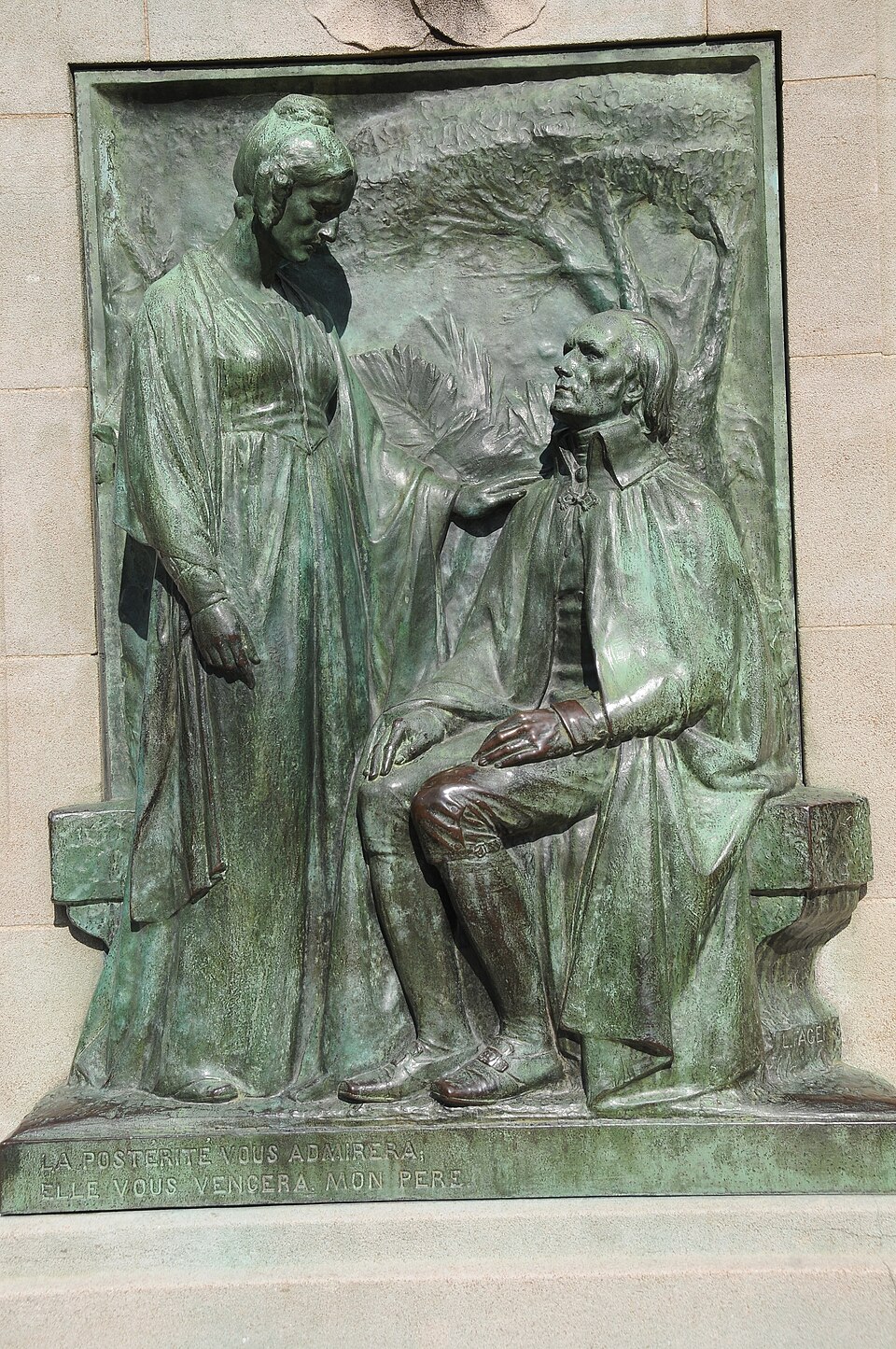
My daughter, my dear Cornélie. Around 1818, my eyes gradually went dark, until total blackness. Imagine a scientist who spent his life looking at tiny shells through a magnifying glass, and suddenly sees nothing. My whole life was in my eyes. So Cornélie became my eyes and my hand. I dictated my thoughts to her, and she held the goose quill in my place, dipped the inkwell, read aloud to me in the evening. Without her, my last ideas would have died in silence. A faithful daughter is worth more than all the glory in the world.
My eyes went dark, but my daughter became my sight.
—Were you poor at the end of your life?
Very poor, my child, I won't hide it from you. I had written monumental books, seven thick volumes on animals without bones, the fruit of twenty years of work at the Museum. And yet, in the evening, in my small lodgings cluttered with shells and papers, I lacked everything. Soup, bread, vegetables: that was my meal. When I died, in 1829, they even sold my belongings to pay my debts, and I was buried in a common grave. You see, you can give your life to science and die with nothing. But ideas, they are not sold at auction: they remain.
One can die with nothing and yet leave ideas that no one can sell.
—If you are remembered today, how would that make you feel?
Oh, it would overwhelm me, my child. I died thinking my ideas would fade with me, forgotten, mocked. And now two children come to my study to listen to me! You know, years after my death, people finally understood that I had opened a door. I was one of the first to dare say that living things transform, that nothing is fixed. They even erected a statue for me at the Museum. But the most beautiful monument is not stone. It is that a child, a hundred years from now, still dares to wonder: what if things could change?
The most beautiful monument to a scientist is a child who still dares to ask his questions.
Read further
This imaginary interview was generated by artificial intelligence from sources documented in Jean-Baptiste Lamarck's profile. It dramatises what the figure might have said based on what we know about them, but does not constitute attested historical testimony. For primary sources and factual documentation, refer to the full profile.