Imaginary dialogue between Cornélie de Lamarck and Jean-Baptiste Lamarck
by Charactorium · Jean-Baptiste Lamarck (1744 — 1829) · Sciences · 5 min read
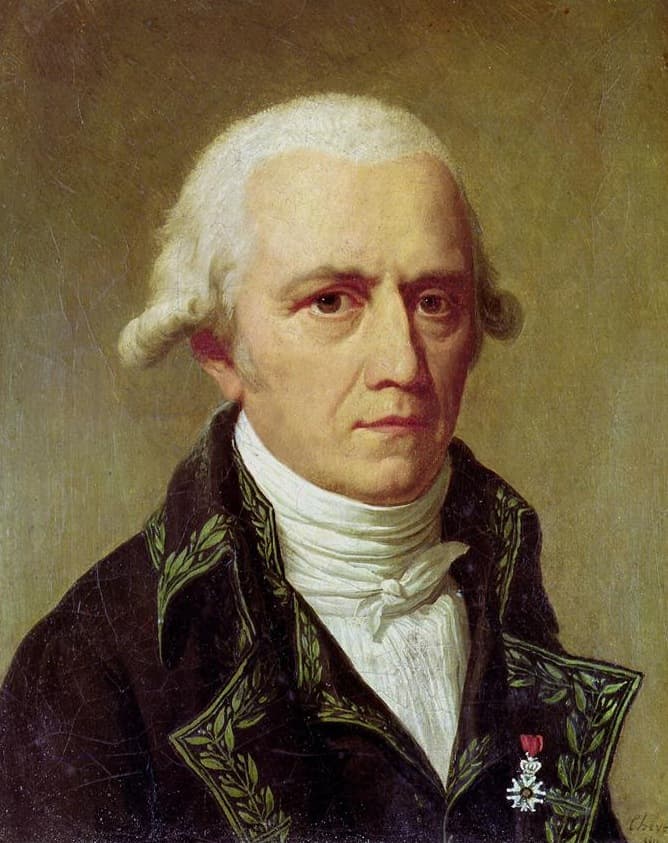
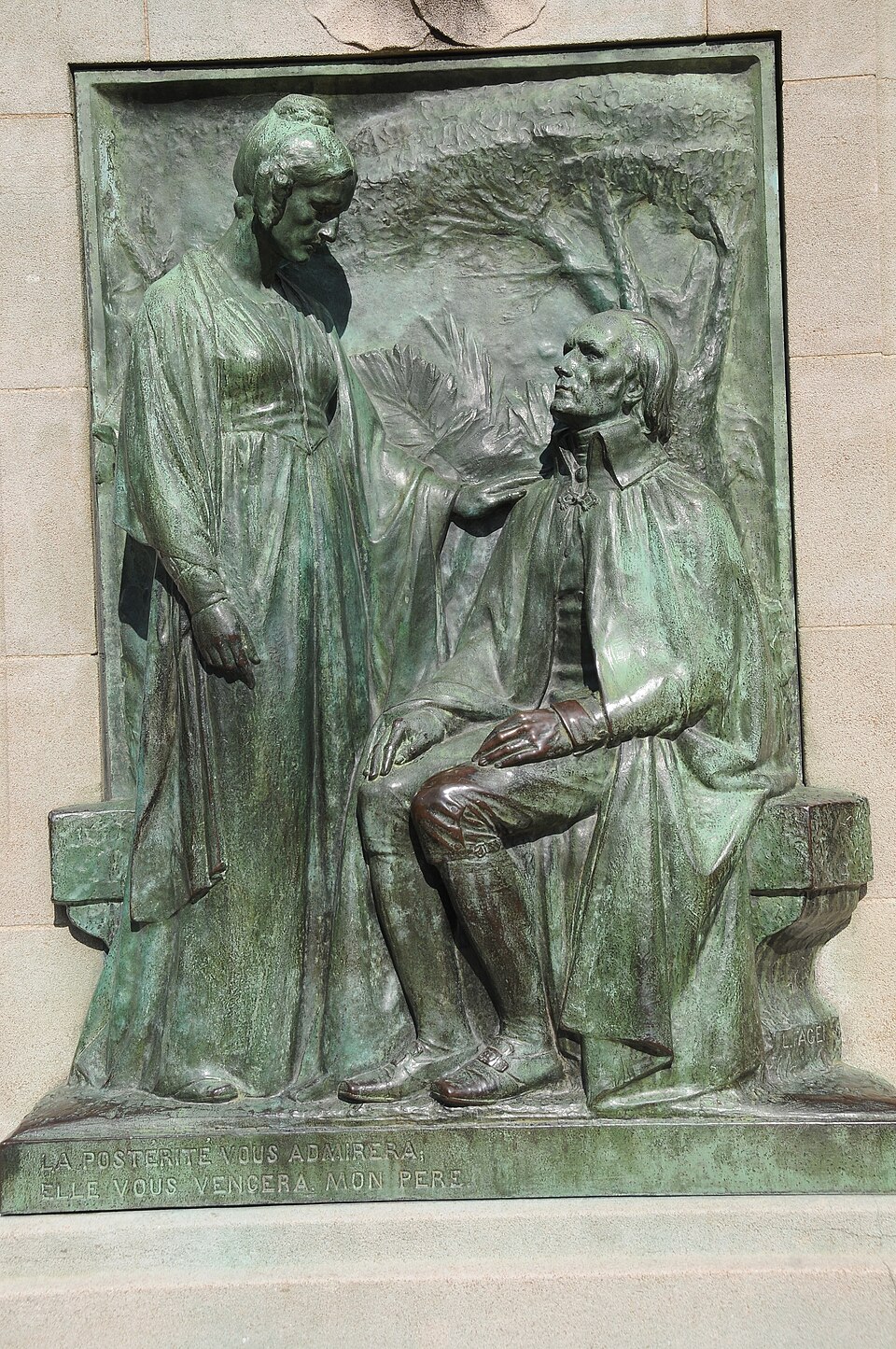
It is in the modest Parisian apartment adjoining the Jardin des Plantes, in this winter of 1828, that Cornelia sits near her father, blind for ten years already. The oil lamp lights the dusty jars and shells lined up on the workbench; outside, the cold bites the greenhouses of the Muséum. She has set down the goose quill and inkwell, ready to transcribe, but tonight she wants, for once, to hear him tell his own story. Father and daughter know each other by heart, and it is this bond that guides every question.
—Father, at forty-nine, you were appointed professor of insects and worms, you the botanist. Do you remember it without trembling?
You are right to be surprised, my Cornelia, for I myself trembled! I was the man of the Flore française, the one good Buffon had pushed into the Jardin du Roi for plants. And then in 1793 they entrust me with these animals without vertebrae — worms, mollusks, animalcules — a world I barely knew. I could have despaired; I chose instead to start everything from the beginning. I opened a thousand jars, compared a thousand shells, and understood that this disorder needed a name. Thus I coined the word invertebrates, and my Système des animaux sans vertèbres appeared in 1801. You see, one does not always choose one's ground; one only chooses to plow it with courage.
One does not always choose one's ground; one only chooses to plow it with courage.
—You have often told me that the Earth was of an unfathomable age. Where did you get this audacity, and that new word biology?
It was in 1802, my daughter, the year of my Hydrogéologie. I observed how water erodes, deposits, transforms the surface of the globe — slowly, so slowly that no human life could see its end. I understood that nature does not count in years but in abysses of duration. Time has no limits for her; it is we alone, poor mortals, who feel its necessity. And since a name was needed for the science of all that lives, from plants to animals, I proposed biology. A German, Treviranus, came to it almost at the same time, without any consultation between us. That word, my Cornelia, is perhaps what will survive me most humbly.
Time has no limits for nature; it is we alone who feel its necessity.
—Explain your great law again, that of use and disuse. The giraffe's neck, which you talked about so much at table.
Ah, the giraffe! She has become my companion, and they mock me enough for it. You see, my Cornelia, I hold that circumstances shape the animal's form. When the environment changes, needs change; and the organ that is constantly used strengthens, while the one that is neglected atrophies and disappears. The giraffe that stretches its neck toward high leaves, generation after generation, lengthens its stature — and transmits to its offspring what it has gained. Those are my acquired characters. I set all this down in my Philosophie zoologique, in 1809. Species are not fixed, frozen from the first day; they transform — that is transformism. Cuvier laughs at me, but the living world is not a collection of statues: it is a river.
The living world is not a collection of statues: it is a river.
—I remember your return, that day in 1809, your face drawn after presenting your work to the Emperor. What happened?
You remember it too well, my child, for it was you who consoled me that evening. I had come to offer my work to Napoleon, hoping for a word of encouragement, perhaps support. He leafed through the work disdainfully, thinking I was presenting some meteorological treatise, and told me he pitied my old age. I wept, I admit, before the entire court. That man wanted only sciences useful for cannons and manufactories; philosophical zoology seemed to him the rambling of an old man. And Cuvier, my colleague at the Muséum, was no kinder: his fixism reigned, and he used all his authority to stifle my ideas. I learned, Cornelia, that a nascent truth must confront both the powerful and the learned.
A nascent truth must confront both the powerful and the learned.
—Father, since night fell over your eyes, it is my hand that holds this pen. Does it weigh on you to depend on me like this?
Weigh on me? You are my eyes, my Cornelia, and much more. Since 1818, I cannot distinguish one shell from another, nor the ink you dip for me. Without you, my last thoughts would remain walled in silence; it is your voice that reads the world to me, and your pen that transcribes it. I know what our life has become: this cluttered lodging, these meager earnings, this destitution I cannot hide from you. When I am gone, I fear they will sell even my books to pay my debts. But I do not mourn fortune. I have forged words, classified entire worlds, and I have had, to the end, a daughter at my side. What fortunate scholar can say as much?
You are my eyes, my Cornelia, and much more.
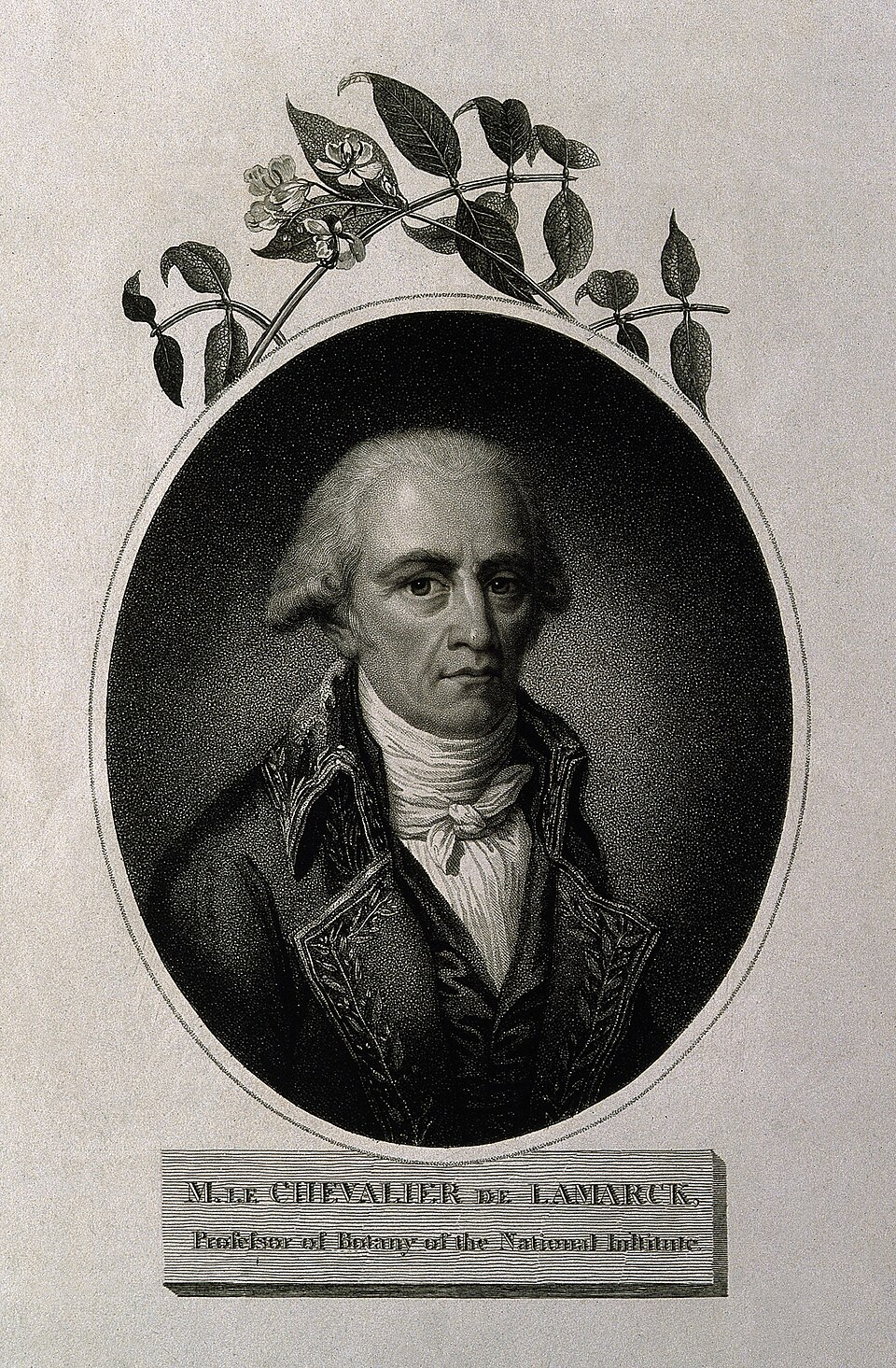
—You who spent your mornings in the galleries, among the jars and shells, what did you go looking for each day?
Order, my daughter, always the hidden order beneath apparent chaos. Each morning I went to the galleries of the Muséum, and there, before those thousands of animals preserved in alcohol, I sought their relationships. With my brass-framed magnifying glass — from the time I could still see — I examined a mollusk, compared its shell to that of a fossil species, and guessed between them a link, a filiation across the ages. For fossils, you see, are not species destroyed by some deluge, as Cuvier claims: they are the transformed ancestors of living species. To classify, for me, was never to arrange corpses in boxes; it was to read the very history of life.
To classify was never to arrange corpses: it was to read the very history of life.
—Many of your colleagues hold species to be immutable, created once and for all. How did you dare break with them?
Through observation alone, Cornelia, never by caprice. This fixism they oppose to me claims that each species was set down, perfect and fixed, on the first day. But when one has, like me, handled for thirty years those countless invertebrates, one sees forms slide from one to another by imperceptible degrees. Where does one species end, where does the next begin? Nature ignores our neat boundaries. I therefore maintained that circumstances, acting over immense durations, gradually mold the organization of beings. They call me a dreamer; but it is the fixist who dreams, he who closes his eyes to the continuity of life. I prefer a disturbing truth to a comfortable certainty.
I prefer a disturbing truth to a comfortable certainty.
—In your Hydrogéologie, you write that life is merely a physical phenomenon. Is that not frightening, to reduce the living in such a way?
Frightening for timid souls, perhaps; for me, it is on the contrary a grandeur. I hold that life is merely a physical phenomenon, and that all the facts it shows us are mechanical results of organization. That does not demean the living, my daughter — it elevates it within the order of nature, subjects it to laws that can be studied, understood, stated. If life obeyed some elusive breath, we would never make a science of it. It is precisely because it follows physical laws that I could make it into biology. Understanding takes nothing away from wonder: the giraffe, the polyp, the humblest earthworm amaze me all the more because I grasp its mechanism.
Understanding takes nothing away from wonder: I am amazed all the more.
—Cuvier is powerful, listened to, laden with honors. Are you not afraid that his voice will drown yours for a long time?
I fear it, I do not hide it from you. Cuvier has eloquence, positions, the ear of power; I have only my shells and my conviction. He builds his glory on the fixity of species and on his catastrophes that supposedly destroyed everything and then recreated it. The public admires him, and I am relegated to the rank of a stubborn old man. But you see, my Cornelia, I do not work for today's applause. I have sown an idea; others, one day, will find it ripe. Perhaps a mind we do not know will take up the thread and show, better than I, how species are made and unmade. What does it matter then that they laughed, if the truth finally prevails.
I have only my shells and my conviction; that is enough to sow an idea.
—Evening falls, father. If I were to tell my children who their grandfather was, what would you want me to pass on to them?
Tell them, my dear Cornelia, that their grandfather was a poor but free man, who never bent his thought to please. Born the younger son of a minor nobility from Bazentin, I had neither fortune nor lasting protector; I earned every truth by the sweat of observation. I gave a name to biology, distinguished the invertebrates, dared to say that species transform and that the Earth is older than all books claim. They will likely let me die in need, and perhaps in a forgotten grave. But pass on this to them: a man is not measured by what he possesses, but by what he has dared to think. And keep my papers, my daughter — one day, they will speak better than I.
A man is not measured by what he possesses, but by what he has dared to think.
Read further
This imaginary interview was generated by artificial intelligence from sources documented in Jean-Baptiste Lamarck's profile. It dramatises what the figure might have said based on what we know about them, but does not constitute attested historical testimony. For primary sources and factual documentation, refer to the full profile.