Kids interview Jocelyn Bell Burnell
by Charactorium · Jocelyn Bell Burnell (1943 — ?) · Sciences · 5 min read
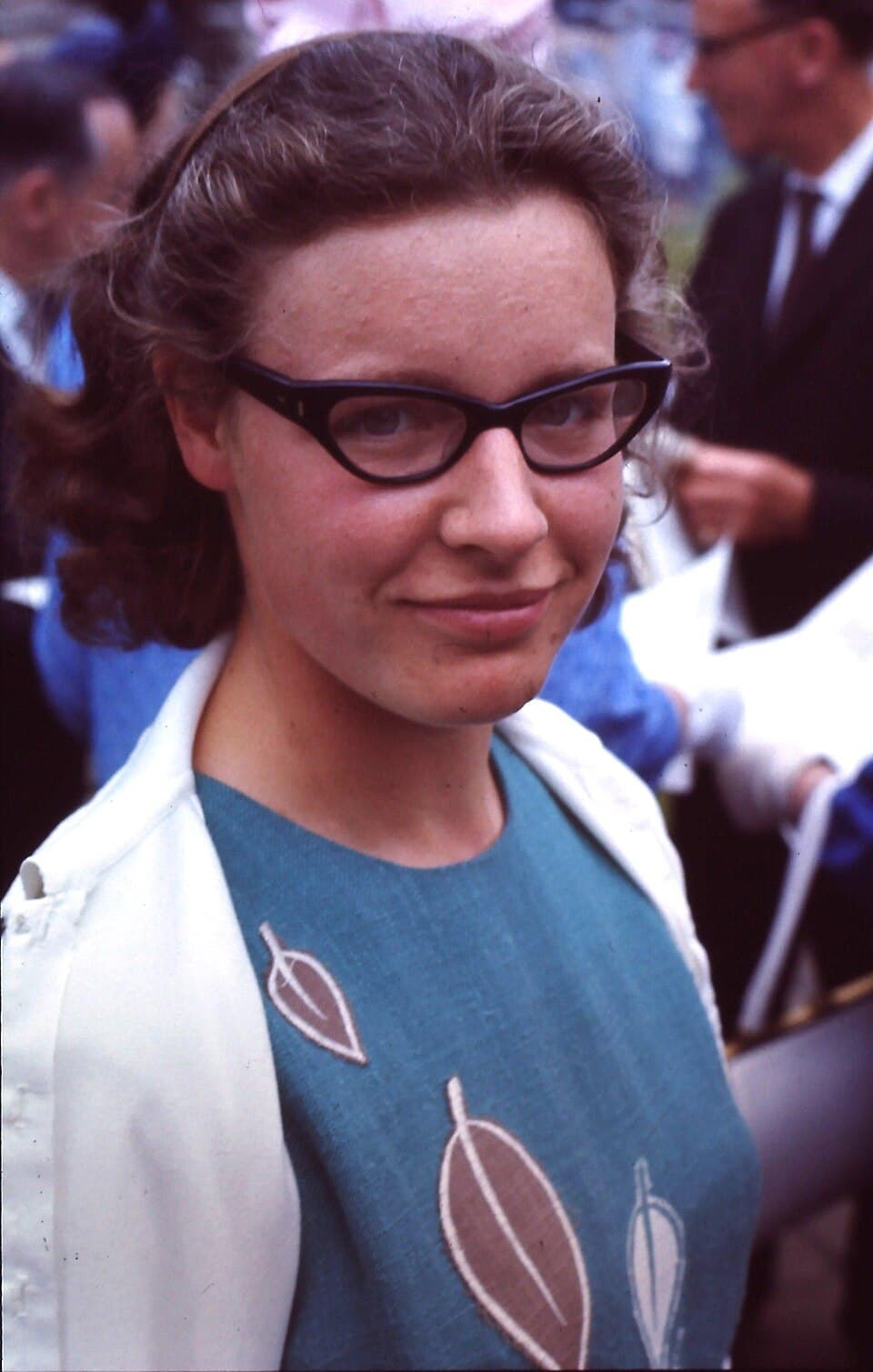
Two young visitors on a discovery field trip push open the door of an observatory room. Before them, an astrophysicist with white hair and a sharp gaze awaits. As a young woman, she discovered invisible stars that beat like hearts. And she is very eager to tell them about it.
—How old were you when you started physics, and was it hard being a girl?
You know, my child, I was very young. In 1961, I entered the University of Glasgow, and there, surprise: I was the only girl in the physics team. Imagine a large room full of boys, and you, all alone in the middle. When I walked in, they banged on the tables and whistled. That was their way of saying a girl had no business being there. But I didn't leave. My parents, in Belfast, had always told me that a girl could love the stars just as much as a boy. So I sat in the front row and listened. You see, the hardest part wasn't the physics. The hardest part was being allowed to learn it.
The hardest part wasn't the physics, it was being allowed to learn it.
—Is it true you built your telescope yourself, with your own hands?
Yes, it is absolutely true! Imagine a large field near Cambridge, four hectares — that's like several football pitches. Well, I planted poles in the ground and unrolled kilometers of cables, in all weather. It was called the Mullard radio telescope. It wasn't a big shiny dome, no: it was thousands of little antennas placed in the grass, more than two thousand! My hands were frozen and covered in mud. But you know what? By building it myself, I knew that machine by heart. And that's exactly why, later, I was able to spot something no one else would have seen.
By building it with my own hands, I knew my machine by heart.
—What was it like, the day you found your first pulsar?
Ah, that day! My telescope didn't have a screen. It printed everything onto long paper rolls, dozens of meters each day. Imagine a huge strip of paper unrolled on a table, covered in little wiggly lines. I spent hours, pencil in hand, looking at them one by one. And one day, I saw a funny scribble, a little strange thing. In English, I said it looked like a piece of scruff. Many would have taken it for useless noise and moved on. But I felt it was different. That tiny scribble was the first neutron star ever detected.
Everyone saw a useless scribble; I looked twice.
—Is it true that at first you thought they were aliens?
Hahaha, almost! Listen: the signal came back every 1.337 seconds, exactly, like a perfect little tick-tock. Yet in nature, nothing is as regular as a clock. So, jokingly, we nicknamed it LGM-1 — that means Little Green Men. We laughed: 'What if someone is calling us from the stars?' But I didn't want to talk nonsense. So at night, in our wooden huts where hot tea was our only comfort, I checked, again and again. And I understood: it wasn't a message from aliens. It was a dead, crushed star spinning very fast. Much more beautiful, in truth.
In nature, nothing is as regular as a clock — that's why I doubted.
—And what was your day like when you were searching for pulsars?
A simple day, you know. In the morning, I jumped on my bike and rode to the observatory, outside Cambridge. The first thing: fetch the long paper rolls printed during the night. I unrolled them on a large table and read them with a magnifying glass, pencil ready. In the afternoon, I discussed the results with my supervisor, Antony Hewish, and the other students. And in the evening, I started again, because we had to eliminate false leads. Imagine wooden buildings, poorly heated, where we warmed our fingers around a cup of tea. Nothing glamorous. But in that cold and paper hid one of the greatest discoveries in the sky.
—I heard someone stole a big prize from you. Is that true?
"Stole" is a strong word, but I understand why you say it. In 1974, the Nobel Prize in Physics rewarded the discovery of pulsars. But it was given to my thesis supervisor and another scientist — not to me, even though I was the one who spotted the signal on the paper. At the time, people thought a female student was just a helper for the great professor. Many found it unfair, and a famous astronomer, Fred Hoyle, said so loudly. I was young, and it stung, of course. But I chose not to spend my life angry. I had other stars to look at.
I chose not to spend my life angry: I had other stars to look at.
—Were you sad not to have won that prize?
A little, at first. But with time, I understood something surprising. You know, someone who wins a Nobel Prize is congratulated once, and then a little forgotten. Me, because I didn't get it, people kept talking about my story for fifty years! I was invited everywhere, given great responsibilities. I even became President of the Royal Astronomical Society. I like to say I've done very well out of not getting that Nobel. Funny, life: sometimes what you think you lose becomes your greatest opportunity. The important thing is not the prize, my child. The important thing is what you discovered.
Sometimes what you think you lose becomes your greatest opportunity.
—What was that telescope like? Did it make noise, did it move?
No, and that's what surprises children! You imagine a big tube pointed at the sky, like a spyglass? Well, no. The Mullard radio telescope was an entire field covered with over two thousand little antennas, called dipoles — simple rods that pick up invisible waves from space. It didn't move, it made no noise. Stars don't send sound, you know: they send radio waves, like a light you can't see with your eyes. The telescope listened to them in silence, and it drew what it heard on paper. All that grass and those wires were a giant ear turned toward the sky.
That field of antennas was a giant ear turned toward the sky.
—Later you won a lot of money. What did you do with it?
Ah, I'm proud of that! In 2018, I was awarded a great prize, the Breakthrough Prize, with a huge sum: £2.3 million. Imagine a mountain of money in front of you. I could have bought a big house, traveled… But I thought of all those girls and boys who love science but don't have the money to study. Remember, when I was young, they didn't really want me in the physics room. So I gave it all — every penny — to fund studies for young people who are too often forgotten. Because talent, you see, can hide anywhere, even where no one is looking for it.
Talent can hide anywhere, even where no one is looking for it.
—If we saw you today, what would you want to tell us children?
I would say: look twice. My whole life is in those three words. The day I found my pulsar, everyone would have thrown away that little scribble on the paper. I looked again. It was patience that made all the difference, not a stroke of genius. And then, I would say: don't let anyone tell you this isn't your place. I was told that in Glasgow, I was told that elsewhere, and yet here I am. I have presided over great learned societies, I have helped hundreds of young people. If a little girl from Belfast could listen to dead stars, then you too can discover something no one has ever seen.
Look twice: my whole life is in those three words.
This imaginary interview was generated by artificial intelligence from sources documented in Jocelyn Bell Burnell's profile. It dramatises what the figure might have said based on what we know about them, but does not constitute attested historical testimony. For primary sources and factual documentation, refer to the full profile.