Imaginary dialogue between Antony Hewish and Jocelyn Bell Burnell
by Charactorium · Jocelyn Bell Burnell (1943 — ?) · Sciences · 5 min read
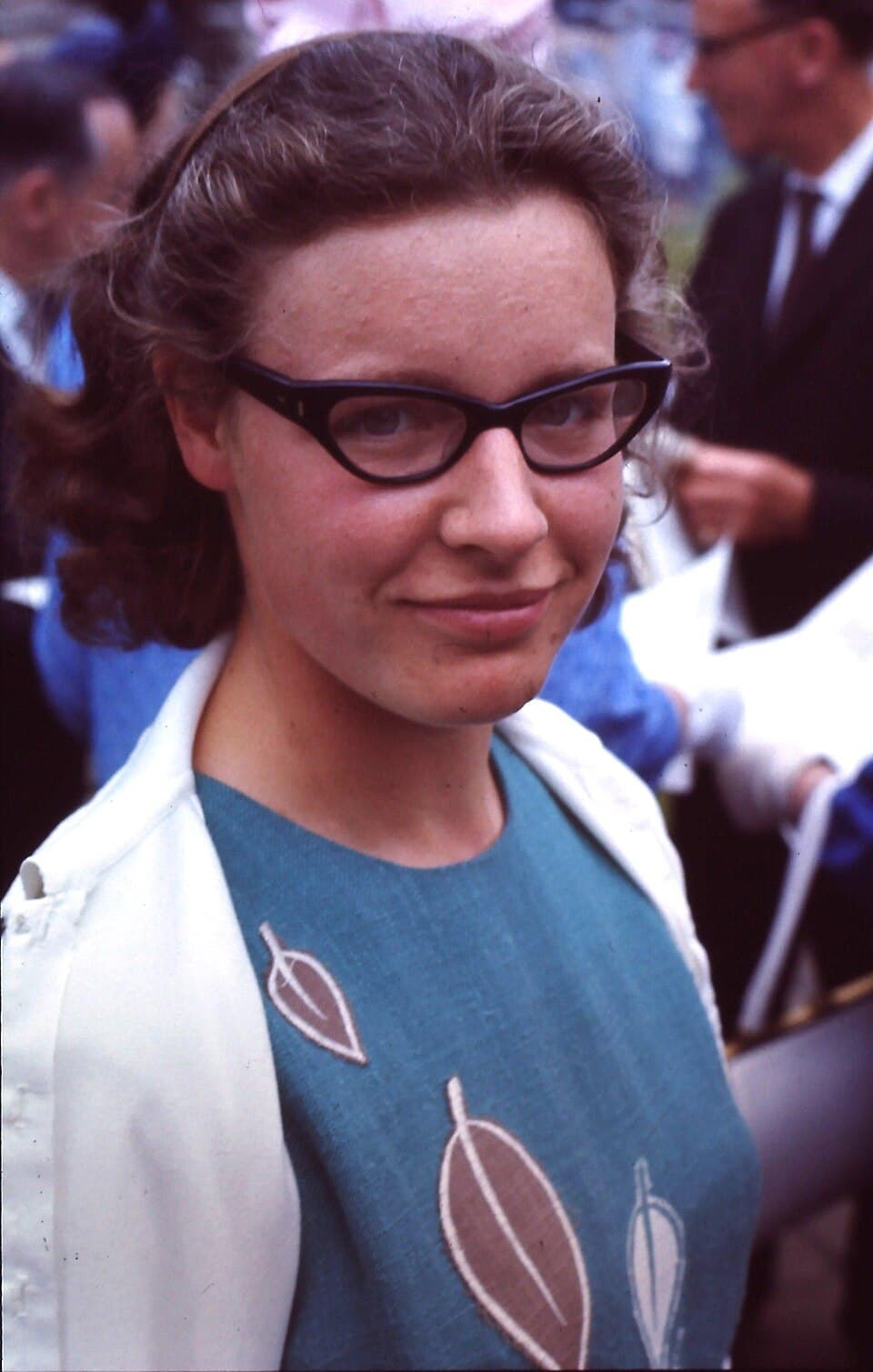
It is under the corrugated iron roof of the Mullard Radio Astronomy Observatory, on a windy autumn afternoon in 1968, that Antony Hewish joins his doctoral student between two tables covered with unrolled sheets of chart paper. The smell of fresh ink and cold tea hangs in the prefabricated hut, and the hum of receivers tuned to 81.5 MHz fills the room. They have worked side by side for three years, ever since she arrived at Cambridge in 1965, and their discovery is still shaking astrophysics to its core. Hewish, her thesis supervisor, comes that day so that she can tell, in her own way, the story of this adventure from which they have only just emerged.
—Jocelyn, do you remember the summer we planted those posts and strung the cables over the four hectares? What did that construction site teach you?
How could I forget! For two years, I swung the sledgehammer and unrolled miles of wire with the team, usually under the Cambridge rain. People sometimes looked at me askance — a young woman planting stakes wasn't the image they had of a researcher. But you let me do it, and that's the whole secret. When you've built your own 2,048 dipoles, you know the instrument like the back of your hand. I knew exactly what that telescope could detect and what it couldn't. The day an anomaly appeared, I didn't doubt the machine: I knew it too well for that. My hands had prepared what my eyes were about to discover.
When you've built your own 2,048 dipoles, you know the instrument like the back of your hand.
—You spotted that little piece of scruff on the chart when so many others would have taken it for noise. How does the eye stop on so little?
You know how many metres of chart paper I examined each day, pencil in hand, leaning over those rolls. Dozens, sometimes more. Over time, the eye learns the signature of every human parasite, every interference. And then one day, there was a little quarter-inch of scruff that didn't resemble anything known. It wasn't quite man-made interference. Many would have turned the page. But I had this persistent feeling that it deserved a closer look. The signal came back, always at the same point in sidereal time. It isn't a flash of genius that discovers a pulsar; it's the stubbornness to look at what others deem unworthy of attention.
It isn't a flash of genius that discovers a pulsar; it's the stubbornness to look at what others deem unworthy of attention.
—When the signal started pulsing every 1.337 seconds with clockwork regularity, did you really believe for a moment in Little Green Men?
The regularity frightened me at first, I admit. One pulse every 1.3373 seconds, with almost insolent precision — nothing in the nature we knew then beat like that. We joked by calling it LGM-1, Little Green Men, because the idea of an artificial signal, almost a beacon, crossed our minds. But I never really believed it. I was mostly annoyed: I was finishing my thesis, and here was a bunch of little green men threatening to ruin my data! The relief came when a second signal appeared from another direction in the sky. Two independent civilizations wouldn't have chosen to call us at the same time. It was a natural phenomenon — and far more extraordinary.
Two independent civilizations wouldn't have chosen to call us at the same time.
—You arrived here after Glasgow, where you were the only woman on the physics team. How did you experience those days as a doctoral student among us?
In Glasgow already, in 1961, I was the only woman in the physics lecture hall, and the boys would bang on their desks when I walked in. You learn to hold your own in such conditions. At Cambridge, my days were simple and hard: the bicycle ride to the observatory, the rolls of paper collected during the night that we unrolled in the morning, the hot tea to keep warm in the cold huts. In the afternoon, I would come and show you what the night had yielded, and we would discuss the false leads to eliminate. A very simple student room, shelves loaded with textbooks, little superfluous. I think that modesty of means served me well: nothing distracted me from the graph paper. The work was everything, and I found in it a kind of austere happiness.
You learn to hold your own when you're the only woman in the lecture hall.
—In the evenings, you tirelessly cross-checked suspect data to rule out interference. What drove you to repeat each verification like that?
The fear of being wrong, quite simply. A discovery announced carelessly, and a whole career collapses — mine, but also your reputation as a supervisor. So in the evenings, I stayed to compare the signal with other observations, to track down any terrestrial origin: a faulty radiator, a passing car, a poorly tuned television set somewhere near Cambridge. The signal had to follow sidereal time, not our watch time, for it to truly come from the stars. I checked and rechecked until I could no longer doubt. This rigour was nothing heroic: it was the very condition for us to be believed. Science does not forgive uncontrolled enthusiasm.
The signal had to follow the time of the stars, not the time of our watches.
—When we wrote the article for Nature, did you already measure what that publication would mean for astrophysics?
No, not fully, and I don't think you did either. We knew it was important — a celestial object of an unprecedented type, of unimaginable density. But that this Nature article would become one of the founding texts of twentieth-century astrophysics was beyond us at the time. I mostly remember the excitement: the ringing phones, colleagues from around the world wanting details. For me, a young doctoral student, it was dizzying. I had spent months alone with my rolls of paper, and suddenly the whole of astronomy was poring over our quarter-inch of scruff. What we now called a pulsar — a rotating neutron star — confirmed theories that were thought forever unverifiable. It was bigger than both of us combined.
The whole of astronomy was suddenly poring over our quarter-inch of scruff.
—Many are outraged that the 1974 Nobel Prize went to Ryle and me, without you who made the detection. How do you carry that today?
I carry it with more serenity than one might imagine, Antony. Yes, Fred Hoyle publicly expressed indignation, and the outcry was loud. But I sincerely believe that a prize of this nature rewards the direction of a research programme, the initial intellectual gamble — and that gamble was yours. A doctoral student does her job; that's how science advances. I bear no bitterness. On the contrary, this controversy brought me visibility and freedom that a laureate perhaps lacks: people listen to me, consult me, entrust me with responsibilities. I made my way without that medal, and perhaps it is that very path that made me who I am. Recognition takes many forms.
A doctoral student does her job; that's how science advances.
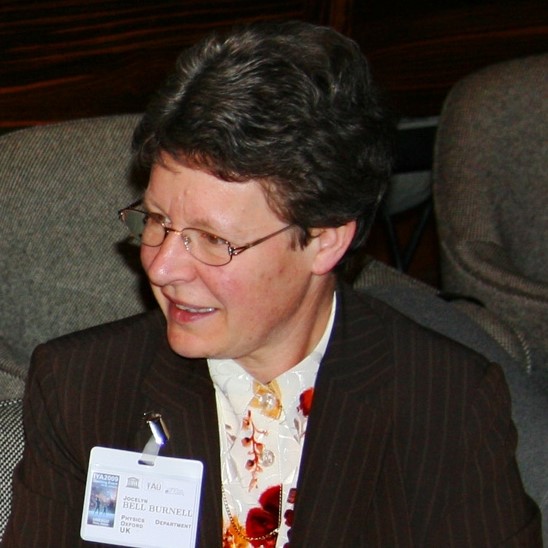
—Do you think this controversy goes beyond your own case, and that it says something about the place of women and doctoral students in our laboratories?
Of course it does, and that is precisely what matters to me. My story is just one example among many where the work of younger people, especially women, remains in the shadow of their elders. How many discoveries have been made by hands that history has not remembered? The three-laureate rule is a convenient excuse, but behind it lies a larger question: whom do we see when we look at a laboratory? I hope my case, debated as it is, will open eyes. If people talk about me, let it at least be so that other young women no longer have to wonder if their name will count. I want to be useful to those who come after, not a martyr to be pitied.
Whom do we really see when we look at a laboratory?
—Now that you are about to leave Cambridge, what will you remember from these years spent together in those freezing huts?
I will remember the cold, yes, and the tea we heated for the long sessions! But above all, that rare thing: having touched the unknown. Few researchers can say they opened a whole new part of the universe. You gave me a thesis topic that seemed modest — mapping radio sources — and it led to pulsars. I will also remember the fruitful solitude of data analysis, those hours bent over the paper when you don't yet know you're about to change astronomy. And the team's friendship, despite the occasional stares. Whatever happens to my career, these huts will remain the place where a young woman learned she could trust her own gaze.
These huts will remain the place where I learned to trust my own gaze.
—You've spoken to me about your concern for underprivileged students. If one day you were richly rewarded, what would you do with it, you who struggled so much over that paper?
What a strange question about the future! But I'll answer you frankly. I never sought money; what I sometimes lacked, like so many others, was that someone made room for me. If I were entrusted with a sum, I think I would put it to use for those who haven't had my chances — girls from modest families, those we don't see in our lecture halls. Science needs all talents, not just those born on the right side. Keeping a fortune for myself alone would make no sense: I had the privilege of discovery, which is already immense. The rest must serve to open doors that were nearly closed to me.
Science needs all talents, not just those born on the right side.
This imaginary interview was generated by artificial intelligence from sources documented in Jocelyn Bell Burnell's profile. It dramatises what the figure might have said based on what we know about them, but does not constitute attested historical testimony. For primary sources and factual documentation, refer to the full profile.