Imaginary interview with Jocelyn Bell Burnell
by Charactorium · Jocelyn Bell Burnell (1943 — ?) · Sciences · 6 min read
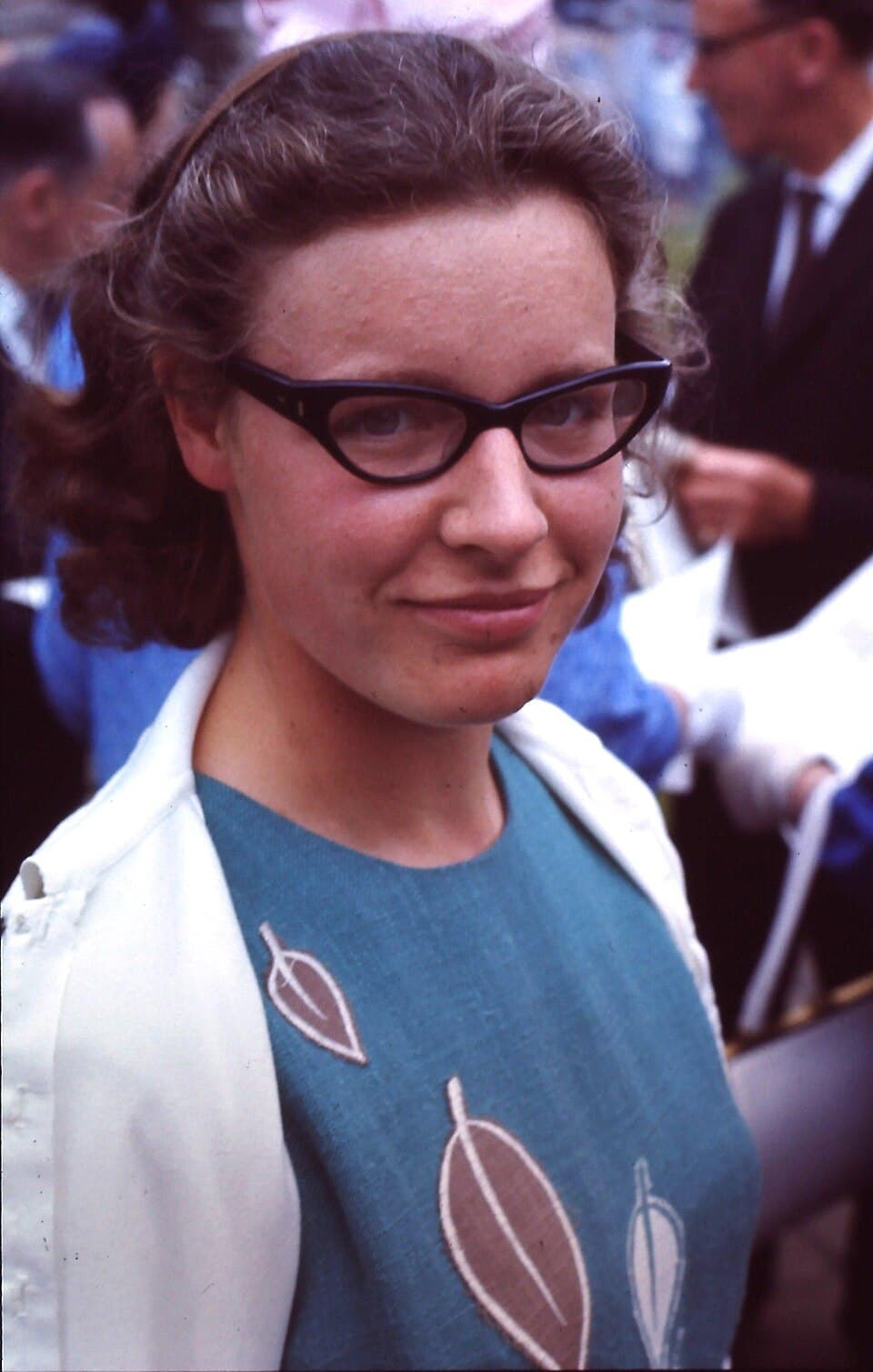
One morning in June, in her office at the University of Oxford where observation reports pile up, Dame Jocelyn Bell Burnell receives us with the calm of someone who spent her youth scrutinizing silence. Behind her, a yellowed photo of the great field of dipoles at Cambridge. She speaks slowly, weighing each word, like one rereading a chart.
—Before the discovery, you yourself helped build the radio telescope. What did that construction site mean to you as a young doctoral student?
People always imagine the astronomer with an eye glued to the sky, but my first real encounter with the Mullard Radio Astronomy Observatory was with a sledgehammer in hand. For two summers, I planted poles and unrolled cables across nearly four hectares, in all weathers, to assemble that field of 2048 dipoles. It was manual labor, unusual for a researcher in 1965, and some were surprised by it. But I believe that mud taught me everything: when the instrument has come from your own hands, you know every weakness, every quirk. Later, when a strange signal appeared, I didn't doubt the antenna — I knew exactly what it could and could not do.
When the instrument has come from your own hands, you know every weakness, every quirk.
—How would you describe the moment that unusual signal caught your attention?
One day in midsummer 1967, I had come to the observatory to become more familiar with the equipment, and I noticed on the chart a little bit of what I called scruff — a fragment of noise that didn't quite look like human interference. Nothing spectacular: a few millimeters of ink among dozens of meters of paper. But the eye gets used to it, and this one stood out. Going back over previous recordings at the same point in the sky, I found the trace. When we stretched it out in time, the signal revealed itself: a pulse of almost unbearable regularity, 1.3373 seconds, metronomic. It wasn't dust on the lens. It was the universe beating time.
It wasn't dust on the lens. It was the universe beating time.
—Why was that first signal nicknamed Little Green Men?
Such regularity was unsettling. In nature, you expect chaos, fuzziness; but here, every 1.337 seconds, the pulse returned with clockmaker precision. The idea crossed some of our minds, half-seriously, that it looked like an artificial beacon — so we labeled the source LGM-1, for Little Green Men. It was a lab joke, but it hid a real worry: what if we were ridiculously wrong? I also had, I admit, a more selfish thought: I was finishing my thesis, and I didn't want a bunch of aliens to mess it all up. Then we found a second one, elsewhere in the sky. Two civilizations calling us at the same time? No. It was a natural phenomenon — the first pulsar.
I was finishing my thesis, and I didn't want a bunch of aliens to mess it all up.
—What were your analysis days actually like at that time?
They had the slowness of craft work. In the morning, I would collect the rolls printed overnight by the telescope and unroll them on a large table. The afternoon was spent with pencil and ruler in hand, scanning tens of meters of charts, on the lookout for the slightest anomaly. The telescope produced nearly thirty meters of paper each day, and everything passed under my eyes. Many would have classified that scruff as cosmic background noise, those parasites you learn to wave away. But I had trained myself to distinguish the signature of terrestrial interference from that of celestial objects. The discovery did not spring from a flash of genius; it came from a stubborn, repeated, almost tedious attention.
The discovery did not spring from a flash of genius; it came from a stubborn, almost tedious attention.
—Would you say that patience is an underrated virtue in science?
Deeply. We celebrate intuition, the intellectual thunderbolt, but most real discoveries sleep in data that no one has the patience to examine fully. My most faithful ally, during those months, was neither a telescope nor an equation: it was a pencil and the discipline to skip nothing. A signal that appears once is a curiosity; a signal found night after night, at the same point in the sky, becomes a certainty. The risk, always, is to take the unexpected for an error and discard it. I learned to distrust that reflex. What others would have erased as noise, I kept — and that is where the star was hiding.
Most real discoveries sleep in data that no one has the patience to examine fully.
—In 1974, the Nobel Prize honored Antony Hewish and Martin Ryle, but not you. How did you receive that news?
I was a doctoral student, and at that time it was readily assumed that students executed while the supervisor thought. The 1974 Nobel was therefore awarded to Antony Hewish and Martin Ryle, without me, who had spotted the first trace. This caused an uproar in the field — Fred Hoyle, notably, minced no words and publicly denounced the injustice. For my part, I chose not to make it a burden. Destroying someone's career out of spite never interested me. In hindsight, I sincerely believe I did very well without that prize: a Nobel might have locked me into a statue, whereas the recognition that came later, more diffuse, left me free.
A Nobel might have locked me into a statue; not having it left me free.
—This controversy fueled a broader debate about the recognition of women in science. How do you see your role in that debate?
I didn't choose to become a symbol, but I was placed in that position, and I eventually embraced it. When I entered the University of Glasgow in the early 1960s, I was the only woman in the physics lecture hall; when I walked in, the boys banged on the desks, whistled, as was the custom to welcome an intruder. You toughen up. The unwritten rule limiting the Nobel to three laureates, in my case, covered another, older reality: it was hard to see a young woman at the heart of a major discovery. I prefer that my story serve as a warning rather than a complaint. If it helps a female student not to stay silent when she sees a scruff that others ignore, then it will have been useful.
I prefer that my story serve as a warning rather than a complaint.
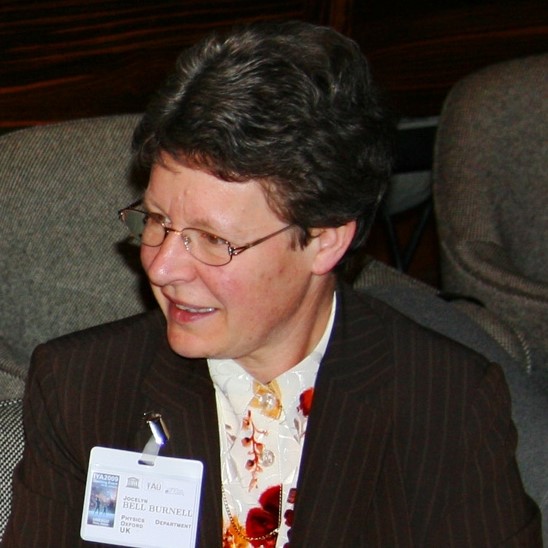
—In 2018, you received the Breakthrough Prize and its $2.3 million. What did you decide to do with it?
The Breakthrough Prize of 2018 came half a century after the discovery, as a belated but sincere recognition, with $2.3 million. The question was not whether I needed the money, but what it would serve best. I decided to give it entirely to a doctoral scholarship fund for people from underrepresented groups in physics — women, minorities, students from backgrounds that don't believe they are allowed into a laboratory. My conviction is simple: science needs all the available intelligence, and we waste quantities of it through prejudice. If some of those talents, today discouraged, can one day sit down before their own data, then this sum will have produced much more than interest.
Science needs all the available intelligence, and we waste quantities of it through prejudice.
—You have also presided over major scientific institutions. What did you seek to change there?
At the head of the Royal Astronomical Society in the early 2000s, then the Institute of Physics from 2014, I was able to act on structures rather than just speeches. You don't correct an imbalance with good intentions; you have to look at the numbers, track where careers stall, and change the concrete rules — hiring, leave, mentoring. I found the same method there as at the telescope: spot the anomaly in the flow, don't classify it too quickly as normal. An institution, like a chart, reveals its hidden signals to those who take the time to read it. I wanted diversity not to be an ornament, but a policy, measured and defended year after year.
An institution, like a chart, reveals its hidden signals to those who take the time to read it.
—Fifty years later, what remains for you of the night of the first pulsar?
I still have the physical sensation of that paper under my fingers and the smell of ink at the Mullard Observatory. Science has since catalogued thousands of pulsars, they are used as cosmic clocks to probe space, and PSR B1919+21 is just one entry among many in the catalogs. But for me, it will always be the first scruff, that stubborn fragment that refused to look like interference. What that night taught me goes beyond astrophysics: the world constantly sends signals that we mistake for noise, for lack of looking at them long enough. I had the immense luck, at twenty-four, to catch one. The rest of my life has been about teaching others not to look away.
The world constantly sends signals that we mistake for noise, for lack of looking at them long enough.

This imaginary interview was generated by artificial intelligence from sources documented in Jocelyn Bell Burnell's profile. It dramatises what the figure might have said based on what we know about them, but does not constitute attested historical testimony. For primary sources and factual documentation, refer to the full profile.