Imaginary interview with John Locke
by Charactorium · John Locke (1632 — 1704) · Philosophy · Politics · 6 min read
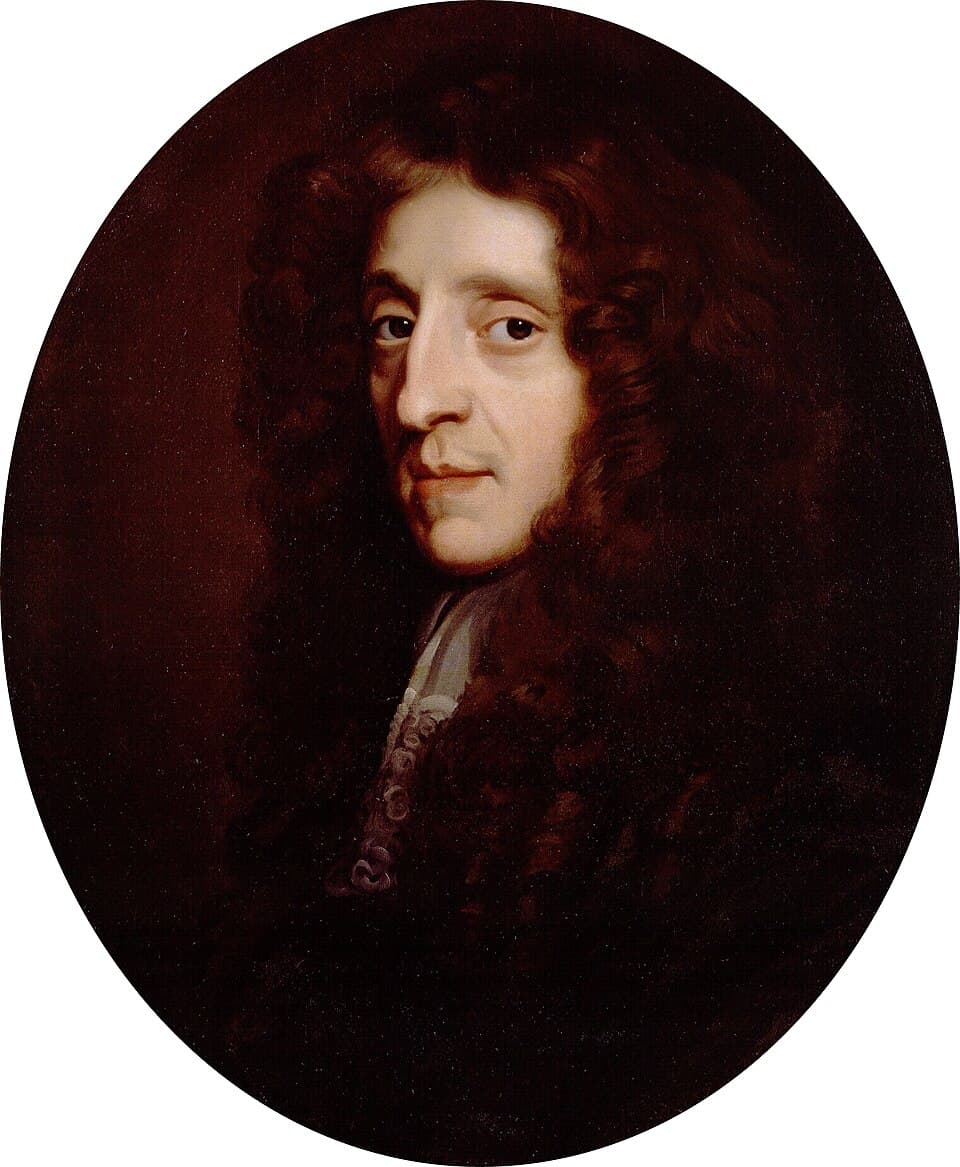
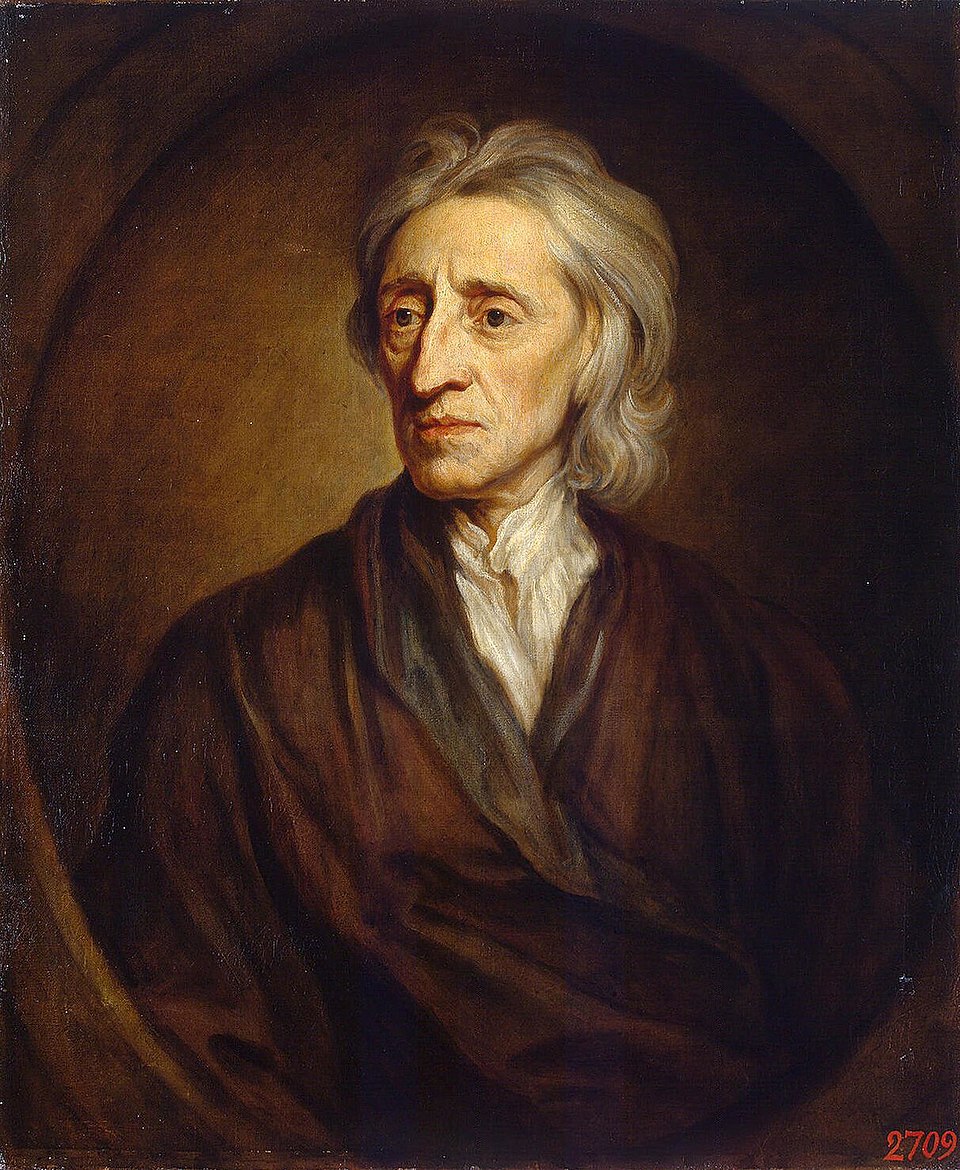
October 1703. In the study that the Mashams lend him at Oates, deep in the Essex countryside, an elderly asthmatic man receives us among his books and scientific instruments. The teapot steams, the light fades; John Locke, seventy-one years old, agrees to trace the thread of a life shared between the lancet, the pen, and exile.
—How did a man called a philosopher come to hold a scalpel at the bedside of a great lord?
It is readily forgotten that I was first a man of medicine, trained at Christ Church Oxford, where my association with Robert Boyle gave me a taste for patient observation rather than systems. In 1666, I met Anthony Ashley Cooper, the future Earl of Shaftesbury, whose liver was being eaten away by a cyst that was slowly killing him. I supervised an operation that my colleagues deemed reckless: to open, drain, and place a silver tube so that the humor could flow out. He survived for years. That lancet, those instruments stored in my case, opened not only bodies but the circles of English power. A philosopher who has never seen a man bleed speaks of human nature as a blind man speaks of colors.
A philosopher who has never seen a man bleed speaks of human nature as a blind man speaks of colors.
—Why did you leave England for the Netherlands in 1683, at the risk of losing everything?
Because I was believed to be involved in a conspiracy against Charles II, what the court called the Rye House Plot. Serving Shaftesbury meant carrying the shadow of his struggles; when he fell, I became suspect by contagion. So I crossed the Channel and found refuge in Amsterdam, then Utrecht, in that Holland where one could think aloud without a spy following. Those were five years of exile I wish upon no one, and yet the most fruitful of my existence. Far from spies, I secretly worked on my manuscripts, those on civil government and human understanding, which I dared show only to a few friends. Dutch tolerance was for me less an idea than something breathed every morning.
Dutch tolerance was for me less an idea than something breathed every morning.
—Do you remember the circumstances of your return to England?
February 1689. The sea was cold and the ship laden with hopes. I had the singular honor of returning on board the same vessel as Mary, the future queen, who was to reign alongside William of Orange. Imagine what that was: a banished man, suspected by a king of conspiracy, returning not as a fugitive but in the wake of a sovereign, in the aftermath of a revolution that had been accomplished almost without bloodshed. The Glorious Revolution had overthrown James II and opened a reign where Parliament finally mattered. At past fifty-seven, I felt that the moment had come to bring my papers out of the shadows. Everything I had matured in silence could finally appear in the light of day.
—What do you reply to those who claim that the mind is born already furnished with innate ideas?
Let them look at a newborn. Where are those truths that God would have engraved there? I find none. In my An Essay Concerning Human Understanding, I dared to write this: 'Let us then suppose the mind to be, as we say, white paper, void of all characters, without any ideas: how comes it to be furnished? Whence comes it by that vast store which the busy and boundless fancy of man has painted on it with an almost endless variety? To this I answer, in one word, from experience.' This blank slate, this white paper, is my compass. Everything we know enters through the senses, as light enters through a window. Descartes wanted ready-made ideas in our cradle; I see only an empty promise that life, little by little, comes to write.
Everything we know enters through the senses, as light enters through a window.
—How, from nothing, does the mind manage to form such vast thoughts?
Through a work of assembly, patient and silent. The senses first deliver simple ideas: this red, this cold, this bitterness of the tea I drink while speaking to you, this weight in the hand. The mind does not invent them; it receives them, as wax receives an impression. But it does not remain idle: it compares, combines, separates, and from these raw materials it builds complex ideas — those of an army, of justice, of a triangle. That is our entire inner architecture: no palace descended from heaven, but a house built stone by stone with what experience carries. It is humble, and that is why it seems true to me. The great systems that claim to deduce everything without observing anything strike me as castles built on air.
—You assert that a people can legitimately rise up against their king. Is that not a dangerous thought?
Dangerous only for tyrants. In my Two Treatises of Government, I start from the state of nature, and there I depart from my contemporary Hobbes, who sees in it only a war of all against all. For me, this state is already governed by reason and natural law: man possesses his life, his liberty, his possessions. If he consents to form a society, it is to better protect these natural rights, not to abandon them to a master. Therefore, the prince who tramples these rights underfoot breaks the pact first; it is not the people who rebel, but the sovereign who, by his tyranny, declares war on his people. To resist, then, is not a crime: it is to restore government to its true end.
It is not the people who rebel, but the sovereign who, by his tyranny, declares war on his people.
—For what reason, in your view, do men consent to give themselves a government?
I stated it without detour in paragraph 123 of the second treatise: 'The great and chief end, therefore, of men uniting into commonwealths, and putting themselves under government, is the preservation of their property.' Understand this word broadly: by property, I mean a man's life, liberty, and estate — all that is properly his own. In the state of nature, each enjoys these things, but without an impartial judge to settle disputes or a common force to defend the weak. The social contract is nothing other than this: we renounce taking justice into our own hands, on condition that a common authority guards what we hold most dear. A government that destroys what it was meant to protect denies itself.
—You published, under the veil of anonymity, a plea for toleration. Why such caution?
Because in that Europe, saying that one should let each person pray to God in their own way was a rash act. The France of Louis XIV had just revoked the Edict of Nantes and driven its Protestants onto the roads; the pyres still smoldered in many memories. In my A Letter Concerning Toleration, I wrote what I hold to be the heart of the matter: 'I esteem that toleration is the chief characteristic mark of the true church.' The magistrate is made to govern bodies and goods, not consciences; the church, for the salvation of souls, has no weapon but persuasion. To mix the two is to corrupt one by the other. Faith imposed by force is only a grimace of faith.
Faith imposed by force is only a grimace of faith.
—You are confronted with a contradiction: the apostle of liberty was also involved in the slave trade. What do you have to say?
I will not flee the question, for it is just and it weighs on me. Yes, I was among the founders of the Royal African Company, and I wrote, in 1669, the Fundamental Constitutions of Carolina, which recognized a master's absolute power over his slaves. How could the man who proclaims that every being is born free have written such a thing? I could plead the century, the interests of my patrons, the distance of the colonies. But I know what such an excuse is worth from the mouth of one who made liberty the first of natural rights. There is a wound here that my treatises do not close. Let others, after me, judge whether my principles were better than my conduct; I fear I know their answer.
There is a wound here that my treatises do not close.
—At this hour, in this retreat of Oates, how do you live these last years?
As a doctor to myself, as much as possible. My asthma steals my breath, my eyes weaken and demand these metal-rimmed spectacles that never leave me. I still rise early, read Scripture, answer correspondents from all over Europe, revise my works with a slower hand. Evenings with the Mashams at Oates are my true sweetness: Damaris Masham is herself a philosopher, and our conversations are worth the best books. I eat frugally, following my own prescriptions, avoid fatty meat and strong drink, and savor this tea from the East that England has recently come to adore. A man who has traveled much and feared much eventually finds that a quiet room, friends, and books are fortune enough.
Read further
This imaginary interview was generated by artificial intelligence from sources documented in John Locke's profile. It dramatises what the figure might have said based on what we know about them, but does not constitute attested historical testimony. For primary sources and factual documentation, refer to the full profile.