Kids interview Laozi
by Charactorium · Laozi (vers VIe siècle av. J.-C.) · Philosophy · Spirituality · 5 min read
Two twelve-year-old students are sitting in a quiet garden that smells of ink and old wood. They have one chance to meet the most mysterious figure in Chinese tradition — a man who may have been a royal librarian, a wandering sage, or perhaps no one at all. Lao Tseu settles onto a low wooden stool and looks at them with calm, unhurried eyes.
—What was your job in the royal library? What did you do all day?
Imagine a long room lit only by thin slivers of daylight through the walls. That was the royal library in Luoyi, capital of the Zhou kings. My job was to keep the ancient texts — records of ceremonies, histories of dead dynasties, old poems no one recited anymore. All written on bamboo strips, tied together in bundles. I would sort them, read them, answer questions from the lords who came through. Years passed like that. But here is the secret I learned: all that reading taught me less than the silence between the words. That silence is where the Tao lives — if you are quiet enough to hear it.
—You wrote on bamboo? What did that actually feel like?
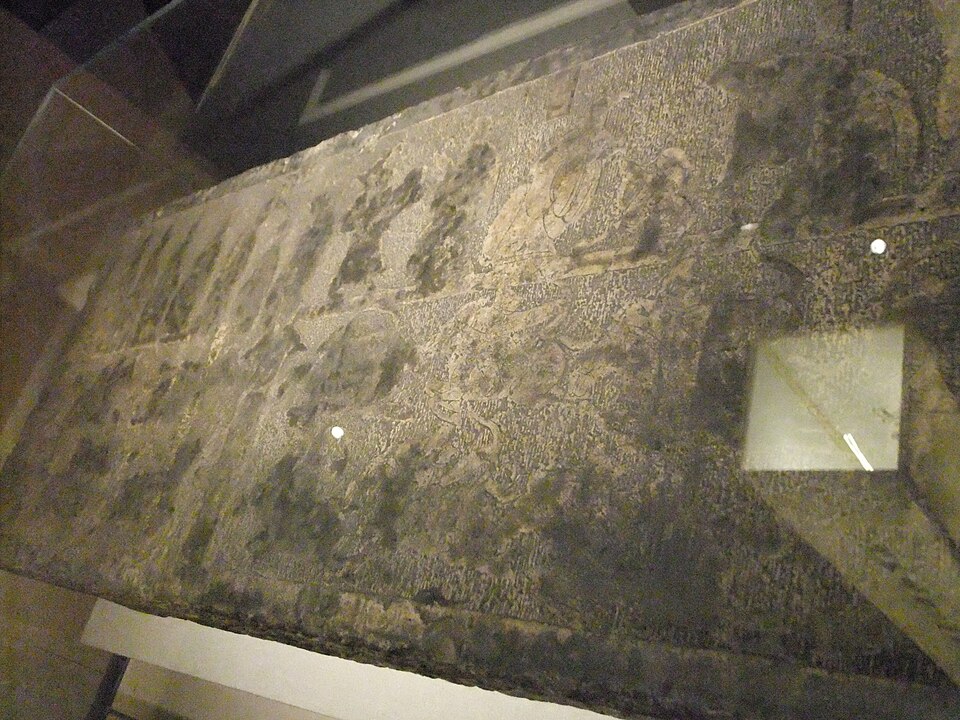
Long thin strips, cut from the green stalk and dried over fire until they hardened. You tied them side by side with cord to make a scroll. Then you dipped your brush in black ink and painted each character, slowly, from top to bottom. Too hard and the strip cracked — too soft and the ink smeared. There were also silk scrolls for very precious texts, much smoother and lighter to carry. Later, some copies of the Tao Te King were found on silk inside a tomb at Mawangdui, perfectly preserved after two thousand years. The words survived because they knew how to be patient. That seems right to me.
—Is it true that Confucius came all the way to visit you and ask questions?
So the story goes — and I have no reason to deny it. Confucius was already famous throughout the Chinese states as a great teacher of ceremony and virtue. He came to ask me about li — the ancient rites, the proper protocols of the court. I told him honestly: the sages whose words you revere are long dead. Their bones are dust. What remains is words — and words without a living spirit dry out like a dead tree in summer. I do not think my answer pleased him. He believed deeply in tradition and ritual. I respected that. But I could not pretend to share it.
—He called you a dragon after that. What does it mean to be a dragon?
He told his students, so the story says, that he understood birds and fish and the beasts of the field — but me, I was like a dragon: something that rides the wind and the clouds, that cannot be caught or pinned down. I think that is one of the most honest things ever said about the Tao. Even the greatest mind of the age could feel it, could be moved by it — but could not trap it in a definition. A dragon is real. You know it when you see it. But you will never hold one still long enough to explain it.
You know a dragon is real when you see it. But no one holds one still long enough to explain it.
—You said water is stronger than rock. How can something so soft beat stone?
Think of a small stream — nothing gentler, nothing more patient. It does not attack the stone in its path. It moves around it, under it, through every tiny crack it can find. And after a thousand years? The stone is smooth, reshaped, perhaps gone entirely. The water has not changed at all. That is the heart of what I called wu wei — 'not forcing.' It does not mean being lazy. It means moving with the natural shape of things instead of fighting against them. A young tree bends in the wind and stays alive. A dry, rigid branch snaps in the first storm. Ziran — naturalness — is not weakness. It is the strongest force I know.
Softness is not weakness. It is the only force patient enough to outlast stone.
—What exactly is the Tao? Can you say it simply?
I have to be honest: the very first sentence of the Tao Te King says the Tao that can be fully named is not the true, eternal Tao. So if I give you a perfect definition, I am already wrong. But I can try. The Tao is like the deep current beneath everything — beneath the river, the seasons, the way fire rises and water flows downhill. You cannot grab it. But you can feel when you are moving with it, and when you are fighting against it. Children often feel it naturally — they play without forcing, they rest when they are tired, they do not pretend. That is closer to the Tao than any philosopher I ever met.
—Why did you decide to leave China? Weren't you safe in the library?
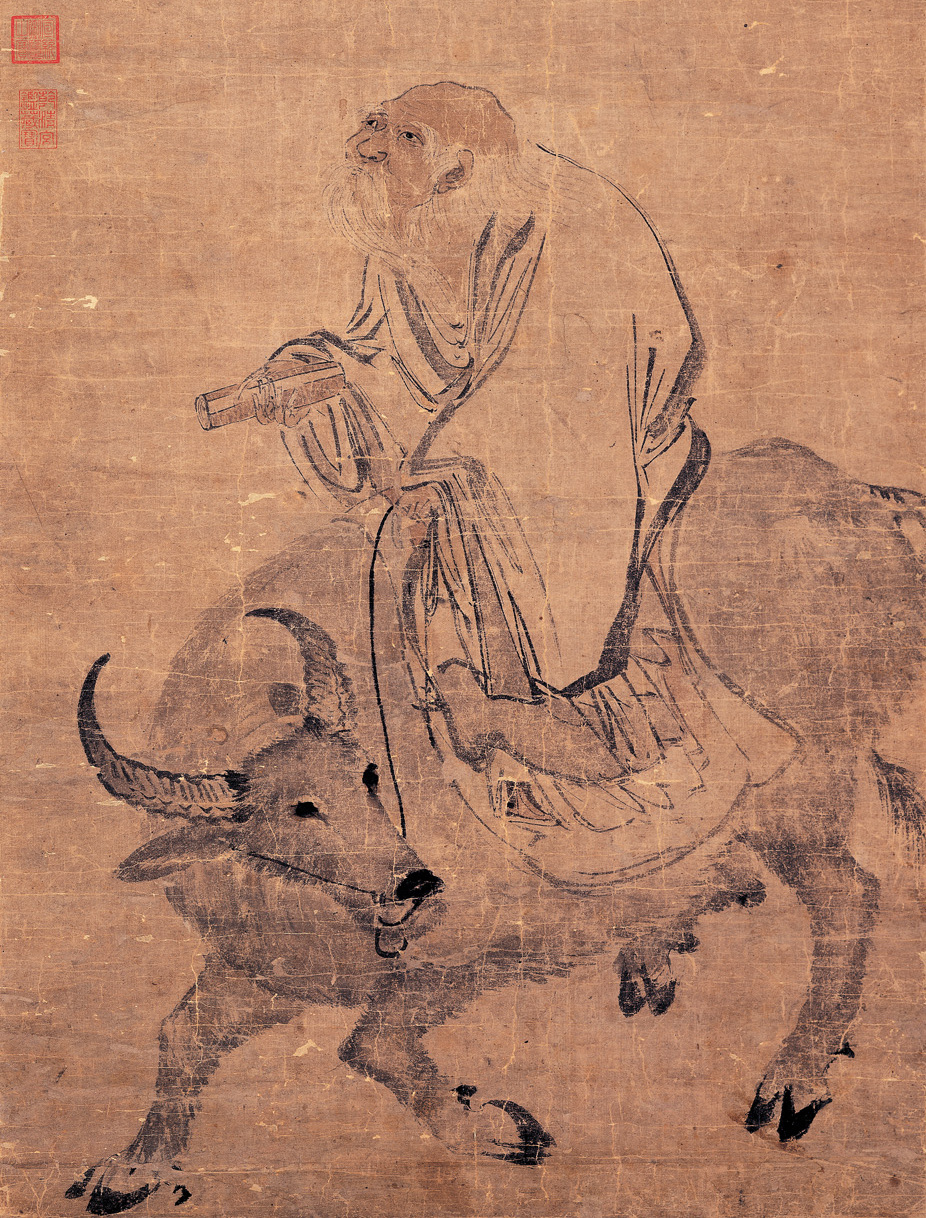
Safe, yes. But something in me had grown very tired. I had watched the Zhou kingdom crack apart for years — lords fighting each other, ceremonies used to cover up cruelties, a court full of men who said fine things and did ugly ones. I had given them decades of my reading and my silence. And I saw it change nothing. One morning I understood: a tree that has given all its fruit does not force itself to give more. It lets go of its leaves and waits. So I found an old water buffalo — slow, patient, the right companion for a man in no hurry — and I pointed him toward the western mountains. I did not look back.
—You wrote eighty-one chapters in one single night? Is that even possible?
At the Col de Hangu — the narrow mountain pass at the western edge of the known world — the guardian Yin Xi blocked my path. He said: you carry too much inside you to leave without leaving some of it behind. So I sat under the night sky with my brush and my bamboo strips. I had not invented those ideas that night — I had been carrying them in silence for eighty years. When water has been still for a very long time and the dam finally opens, it all rushes out at once. By morning I had eighty-one short chapters, about five thousand characters in all. I gave them to Yin Xi, climbed back on my buffalo, and left.
When water has been still long enough, the dam opens and everything rushes out at once.
—Some historians say you might not have really existed. Does that bother you?
Does it bother me? I think it may be the most Taoist question anyone has ever asked. My whole life I taught that clinging to your name, your reputation, your place in history is the very thing that makes you miserable. So if someone says 'Lao Tseu was not a real person' — perhaps they understand me better than they know. Sima Qian, a historian who wrote about me three centuries after my death, did his best. He found records, names, a village in the state of Chu. But even he admitted his uncertainty. What I know is simpler: the ideas in the Tao Te King have lived for two thousand five hundred years. That is more than enough.
—What does 'Lao Tseu' mean? Was it your real name?
It means 'Old Master' — or perhaps 'Old Child.' Both feel right to me. You can live eighty years and still look at the world with a child's eyes: without needing to win every argument, without needing to explain everything. My family name, according to Sima Qian, was Li Er, from a small village in the state of Chu. But everyone forgot that name. 'Lao Tseu' is what stuck. Which is strange, because the first line of my own book warns you that names are not the true thing they point to. The real Tao has no name. And here I am, remembered only by a nickname that means 'the old one.' The universe, I think, has a quiet sense of humour.
This imaginary interview was generated by artificial intelligence from sources documented in Laozi's profile. It dramatises what the figure might have said based on what we know about them, but does not constitute attested historical testimony. For primary sources and factual documentation, refer to the full profile.