Kids interview Louise Michel
by Charactorium · Louise Michel (1830 — 1905) · Politics · 5 min read
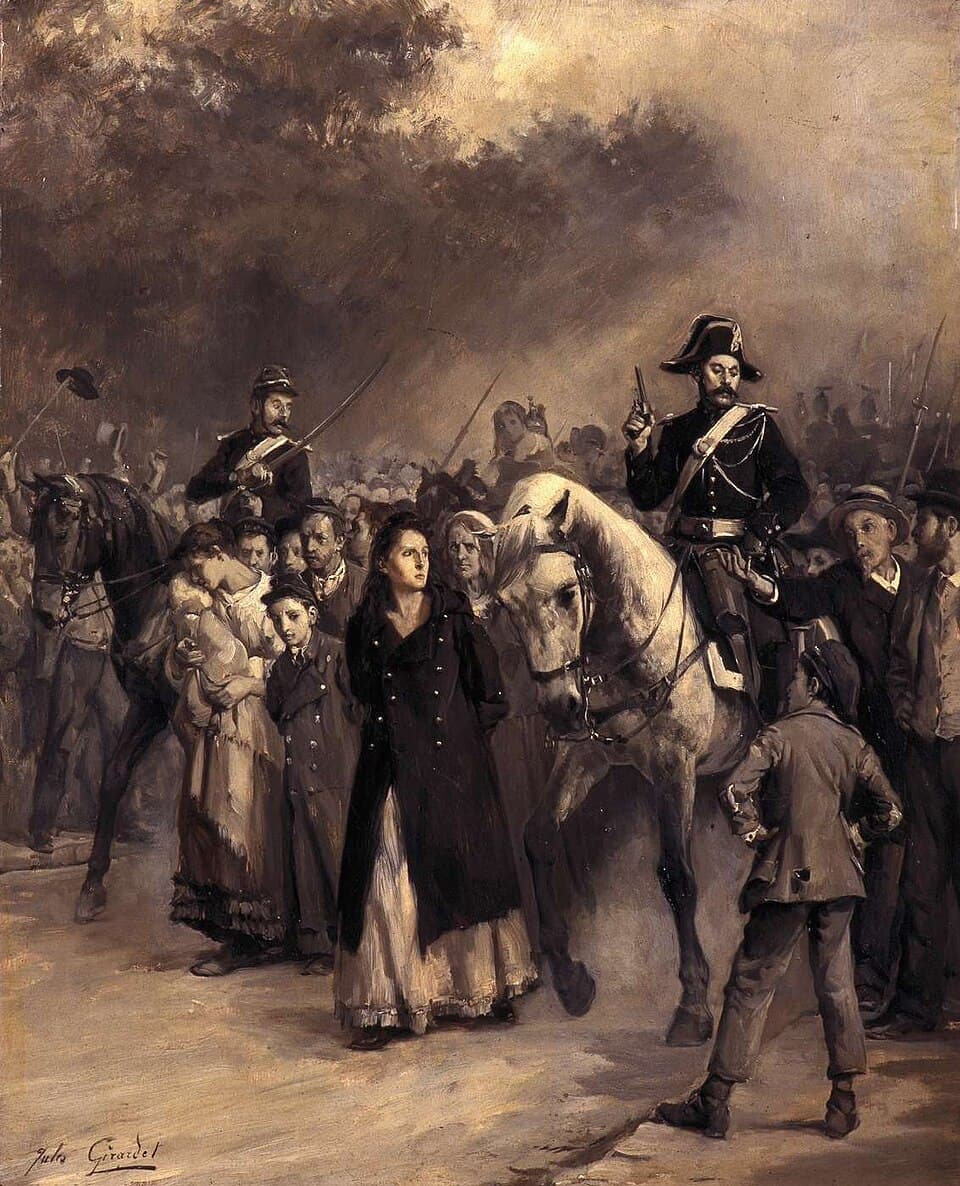
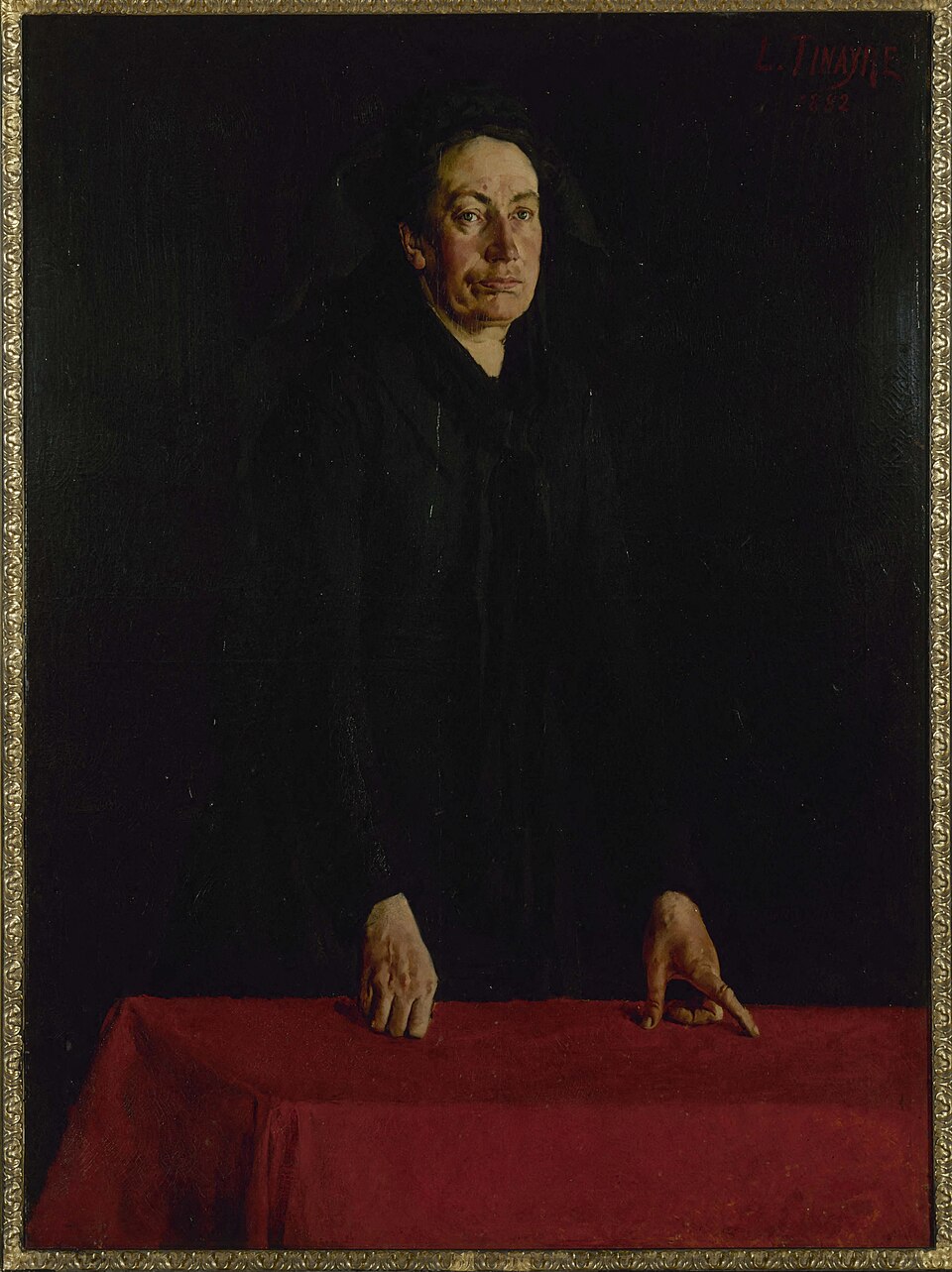
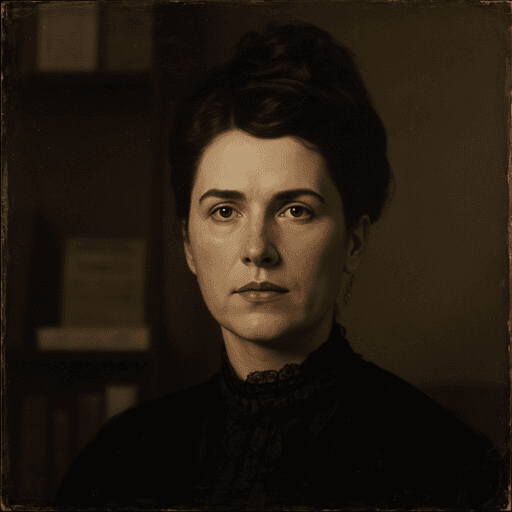
That morning, two young visitors of twelve pushed open the door of a small room in Montmartre. An old woman dressed all in black awaited them, her gaze sharp. Her name was Louise Michel, and she had promised to tell them everything.
—How old were you when you decided to become a schoolteacher?
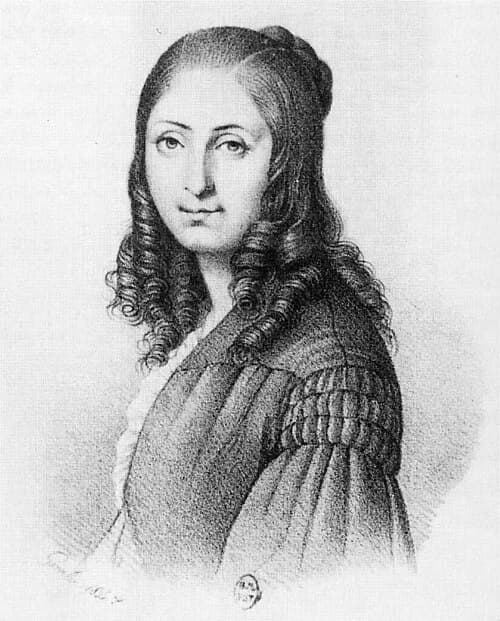
You know, my child, I was very young. At fifteen, in 1845, I already dreamed of teaching little ones to read. Imagine a village in the Haute-Marne, fields everywhere, and poor children who never went to school. I wanted to open the doors of knowledge to them. In 1853, I opened my first school in Audeloncourt. But you had to swear loyalty to Emperor Napoleon III to teach in state schools. I refused. So I started a free school, meaning a school that did not obey the government. It was risky, but my blackboard and chalk were worth more than a crown.
My blackboard and chalk were worth more than a crown.
—What was your classroom like? Did you punish children who didn't listen?
I never raised my hand against a child. In my time, many teachers hit students with a ruler or a stick. I found that shameful. You don't learn through fear, you learn through curiosity. So I would go outside with my students to look at plants, insects, the sky. I told them: observe, touch, ask questions. I even wrote a little book for them, Le Livre du jour de l'an, full of stories to grow by. My classes in Montmartre were filled with poor, underfed children, but their eyes shone. That was my greatest reward.
You don't learn through fear, you learn through curiosity.
—One day you picked up a rifle? Why would a teacher go fight?
Yes, it's true, and it always surprises people. On the morning of March 18, 1871, on the hill of Montmartre, the bells began to ring very loudly: that's what they call the tocsin, the signal of danger. The government wanted to take back our cannons, those that the people of Paris had paid for. So the people came out into the streets, and I with them. I took my rifle, a Chassepot, like the soldiers of the National Guard, that citizens' militia. You know, I did not like war. But when they come to take the bread of the poor, you don't stand idly by.
—Were you afraid on the barricades?
Afraid? Much less than you might think. Imagine a street with no engine noise, just torn-up cobblestones, overturned carts, furniture piled across the road. That's called a barricade: a wall built to stop the soldiers. I was there, behind it, my red sash tied around my waist. That sash was the sign of the Commune, our free Paris. Danger was everywhere, yes. But when you truly believe in something, your heart beats for something other than fear. I felt useful, alive. My comrades fell around me, and that broke me far more than the bullets.
—Afterward, you were tried? What did you say to the judges?
In December 1871, they dragged me before a military tribunal, the court-martial. My friends had been shot by the thousands during the Bloody Week. I did not want any favors. So I said words to the judges that I have never regretted. I demanded my share of lead, meaning the bullets, like my brothers fallen at the Satory camp. I told them that if every heart beating for liberty was only entitled to a bit of lead, then let them kill me. I was not trembling. To ask for mercy would have been to betray my dead comrades.
I demanded my share of lead, like my fallen brothers.
—But why ask to die? That's strange, isn't it?
I understand that surprises you, my child. But think: they had just shot my friends. To live when they were dead seemed almost cowardly to me. I wanted to be faithful to them to the end. And besides, I knew one thing: if the judges killed me, my death would tell the whole world that the Commune was not afraid. In the end, they didn't dare. They sentenced me to deportation, that is, to be sent very far away, to a colony, never to return. It was an island at the end of the world. They thought they could extinguish me. They were very wrong.
—Where exactly were you sent? How far was it?
They shipped me to New Caledonia, an island at the other end of the Earth, months by boat. Imagine: you leave, and you know you may never see your mother or your city again. I lived on the Ducos Peninsula, from 1873 until the amnesty. Amnesty is the pardon that erases a conviction. There, instead of letting myself be consumed by sorrow, I looked around me. I discovered unknown nature, flowers, birds that no one in France had seen. The harshest prison cannot imprison your curiosity. That, they could not take from me.
The harshest prison cannot imprison your curiosity.
—Did you meet the Kanaks there? Were you friends with them?
Yes, and I am still proud of it today. The Kanaks are the people who lived on that island long before us. In 1878, they revolted against those who were taking their lands. Almost all the French deportees despised them. Not me. I gave them my red sash from the Commune, the most precious thing I owned, to tell them: your fight is mine. I also listened to their stories, their tales, their songs. I wrote them down in a book, Légendes et chants de gestes canaques. An oppressed person remains oppressed, whether from Paris or the other side of the world.
—What did you do with your days on the island?
I never stayed idle, you know. In the morning, I walked in nature with a notebook. I noted everything: the shape of a leaf, the song of a bird, the color of a seashell. I had kept my schoolteacher's soul: observe, understand. Then I sent my finds, dried plants, little creatures, all the way to the great Natural History Museum in Paris, thousands of kilometers away. Imagine my joy when I learned that scholars were studying what I had collected on my deportee's beach! Science kept me company when men had put me at the end of the world.
—Is it true that a man shot you and you forgave him?
It is absolutely true, and many did not understand it. On January 9, 1882, I was speaking before a crowd in Le Havre. A man, Pierre Lucas, pulled out a pistol and shot me in the head. I survived, by chance. The man was arrested, and everyone wanted him severely punished. And what did I do? I refused to press charges. I even asked that he be pardoned. I felt he had been set up, manipulated by people more powerful than him. The real culprit was not that poor wretch, but those who used him.
The real culprit was not that poor wretch, but those who used him.
—If you are not forgotten today, what would you like people to remember about you?
What a beautiful question, my child. I spent my life in prison, in exile, wounded, but I never stopped believing in one simple thing: no one should go hungry while others have too much. I was a schoolteacher, a fighter, a writer, but always on the side of the smallest. If you remember one thing from the old lady in black that I am, remember this: never lower your eyes before injustice, even when you are alone. When I died, in 1905, tens of thousands of people followed my coffin. It was not for me. It was for that idea, which never dies.
Never lower your eyes before injustice, even when you are alone.
This imaginary interview was generated by artificial intelligence from sources documented in Louise Michel's profile. It dramatises what the figure might have said based on what we know about them, but does not constitute attested historical testimony. For primary sources and factual documentation, refer to the full profile.