Imaginary interview with Madame de Sévigné
by Charactorium · Madame de Sévigné (1626 — 1696) · Literature · 5 min read
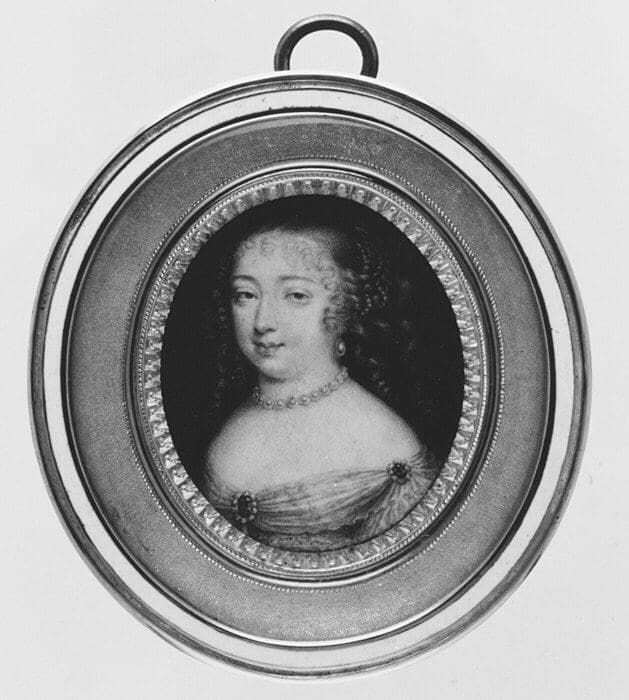
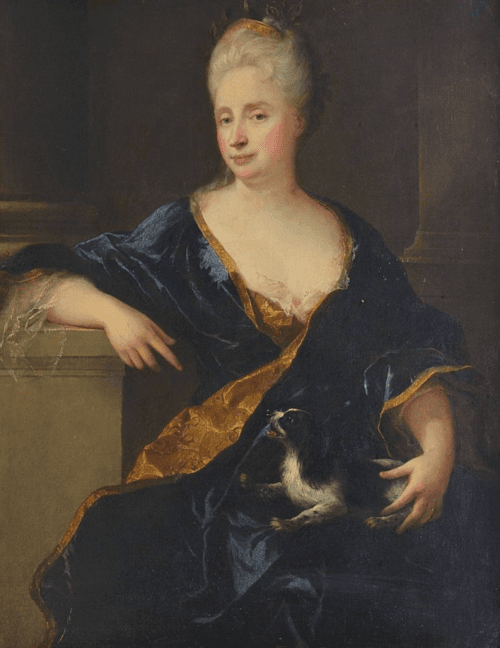
Hôtel Carnavalet, one morning in the winter of 1685. In the large paneled study of the Marais, a goose quill still waits on the inkwell, beside a half-folded letter. The Marquise de Sévigné receives us with her face turned toward the window, as if she were watching, on the road to Provence, for the mail that always delays.
—How did daily writing to your daughter become the center of your life?
Everything changed in 1669, when my Françoise-Marguerite married the Comte de Grignan and they took her away to Provence as if tearing a part of me away. The following February, I wrote to her that I was always looking for her, and that every hour I realized I missed her — that is what it means to love more than is reasonable. Since then, I take up the pen almost every day, sometimes even before finishing my toilette. People think I am busy with a great work; I believe I am only filling the emptiness of a room where my daughter no longer is. Paper replaces the arms one can no longer stretch out.
Paper replaces the arms one can no longer stretch out.
—How do you feel when the mail coach finally brings a reply from Grignan?
You do not know the torment of this distance. Between Paris and the Château de Grignan, a letter travels several days, sealed with wax, entrusted to ruts and rains. I wait, I count the regular posts, I pester my servants to see if anything has come. And when the letter finally arrives, I unseal it as one opens a window onto a beloved face: I read, I reread, I guess her tone, her fatigue, her moods from Provence. Then I sit down and reply at once, because the silence between two letters is heavier for me than anything. One thousand one hundred and twenty times perhaps, I have thus crossed France with a little ink.
—Do you remember the day you were told of Vatel's death?
April 26, 1671, at the Prince de Condé's, in Chantilly. A feast was being given that would make Versailles pale, and poor Vatel, a perfect majordomo, was in charge of it all. Seeing at eight in the morning that the seafood had not arrived, he could not bear the affront he thought was intended for him, and killed himself. I wrote this to my daughter almost without believing it myself. Imagine: a man who runs himself through for some late fish! But it was not the fish, it was honor — that magnificent folly of our time, where one would rather die than fail in one's rank.
It was not the fish, it was honor — that magnificent folly of our time.
—Why did you recount the execution of the Marquise de Brinvilliers with such precision?
Because the thing was monstrous and I could not turn my eyes away. In July 1676, they burned that woman who had poisoned her father and brothers, and threw her ashes to the wind. I wrote to my daughter that we would breathe her henceforth, and that through the communication of little spirits we would catch some poisonous humor. People will say that is a very dark remark; but horror calls for wit, it is my way of standing firm before the abyss. I am curious, I admit, curious about everything that this Court and this city produce that is great and dreadful. The pen serves that purpose too: to look straight at what one would not dare say aloud.
—What did you feel at the arrest of Nicolas Fouquet in 1661?
A blow to the heart, and a loyalty that never left me. Fouquet, the Superintendent of Finances, was my friend, a man of wit and generosity, and then in 1661 the king had him seized to prefer Colbert. His disgrace was total, and that was when one saw who truly loved him. I followed his trial as one watches over a sick person, writing to Monsieur de Pomponne my anxieties for that afflicted man. Many abandoned him out of prudence; I did not have the courage to do so, or rather I had too much courage for that. One does not drop a friend because the prince's favor has left him — that would be to have loved only his fortune.
One does not drop a friend because the prince's favor has left him.
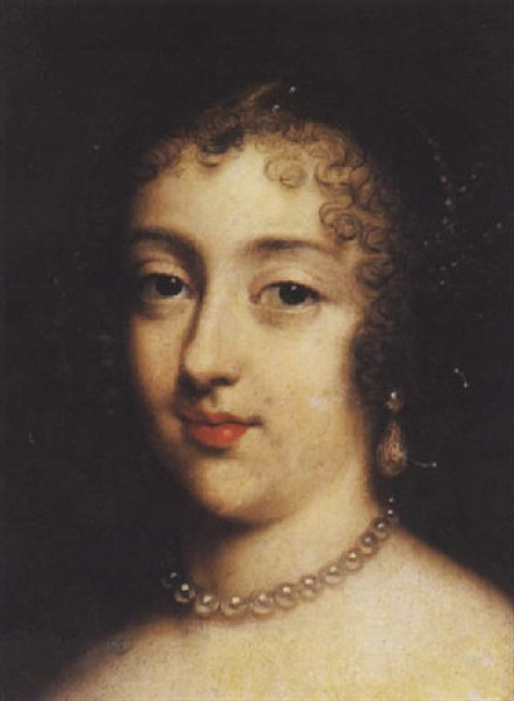
—Was it not dangerous to defend a man who had fallen out of favor with the king?
Dangerous, certainly, and my friends made me feel it keenly. Writing in favor of Fouquet during his trial in 1664 was to gently brave His Majesty's wrath. But I was not haranguing anyone in public squares; I confided my alarms to Monsieur de Pomponne, in those letters where I wished him such good nights and such fine days that his passion for the afflicted would give him a share in my anxieties. That is all my courage: discreet ink and an obstinate heart. A woman of my station has no other weapon than her loyalty and her pen — but that is sometimes enough for the centuries to remember.
—What did those salons, where you were introduced so young, represent for you?
They were my true schools. From my youth, I was taken to the Hôtel de Rambouillet, that temple of preciosity where language was polished like a diamond, where Voiture and Corneille engaged in battles of wit. There I learned that a well-conducted conversation is worth a book, and that a woman can be an honnête homme in her own way, without yielding any of her grace. Later, I counted as close friends La Rochefoucauld, who probed the human heart better than anyone, and good La Fontaine. In those circles, my judgment on works mattered; I was listened to. Those are the hours that sharpened the pen I use today for my daughter.
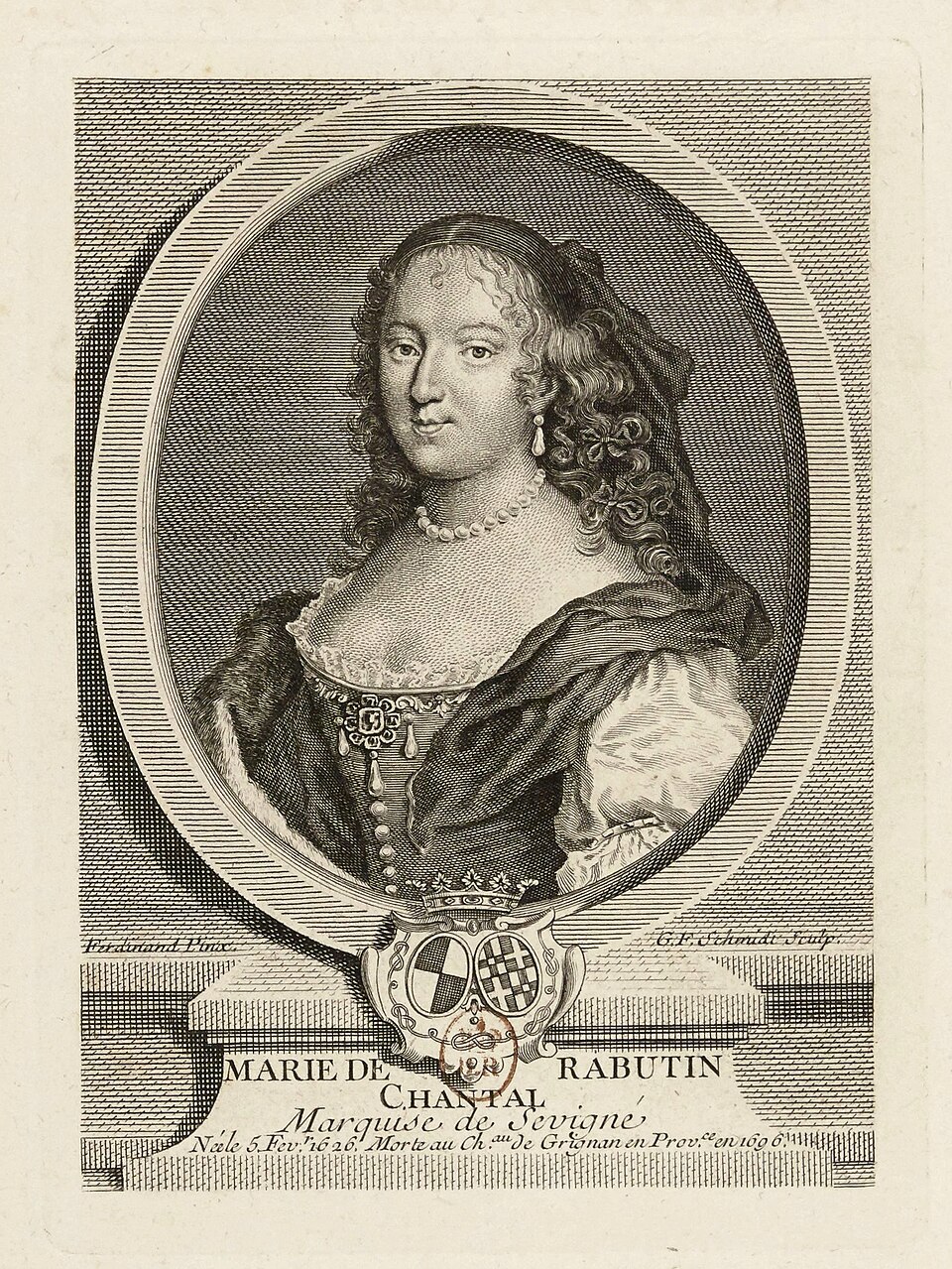
—How would you describe the friendship that bound you to La Rochefoucauld?
A friendship of mind and heart, one of those that thrive in literary salons and survive all winters. La Rochefoucauld saw clearly into our vanities, and yet that disillusioned man could be the tenderest of friends. We often met at Madame de La Fayette's, and we would talk about everything — books, the intrigues of the Court, the absurdities of the world. His death in 1680 left a terrible void; it was like losing a mirror in which I had long watched myself think. Friendships of my kind are not replaced: they leave, in the conversation of days, a silence that no one else fills.
—Tell us about this writing ritual that occupies your mornings.
I rise early, and the first thing I seize is my goose quill, even before my toilette is finished. I am found thus, half-coiffed, with the inkwell at hand, receiving some intimate friend while I cover my pages with tight, rapid handwriting. I write for hours without tiring, for material never fails me: news from the city, a book read by candlelight, a word from my daughter to comment on. Then comes the ceremony: folding, sealing the house seal with wax. This pen is my craft without my ever having believed I practiced one — the sweetest of labors.
—You often mention in your letters the cost and slowness of mail — why this concrete concern?
Because love, sir, is also counted in sous and days of travel! Each letter to Grignan must cross all of France, and I speak of it as port payé, thinking of what it costs my correspondents as well as myself. The carriage and post horses are the true heroes of my correspondence: without them, my heart would never reach Provence. I do not disdain these details of mud and money, for they are the underside of my tenderness. A love note is worth nothing if it stays in the inkwell; it must roll, wear out at the relay stations, arrive at last all crumpled from its journey — only then has it kept its promise.
Love is also counted in sous and days of travel.
Read further

This imaginary interview was generated by artificial intelligence from sources documented in Madame de Sévigné's profile. It dramatises what the figure might have said based on what we know about them, but does not constitute attested historical testimony. For primary sources and factual documentation, refer to the full profile.