Imaginary interview with Madame de Staël
by Charactorium · Madame de Staël (1766 — 1817) · Literature · Philosophy · 6 min read
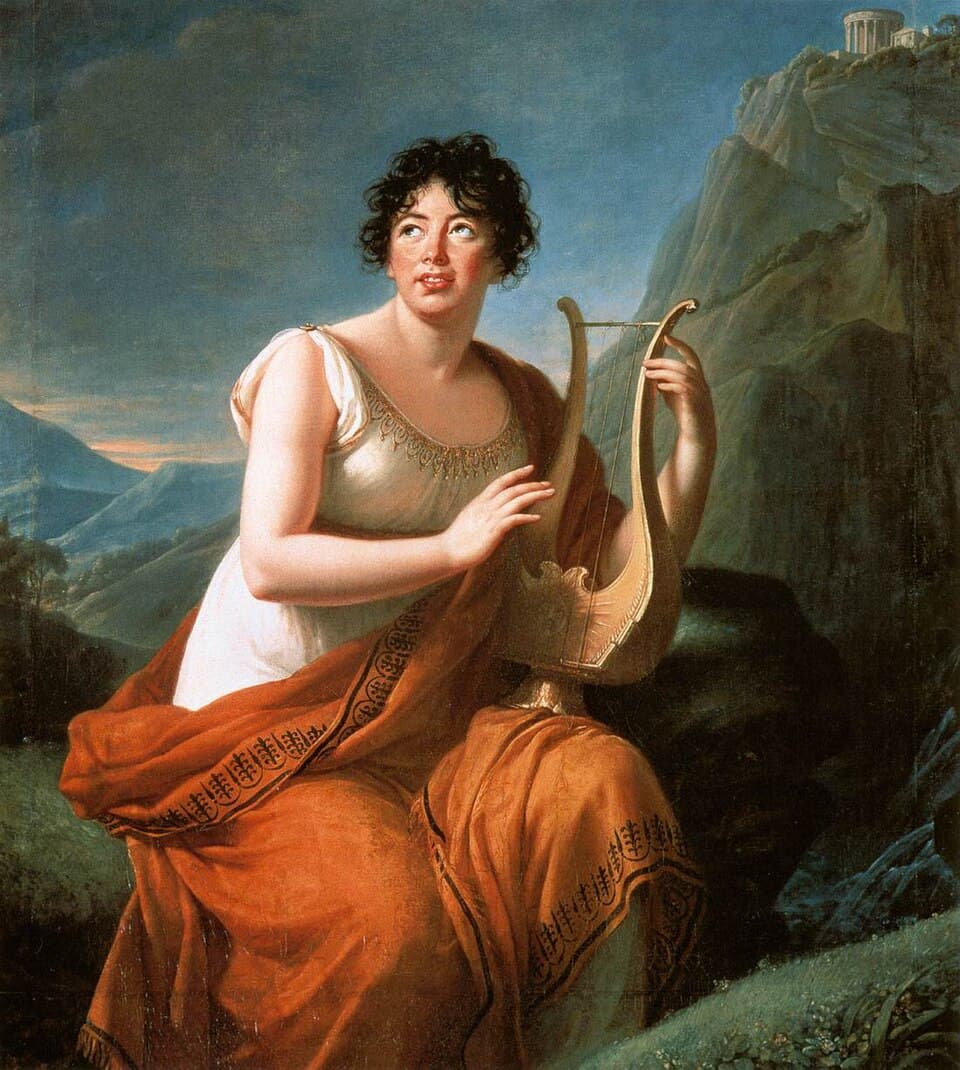
October 1813. The traveler climbing the avenue of the château de Coppet, on the shores of Lake Geneva, finds Madame de Staël in a salon where the fire struggles against the first Alpine chills. A twig of wood twists between her fingers as she speaks, lively, imperious, as if every idea must be seized before it escapes.
—Before glory and exile, there was childhood. What remains in you of those years spent in your father's salon?
Everything, sir, absolutely everything. From the age of twelve, I was placed on a stool near my father Jacques Necker's table, and I listened to Diderot, d'Alembert, all those philosophes who made conversation an art as serious as geometry. They thought me too young to understand; I already understood that thought is forged in the friction of minds, never in solitude. In all my apartments in exile, I kept a bust of my father — not out of filial devotion, but because he remains for me the model of the enlightened man who serves without betraying himself. It is from that salon, more than from any book, that I acquired this curiosity that has never left me.
Thought is forged in the friction of minds, never in solitude.
—You published your first essay very young. How did you go from the listener on the stool to the writer?
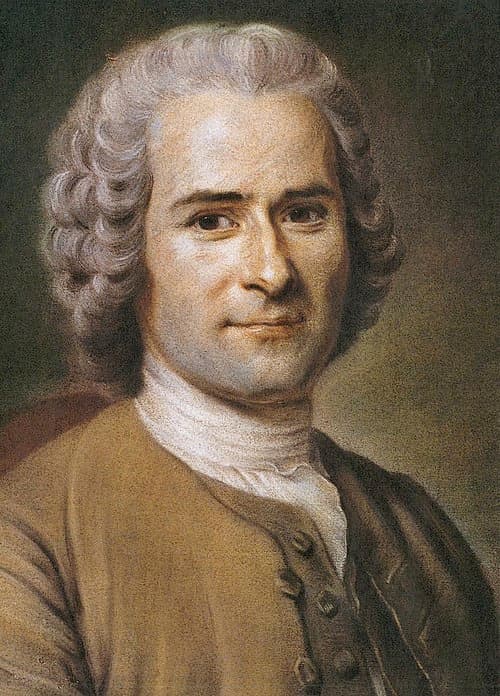
At twenty-two, I dared to write those Letters on the Works and Character of Jean-Jacques Rousseau. It was in 1788, the world of the Enlightenment was ending its dusk without knowing it. Rousseau had moved me as he moves every young soul: he taught me that feeling is not the enemy of reason but its secret source. I wrote at night, with a quill, in that fever that has never left me — they say I compose while walking, talking, twisting some little stick between my fingers. That first book was only a homage; but already I felt that one could judge a writer without ceasing to revere him. That, I believe, is the very definition of freedom of the mind.
Feeling is not the enemy of reason but its secret source.
—Let us speak of your great work. Why did you want to present German thought to the French?
Because we were suffocating, sir. The France of the Empire swore only by Classicism, that cold elegance that mistakes rules for genius. Crossing the Rhine, at Weimar, I met Goethe and Schiller, and I discovered a literature that dared to weep, to dream, to plunge into the infinite. De l'Allemagne was the fruit of those journeys: I show Kant, Schlegel, all that philosophy that makes Romanticism not a fashion but a rebirth. I write that we must adopt romantic literature not as imitation but as a national source. The poetry of the ancients is purer as art; that of the moderns draws more tears. Between these two truths lies the future of our spirit.
A literature that dared to weep, to dream, to plunge into the infinite.
—That book met a singular fate even before publication. What happened?
In 1810, the imperial police entered my publisher's and seized the ten thousand copies already printed. They were pulped, like grinding grain. The minister wrote me that the air of France did not suit me — that is how an Empire responds to a book about poetry! I was given three days to leave the country. I understood then that De l'Allemagne frightened more than an army, for a book crosses borders that soldiers guard. It had to wait until 1813 and the freedom of London to finally appear. Destroying a work only proves its strength; never was censorship a finer tribute.
A book crosses borders that soldiers guard.
—Napoleon pursued you relentlessly. How do you explain such tenacious hatred?
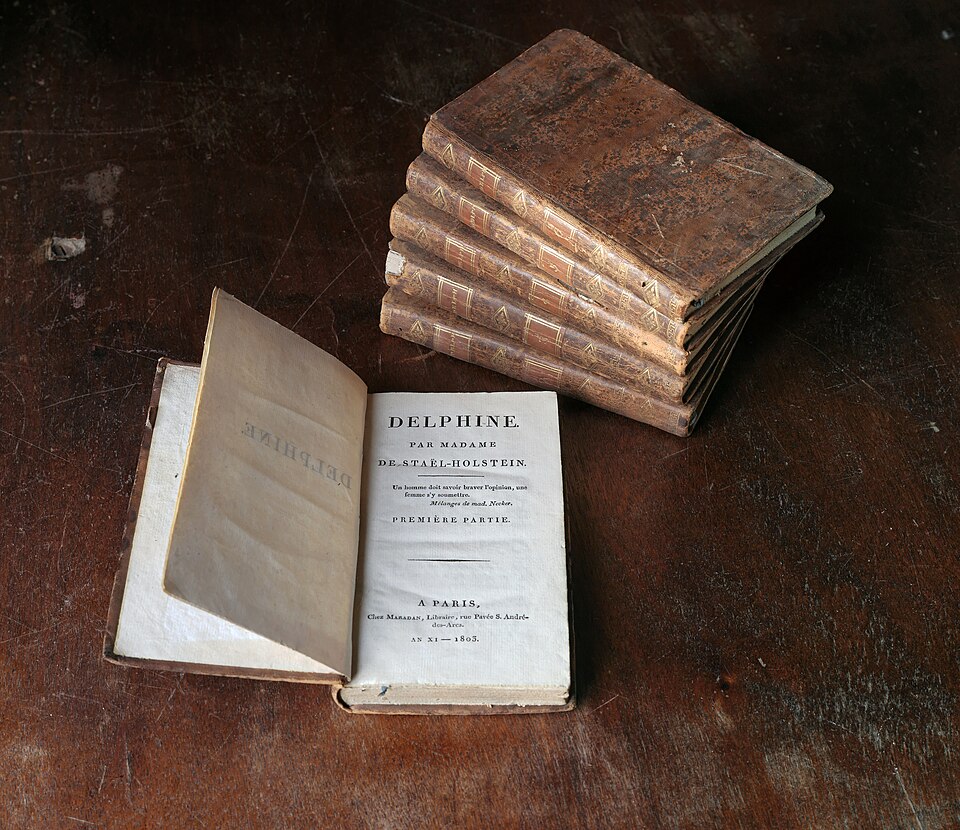
He could not tolerate that an independent woman existed in France. That is my entire crime, and I wrote it plainly in Ten Years of Exile: my only fault in his eyes was that I refused to submit. After De la littérature in 1800, which superbly ignored his glory, and then after Delphine, he ordered me to stay forty leagues from Paris. I replied that I did not measure distances in political magnitudes. A man who commanded all of Europe feared a salon, a pen, a conversation. He had guessed, better than anyone, that the mind that cannot be bought is the only power a despot never possesses.
My only crime was that I refused to submit.
—Do you remember that flight across Europe in 1812?
How could I forget it? I left Coppet like a thief, without luggage, so the spies would suspect nothing. And then came the great race: Switzerland, Austria, thousands of leagues to Saint Petersburg, where Tsar Alexander received me as a natural ally against the man ravaging his empire. Then Sweden, and finally England. Think of this absurdity: I had to cross half the continent to escape a single man. At every posting station, I held my notebook, jotting down faces, cities, ruins. This flight made me more European than any theory: I understood that tyranny unites its victims across languages and borders.
Tyranny unites its victims across languages and borders.
—Coppet became a famous name throughout Europe. What did you do there with your friends?
We lived on wit, sir, to the point of delightful exhaustion. Around my table gathered Benjamin Constant, August Wilhelm Schlegel, Sismondi, and so many others whom the Emperor persecuted or scorned. We were called the Coppet group, and I am prouder of that than of any title. The evenings never ended: we read tragedies aloud, improvised scenes, debated philosophy until two or three in the morning, the black lake sleeping beyond the windows. What Napoleon called a nest of outlaws was in truth the liveliest hearth of thinking Europe. You can banish bodies; you cannot banish a conversation.
You can banish bodies; you cannot banish a conversation.
—You speak of outlaws. What did it mean to you to welcome all those exiles?
Being proscribed oneself teaches one to recognize one's own. When I was banished from Paris, then from all of France, I understood what those émigrés feel when politics tears them from their soil. So Coppet became a refuge where everyone found a room, a table, attentive ears. Lord Byron himself later came to taste that air of freedom. I believe nothing is more precious, in times of tyranny, than a place where thought can still breathe freely. My château was in turn my prison and my citadel — the Emperor confined me there, and I made it the center of all he wanted to destroy. That is my sweetest revenge.
My château was in turn my prison and my citadel.
—Your novels feature exceptional women broken by society. Why was this theme so close to your heart?
Because I lived it in my own flesh. Think of Delphine, that free woman whom the world condemns for simply having wanted to think and love according to her conscience. Then Corinne, my Italian improvisatrice, who in Rome enchants crowds with her genius yet dies for not being loved as she loves. A woman of genius, sir, society does not forgive: it admires and punishes her in the same gesture. I wanted to show this rift, because it is my own. The glory I so desired, what is it if it can do nothing for happiness? A noise, a commotion that wearies the soul. That is what my heroines paid for daring to shine.
A woman of genius is admired and punished in the same gesture.
—This figure of Corinne, the improvisatrice crowned at the Capitol, what does she really represent for you?
Corinne is the dream that reality denied me: a woman whose talent is not only permitted but celebrated by an entire people. In Italy, the improvisatrice mounts the platform, composes verses on the spot before the crowd, and no one thinks to reproach her brilliance. I placed there, under the Roman sky, that enthusiasm which I make the highest virtue of the soul — that exaltation that lifts the being above mediocrity. Corinne, or Italy traveled all over Europe because everyone recognized in it their own thirst to exist fully. Female genius is not a threat; it is a light that people stubbornly try to extinguish, and which, fortunately, always rekindles.
Female genius is a light that people stubbornly try to extinguish, and which always rekindles.
—You made the idea of progress the heart of your thought. Do you still believe in it, after so many trials?
More than ever, sir, for doubt would be cowardice. In De la littérature, I dared to write that the perfectibility of the human species is not a vain idea — and that political freedom and intellectual freedom have the same source and sustain each other. The entire legacy of the Enlightenment is contained in that sentence. We have seen the Terror, we have seen the despotism of the Empire; yet I refuse to believe that humanity is regressing. It stumbles, it rises, it learns. One generation censors a book, the next crowns it. That is why I still write, despite exile, despite fatigue: a book is a seed cast across the years, toward readers I will never see.
A book is a seed cast across the years.
—If you had to name the lesson of your entire life, what would it be?
That no power, not even that of a Napoleon, can command the conscience of a single being who refuses to bend. I was banished, watched, dragged from one European court to another from Coppet to Saint Petersburg; my books were burned. And here I am, still speaking, still writing, free in my thought as on the first day. Brute force passes; De l'Allemagne remains. I have learned that a constitutional liberalism, which limits power by law and guarantees the freedom of each, is worth more than all military glories. If I am read in a century, I would like this to be remembered: thought is the last territory that tyranny never conquers.
Thought is the last territory that tyranny never conquers.
Read further
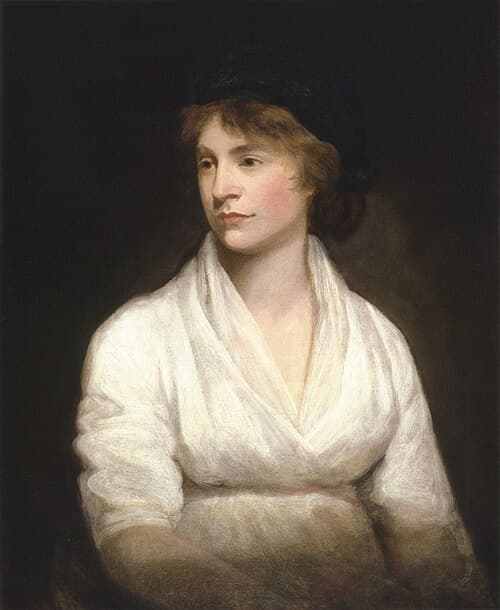
This imaginary interview was generated by artificial intelligence from sources documented in Madame de Staël's profile. It dramatises what the figure might have said based on what we know about them, but does not constitute attested historical testimony. For primary sources and factual documentation, refer to the full profile.