Imaginary dialogue between Benjamin Constant and Madame de Staël
by Charactorium · Madame de Staël (1766 — 1817) · Literature · Philosophy · 6 min read
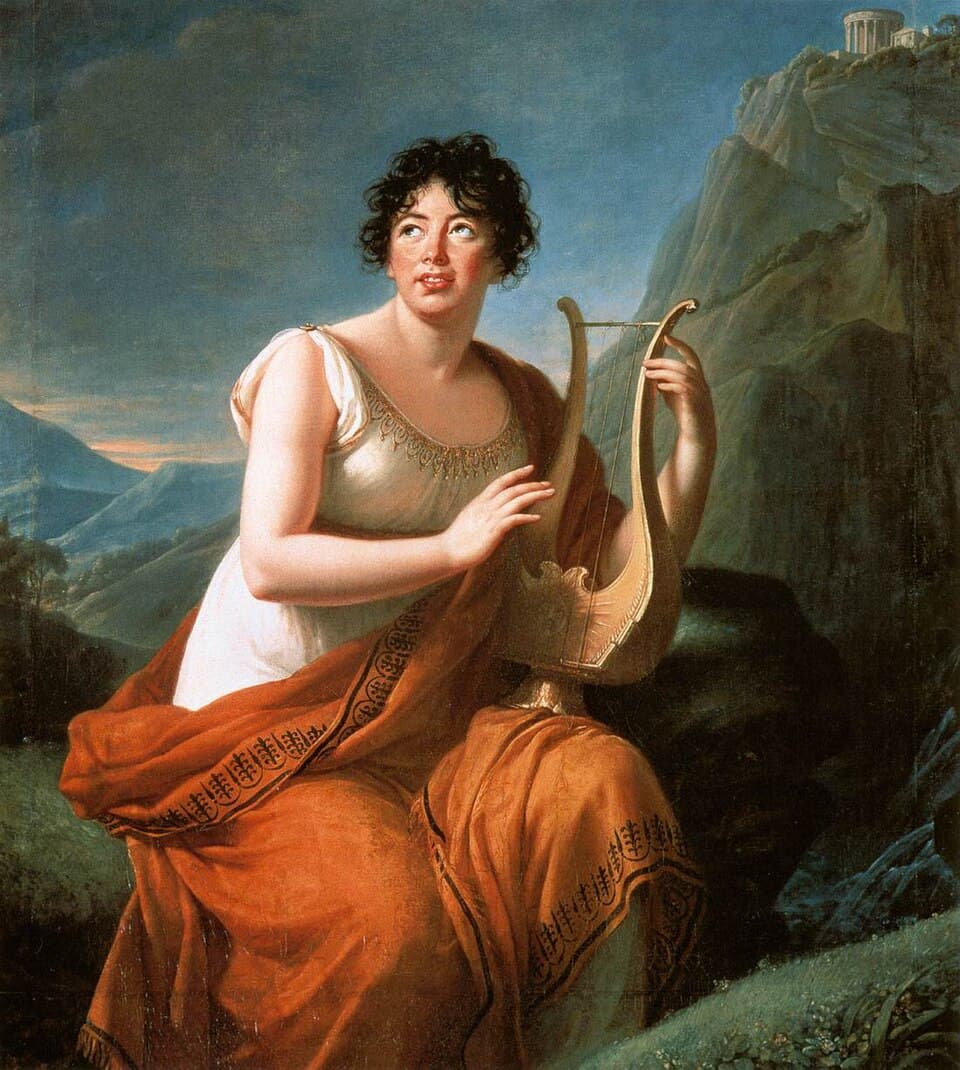
It is in the library of the Château de Coppet, one autumn evening in 1807, that Benjamin Constant finds Germaine, still exhilarated by the European success of Corinne. A small wooden twig twists between her fingers, and the candlelight trembles over the scattered manuscripts covering the large table. They have known each other for over ten years, since that Parisian salon where their minds recognized each other, and Constant comes tonight not as a circle companion, but as a curious witness to everything hidden behind the great lady whom Europe admires and Napoleon fears.
—Germaine, even before I knew you, you were already the child of the salons. Do you remember those dinners at your father's, at twelve years old, among the philosophers?
How could I forget? I was a little girl seated among the Encyclopedists, and my father, Necker, never sent me away with the children. I listened to Diderot, I listened to those men who made reason a celebration, and I dared to respond. They looked at me with astonishment, sometimes with amusement, but they let me speak. It was there, my friend, that everything was forged: this hunger to understand that has never left me. My father reigned over those conversations as he did over the kingdom's finances, with that gentle gravity I loved so much. I keep his bust near me, you know. The Philosophes gave me a critical mind; my father gave me a heart. I owe it to that extraordinary education that I have never known how to remain silent before the powerful.
The Philosophes gave me a critical mind; my father gave me a heart.
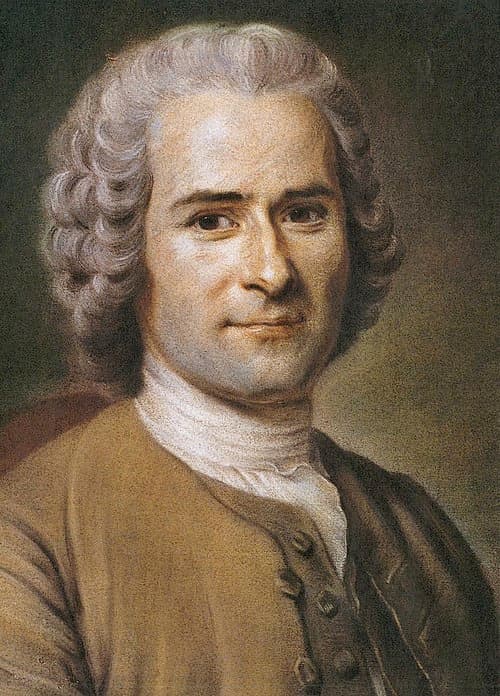
—Your first Letters on Rousseau, in 1788, you were only twenty-two. Why start with him rather than under your own name?
Because Rousseau had taught me to feel before learning to think. By paying him homage, I was already discovering my own voice — one never speaks so well of oneself as when speaking of another one admires. I was twenty-two, and I wanted to be read not as Necker's daughter, but as a mind. It was audacious: a young woman daring to judge the greatest writer of her century! But Rousseau had made sensibility a moral force, and I already felt that literature could not be separated from life, from feeling, from commitment. That little book was like a threshold crossed. I was already putting into it what would make all my work: the idea that analyzing a thought is also taking a stand for a certain way of being in the world.
One never speaks so well of oneself as when speaking of another one admires.
—With On Literature, in 1800, you dared to link works to the societies that produce them. Where did you get such a novel idea?
From the obvious, my dear Benjamin! A literature does not fall from the sky: it is born from a climate, institutions, a history. I wanted to show that the melancholy of the North and the clarity of the South are not whims, but the fruit of peoples and their liberties. That is where I set out this opposition between the literature of the North and that of the South, which has so occupied me since. And I defend there an idea dear to me: the perfectibility of the human species. Political liberty and intellectual liberty have the same source and support each other — I am more convinced of it than ever. That is why a tyrant cannot tolerate true literature: it is, by nature, an act of freedom.
Political liberty and intellectual liberty have the same source and support each other.
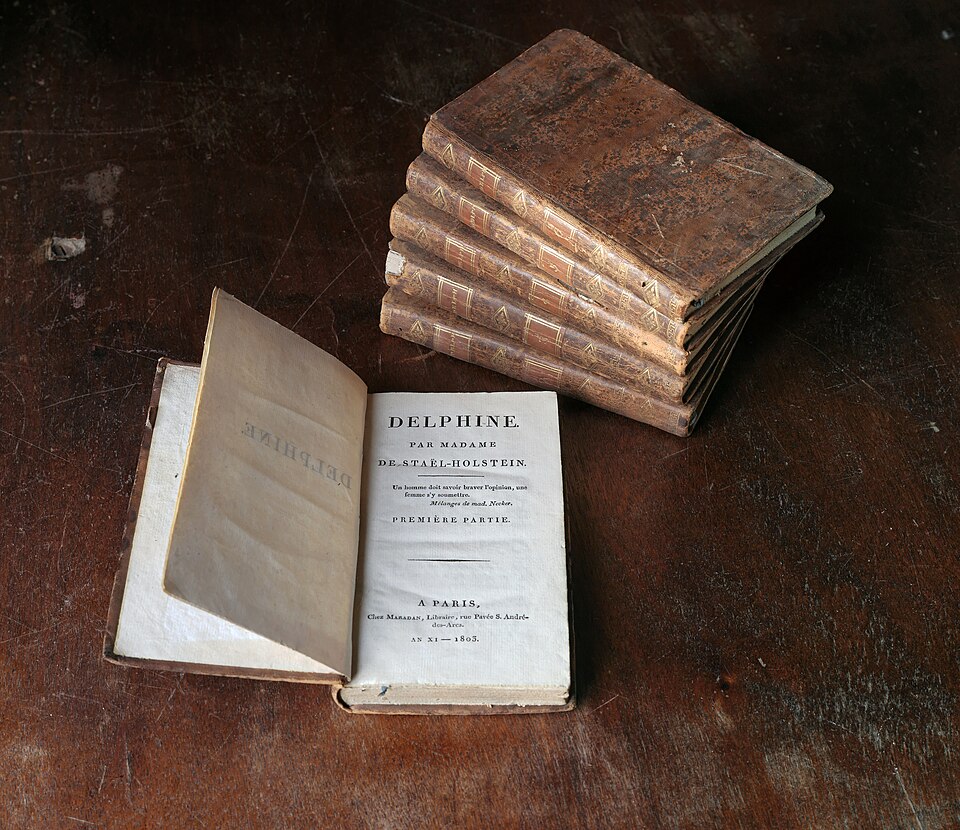
—This year, Corinne is sweeping Europe. Through your improviser, aren't you defending women's genius against the mediocrity of the world?
You have seen through me, as always. Corinne is an improviser, she composes and recites before the Roman crowd, crowned on the Capitol — and yet society condemns her for that very genius that makes her shine. I wanted to tell how hard it is for a woman to bear a gift that the world reproaches her for. They want her graces, but never glory. And I myself sometimes wonder what this glory I have so desired is worth, if it can do nothing for happiness. The Italy of Corinne is the land of art and freedom, the opposite of that rigidity imposed on us in France. Through her, I have put everything I know about the price a woman pays for her mind.
They want her graces, but never glory.
—You who have so often spoken to me of the Consul, tell me: why does Bonaparte pursue you with such relentlessness, even banishing you forty leagues from Paris?
Because he cannot bear that there exists in France an independent woman — that is my whole fault. Bonaparte wants subjects, not minds; he has me watched like a conspirator, though I have never dealt with anything but literature and morality. When he ordered me to move away, I replied that I did not know how to measure distances in political magnitudes — one must laugh at what wounds us. My only crime in his eyes was not wanting to submit. He forgives everything except freedom of mind. You, who are well placed to know, Benjamin, know that it is not ambition that moves me, but the horror of bending. I miss Paris terribly; but I will not disown a single line to return there.
He forgives everything except freedom of mind.
—This château where we are tonight, Coppet, has become our refuge for all. What does it represent to you, who make it the heart of your life in exile?
Coppet is my consolation and my substitute homeland. When Paris is closed to me, I gather here everything Europe has in the way of free minds — you, Schlegel, Sismondi, and so many others the Consul pushes aside or despises. We talk until two or three in the morning, we read, we improvise, we remake the world on the shores of this lake my father loved. What Bonaparte scatters, Coppet gathers. They think we are in exile; we are in truth at the center of everything that thinks. Without you, without this circle, the distance would have broken me. But here, friendship and conversation give me back what politics tears from me. Coppet is not a prison: it is the hearth where I still hold my ground, through the mind, against the one who drives me away.
What Bonaparte scatters, Coppet gathers.
—You have just returned from Weimar, where you saw Goethe and Schiller. What did you go looking for among those Germans that France still ignores?
Another way of feeling, my friend. France believes that all the world's spirit resides in its classical clarity; the Germans showed me a literature that delves into the soul, into the infinite, into what I call enthusiasm — not agitation, but that exaltation which elevates man above himself. Goethe, Schiller, Schlegel: they think of poetry as a national source, not as an imitation of the ancients. That is what I want to bring back to France: that we must adopt Romanticism, not out of fashion, but to rediscover our own roots. I am gathering my notes, my travel journals, for I feel that a great book is being prepared — a book that will tell the French what they do not want to hear: that greatness can come from elsewhere, from beyond the Rhine.
We must adopt Romanticism, not out of fashion, but to rediscover our own roots.
—You already speak of fleeing further if you are hounded again. How far are you willing to go to escape his surveillance?
To the ends of Europe, if necessary. I feel that this man will not leave me in peace as long as he rules; every book I publish becomes a pretext to push me further away. If he closes France, I will go to Germany; if he closes Germany, I will go to Russia, Sweden, England. They will not tear from me the right to think and write wherever I still breathe. I know it would be a frightening journey, of roads and uncertainties — but exile has taught me that the homeland of a free mind is everywhere one does not bend. You who know my terrors, Benjamin, you know that I tremble before many things; but before him, never. I would rather run across all Europe than kneel in Paris.
The homeland of a free mind is everywhere one does not bend.
—Here, in the evenings, you animate our gatherings without ever tiring. But when everyone has retired, what remains of Germaine, alone?
You ask the only question no one dares. When the candles go out and you have all gone to sleep, what remains is anxiety — that agitation of thought that never calms. I twist my little wooden twig, I walk, I start twenty letters. Solitude frightens me more than Bonaparte; that is why I keep you so late. Conversation is my true element, more than writing: in silence, I feel exiled even from myself. But it is also in those hours that my truest pages are born, for the night does not lie. You have often seen me thus, torn between the brilliance of salons and that melancholy of the North I carry within me. That is my secret, my friend: I fear silence more than tyranny.
Solitude frightens me more than Bonaparte.
—Everywhere they reproach you for being a woman and wanting glory. To me, tonight, tell me frankly: do you regret that ambition?
No — and yes, both together. I do not renounce any of my ambition: without it, I would have written nothing, dared nothing against the most powerful of men. But I confess to you alone, glory itself, which I so desired, what is it if it can do nothing for happiness? A noise, an agitation that wearies the soul. They punish in me the woman before the writer; they would forgive me for having genius if I consented to hide it. That is both my wound and my honor. I would like to be loved as much as admired, and I too often feel that the one excludes the other. But no matter: I prefer an ardent and contested life to a peace bought by silence. That is what I would say only to you.
They would forgive me for having genius if I consented to hide it.
Read further
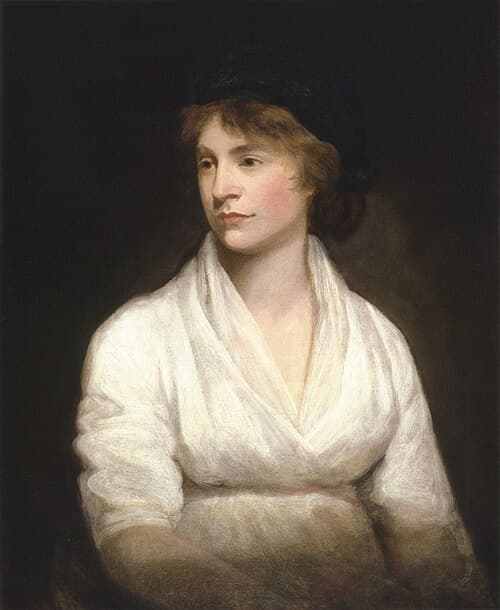
This imaginary interview was generated by artificial intelligence from sources documented in Madame de Staël's profile. It dramatises what the figure might have said based on what we know about them, but does not constitute attested historical testimony. For primary sources and factual documentation, refer to the full profile.