Imaginary interview with Marie-Antoinette
by Charactorium · Marie-Antoinette (1755 — 1793) · Politics · 5 min read
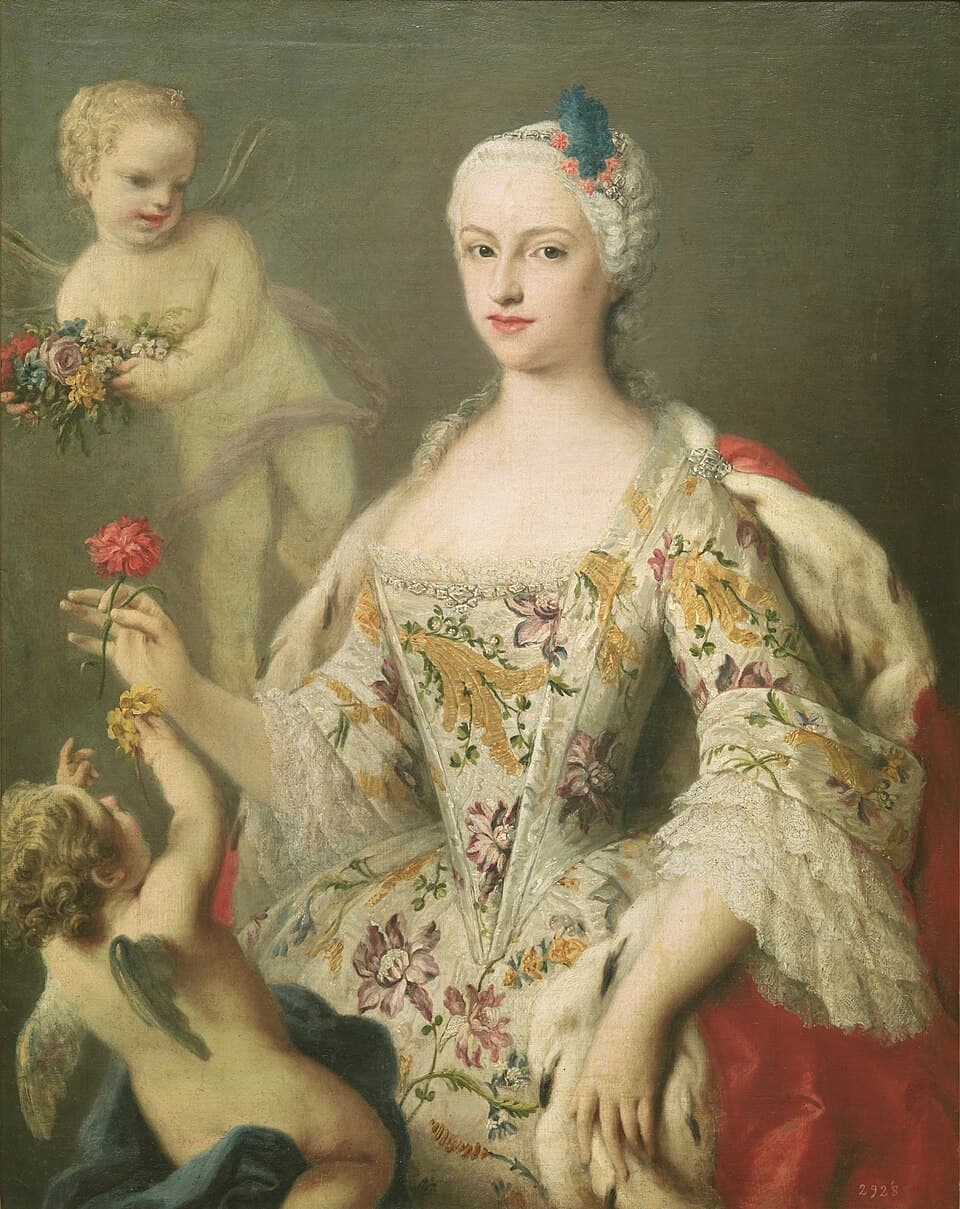
October 1793. In a damp cell at the Conciergerie, by the light of a candle, a thirty-seven-year-old woman in a white dress agrees to answer, one last time, questions that are not those of her judges. She speaks softly, but without trembling — as one remembers a garden when one no longer has a garden.
—Before being Queen of France, you were a child in Vienna. How do you remember that passage from Austria to France?
I was only fourteen. They led me to a border, on an island in the Rhine, and there they stripped me of everything that came from home — my dresses, my stockings, even the ribbon in my hair. They dressed me from head to toe in the French style, so that nothing Austrian would cross with me. That day I understood that I had been bought like a treaty is sealed. At the Hofburg, my mother, Empress Maria Theresa, wrote to me tirelessly; I replied that I was striving to deserve her approval. And yet, despite all that French clothing sewn onto my skin, they never stopped calling me the Austrian. You can change a child's dress. Not the suspicion she carries behind her.
You can change a child's dress. Not the suspicion she carries behind her.
—You are said to be an accomplished musician. Where does this love of music come from?
From Vienna, always from Vienna. As a child, I placed my fingers on the harpsichord before I could speak French well, and they say that a little Mozart, younger than me, came to play at my mother's court. At Versailles, I wanted my former teacher, Gluck, near me, and I defended his music against those who preferred Piccinni — the whole city tore itself apart over which of the two made people weep more truly. Madame Campan said that I gathered in my chamber whatever was most brilliant in the arts. It was true. When I touched the pianoforte in the evening, in my private apartments, I was no longer a queen under surveillance: I was only an ear, and that was enough for me.
—You had a village built in the gardens of Versailles. What were you seeking in that Hamlet?
To breathe. You do not know what etiquette is: a lever where thirty courtiers watch you put on a chemise, each having the privilege of handing you such and such a garment, according to an order set by Louis XIV himself. I was suffocating. So at the Petit Trianon, they let me be mistress in my own home, and I had my Hamlet built: cottages, a dairy, sheep that I led with my ladies. They said I was playing at being a shepherdess, that it was a ruinous whim. Perhaps. But it was the only place where they knocked before entering, where I chose who sat at my table. I never wanted to play at the poverty of the people. I only wanted, for one hour, to be watched by no one.
It was the only place where they knocked before entering.
—This taste for withdrawal, your enemies turned against you. Did you understand that?
Too late, I admit. By closing the door of the Petit Trianon to all the court nobility, I made a thousand enemies among those no longer invited. A slighted courtier is more dangerous than a pamphleteer. From that came the rumors: that fortunes were being spent, that the queen despised her people. The Affair of the Diamond Necklace, in 1785, where my name was used for a swindle I never plotted, only poured oil on that fire. I learned that far from Versailles, a queen's silence is always filled with the lies of others. They did not forgive me a thatched village; they attributed to me palaces I did not have.
A queen's silence is always filled with the lies of others.
—Let's talk about fashion. They say a simple portrait caused a scandal. What happened?
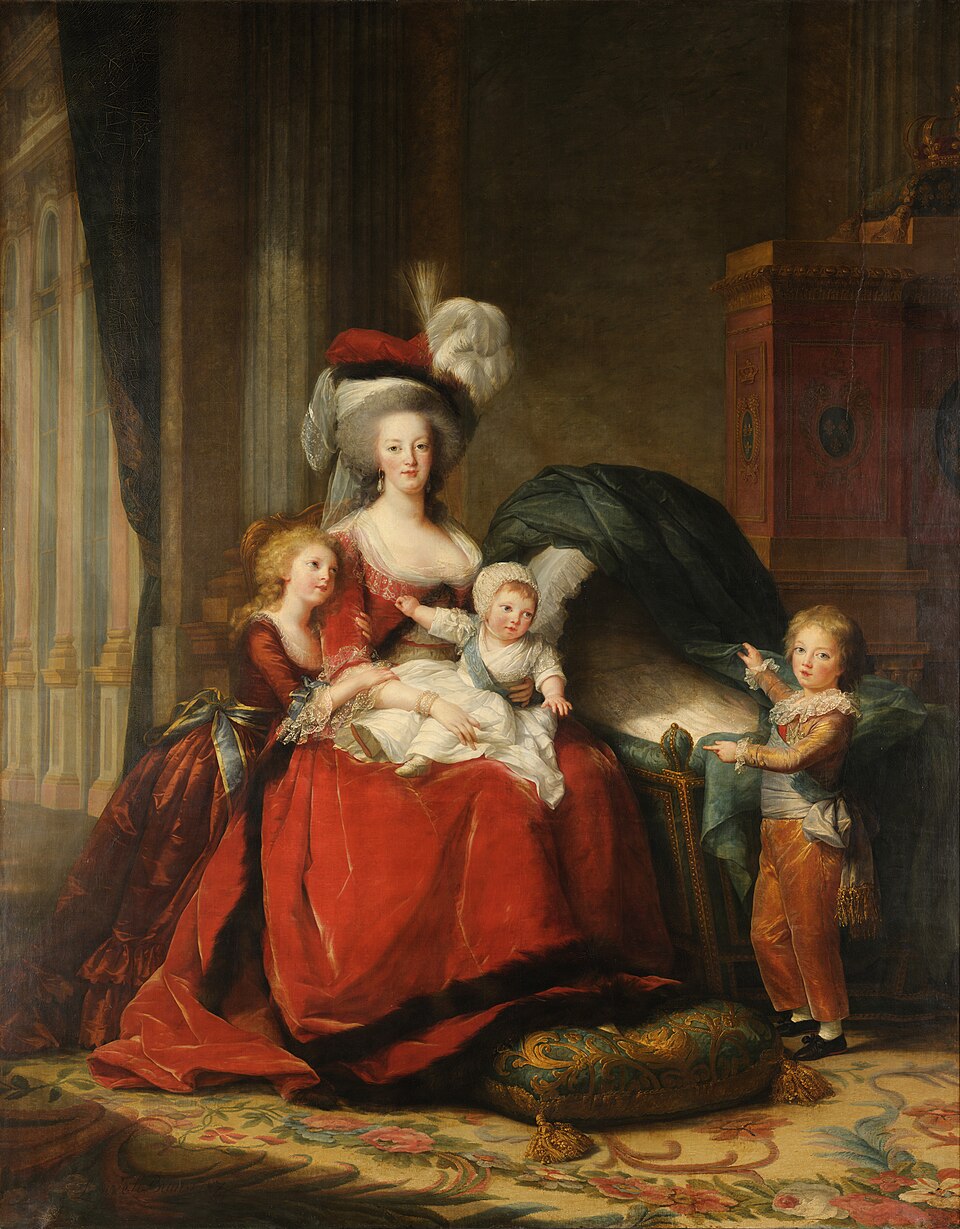
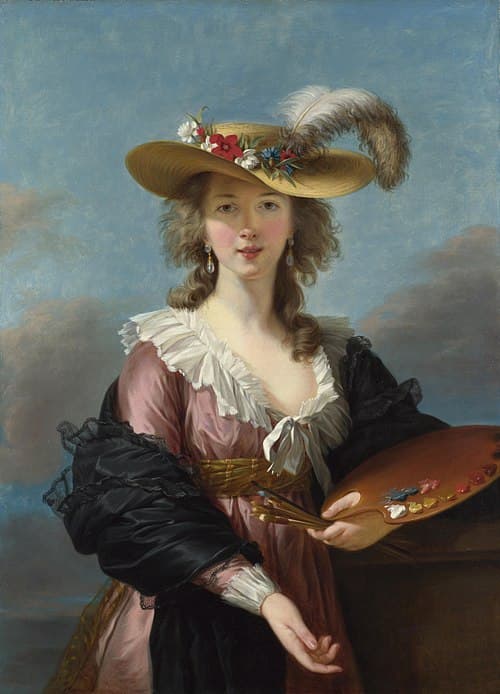
A white muslin dress, that was all the crime. I had posed for Madame Vigée Le Brun wearing a simple chemise dress, without panniers, without framework, like breathing on a summer morning. They cried indecency: a queen of France in peasant's linen! Yet, see the irony — the following year, all of Europe wore my chemise. With my milliner, Rose Bertin, whom they called the minister of fashion, we had lightened women's bodies of those robes à la polonaise whose iron panniers widened their hips by half a yard. They reproached me for my frivolity; but what frivolity is more lasting than one that changes the silhouette of a century?
What frivolity is more lasting than one that changes the silhouette of a century?
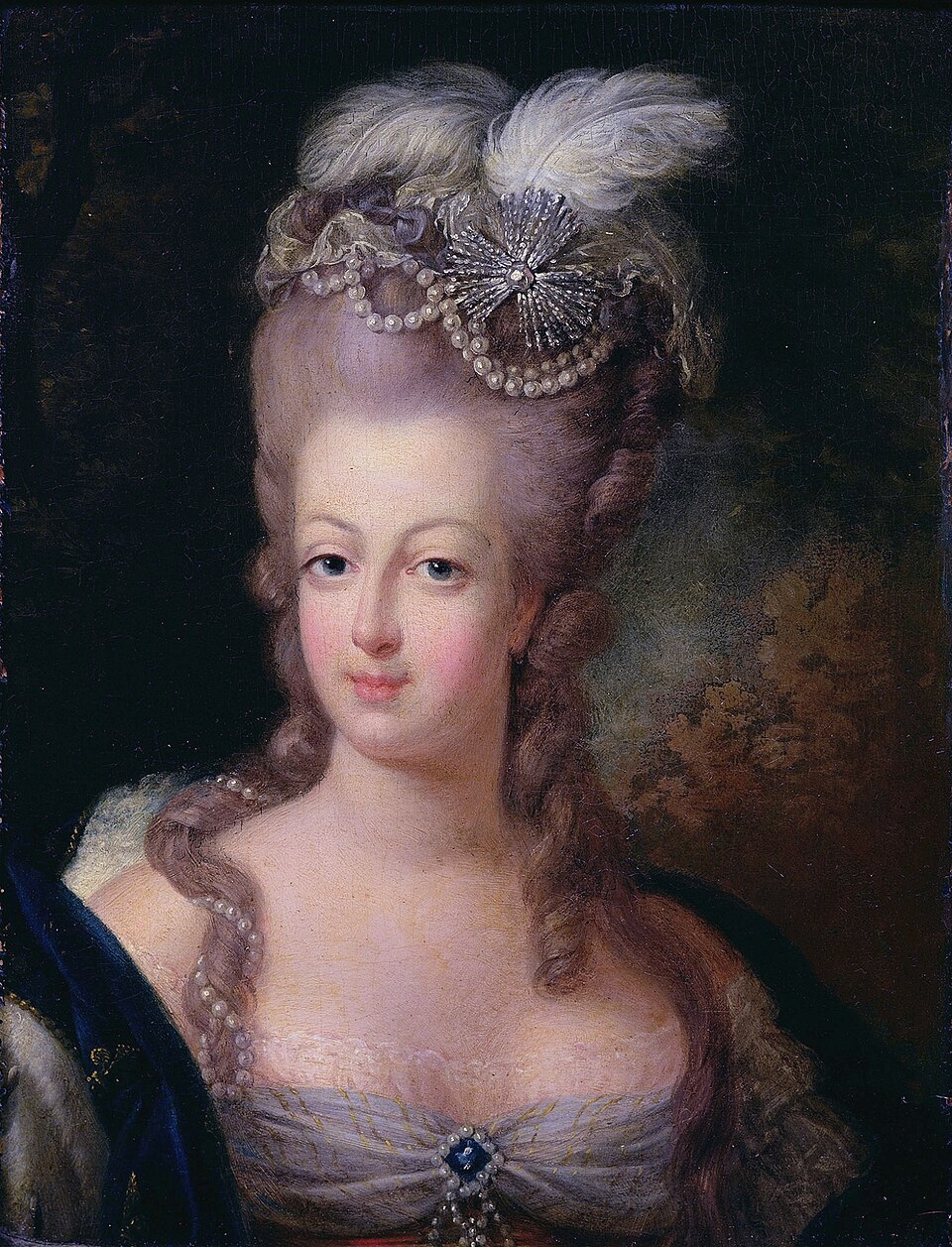
—You launched extravagant fashions, like those monumental hairstyles. Was there more than a game?
The pouf, yes — those edifices of hair, feathers, and ribbons that sometimes rose more than a foot above the forehead. They housed flowers, miniatures, and even, on some days, little scenes of current events. It was a game, I do not deny it, and I put wit into it. But understand what it is to be a young woman observed from dawn to dusk: my body was never my own, so I made it a work of art. Each outfit was a sentence I spoke without opening my mouth. They saw caprice. I saw the only language I was allowed to speak freely throughout Versailles.
—Beyond court pleasures, the reign was marked by great state affairs. Do you remember the support for America?
How could I forget — that is perhaps where everything began to crack. With the King, we supported the American insurgents against the English, sending men, gold, ships. The cause was noble, and the court was intoxicated by it as if by a novel. But the money did not return from the battlefields. When the kingdom's coffers emptied, they did not blame the war: they blamed the queen, her dresses, her Hamlet, as if my ribbons had swallowed an empire. I believe today that peoples prefer a visible culprit to an invisible cause. A debt is abstract. A diamond necklace, on the other hand, can be pointed at.
Peoples prefer a visible culprit to an invisible cause.
—Then came the flight of June 1791. How could you be recognized on the roads?
By my own face, sir. We had left Paris at night, disguised as commoners — I as a governess, the King as a servant. Everything seemed to succeed. But at Varennes, we were arrested, and do you know what betrayed me? My portrait, engraved on those assignats that the Revolution circulated from hand to hand. The queen they were hunting was printed on the very currency with which the people bought their bread. We were brought back to Paris under jeers, between two rows of hostile silence. That day, I knew there would be no reconciliation. You can flee a kingdom; you cannot flee a face that everyone carries in their pocket.
You can flee a kingdom; you cannot flee a face that everyone carries in their pocket.
—The nickname 'the Austrian' pursued you all the way to the trial. Did it weigh so heavily?
It weighed heavier than the guillotine. When France declared war on Austria, in 1792, I was immediately suspected of betraying our secrets to my nephew the emperor. The Austrian was no longer a mockery: it was an indictment. All my life, they had reproached me for not being French enough; now they reproached me for being too little to betray. Yet my mother had written to me, for years, to attach myself to this country. I obeyed, I loved France — and France ended up judging me under the name Widow Capet, as if I had never worn a crown. They denied me even my title. But they did not take away my birth.
—At the trial, the accusation crossed a line. What did you feel that day?
There are infamies that a mother's heart cannot bear. Before the Revolutionary Tribunal, Fouquier-Tinville accused me of a crime against my own son — something so monstrous that words still fail. I turned to the women who filled the hall and said that nature herself refuses to answer such an accusation made against a mother. I saw faces waver there, among the public that had come hostile to me. They wanted to make me a monster; they only succeeded, for an instant, in giving a mother back to those who were listening to me. That night, at the Conciergerie, I wrote my last letter to my sister Élisabeth, and I prayed. I die, I told her, in the religion of my fathers.
They wanted to make me a monster; they only succeeded in giving a mother back to those who were listening to me.
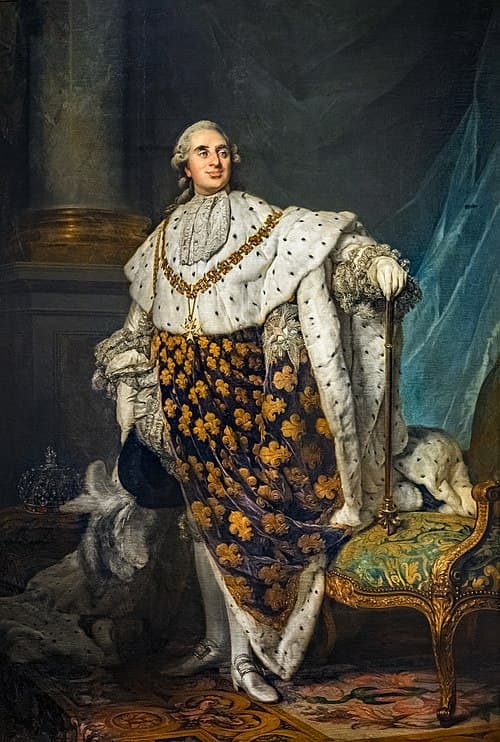
This imaginary interview was generated by artificial intelligence from sources documented in Marie-Antoinette's profile. It dramatises what the figure might have said based on what we know about them, but does not constitute attested historical testimony. For primary sources and factual documentation, refer to the full profile.