Kids interview Marie Tharp
by Charactorium · Marie Tharp (1920 — 2006) · Sciences · 5 min read
Two 12-year-old students on a field trip have an appointment with a smiling old lady leaning over a huge drawing table. Before them: hand-drawn maps of the ocean floor. The cartographer invites them to sit down and ask all their questions.
—Is it true they wouldn't let you board research ships?
Yes, my child, it's true, and it broke my heart. In the 1950s, at the Lamont Observatory, they said a woman on board was bad luck. An old sailors' superstition. So I stayed on land, at my big drawing table. Imagine: men sailed the Atlantic, measured the bottom with their instruments, and brought me back columns of numbers. I turned those numbers into landscapes. I drew underwater mountains I would never see with my own eyes. It was strange, you know. I knew the ocean floor better than anyone, without ever having dived there.
I drew mountains I would never see.
—How do you draw the seafloor if you can't see it?
Patiently, line by line. My job is called bathymetry: measuring the depth of the sea, like measuring the height of a mountain on land. Ships sent a sound toward the bottom and listened for the echo. The longer the echo took, the deeper it was. I received these measurements on long sheets. With my tracing paper and India ink, I drew cross-sections of the relief, called profiles. I drew thousands of them, by hand. Little by little, valleys and mountain ranges appeared under my pencil, emerging from the blackness of the deep.
A slow echo means a very deep ocean.
—How old were you when you made your great discovery?
I was 32, in 1952. While drawing my profiles of the North Atlantic, I noticed something that kept appearing: a V-shaped cleft right in the middle, for miles and miles. It's called a rift valley, a tear where the earth pulls apart. My heart beat fast. I felt it meant something huge: that the seafloor was spreading, that continents were moving. But a discovery, you see, is not enough to see it. You also have to be believed. And that was going to be another story.
Seeing the truth is not enough: you have to be believed.
—And your colleague, did he believe you right away?
Oh no, not at all! When I showed my map to Bruce Heezen, he dismissed my work with a wave of his hand. He said it was girl talk. Can you imagine how I felt? Months of work, dismissed because of a word. But I didn't get discouraged. The numbers were on my side. It took two years. Two years! Then we compared my valley with the locations of undersea earthquakes. They matched exactly. Then, finally, he had to admit I was right.
Months of work dismissed by a single word: 'girl talk'.
—What were your days like when you were drawing your maps?
I arrived early at the Lamont Observatory, often before anyone else. A black coffee, and I unrolled the new measurement sheets that had arrived by mail. In the afternoon, I drew, line after line, looking for repeating shapes. In the evening, I compared my drawings with maps of the land. For the seafloor, there were no drawing rules: no one had ever mapped it. I had to invent my own way of showing an underwater mountain, a fault, a slope. I often came home late, and kept thinking about it on the way.
No one had drawn the seafloor: I invented my own way to show it.
—Was your most beautiful map really seen in schools?
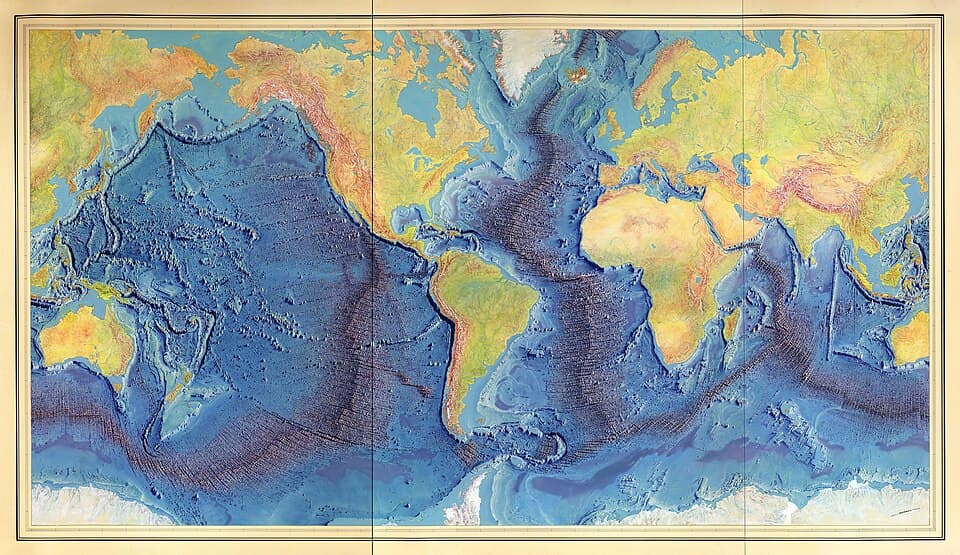
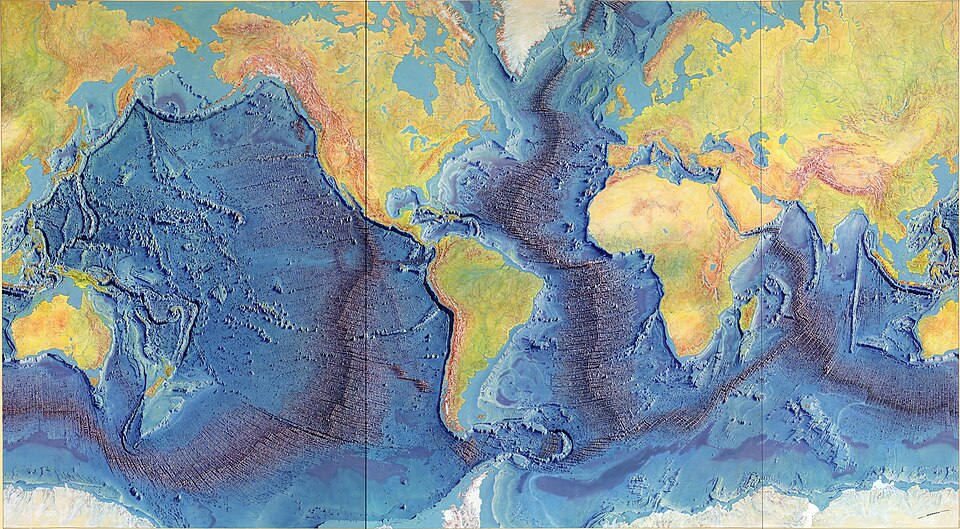
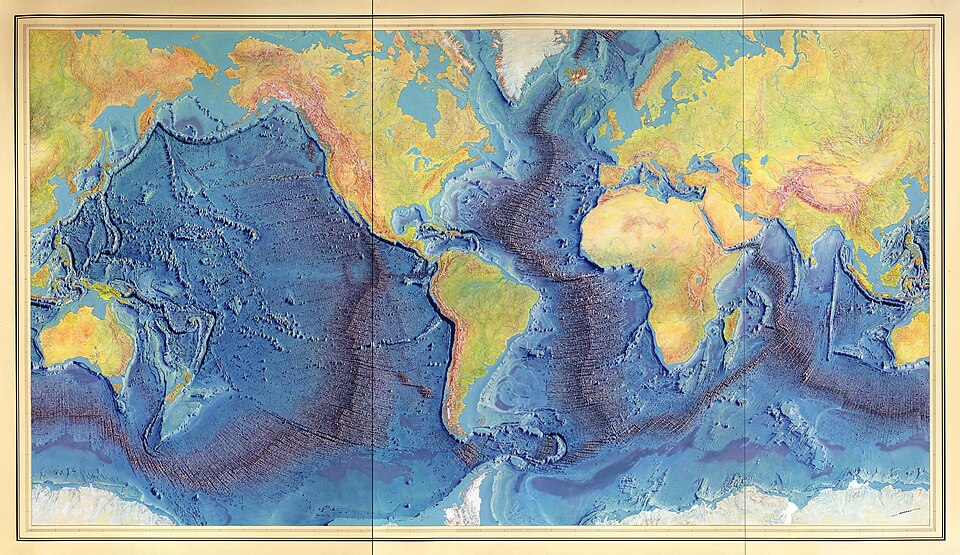
Yes, and it makes me so proud! In 1977, I completed with Bruce Heezen and an Austrian painter, Heinrich Berann, a map of all the world's oceans: the World Ocean Floor Panorama. Berann gave it beautiful colors and relief, like a painting. But every mountain, every valley came from my measurements. National Geographic distributed it everywhere. It ended up in millions of classrooms, maybe even one like yours. Think that children your age were seeing the ocean floor for the first time, thanks to numbers I had patiently turned into images.
The colors came from the painter, but every mountain came from my measurements.
—Why was your map so important to scientists?
Because it proved an idea that almost everyone rejected. In 1912, a scientist named Wegener said that continents move slowly, like rafts. People laughed at him: no proof. But my rift valley, in the middle of the ocean, showed the exact place where the seafloor is created and spreads apart. That's called seafloor spreading. My map was proof you could see with your eyes. Gradually, in the 1960s, scientists accepted that the Earth's surface is made of large moving plates. Wegener was right, fifty years too early.
My map showed with the eyes what they had refused to believe.
—How did it feel to prove an idea that had been rejected?
You know, I wasn't the type to shout victory. I trusted one thing: the measurements. In 1959, we published a major study, The Floors of the Oceans. It described this chain of underwater mountains that circles the globe, a mid-ocean ridge, thousands of miles long. Many still doubted. But I knew. When you've drawn every line yourself, you don't need applause. The ocean floors do not lie. It's people who take time to listen. So I waited, calmly, for the truth to prevail on its own.
The ocean floors do not lie; it's people who are slow to listen.
—Were you thanked for all that work, at least?
Late, my child, very late. For years, my name remained in the shadow of my male colleagues. That was normal in my time; women in science often went unnoticed. I had to wait until 1998, almost fifty years after my discovery, to be truly recognized. The Library of Congress, America's great library, named me one of the four greatest cartographers of the 20th century. I was 78 then. I smiled, you know. No bitterness. I had done my work, and the ocean floor was on walls around the world. In the end, that was already my greatest reward.
Fifty years in the shadows, then finally my name in the light.
—If you had to give advice to a girl who loves science?
I would tell her: never let anyone decide for you what you can discover. They banned me from ships, they called my work girl talk. Yet I drew the hidden face of our planet. Keep your measurements, keep your patience, keep your own drawing table. The truth doesn't ask permission to be true. One day, your work will speak louder than all the doubters. I waited a long time, but the ocean floor carries a bit of me forever. You too can leave your mark.
The truth doesn't ask anyone's permission to be true.

This imaginary interview was generated by artificial intelligence from sources documented in Marie Tharp's profile. It dramatises what the figure might have said based on what we know about them, but does not constitute attested historical testimony. For primary sources and factual documentation, refer to the full profile.