Kids interview Mary Wollstonecraft
by Charactorium · Mary Wollstonecraft (1759 — 1797) · Philosophy · 5 min read
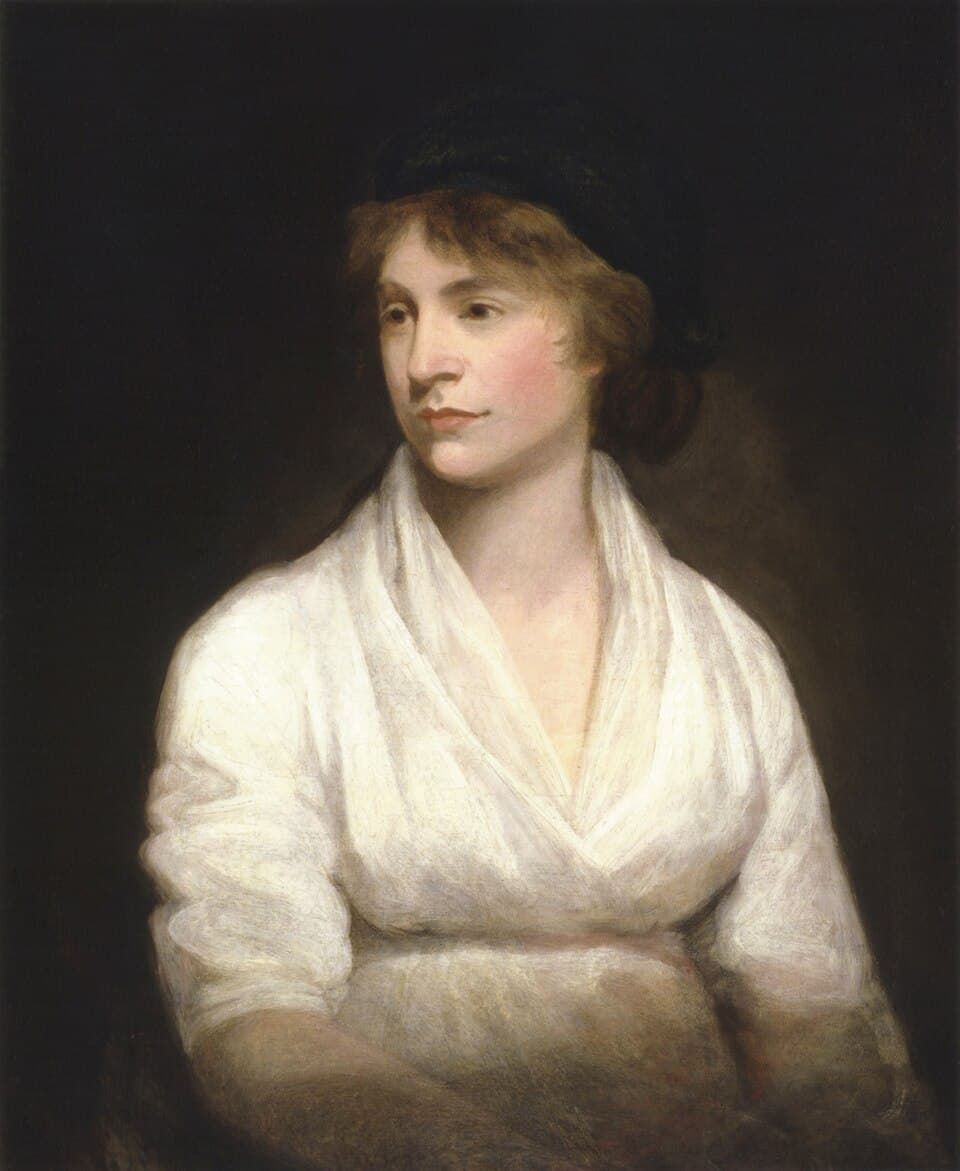
That morning, two middle-school students on a field trip push open the door of an old London house. A woman awaits them, quill in hand, her gaze sharp and gentle. Her name is Mary Wollstonecraft, and she has so many things to share with them.
—In the morning, what did you wear? It must have been very pretty, right?
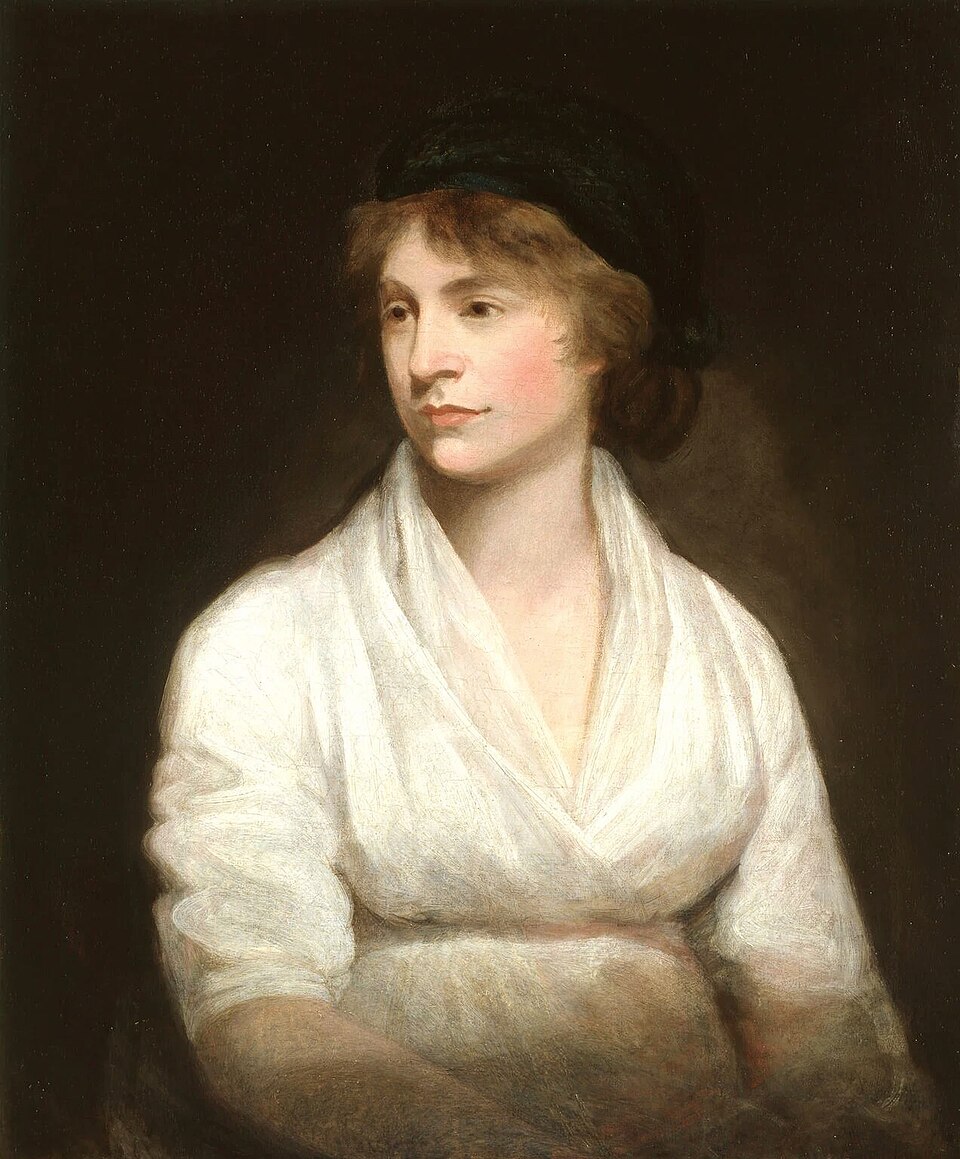
You know, my child, I might disappoint you a little. No corset, ever. Imagine a garment so tight you can barely breathe — well, I refused it. I wore simple cotton dresses, a wool shawl, a bonnet, nothing more. For many ladies, that was scandalous. For me, it was an idea. A woman is not an object to be decorated to please. I rose before dawn, lit my candle, and wrote for hours before the world awoke. My finest clothes, you see, were my thoughts.
—But how did you earn money if you were a writer?
Good question, and it was rare for a woman of my time! Most writers had a wealthy patron — a great gentleman who paid, and to whom you had to obey and flatter. I refused. I wrote hundreds of book reviews for a London journal, The Analytical Review. My publisher Joseph Johnson paid me for that. Imagine: reading, judging, writing, from morning to night, to earn my bread. It was hard, but it was free. I had to flatter no one. Very few women lived that way, by their pen alone. I was proud of it, my child.
—Is it true you opened a school just for girls?
Yes! In 1784, with my sister and my friend Fanny Blood, I opened a small school for girls at Newington Green, near London. Do you know what girls were taught back then? To embroider, to dance, to play a tune to please a future husband. Nothing for the mind! I wanted to teach them to think, to reason, to judge for themselves. In that village lived a minister, Richard Price, who spoke of liberty and equality. I listened to him, my heart beating. That's where my idea was born: a girl has a mind, not just a pretty face.
—What is the most important book you wrote?
Without hesitation: A Vindication of the Rights of Woman, in 1792. The title means 'Defense of the Rights of Woman'. I said a simple thing there, but it angered many people. Women were told their charm was gentleness, delicacy, pretty weakness. I wrote that these fine words were almost synonymous with weakness. Understand me: I wanted girls to have a strong mind and a strong body, not to be raised like fragile flowers. Today they say this book is the first great text defending women.
A woman who thinks is more useful to the world than a woman who pleases.
—Did you really argue with a famous politician?
Oh yes! In 1790, a very famous man, Edmund Burke, wrote a book against the French Revolution. He defended kings, nobles, privileges received at birth. That made me angry. In a few days — not months, days! — I wrote my reply: A Vindication of the Rights of Men. My idea boiled down to one sentence: we have rights at birth because we are thinking human beings, not because we are born rich. It was a pamphlet, a small cheap booklet read quickly. And for the first time, I signed my name. A woman defying a great man — that had never been seen.
—What are 'natural rights'? I don't really understand.
Ah, that's an important idea; let me explain it simply. Natural rights are the rights you have just because you are a human being. Not because a king gives them to you. Not because you were born rich or noble. You are born with them, like you are born with two hands. In my time, people said: the duke's son has more rights than the poor man's son. I answered: no! A philosopher I loved to read, John Locke, already said that men are born equal in rights. And I added one thing that was always forgotten: women too, my child. Women too.
—Were you in Paris during the Revolution? Were you afraid?
I was in Paris, yes, in an apartment in the Marais district. I came full of hope: I believed the Revolution would make men free and equal. And then... the Terror arrived. Imagine: you look out your window, and you see carts passing by. Inside, people being taken to the guillotine, to be killed. Day after day. I was afraid, I won't lie to you. My beautiful dream of freedom was covered in blood. I understood that a good idea, when it becomes violence, can turn into a monster. That marked me forever.
A good idea, when it becomes violence, can turn into a monster.
—And afterwards, did you write a book about all that?
Yes, I could not stay silent. In 1794, I wrote a long book on the history of the French Revolution. You know, it is very difficult to write about something while it is still happening. I wanted to be fair. On one hand, I still believed in the beautiful ideas of the beginning: liberty, equality, the end of privilege. On the other, I could not close my eyes to the violence, the bloodshed. I tried to say both at once, without lying. An honest heart does not erase what disturbs it. That is what the thinkers I admired sought: truth, even when it hurts.
—Is it true you had a daughter without being married?
Yes, and in my time, that was a great scandal. I loved an American traveler, Gilbert Imlay. In 1794, we had a baby girl, Fanny, without being married. People whispered, pointed fingers. But the worst was not their judgment. The worst was that Imlay abandoned us, my baby and me. I had such deep sorrow that I almost never recovered. And then, you see, I had a little girl to raise, ideas to defend. So I got up, and I took up my pen again. Pain did not defeat me.
—Did you really go far away, all alone with your baby?
Yes, and it was very brave for a woman alone, believe me. In 1795, I sailed north — to Sweden, Norway, Denmark — with my little girl and a maid. The first port was called Gothenburg. Imagine immense forests, rocks, a cold gray sea, endless nights. My heart was heavy, but before so much beauty, sometimes my soul breathed. I wrote everything in a notebook. Later, those pages became a book, Letters Written During a Short Residence. It is the work of mine most loved in my lifetime. The saddest, too, and the truest.
—And afterwards, were you happy? What remains of you today?
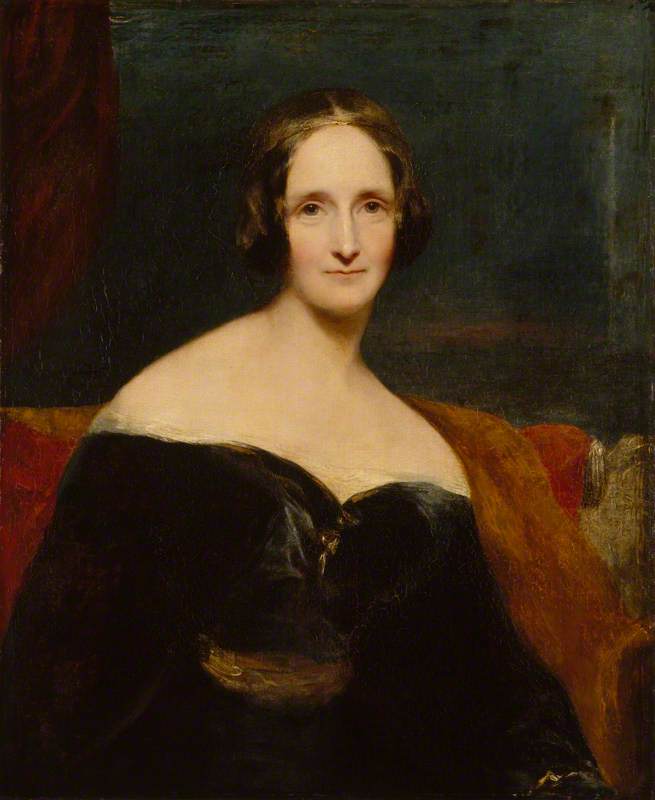
I finally met a good man, the philosopher William Godwin. Neither of us believed in marriage, but we married in 1797 to protect the coming child. That child is my daughter Mary — the one who would later write Frankenstein. I knew her only eleven days, my child. I died just after her birth, at thirty-eight. For a hundred years, my ideas were forgotten, even mocked. And then, long after, girls like you read them again. That is what remains of me: you are sitting there, listening to me. A just idea never quite dies. It waits.
A just idea never quite dies — it waits.
Read further
This imaginary interview was generated by artificial intelligence from sources documented in Mary Wollstonecraft's profile. It dramatises what the figure might have said based on what we know about them, but does not constitute attested historical testimony. For primary sources and factual documentation, refer to the full profile.