Kids interview Michel Foucault
by Charactorium · Michel Foucault (1926 — 1984) · Philosophy · 5 min read
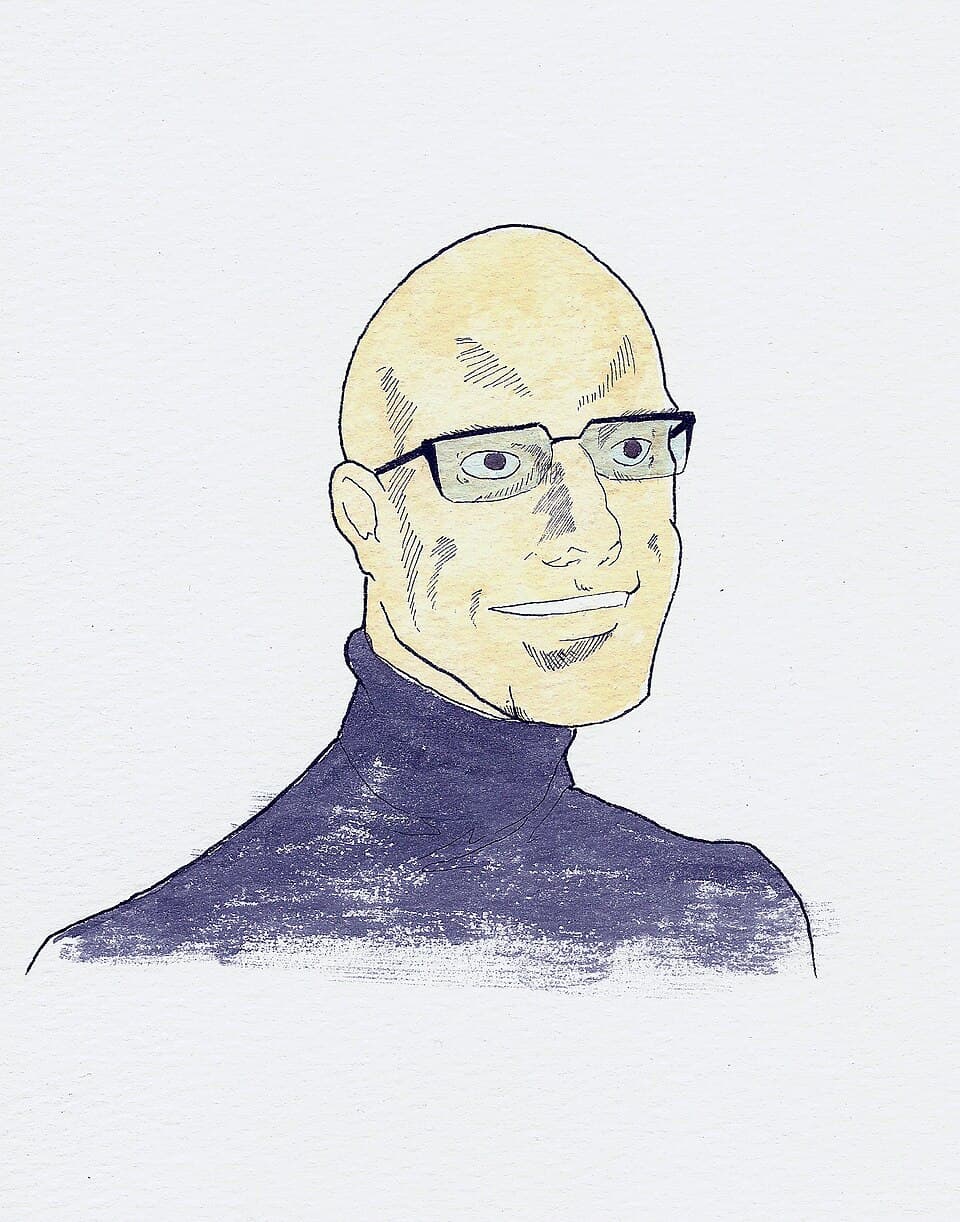
Two 12-year-old students, on a school trip to Paris, push open the door of an old office full of books. A man with a shaved head and round glasses greets them with a smile. It's Michel Foucault, and he has agreed to answer all their questions.
—What was your job, really, all day long?
You know, my child, I spent my afternoons in silence. At the Bibliothèque nationale, rue de Richelieu. Imagine a large room filled with old papers, where all you hear is the turning of pages. I read thousands of forgotten documents. And I filled little index cards, hundreds of cards. It was like assembling a giant puzzle whose picture no one had ever seen. In the evening, I typed my pages on my typewriter. I often worked at night, with a strong coffee. My job wasn't to invent: it was to dig up what had been buried.
—Why did you write an entire book about madness?
Because a question haunted me. Why, in certain eras, do we lock up those we call 'mad'? In 1961, I defended a big thesis on that, History of Madness. I discovered that each era secretly decides what is normal and what is not. I called this the episteme: the hidden way of thinking of a time. Imagine glasses that everyone wears without knowing it, and that color what they see. In the past, they chased away the mad as one chases away what disturbs. Understanding that is understanding how a society sees itself.
—Is it true that you climbed onto a roof to throw cobblestones?
Ah, you heard that story! Yes, it's true. In 1969, I was teaching at the university of Vincennes, a brand-new campus born from student unrest. One day, the police came to evict the young people who were occupying the premises. I climbed onto the roof with them. And yes... I threw cobblestones. Imagine a professor already known, shaved head, crouching on a roof like a kid! I was scared, my heart was beating fast. But I didn't want to just think about power in my books. Sometimes, you have to go up there and be present, with others.
I didn't want to just think about power in my books.
—Were you afraid of being arrested because of all that?
Many thought a professor should stay calm, in his office. I found that a bit cowardly. In my time, in France, you could be hit or put on file by the police for demonstrating. So yes, I was afraid, like everyone. But I understood one thing as I grew older: you can't write about the powerful in the morning and let them do as they please in the afternoon. My ideas were only worth something if I dared to live them. That's why, later, I fought for prisoners. Thinking is already acting a little. But acting is thinking all the way through.
—What's that Attica prison you went to see?
In 1975, I crossed the ocean to visit an American prison: Attica. A few years earlier, the inmates had revolted there, and the repression had been terrible. Imagine immense walls, iron corridors, cages lined up as far as the eye can see. When I came out, I was shaken. I understood that prison doesn't really serve to make people better. It serves to set aside those who disturb, to store them like objects. What I had written in my books, I saw it there, before me, in stone and bars. It was chilling.
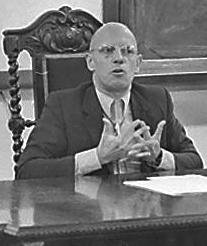
—And that group you created to help prisoners?
In 1971, with my friend Gilles Deleuze, we created a somewhat special group. Its goal? To let prisoners speak for themselves. You see, usually, others speak for them: judges, journalists, scholars. But they never do. We collected their words, their hunger, their cold, their anger. Imagine finally handing a notebook to someone who has always been silenced. I didn't want to be the great professor who explains everything. I wanted those who suffer to say themselves what they experience. Listening, sometimes, is the greatest struggle.
—What is the Panopticon that everyone talks about?
Ah, my most famous idea! In my book Discipline and Punish, in 1975, I describe a strange invention. A gentleman named Bentham had imagined a completely round prison. At the center, a tower; all around, a ring of cells with large windows. The guard, in his tower, can see every prisoner. But the prisoners never know if they are being watched. So they behave, all the time, just in case. That is panopticism: being watched without seeing anything. And the most troubling thing is that you end up watching yourself, in your head.
The most troubling thing is that you end up watching yourself.
—But are we also watched like in that prison?
You ask the question that matters most to me. Look around you: the school where you sit in rows, the hospital where everything about you is noted, the barracks, the factory. Everywhere, we observe, classify, correct. I call this normalization: a rule is set, and everyone is pushed to conform. It's not an evil king who orders all this. It's a thousand little habits, a thousand gazes. Imagine an invisible net that holds you straight without even touching you. I'm not saying everything is bad. I say: open your eyes, and always ask yourself who decides what is 'normal'.
—Is it true that there were too many people at your lectures?
Yes, and it surprised even me! I taught at the Collège de France, a place where lectures are free and open to all. Every winter, between January and March, the room overflowed. People from all over Europe sat on the floor, on the stairs, even in the hallways! I needed a microphone so my voice would carry far enough. Imagine a room so full you can barely breathe, and total silence when I began to speak. I had no diploma to give, no grade to assign. People came just to think together. That was a tremendous gift.
—Why didn't you want your lectures to be recorded?
Because a thought, my child, is alive. Each year, I rewrote everything, corrected, changed my mind. If my words had been locked in a box, people would have thought it was finished, frozen forever. But I was never finished! Imagine a river: if you put it in a bottle, it's no longer a river, it's dead water. I preferred that my words fly away and that everyone transform them in their own head. Thinking is not repeating what you've heard. It's starting over, again and again, without ever believing you've found the final answer.
—If we remember only one thing about you, what would it be?
If you must remember only one thing, remember this. One day, I said that 'criticism is the art of not being governed quite so much'. That means: don't swallow everything. When they tell you 'that's how it is, it's normal,' ask yourself why. Who decided it? Since when? Who does it benefit? I didn't write to be taken at my word. I wrote so that you would doubt, so that you would look at the world with fresh eyes. You too can dig, question, disobey a little. That is the most beautiful gift I can leave you, you and your friends.
Criticism is the art of not being governed quite so much.

This imaginary interview was generated by artificial intelligence from sources documented in Michel Foucault's profile. It dramatises what the figure might have said based on what we know about them, but does not constitute attested historical testimony. For primary sources and factual documentation, refer to the full profile.