Imaginary dialogue between Lope de Vega and Miguel de Cervantes
by Charactorium · Miguel de Cervantes (1547 — 1616) · Literature · 5 min read
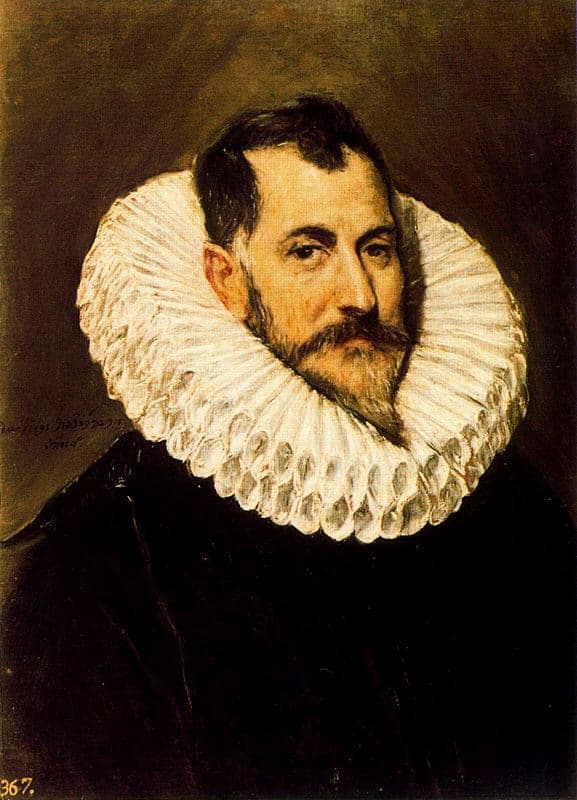
In a shady courtyard in the Letras district of Madrid, one evening in the autumn of 1615, Lope de Vega comes knocking at the door of Miguel de Cervantes. An oil lamp lights a table strewn with papers: the second part of Don Quixote has just come off the press. The two men have known each other for years — their pens have often crossed and clashed on the stages of the corrales de comedias. Lope, the undisputed master of the stage, comes this time as a curious visitor, almost an accomplice, to extract some confessions from this soldier turned novelist.
—Don Miguel, they say your left hand has not obeyed you since Lepanto. Do you bear this infirmity as a shame or as a trophy?
As a trophy, Lope, do not doubt it for a moment. In 1571, I had a fever and the surgeon wanted me below deck, safe. I refused: a soldier must die fighting rather than hide in safety. Three arquebus shots rewarded me, one of which left me this dead hand you see here. But I say it plainly: I lost it for the greater glory of the right. That day was the highest of my life, the most memorable that past centuries have seen. You hold your pen, I hold mine with one hand, and believe me, it writes all the better for having smelled gunpowder.
I lost it for the greater glory of the right.
—You've come back from far away, my friend. Five years a captive in Algiers, they say. How does a man survive such a prison without losing his mind?
One survives by obstinacy, Lope, and by a certain madness of hope. Captured in 1575 off the coast, I found myself a slave among the Barbary corsairs, a chain on my feet. Four times I attempted escape, four times I failed, and each time I took the blame to spare my companions punishment. My jailers believed I could raise the whole city; this earned me, strangely, their respect. My family ruined itself to raise my ransom, which Trinitarian monks finished paying in 1580. I returned free but poor, to a homeland that hardly recognized me. From that captivity, I brought back more tales than scars.
My jailers believed I could raise the whole city.
—Before glory, you roamed Andalusia provisioning the Armada. A poet reduced to counting sacks of wheat — was that not humiliating?
Humiliated, perhaps, but fed, which is no small thing when the pen doesn't pay. For years I was a commissary of provisions, requisitioning grain and oil for the king's fleets. I kept my registers, haggled with reluctant peasants, slept in inns where you meet all of Spain — muleteers, rogues, fallen hidalgos. This thankless job even landed me in prison over accounts deemed questionable. But you see, Lope, those dusty roads were my true university. It was there, on the roads of La Mancha, that I crossed paths with the faces I populated my books with. You only invent well what you have seen with your own eyes.
Those dusty roads were my true university.
—Let's talk about your mad hidalgo. En un lugar de la Mancha... all Madrid recites it. Did you guess, in 1605, that this old man would dethrone the Amadises?
I first wanted to laugh at it, and to make others laugh with me. I wrote it so that those libros de caballerías, those chivalric romances that turn our readers' heads, would finally fall into disrepute. My poor hidalgo read so many of these fables that he lost his wits and set out, mounted on his nag, to right the world's wrongs with his Sancho. I did not expect such a stir: it was translated, copied, celebrated throughout Europe within months. But you see, Lope, truth, whose mother is history, always breaks through in the end. I parodied paper giants, and it is my Quixote who became the giant.
I parodied paper giants, and it is my Quixote who became the giant.
—Then that scoundrel Avellaneda dared to steal your knight and invent a sequel for him. How did you take such effrontery?
With anger first, I admit, then with the only weapon I have left: the pen. In 1614, that masked forger published his false sequel, disfigured my hero and insulted me into the bargain. I could have sued, complained. I preferred to finish my second part on the spot, published this year 1615, and have the impostor himself enter it. My Quixote meets this false double and confounds him, so that Avellaneda's lie becomes an episode of my truth. You know better than anyone, you who know the jealousies of our trade, that you only answer a bad pen with a better one. I repaid ridicule a hundredfold.
You only answer a bad pen with a better one.
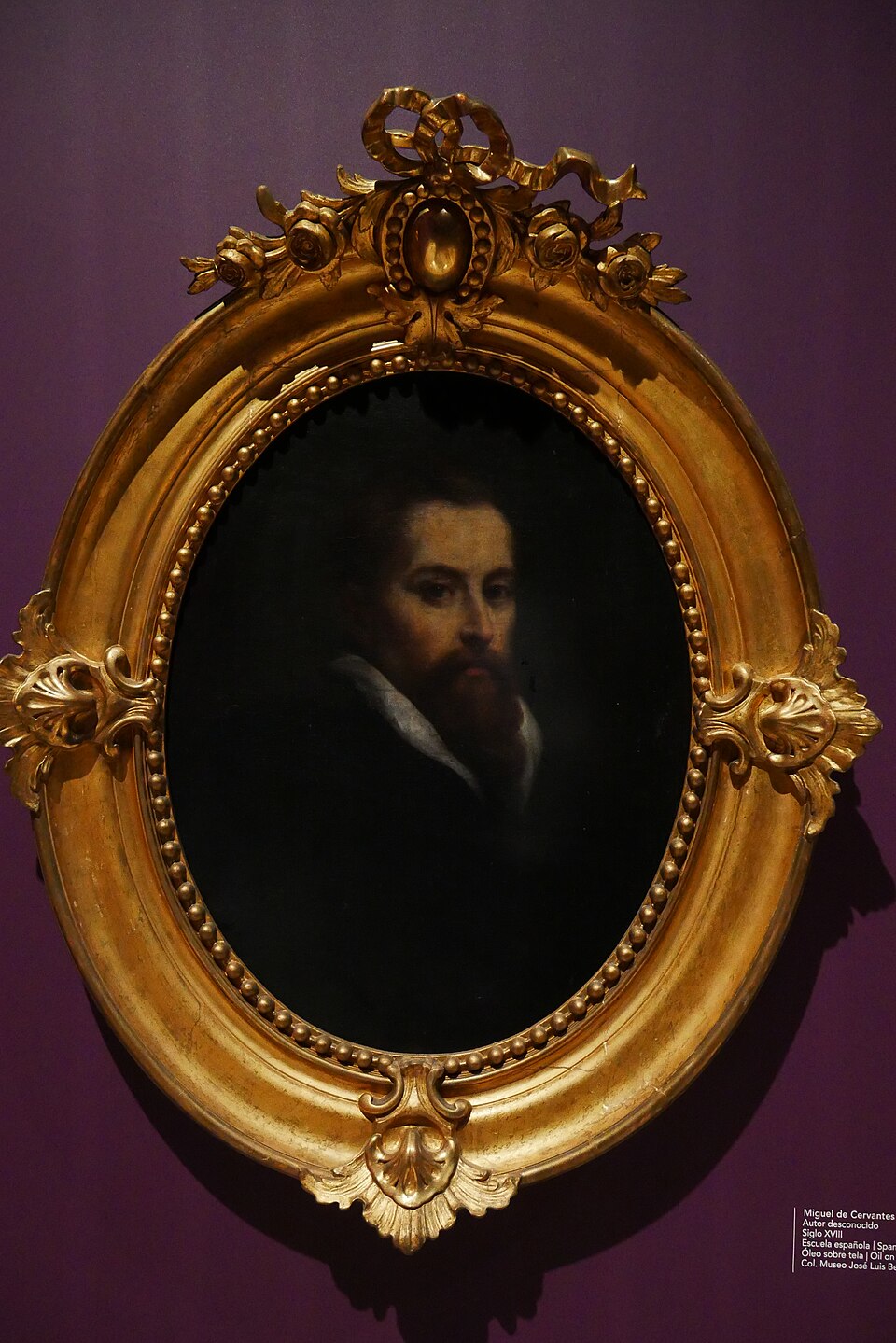
—Let's come to us two, Miguel. You haunt the corrales where my plays are performed. Is it to learn, or to envy me a little?
Both at once, Lope, and I am not ashamed. You reign on the stage, your comedies fill the corrales de comedias while mine struggle to find a theater. I have seen you give the public what it demands, and I have admired your prodigious facility as much as I have envied it. I put my best strengths elsewhere: in my entremeses, those brief interludes where the common people speak truly, and in my Exemplary Novels, where I was the first to tell stories in Castilian without borrowing from foreigners. We do not plow the same field, you and I. But it was by watching you triumph that I measured what I had to dare.
It was by watching you triumph that I measured what I had to dare.
—They say you are surpassed by our Golden Age, by this youth that imitates me. Do you feel like you are from another age, Don Miguel?
From another age, yes, and I bear it without bitterness. I knew Lepanto, captivity, the reign of great Philip; the young people who fill the theaters today have felt neither the sea nor chains. They have your verve, Lope, and the speed of your verse, but perhaps they lack the years of dust and prison that give depth to the gaze. Our Spain shines with a brilliance that no century will equal, I am convinced. That I am counted among the ancients matters little to me: a patient book outlasts fashions. I write slowly, as one builds to last, not as one throws a straw fire to the public.
A patient book outlasts fashions.
—You have been a soldier then a poet. That old debate of arms and letters — which of the two honors a man more, in your view?
That is a quarrel my Quixote himself settled in a long speech, and I do not back down. Letters require wit, study, sleepless nights; but arms demand that one risk flesh and life. The soldier who dies in battle never receives the wages of his blood, whereas the man of letters can hope for fortune and rest. I have tasted both, Lope: I wore the cuirass and morion at Lepanto, then the goose quill in my Madrid lodgings. And I will tell you this: the accomplished man unites sword and book. That is the ideal of our time, and it is the one that kept me standing when all else failed me.
The accomplished man unites sword and book.
—We often find the slave, the captive, the renegade in your pages. Do your years in Algiers still pursue you into your writing?
They never leave me, Lope, and I believe they never will. What one lives in chains imprints itself deeper than anything one reads free. I put into my stories and even into my Quixote the tale of those Christian captives on the Barbary coast, because those men I knew, I shared their bread and their despair. The Mediterranean I describe is not that of maps, it is that of irons and ransoms. I have sometimes been reproached for returning to it too often. But how can I silence five years that made me the writer you are questioning this evening?
What one lives in chains imprints itself deeper than anything one reads free.
—One last confidence, Miguel. After so many trials, death lurking — what feeling dominates you when you take up the pen today?
A gentle haste, Lope, and a gratitude I did not expect. I feel my strength declining, and yet I am still working on my Persiles, that adventure novel I consider my finest work. With one foot already in the stirrup, with the anguish of death, great lord, I write this to you — that is how I dedicated my last pages. I have received extreme unction, and that very morning I still take up the pen. Do not think it is sadness: I have lived more lives than a man deserves, soldier, captive, commissary, storyteller. If I must depart, let it be while writing. The rest I leave to time, that old judge who rarely errs.
If I must depart, let it be while writing.
This imaginary interview was generated by artificial intelligence from sources documented in Miguel de Cervantes's profile. It dramatises what the figure might have said based on what we know about them, but does not constitute attested historical testimony. For primary sources and factual documentation, refer to the full profile.