Kids interview Miguel de Cervantes
by Charactorium · Miguel de Cervantes (1547 — 1616) · Literature · 5 min read
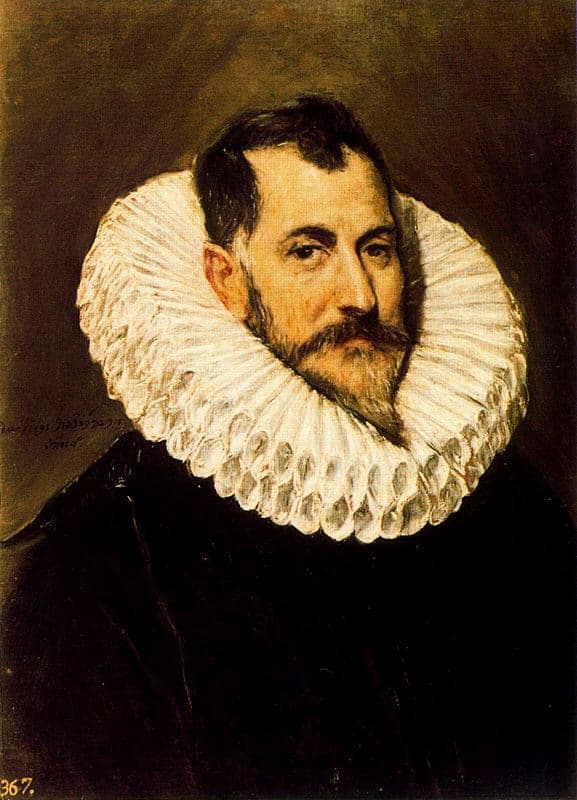
That morning, two young visitors on a school trip push open the door of a house with a patio in the Letras district of Madrid. An old gentleman with a motionless left hand awaits them, a mischievous smile on his face. His name is Miguel de Cervantes, and he has promised to tell them everything.
—Is it true you lost a hand in the war?
Almost, my child! It was in 1571, at the Battle of Lepanto, at sea. Imagine dozens of wooden ships, shouts, smoke everywhere. I had a high fever that day. They told me to stay in bed. I refused. Three shots from an arquebus — a long, very heavy gun of my time — hit me. The last one paralyzed my left hand forever. You know what I say when people pity me? That I lost that hand for the greater glory of the right, the one that writes. I have never regretted that day. It was the finest of my life.
I lost my left hand for the greater glory of the right.
—Were you afraid, with the fever, before the battle?
Of course I was afraid; I would be lying to say no. But in my time, a soldier who hides is a shame that follows you all your life. So imagine: the ship's deck pitching, my legs trembling with fever, and over there, the enemy vessels. My comrades wanted to protect me. I asked for the most dangerous post. Why? Because fear, you see, is not fought by staying in bed. It is fought by moving forward. That day at Lepanto, I understood something: courage is not the absence of fear; it is moving forward anyway.
Courage is not the absence of fear; it is moving forward anyway.
—After that, is it true that pirates captured you?
Alas, yes! In 1575, I was proudly returning to Spain, with a fine letter of recommendation in my pocket. And then, Barbary corsairs — pirates from the North African coast — attacked our ship. I was taken to Algiers, in chains. I stayed there for five years. Five years, can you imagine? I was what they called a Barbary captive, a Christian slave. The chain tightened around my ankles. The worst part was not the chain. It was looking at the sea every day, knowing Spain was just on the other side, and not being able to reach it.
—Did you try to escape? Did it work?
Four times, my child! Four escapes, and four failures. Once I hid in a cave with other prisoners. Another time, I organized everything for a whole group. After each failure, I was brought before the master of Algiers. I could have been killed a hundred times. But each time, I said: I am the one responsible; they did nothing. You know why I tell you this? Because those five years of slavery, later, I put them in my books. Nothing is lost, even the worst moments. A writer turns his chains into stories.
A writer turns his chains into stories.
—Once back home, what work did you do?
A very thankless job, I must admit. I was a commissary of supplies for the Armada, the great war fleet of King Philip II. My job? To travel through Andalusia and requisition wheat, oil, from the peasants, to feed the soldiers. Imagine me knocking on farm doors, my register under my arm, peasants who don't want to give me anything. All day counting sacks of grain! Me, who dreamed of poetry. In the evening, exhausted, I jotted down my figures. It was far, very far, from the glorious battles of my youth.
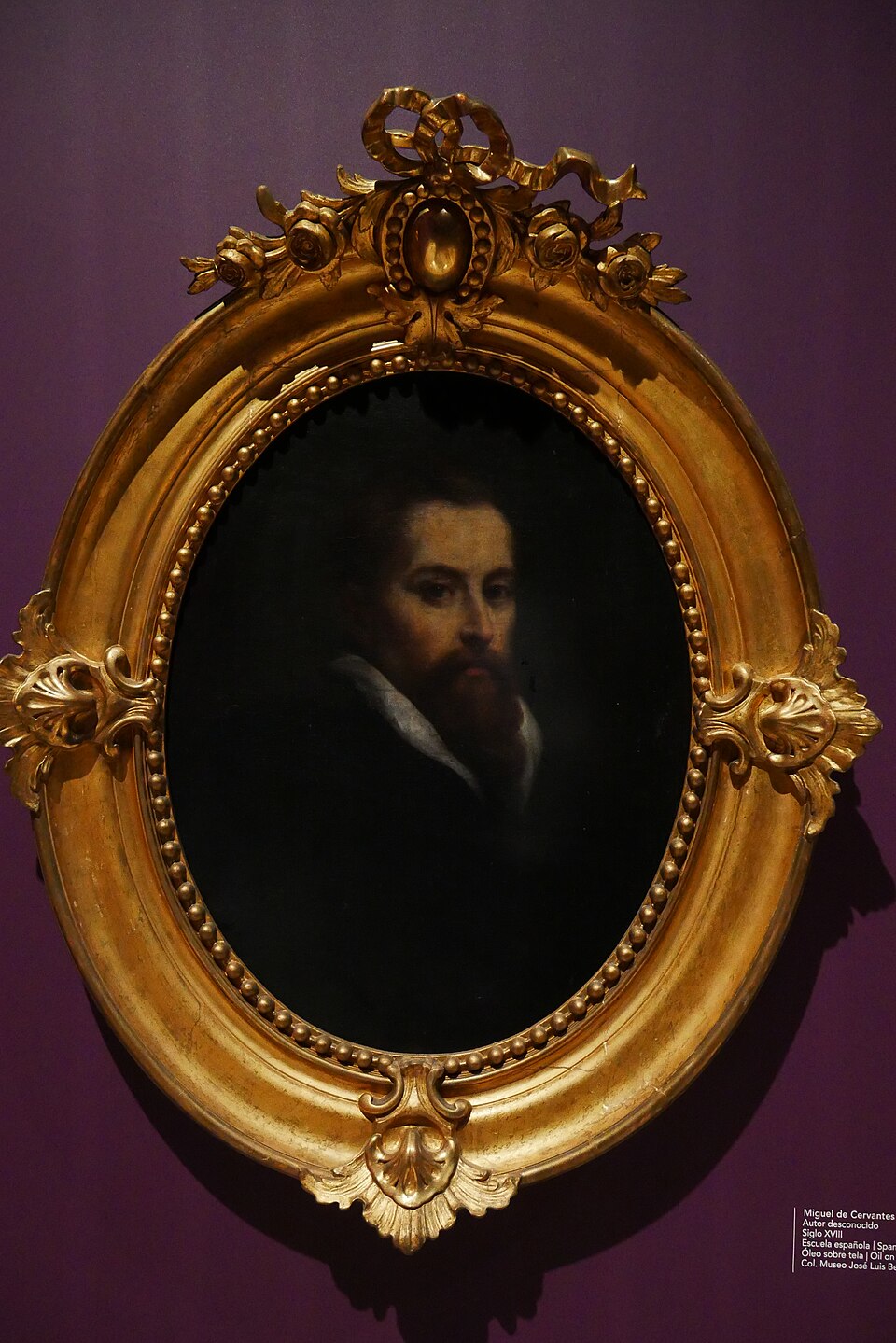
—Is it true you even went to prison?
Oh yes, and not because I had stolen! My commissary accounts were muddled. A sum of money had disappeared from a banker's. Guess who was accused? Me, the poor civil servant. I was thrown into prison, in Seville. You see the irony? I supplied the army of the greatest empire in the world, and I ended up behind bars over numbers. But listen well to this, my child: some say it was in that prison that I began to imagine a certain skinny knight on a skinny horse. Prison locks up the body, never the imagination.
Prison locks up the body, never the imagination.
—In the evening, after work, what did you do for fun?
Ah, in the evening, I rushed to the theater! They were called corrales de comedias. Imagine the courtyard of a large building, open to the sky, with benches, a wooden stage, and a noisy crowd eating and shouting. There, they performed the plays of a certain Lope de Vega. He was my great rival, who wrote comedies at lightning speed, adored by all. I too wrote for the theater — my Eight Comedies and Eight Interludes. And at home, in the evening, I devoured something else: big chivalric novels. You don't yet know how much those books would change my life.
—What exactly is a chivalric novel?
They are big stories full of heroic knights, giants, princesses to rescue, and impossible battles. In my time, everyone devoured them, like Amadis of Gaul. People read them all night, almost believing in them. And I, you see, found them both wonderful and a little ridiculous. So a crazy idea came to me. What if a man read so many of these books that he lost his mind? A man who would truly believe he was a knight, in a world that no longer wanted one? That is how my poor Don Quixote was born, from reading too much.
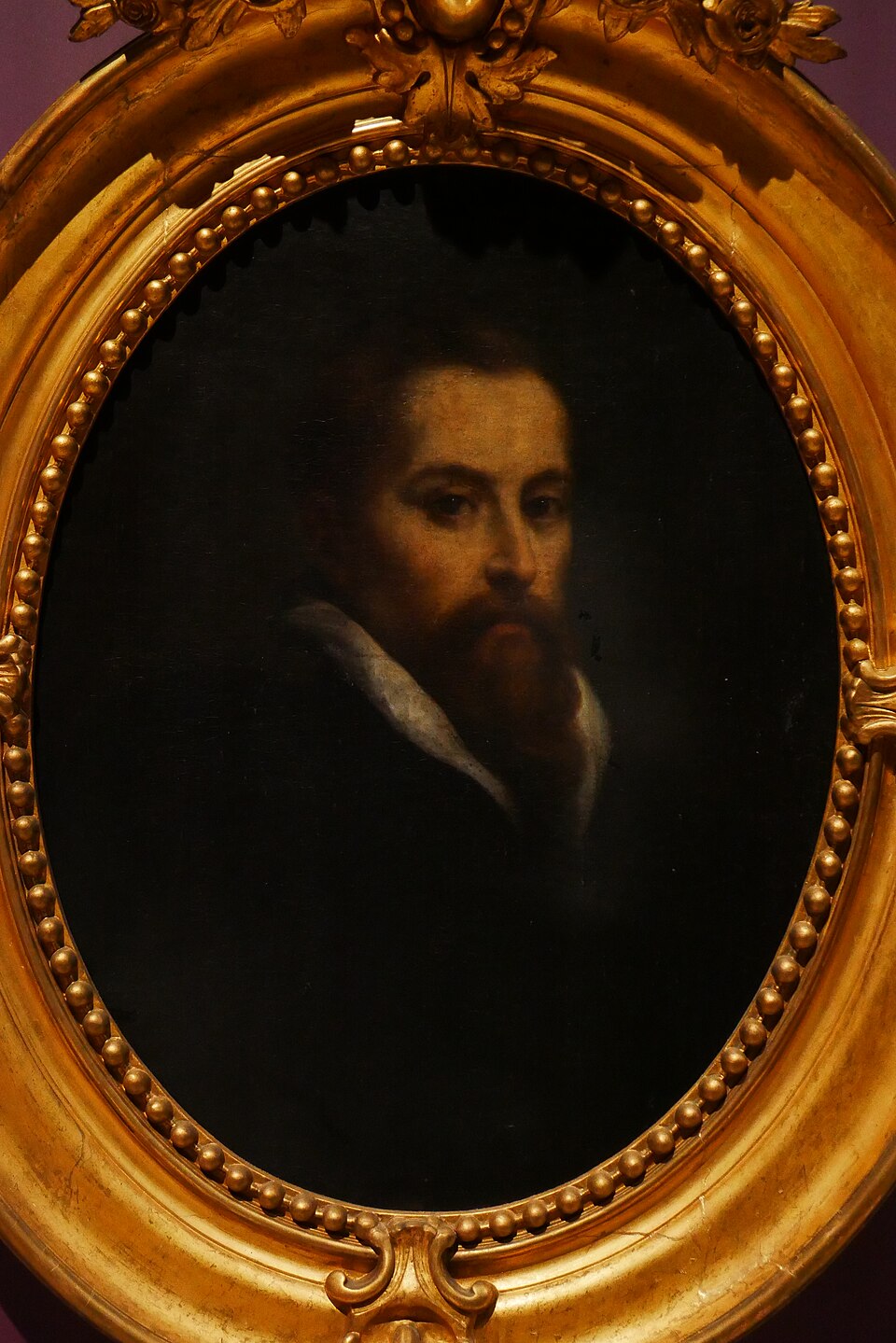
—Don Quixote was an immediate success?
An immediate success, my child, in 1605! Overnight, all over Spain, people laughed at my hidalgo — a poor minor noble — who mistakes windmills for giants. It was already being translated into other languages. Can you imagine my joy? I, the crippled old soldier, the former captive, the employee thrown into prison... and now everyone was reading my book. Alongside Don Quixote, I had invented his squire, Sancho Panza, a cunning and gluttonous peasant. One dreams too high, the other keeps his feet on the ground. Together, they walk the roads. That's life, all of it.
—Is it true someone copied your book? Were you angry?
Angry? I was furious! Listen to this story. My Don Quixote had been a success for ten years. And then in 1614, a stranger, hiding under the false name of Avellaneda, published a fake sequel! He stole my knight and, moreover, mocked me, the old one-handed man. What did I do? I did not shout in the street. I took my pen. I wrote my true second part, in 1615, and inside, I slipped that thief in to better ridicule him. You see, my child: against a liar, the best weapon is not the fist. It is a well-written story.
Against a liar, the best weapon is a well-written story.
—If we remember one thing about you, what would it be?
What a beautiful question to end with. You know, I have been a soldier, a slave, an employee, a prisoner. I have known more failures than victories. But I gave the world two traveling companions: a madman who dreams too big, and a brave man who keeps his feet on the ground. If you remember one thing, remember this. One can be poor, wounded, forgotten by all, and yet create something that crosses the centuries. My hands have held the sword and the goose quill. It is the quill that won. Keep reading, my child. In books, no one ever truly dies.
One can be poor and forgotten, and yet create something that crosses the centuries.
This imaginary interview was generated by artificial intelligence from sources documented in Miguel de Cervantes's profile. It dramatises what the figure might have said based on what we know about them, but does not constitute attested historical testimony. For primary sources and factual documentation, refer to the full profile.