Imaginary interview with Miguel de Cervantes
by Charactorium · Miguel de Cervantes (1547 — 1616) · Literature · 6 min read
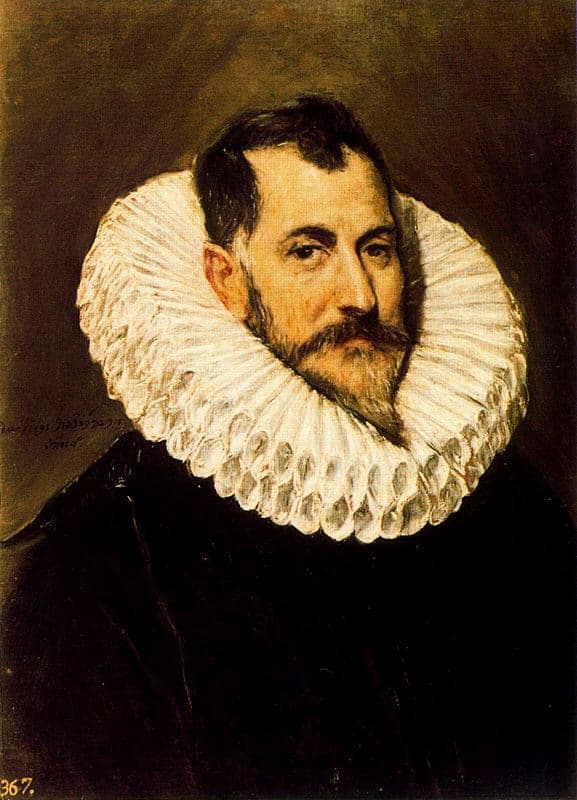
Madrid, winter 1615. In a house with a patio in the Letras district, an old man with a lifeless left hand receives us, a goose quill resting on still-damp pages. His voice is slow, but his eye sparkles with that irony which made all Europe laugh.
—They say you consider the day of Lepanto the finest of your life. How is it that a wound became your pride?
It was October 1571, off Lepanto. I had a fever; they advised me to stay below deck, out of harm's way. I refused: I wanted to be where the fighting was fiercest. Three arquebus shots found me, one of which left this left hand dead, hanging at my side like an empty glove. People still pity me today, and I laugh. I'm wont to say I lost it for the greater glory of the right hand — the one that now holds the pen. That day the Christian fleet broke the Turk's pride in the Mediterranean, and I, a simple feverish soldier, had the good fortune to be a grain of powder there.
I lost it for the greater glory of the right hand — the one that now holds the pen.
—You speak of the soldier and the writer as one man. What does this sword you carried so long represent to you?
The sword and the pen have never warred in me. I put into my hidalgo's mouth a whole discourse on arms and letters, and I still believe it: one needs the courage of the body to earn that of the spirit. A man who has never been cold on a galley's deck, who has never felt fear dry his throat, will always write a little off the mark from life. My years of cuirass and morion helmet taught me what a thousand books do not: the real weight of a word like honor. When I describe a battle, I do not imagine — I remember, and memory smells of gunpowder.
—In 1575, your return to Spain turned into a nightmare. What remains in you of those five years in Algiers?
I was returning light-hearted, a letter from Don John of Austria in my bag, convinced they would make me captain. The Barbary corsairs decided otherwise: I was thrown, chains on my feet, into the bagnios of Algiers. Five years, sir. I was a Barbary captive among thousands of others, and I tried to escape four times, four times in vain. Each failure should have earned me the stake or the noose; I know not what strange favor saved me. What do I retain from it? The certainty that liberty is not a poet's word, but a physical hunger that keeps you awake at night. All my life, my captives and renegades came out of those white walls.
Liberty is not a poet's word, but a physical hunger that keeps you awake at night.
—Your release in 1580 came at a price. How did you experience that return to a Spain that was not expecting you?
It was the Trinitarian fathers who gathered the ransom, and my own family ruined themselves for it — my mother begged, my sister sacrificed her dowry. Imagine: they bleed themselves dry to tear you from chains, and the homeland for which you shed your blood at Lepanto welcomes you with a shrug. No pension, no worthy post. I had to become a clerk, run around Andalusia for a few maravedis. That is where I understood something bitter and fruitful at once: the hero and the beggar can lodge in the same body. All my Don Quixote perhaps lies in that vertigo — the man who believes himself a knight when the world sees only a poor wretch.
—You mention the clerk. How does a man of letters end up requisitioning wheat for the Crown?
For lack of better, sir, for lack of bread. I was appointed commissary of supplies for His Majesty's Armada, and there I was, traveling through the villages of Andalusia, my ledger under my arm, confiscating grain and oil from recalcitrant peasants. Believe me, nothing trains a novelist better than haggling with a priest who hides his oil jars! My afternoons were spent in arguments, accounts, dusty roads. I even tasted prison for irregularities in my accounts — the height of irony for someone who demanded others' money. But from those markets, those crafty and cunning faces, I drew an entire gallery: innkeepers, muleteers, rogues. The great Spanish road was my true theater.
Nothing trains a novelist better than haggling with a priest who hides his oil jars.
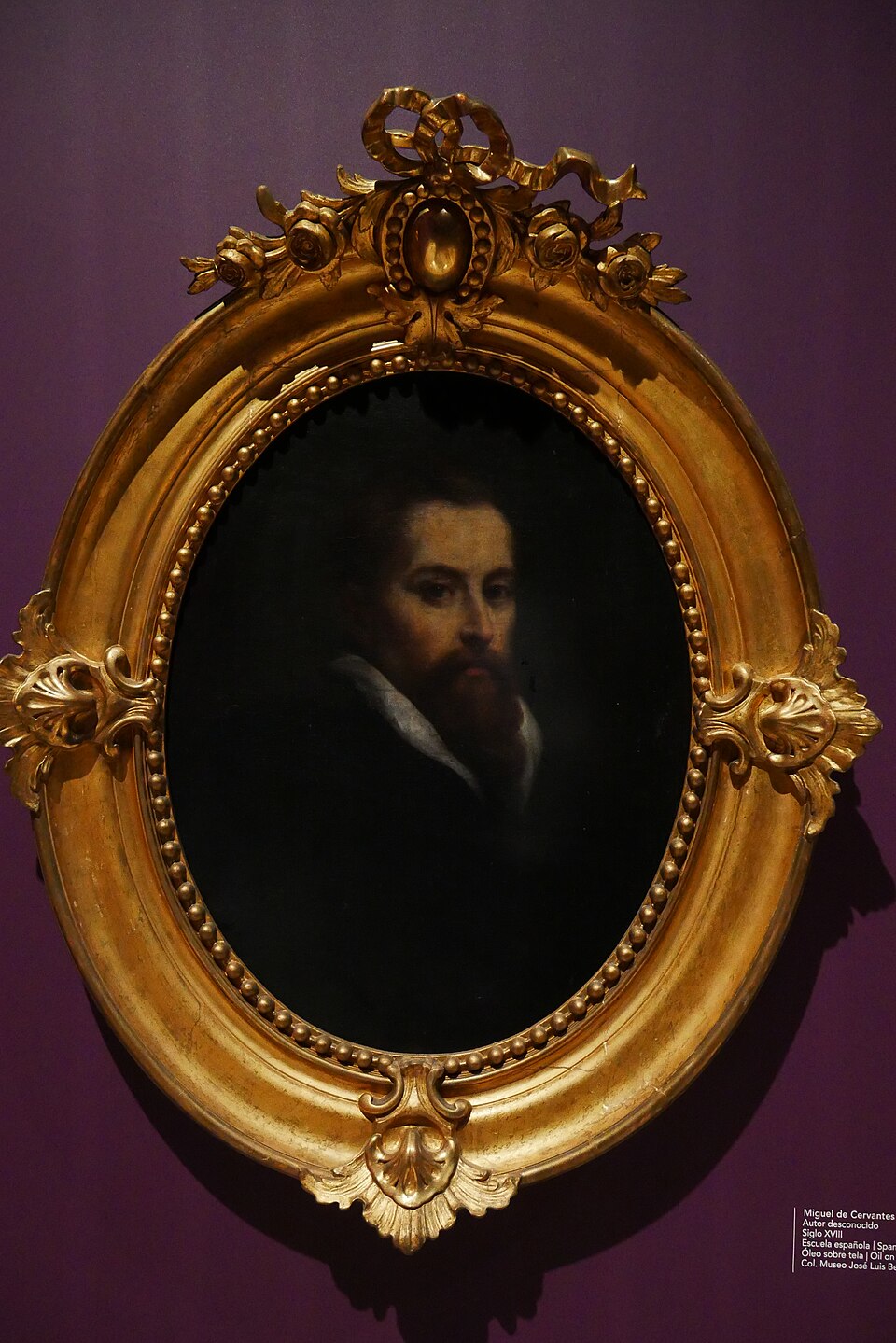
—Do you regret those obscure, laborious years, or do you owe them something?
I do not bless them, but I owe them my eye. A court poet sees only fountains and shepherdesses; I saw Andalusia in its mud and light, the suspect Moriscos under surveillance, the roads infested with pícaros. My job as commissary threw me against real society, the one that smells of suint and frying, not that of dedications. That is why my hidalgo meets galley slaves, traveling actors, tavern girls — all those people I rubbed shoulders with, ledger in hand. Had I remained a pensioned gentleman, I would have written only insipid pastorals, like my poor Galatea. Misery gave me the whole world as my portion.
—Let us talk about your hidalgo. Where did you get the idea of a man driven mad by his reading of chivalric romances?
From everywhere and nowhere. All of Spain was gorging on books of chivalry — Amadis of Gaul and its ilk — as one gets drunk on a heady wine. I wanted to laugh at it, to show a worthy hidalgo who, by staying up over these fables, takes windmills for giants and inns for castles. It all begins with that sentence I will never let go: En un lugar de la Mancha, de cuyo nombre no quiero acordarme. I thought I was mocking a genre; I gave birth to a man. For beneath the laughter something else pierces: a madman wiser than the wise, who chooses his truth against that of the world. The first part, in 1605, was read as far as the Indies.
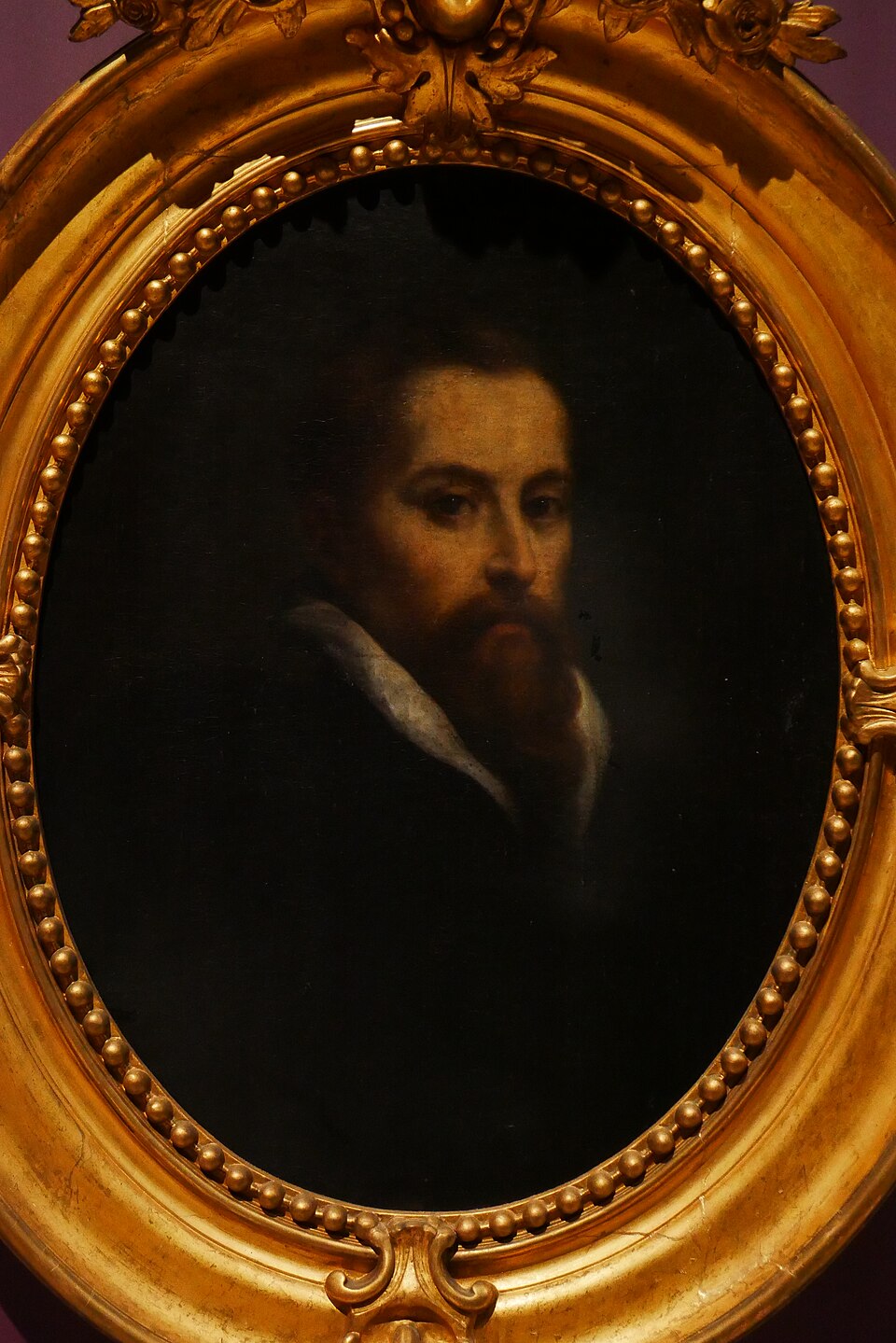
—A certain Avellaneda dared to write a false sequel to your novel. How did you counter this imposture?
Ah, the rascal! In 1614, a scribbler masked under the name Avellaneda published an apocryphal sequel to my Don Quixote, stealing my knight as one steals a purse, and insulting me in his preface to boot. My blood was slow, but it boiled. My revenge was not a duel — I left my dead hand at rest — but my pen. In my second part of 1615, I wove this imposture into the narrative itself: my characters learn that a false Quixote is roaming the world, and the real one is indignant. What better punishment than to drown the plagiarist in the fiction he sought to plunder? Truth, cuya madre es la historia, always ends up confounding the liar.
What better punishment than to drown the plagiarist in the fiction he sought to plunder?
—You lived at the heart of the Golden Age, in the shadow of the great Lope de Vega. How did you view this rivalry?
What a time, sir, what a Golden Age! In the evening, I would slip into the corrales de comedias, those open-air theaters set in a courtyard, where the people whistled and applauded elbow to elbow. And there reigned Lope de Vega, that monster of nature who churned out plays like a tree gives fruit, with no apparent effort. I admired him and I envied him — both at once, for a poet's heart is thus. My own plays never had his public favor, I confess. So I took revenge in prose and verse: in my Journey to Parnassus, I reviewed all the rhymesters of my time, distributing praise and pinpricks with a mischievousness that I believe turned out rather well.
—You are ending your life today with pen in hand. What would you say to someone who will read you a century from now?
A century? What poetic presumption to think of it! But since you press me: I have just received extreme unction, and I am still writing the dedication of my Persiles. I have traced these words — Puesto ya el pie en el estribo, con las ansias de la muerte, gran señor, esta te escribo — my foot already in the stirrup, with the anguish of death. If a reader finds me in a hundred years, let him know that I wrote to my last breath, as a man who loved life so much he could not tear himself away without one final sentence. My hidalgo will tell him the rest better than I. Let him laugh, let him weep, and let him choose, like my madman, to believe in finer windmills.
I wrote to my last breath, as a man who loved life so much he could not tear himself away without one final sentence.
This imaginary interview was generated by artificial intelligence from sources documented in Miguel de Cervantes's profile. It dramatises what the figure might have said based on what we know about them, but does not constitute attested historical testimony. For primary sources and factual documentation, refer to the full profile.