Imaginary dialogue between Voltaire and Montesquieu
by Charactorium · Montesquieu (1689 — 1755) · Literature · Philosophy · Politics · 5 min read
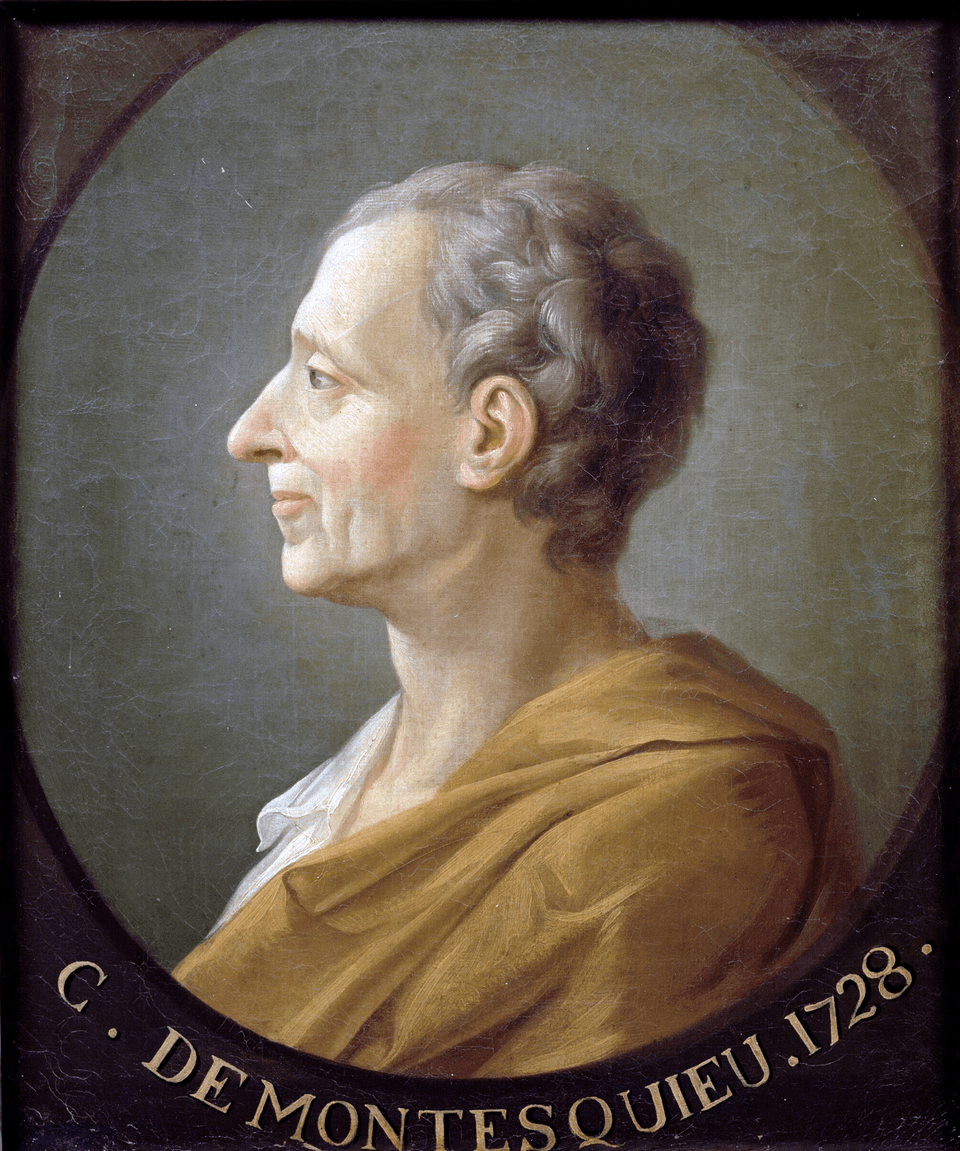
It is in the great library of the Château de La Brède, among thousands of volumes and the smell of bound leather, that Voltaire meets his host one autumn morning in 1750. Outside, the vineyards of Gironde are finishing their harvest, and the low light filters through the mullioned windows. The two men have known each other for a long time — two minds marked by England, two pens troubled by the court. Voltaire, lively and rebellious, has not come to flatter: he comes to push his rival into his defenses, on liberty, laws, and that wine the baron exports so proudly.
—My dear baron, in 1721 you launched your Persian Letters without putting your name on them. Why this cautious mask?
Because truth, my dear Voltaire, is best spoken through the mouth of a stranger. Having two Persians visiting Paris speak gave me the right to see everything as new: our convents, our ministers, our ridiculous fashions. If I had signed in my own name as a Bordeaux magistrate, I would have been accused of sedition; signed Usbek and Rica, I was merely an amusing storyteller. The book was reprinted so many times in a few months that booksellers were tearing pages still damp. You who know how sweet it is to strike without the blow being parried, will understand me: the mask is not cowardice, it is strategy. One laughs at the Persian, and finds oneself corrected without noticing.
One laughs at the Persian, and finds oneself corrected without noticing.
—Your Parisians ask Rica: "How can one be Persian?" Isn't that, deep down, your entire method?
You have put your finger on the clockwork. This question, asked of Rica in the street, is an admirable stupidity: it expresses all the foolishness of a man who believes his way of being is the only possible one. The Parisian is astonished by the Persian as if nature had made a mistake. Yet it is precisely this mirror I wanted to hold up. By showing our customs through eyes that have never seen them, I make them visible to ourselves. We believe our laws eternal because we are born into them; the traveler, however, sees that they could have been otherwise. This curiosity, this relativism of perspective, I have kept all my life: it is the beginning of all serious philosophy.
The Parisian is astonished by the Persian as if nature had made a mistake.
—We both crossed the Channel. When you were in London, what did you see that France did not show you?
I saw there, my friend, a people where power stops power. You who lived there in your years of exile, you know what one breathes in that Parliament: a king who cannot do everything, chambers that cannot do everything either, and judges who depend on neither one nor the other. I stayed there nearly two years, from 1729 to 1731, observing how liberty is born not from beautiful souls, but from the arrangement of things. I was honored to be elected to the Royal Society. It was there that I understood what I have since written: that the separation of legislative and executive powers is not a philosopher's luxury, but the only dike against arbitrariness. France has a tempered king; England has tempering institutions. The difference is immense.
Liberty is born not from beautiful souls, but from the arrangement of things.
—You wrote to William Domville your admiration for the English constitution. Is that not yielding to the Anglomania we are both accused of?
We are reproached for it, it is true, and wrongly. I do not admire England because it is English, but because it has found a mechanism we would do well to study. When I wrote to Domville, I was not praising the climate or the cuisine of London — God forbid — but this idea that political liberty depends on the separation of powers. A people can be free under imperfect institutions if no body concentrates all power. That is what I brought back in my luggage, more precious than any silk. It is not Anglomania: it is observation. I do not love a country, I love a lesson. And that lesson is as valid for the French as for the English.
I do not love a country, I love a lesson.
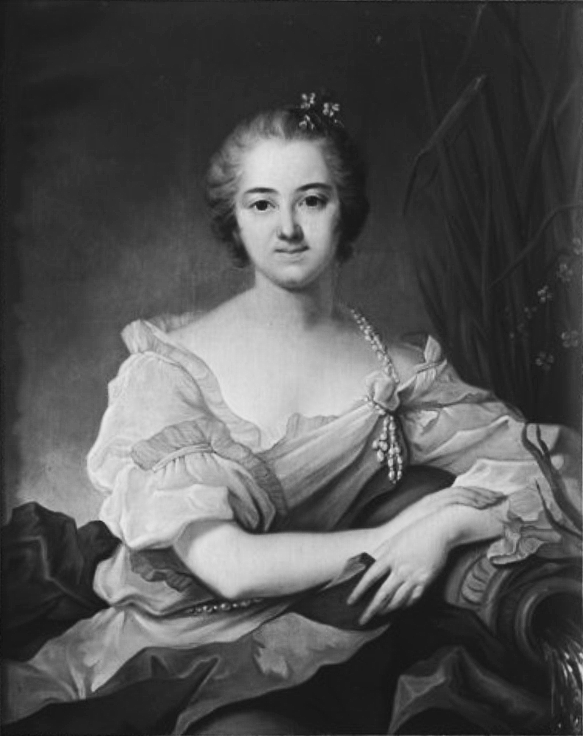
—You spent nearly twenty years building The Spirit of the Laws. How does one bear such a long burden, nearly blind?
One bears it because one cannot do otherwise. Twenty years, yes, piling up, comparing, erasing thirty-one books on laws, climates, governments of the whole earth. And my eyes betraying me little by little — that disease threatening to plunge me into darkness. I had to dictate what I could no longer read, entrust my thoughts to secretaries, have them repeat a passage a hundred times that I corrected from memory. There were days when I thought the work and I would end together. This work almost killed me, and I am resting. But know, Voltaire, that a man who holds his book like a shipwrecked man holds his plank has no leisure to despair. One gropes forward, and one arrives.
This work almost killed me, and I am resting.
—Thirty-one books, climate, customs, commerce... Did you not fear being accused of embracing everything only to grasp poorly?
That fear never left me, and yet I could not escape it. Laws do not fall from heaven, my friend: they are tied to a country's climate, its soil, its religion, its commerce, the character of its people. That is what I call their spirit — that hidden relationship between a law and the thousand things that give rise to it. I have been told I scatter; I reply that I connect. My theory of climates, for which I will be reproached, is only an effort to understand why what is just in Bordeaux would be absurd in Isfahan. I wanted a causal method, as I had sketched one on the greatness of the Romans. Embrace everything, perhaps; but without that vast perspective, one makes only regulations, never a science of laws.
Laws do not fall from heaven: they are tied to a people's climate, soil, and commerce.
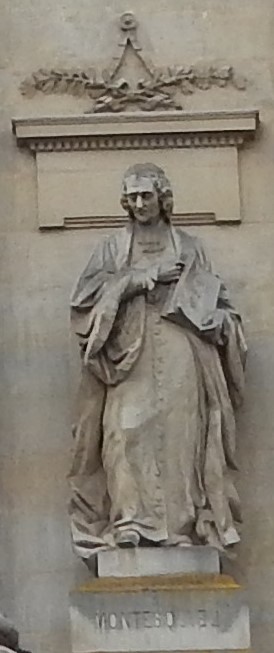
—The Church placed your masterpiece on the Index last year. You who reproached me for my caution, how do you live with this condemnation?
Badly, I admit, and you have good sport reminding me of my lessons in caution. Seeing The Spirit of the Laws listed among books forbidden to the faithful was a blow to the heart. I was accused of being secular, relativist, of not making laws descend from Providence. That is why I took up my pen this very year for my Defense: not to recant, but to show that comparing religions is not denying them, and that analyzing human laws does no injury to divine laws. You know better than I the price of such battles — you who were imprisoned in the Bastille, exiled, still pursued. I am not one who loves scandal. But when my method is attacked, I defend my method. Truth is not placed on the Index.
Comparing religions is not denying them; truth is not placed on the Index.
—Enough philosophy. They say the Baron de La Brède exports his own wine to England. Does the magistrate become a merchant?
The magistrate above all becomes a free man, my dear mocker. These vineyards you see through the window, I watch over them as I watch over a sentence: with care and mistrust. My wine goes to England and Ireland, and I get from it enough to live without owing anything to anyone — neither to a minister, nor to a patron, nor to a royal pension. That is my real secret: a philosopher who lives by his books alone ends up a courtier or a starveling. I owe my independence to my vines. People think I am entirely in my folios; they forget that I walk through my rows of vines at dawn, talking harvests with my stewards. This Gascon land keeps my feet on the ground while my head chases after the laws of the world.
A philosopher who lives by his books alone ends up a courtier or a starveling.
—And that red robe of a président à mortier you wore at the Parliament of Bordeaux — did you leave it without regret?
Without regret for the office, with gratitude for the lesson. I presided over a chamber at the Parliament of Bordeaux from 1716 to 1726, in that scarlet robe that impresses the litigant and weighs down the magistrate. The job did not much interest me — the procedures, the chicanery, the endless minutes. But do you know what I gained from it? A carnal knowledge of justice, of laws, of how a body of magistrates can resist a king by refusing to register his edicts. Everything I later theorized about powers, I had first touched with my finger under that robe. I sold the office, yes; I did not sell the experience. A man who wants to write about laws must first have handled them, just as one knows wood better when one has held the plane.
Everything I later theorized about powers, I had first touched with my finger under that robe.
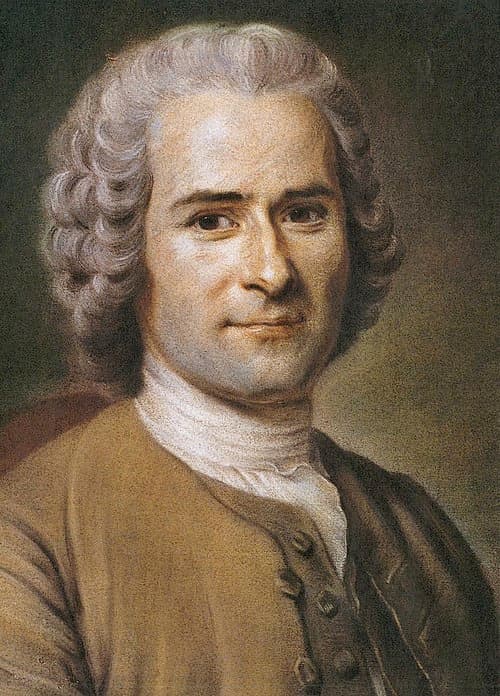
This imaginary interview was generated by artificial intelligence from sources documented in Montesquieu's profile. It dramatises what the figure might have said based on what we know about them, but does not constitute attested historical testimony. For primary sources and factual documentation, refer to the full profile.