Imaginary interview with Montesquieu
by Charactorium · Montesquieu (1689 — 1755) · Literature · Philosophy · Politics · 6 min read
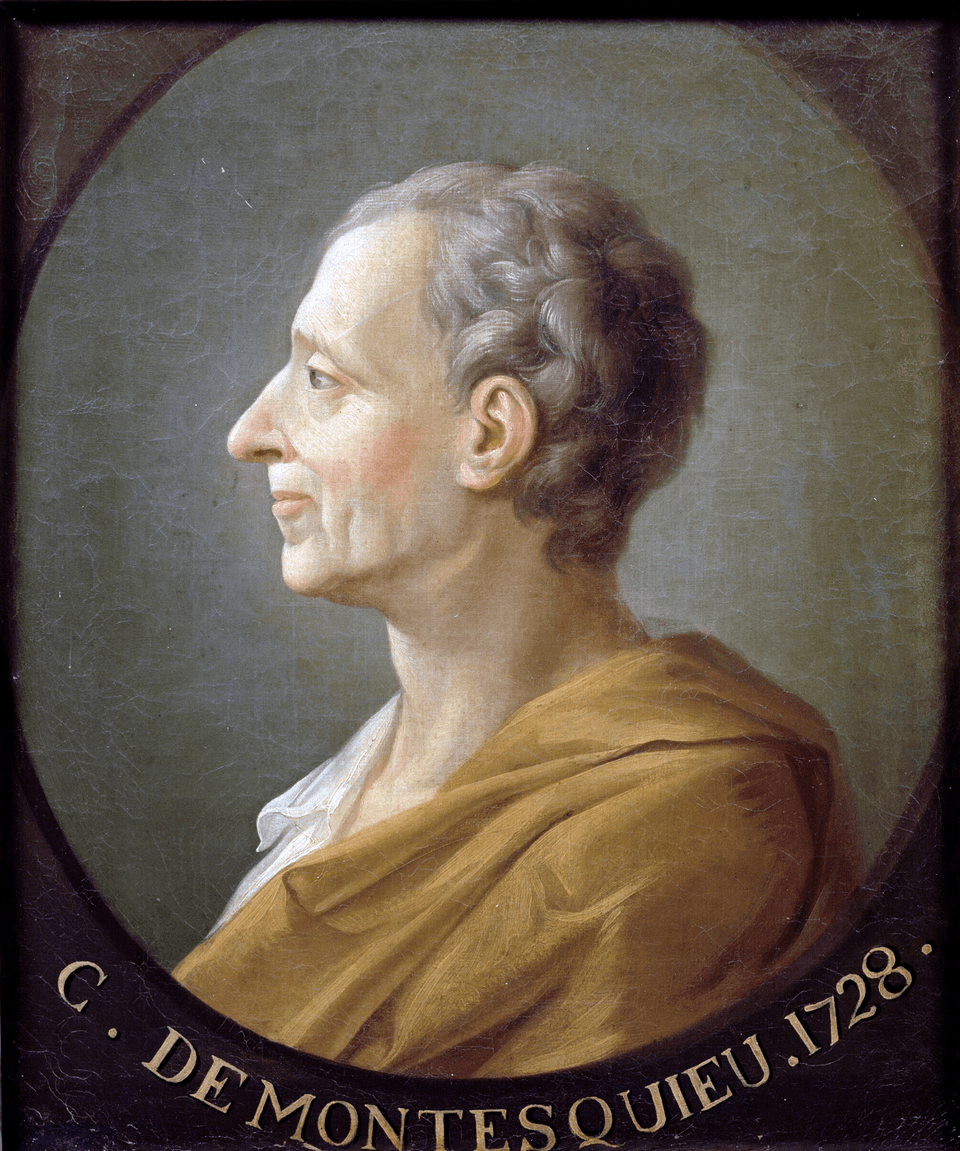
It is in the great library of the Château de La Brède, among the thousands of volumes lined up behind the medieval moats, that Montesquieu receives us, one autumn at the end of his life. The light comes in through the tall windows; he squints his tired eyes, smiles, and has a bottle of his own wine brought in. The conversation opens like a walk through his vineyards: unhurried, but without detours.
—How did you come up with the idea of having France observed by two travelers from Persia?
It was in 1721, and France had barely emerged from the interminable reign of Louis XIV. I had understood one simple thing: we no longer see our own faults, just as we no longer smell the odor of our own house. A foreign nose was needed. So I imagined Usbek and Rica arriving in Paris, writing to their friends in Isfahan about everything that astonished them — our fashions, our priests, our women, our kings. The device was convenient: one forgives a Persian what one would never forgive a Gascon. I published Persian Letters without putting my name on it, and the work was reprinted so many times in a few months that the booksellers lost their heads. The mask, you see, often speaks more truths than the face.
One forgives a Persian what one would never forgive a Gascon.
—A line from that book has remained famous. What did you intend by it?
When Rica walks through Paris, people stare at him like a strange beast, and someone finally exclaims: 'How can one be Persian?' Everything is there, in that silly little sentence. Those people could not conceive that anyone might exist differently from them; their own custom served them as nature. Now, nothing has occupied me more throughout my life than this idea: what we believe eternal is often only a habit of our climate and our history. The Parisian who laughs at the Persian is exactly as strange in the Persian's eyes. I wanted people to laugh, yes, but to leave the laughter feeling a little less sure of themselves. That is the beginning of political wisdom.
What we believe eternal is often only a habit of our climate.
—Before being the writer we know, you long served as a magistrate. What did that role teach you?
I inherited in 1716 the office of president à mortier at the Parliament of Bordeaux, with its scarlet robe and ceremonial black hat. For ten years, I dispensed justice, registered the king's edicts, listened to pleadings in often obscure and sometimes sordid cases. People think that laws are written in the silence of studies; I saw them applied to real men, with their clumsiness and injustices. That red robe taught me what no book teaches: that a law is nothing without the institution that carries it, and that a poorly distributed power corrupts as surely as a forgotten fruit. I eventually sold the office — the detail of procedures wearied me — but I never lost my taste for concrete things.
People think that laws are written in the silence of studies; I saw them applied to real men.
—You speak of institutions as living organs. Where does that way of thinking come from?
From my profession as a judge, and also from my readings on Rome. In my Considerations on the Causes of the Greatness of the Romans, in 1734, I wanted to show something that scandalized some minds: 'It is not fortune that rules the world.' An empire neither rises nor falls by the caprice of fate; there are general causes, moral or physical, that maintain or overthrow it. In Parliament, I had seen with my own eyes how a custom, a slowness, a privilege, could derail an entire machine. I brought that anatomist's gaze to all of history. A constitution is a body: you need to know where the blood circulates, where it stops, where it thickens. It is less glorious than singing of heroes, but infinitely more useful.
—You stayed nearly two years in England. What did you go there to find?
I arrived after a long journey through Austria and Italy, and I stayed from 1729 to 1731, much longer than I had planned. London held me. I would go sit and listen to the British Parliament, where men debated the affairs of the kingdom out loud, where the king governed without governing everything. That existed nowhere else with such frankness. I was honored, a rare thing for a foreigner, by being elected a member of the Royal Society. But the true treasure I brought back in my trunks was not a diploma: it was an intuition. I had seen, alive and noisy, the secret of a liberty that rested neither on the virtue of a prince nor on chance, but on an arrangement.
I had seen, alive and noisy, the secret of a liberty that rested not on the virtue of a prince.
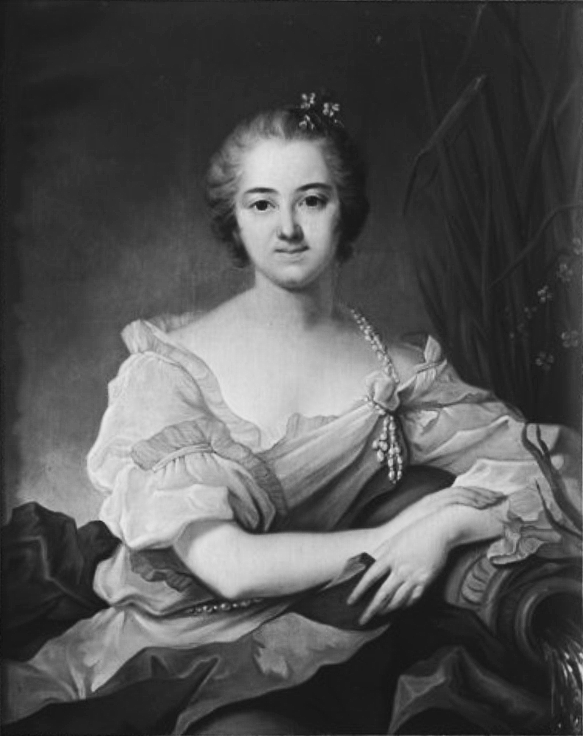
—How did you formulate that arrangement once back in France?
In the eleventh book of The Spirit of the Laws, after turning it over and over for twenty years. The formula I am most attached to is in one line: 'So that one cannot abuse power, power must check power by the arrangement of things.' Note that I ask for neither saints nor philosophers at the helm. I distrust virtuous men as much as others; any man who holds power is inclined to abuse it, that is his tendency. The only solid dike is not morality, it is mechanics: that the legislative, executive, and judging powers be in separate hands, and counterbalance each other. I drew this idea from English soil, but I dare believe it suits all climates.
Any man who holds power is inclined to abuse it; the only solid dike is mechanics.
—So you fear above all a certain form of government. Which one?
Despotism. It is in my eyes the worst of constitutions, because it is not one: a single man governs without laws, without rules, by fear alone. There, power checks nothing; it spreads like water over a plain, until everything is drowned. I oppose to this monstrosity tempered monarchy, where intermediary bodies — a parliament, a nobility, customs — block arbitrariness. In England, it is the division of powers; with us, it was long those old institutions that the court would like to shave down. I have been criticized for my theory of climates, and rightly so on many points. But let them read me on despotism: that is where my heart as a free man beats.
—They say writing your great work nearly cost you your sight. Do you remember that effort?
Nearly twenty years, sir. Twenty years of amassing notes, comparing the laws of all peoples, from Rome to Persia, arranging that chaos into thirty-one books. And all the while my eyes were betraying me. A dull disease gradually veiled them; there were days when I could no longer make out my own lines. I had to resort to secretaries, dictating to them for hours on end, redoing what they had misunderstood. When the work finally appeared, in 1748, exhausted, I told a friend that this work had nearly killed me, and that I was resting. That was not a coquetry. A book, sometimes, costs half of one's light.
A book, sometimes, costs half of one's light.
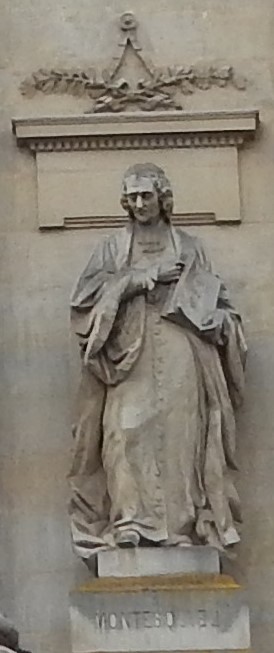
—How do you keep working when the body gives way like that?
Through habit and stubbornness, which are the two legs of the old man. When the quill pen became useless to me, I would walk in this library talking out loud, and a faithful secretary would catch on the fly what was worth keeping. I have always had my best thoughts in motion, never seated. And then I had learned a maxim early on that I repeated to myself: 'I have always seen that, to succeed in the world, one must look foolish and be wise.' In the eyes of my neighbors, this half-blind magistrate pacing his room dictating Persian laws surely passed for a little mad. So much the better. Wisdom likes to hide under an air of extravagance; one disturbs it less.
—You mention your neighbors. It is often forgotten that the philosopher was also a winemaker. What did that estate mean to you?
My freedom, quite simply. This Château de La Brède where we speak is not just a medieval setting surrounded by moats: it is an estate that produces wine, and I am its merchant as much as its lord. I sold my barrels as far as England and Ireland, I watched over my vines, discussed prices with my stewards like a businessman. People are surprised that a man who writes about laws stoops to counting barrels. But he who depends on a patron or a royal pension never writes quite freely. My wine bought me the right to say what I thought in The Spirit of the Laws without trembling. True independence of the mind often has its feet in the earth.
True independence of the mind often has its feet in the earth.
—Would you say your life at La Brède nourished your thought as much as your travels?
Probably more. My days here have a peasant rhythm: in the morning, reading and dictation; then a tour through the rows of vines, judging the ripeness of the grapes; in the afternoon, correspondence with jurists and philosophers from all over Europe. In the evening, in Paris, there are salons, wit, irony — but here, there is silence and the fire. And it is in this silence that lasting ideas are born. Watching a vine grow, one learns the patience of slow causes, the same patience needed to understand why Rome rose and then fell. The winemaker and the historian do the same job: they observe what ripens, and they wait. The earth taught me half of my philosophy; the books only arranged the other half.
The winemaker and the historian do the same job: they observe what ripens, and they wait.
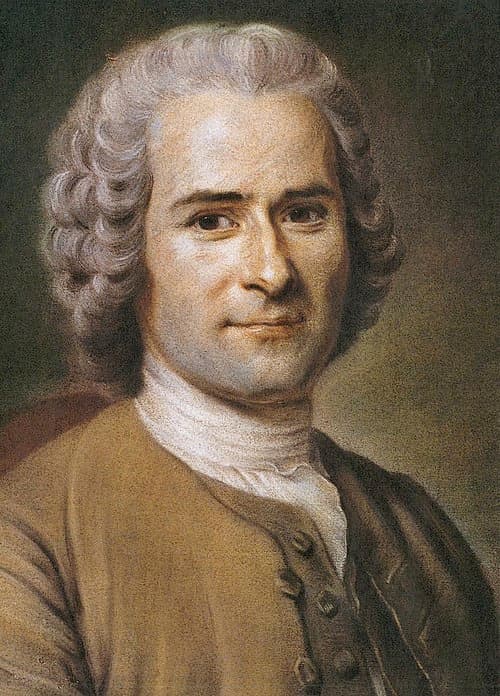
This imaginary interview was generated by artificial intelligence from sources documented in Montesquieu's profile. It dramatises what the figure might have said based on what we know about them, but does not constitute attested historical testimony. For primary sources and factual documentation, refer to the full profile.