Kids interview Napoleon Bonaparte
by Charactorium · Napoleon Bonaparte (1769 — 1821) · Politics · 5 min read
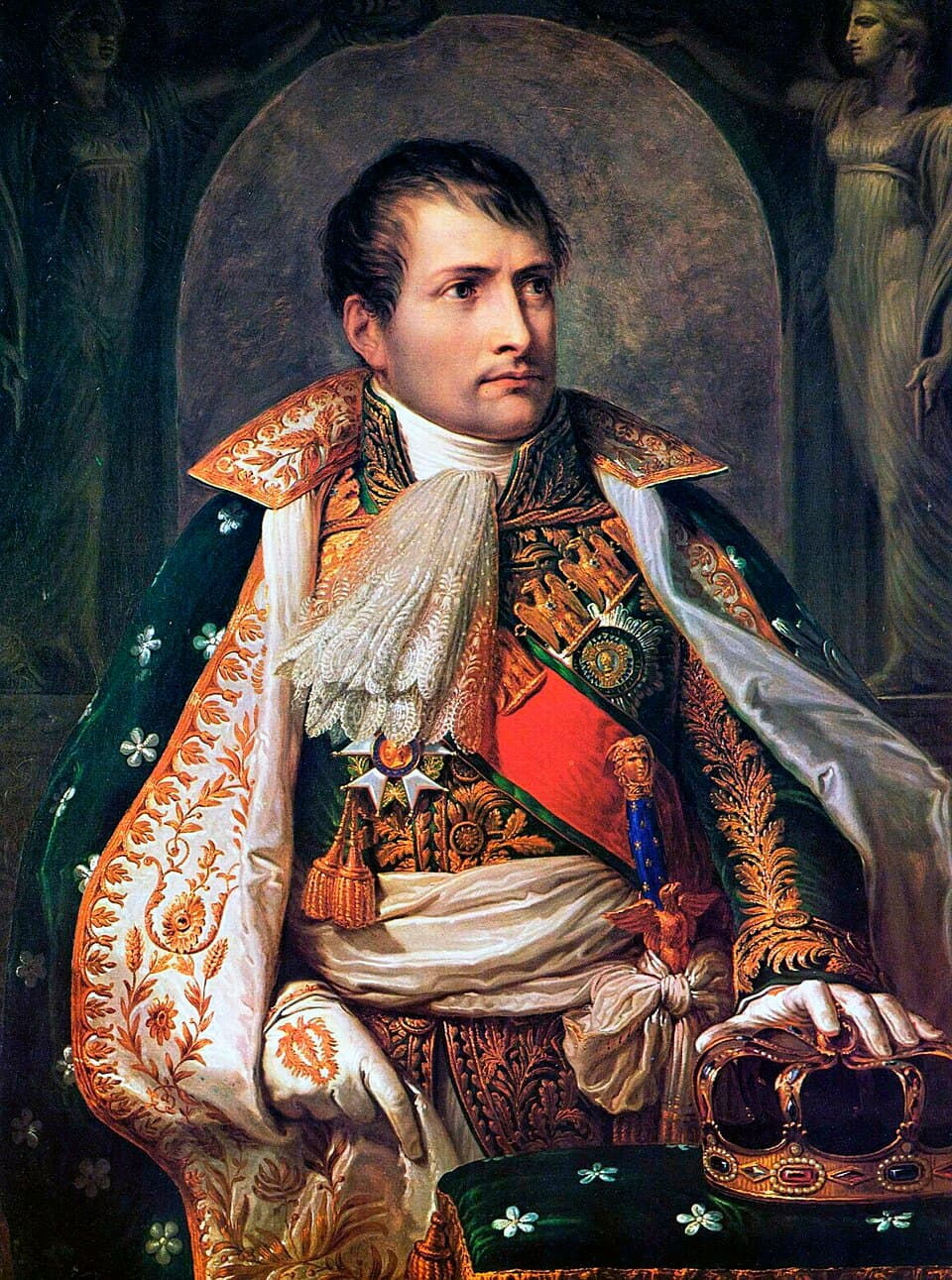
Two twelve-year-old visitors, on a school field trip, push open the door of a large office at the Tuileries. A man in a gray frock coat awaits them, a thick book lying before him. He motions them closer, almost moved that they are there.
—How old were you when you became a general?
You know, my child, I was only twenty-four years old. Imagine: a skinny young captain, still speaking with the accent of his native Corsica. We were at Toulon, in 1793, a city taken by the English. Everyone hesitated. I looked at the hills and understood: if we take that height, we hold the port. I proposed my plan. It worked. A few days later, I was named brigadier general. At your age plus twelve years, you see. My heart was beating very fast. That day I understood that you don't win by waiting, but by daring to look where no one looks.
You don't win by waiting, but by daring to look where no one looks.
—Is it true that you took scholars to war, in Egypt?
Yes, and many people thought I was crazy! In 1798, I left for Egypt with my soldiers, but also with 167 scholars: draftsmen, mathematicians, people who measured ancient stones. Imagine an army where, alongside cannons, there are men with notebooks and pencils. There, my soldiers found a stone covered with strange signs: the Rosetta Stone. Much later, a Frenchman named Champollion used it to finally read hieroglyphs. You see, I wanted to conquer lands, yes. But also to conquer knowledge. A country that can read the past is stronger.
I wanted to conquer lands, but also knowledge.
—What did your morning smell like when you were at war?
Ah, my morning! I got up very early, often before six o'clock. And believe it or not: even in the middle of a muddy camp, I took a hot bath for an hour! My valets heated water in a travel bathtub. It was my only moment of calm. It smelled of warm water, fire smoke, wet grass. Then I put on my bicorne worn sideways, never like the others, so I could be recognized from afar. Then I dictated twenty letters before even eating. In the evening, my dinner lasted twenty minutes! I ate quickly: chicken, lentils, bread. Glory did not stop me from loving simple things.
Even in the mud of a camp, I took my hot bath every morning.
—Why did you take the crown yourself on the day of your coronation?
It was December 2, 1804, at Notre-Dame de Paris. Pope Pius VII had come from Rome. Imagine the immense cathedral, the candles, the cold, thousands of eyes fixed on me. The right word is coronation: a ceremony where one becomes emperor before God. And then, instead of letting the pope place the crown on my head, I took it myself with my own hands. Then I placed it. Why? To say a simple thing: I owed my power to no one. Neither to a king, nor to the Church. I had earned it. That gesture, my child, was worth a whole speech.
I took the crown myself: my power, I owed it to no one.
—Were you afraid, in front of all those people, on the day of the coronation?
You know, I was mostly afraid of trembling! A leader must never show hesitation. Before me were the pope, my marshals covered in gold, and my wife Joséphine kneeling. After crowning myself, I placed a crown on her head. She was crying softly. Imagine that moment: a little boy born on a poor island, become Emperor of the French. My heart was beating, yes. But I had learned to turn fear into strength. The cold of the stone, the weight of the ermine mantle on my shoulders... I still remember it. That day, I did not allow myself a single second of weakness.
I had learned to turn fear into strength.
—What is the Civil Code, the book you carried everywhere?
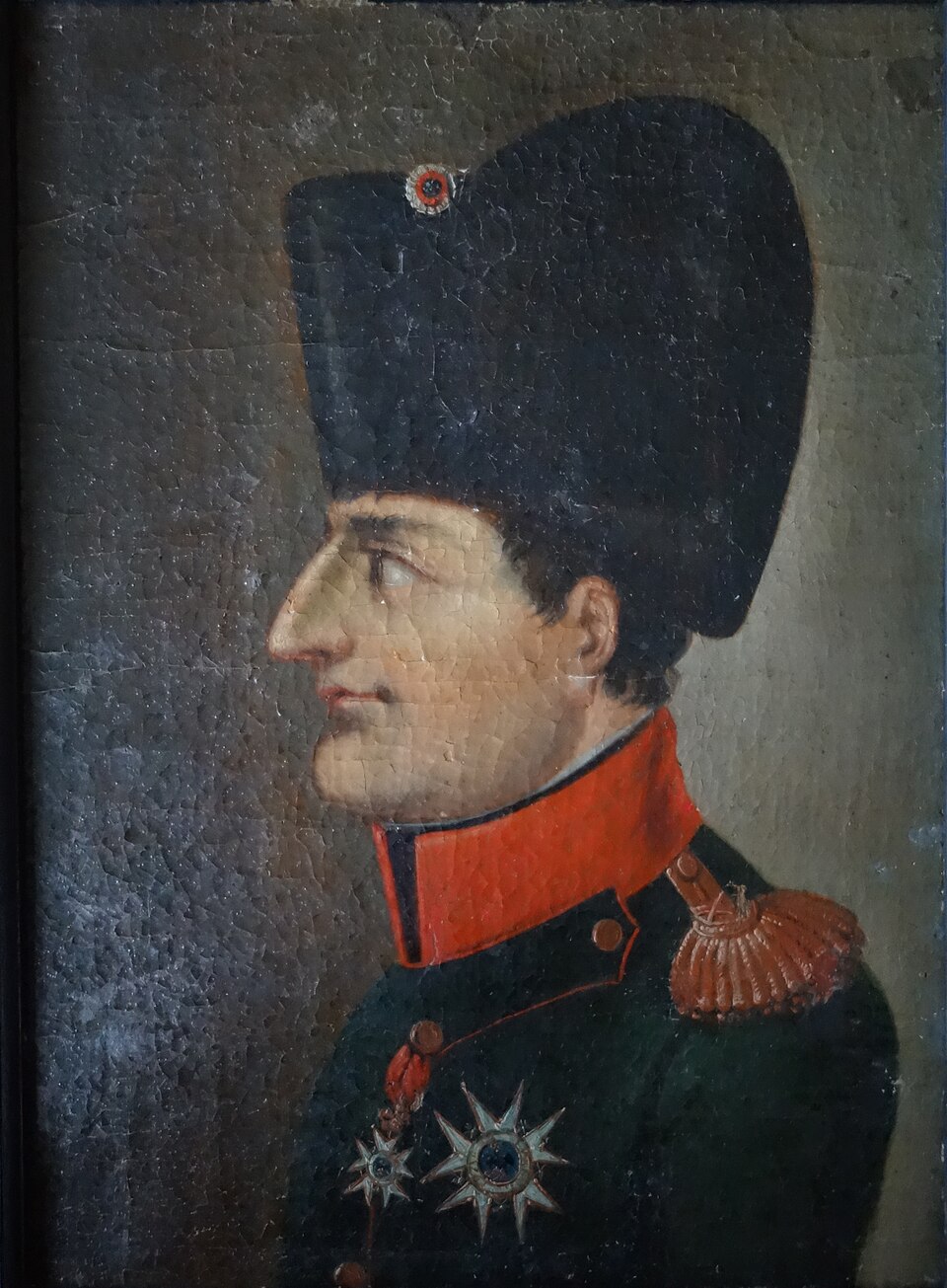
Come closer, look at this big book on my table. It is my Civil Code, enacted in 1804. Before it, in France, each region had its own laws! A neighbor could be judged differently than you for the same thing. It was chaos. So I gathered jurists, and together we wrote clear rules, the same for everyone: on family, on property, on contracts. Imagine a great book where everyone, rich or poor, can finally know their rights. I carried it everywhere, even on campaign, and discussed it in the evenings. Two centuries later, it is still used. It is my greatest pride.
Clear rules, the same for everyone, rich or poor.
—Did you prefer your battles or your Civil Code?
Ah, what a fine question, my child! Many think a soldier loves his victories most. I won dozens of battles, like at Austerlitz in 1805. But listen well to what I once said: my true glory is not to have won forty battles; what nothing will erase is my Civil Code. A battle, you see, is forgotten, or worse, you lose one like at Waterloo and it erases the others. But just laws cross time and protect people I will never know, like you. Swords rust. Good laws, they keep serving.
Swords rust; good laws keep serving.
—Is it hard to command thousands of soldiers?
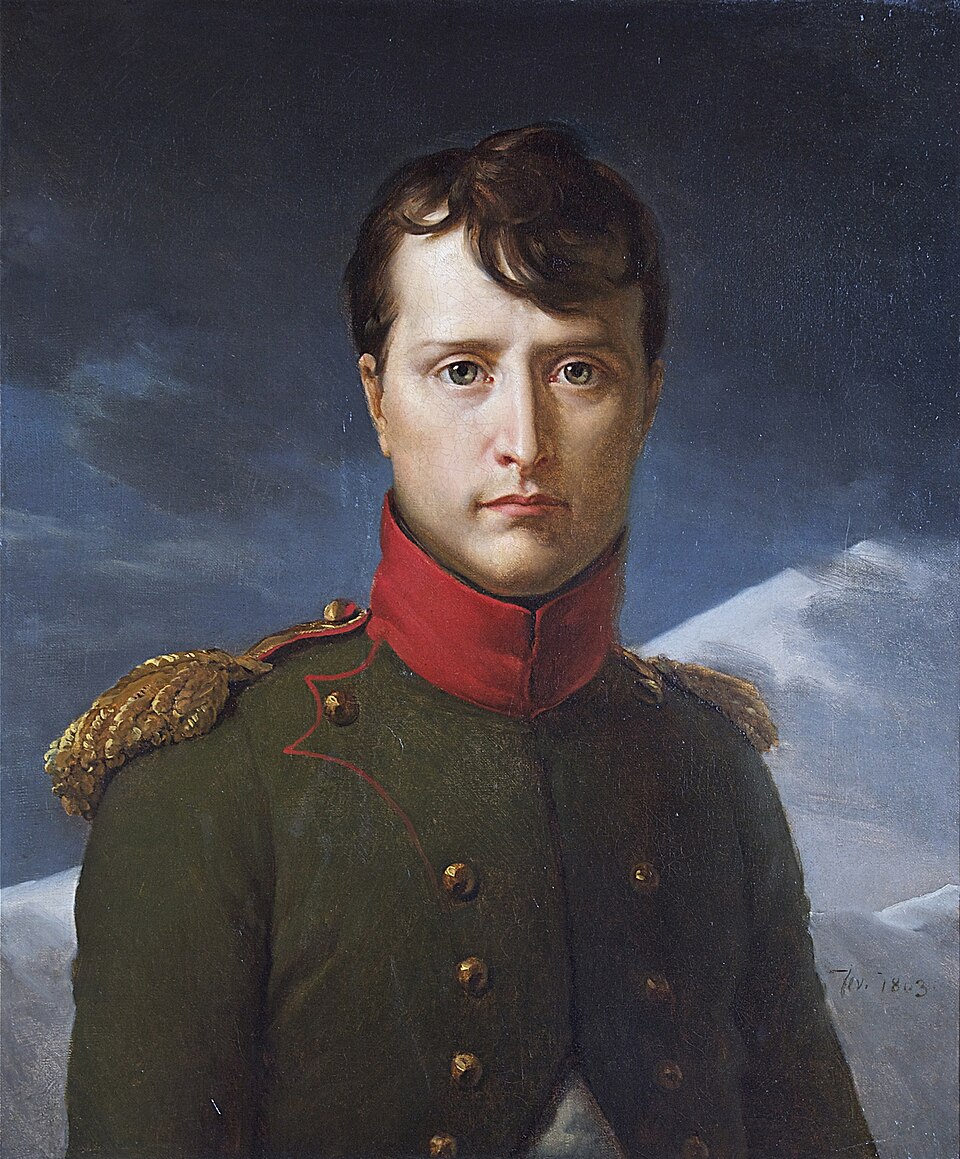
Very hard, but I had a secret. I had an enormous memory: I knew the names and faces of thousands of my men. During reviews, I would call a soldier by name, remind him of a battle where he had fought. Imagine his pride! My army was called the Grande Armée, up to 600,000 men sometimes. For so many people to follow you, it is not enough to give orders. They must feel that you truly see them, one by one. I wore a simple gray frock coat among my gilded marshals. A leader close to his soldiers, that is what I wanted to be.
For people to follow you, each must feel that you truly see them.
—Did you love books or battles more, really?
Don't say it too loudly: I loved to read! In the evening, after a day's work, I devoured books on history, geography, strategy. I even had a bust of Julius Caesar in my apartments, that great Roman general I admired so much. Imagine a man covered in battle dust who, at night, bends over a map or an old story by candlelight. For me, reading and fighting were the same thing: understanding the world in order to act on it. In Egypt, my scholars told me about their discoveries, and I listened for hours. A mind that does not feed itself ends up rusting, like a sword.
Reading and fighting, for me, were the same thing: understanding in order to act.
—What was it like, the end of your life, far from France?
Sad, my child, I will not hide it from you. After my defeat at Waterloo in 1815, I was exiled to a tiny island in the middle of the ocean: Saint Helena. Imagine a wind-beaten rock, thousands of miles from anywhere, where it often rains. There, I spent my last six years. But I did not give up. Every day, I dictated my memories to my companions. I told my life, my reforms, my battles. I knew my body would fade, but that my story could survive. And you see: today, two children come to listen to me. So I was right to keep talking.
My body would fade, but my story could survive.
This imaginary interview was generated by artificial intelligence from sources documented in Napoleon Bonaparte's profile. It dramatises what the figure might have said based on what we know about them, but does not constitute attested historical testimony. For primary sources and factual documentation, refer to the full profile.