Imaginary interview with Napoleon Bonaparte
by Charactorium · Napoleon Bonaparte (1769 — 1821) · Politics · 6 min read
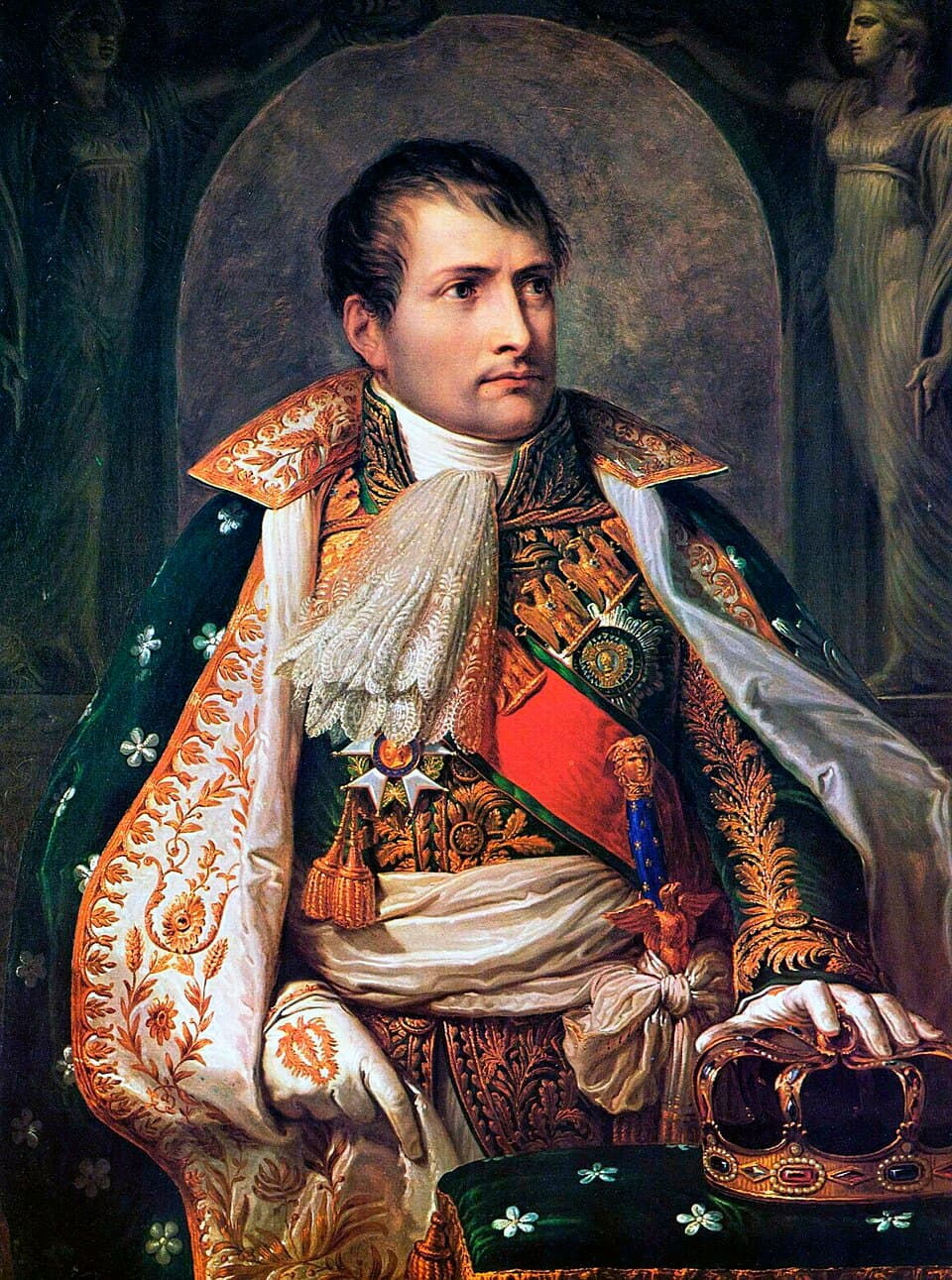
St. Helena, autumn 1820. In the modest Longwood house battered by the winds of the South Atlantic, the fallen Emperor agrees to receive a visitor. The gray overcoat thrown over his shoulders, a snuffbox within reach, he speaks in a measured voice, sometimes broken by long silences in which the roar of Austerlitz still passes.
—Do you remember the precise moment when you understood that war would be your destiny?
Toulon, winter 1793. I was twenty-four, a captain's rank and a certainty that no one around me shared: the city would not be retaken by exhausting itself under its ramparts, but by seizing Fort l'Aiguillette which commanded the roadstead. I was taken for a presumptuous man. The British evacuated. I was made brigadier general. You see, I never believed in chance on a battlefield: there is always a point, a single one, where everything tips, and genius consists in seeing it before others. At Toulon, I understood that I saw that point. Three years later, before my soldiers of Italy, ragged, I did not have to lie: I knew where to lead them.
There is always a point, a single one, where everything tips, and genius consists in seeing it before others.
—How do you galvanize men who, by your own words, were naked and poorly fed?
You do not galvanize a soldier with promises he cannot grasp. In March 1796, before the Army of Italy, I told the truth before promising: "Soldiers, you are naked, poorly fed; the government owes you much, it can give you nothing." And I added that I wanted to lead you into the most fertile plains in the world. That is the whole secret: to acknowledge a man's misery is already half his courage. Then, I knew their faces, their names, the village they came from. During a review, calling out a grenadier by name was worth ten harangues. A leader who scorns the memory of little things does not deserve that men die for him.
To acknowledge a man's misery is already half his courage.
—Why take one hundred and sixty-seven scholars on a military expedition to Egypt?
Because an army conquers only territory, but an Egypt is possessed only through the mind. In 1798, I embarked mathematicians, draughtsmen, engineers, naturalists — one hundred and sixty-seven men of science alongside the bayonets. I wanted to measure, decipher, understand this land that the Ancients already venerated. My soldiers, digging near Rosetta, unearthed a stone covered in three scripts; I could not then guess that it would one day open the hieroglyphs to the genius of Champollion. You see, I always kept in my study a bust of Caesar: he too knew that the glory of arms fades if one does not join it with the glory of intelligence. The Orient taught me that — that a conqueror who leaves only ruins is merely a well-organized bandit.
An army conquers only territory, but an Egypt is possessed only through the mind.
—What did this lineage with the conquerors of Antiquity represent for you?
As a child in Ajaccio, I read Plutarch as others read tales. The Romans were not dead for me: they were masters. When I say I kept a bust of Julius Caesar before my eyes, understand well — it was not vanity, but a lesson. Caesar had known how to be both the sword and the law, the general and the legislator. It is this double face that I sought. Alexander is remembered only for his battles; Caesar is remembered also for having ordered the world. My campaigns, from Italy to Poland, I wanted them on that ancient scale. But the sword ages quickly. It is the law, always, that remains when swords have rusted.
—Among all your works, which do you consider the most lasting?
No battle. I said it and I maintain it: "My true glory is not to have won forty battles: Waterloo will erase the memory of so many victories. What nothing will erase, what will live eternally, is my Civil Code." Two thousand two hundred and eighty-one articles, promulgated in 1804, to put an end to the chaos of local customs, privileges, and contradictory revolutionary laws. A peasant from Brittany and a merchant from Marseille finally fall under the same law. I carried a printed copy even into my bivouacs, and debated it with my jurists between marches. Cannons make noise, then fall silent. A well-drafted article of law works silently for centuries in the lives of millions of men who will be ignorant even of my name.
Cannons make noise, then fall silent. A well-drafted article of law works silently for centuries.
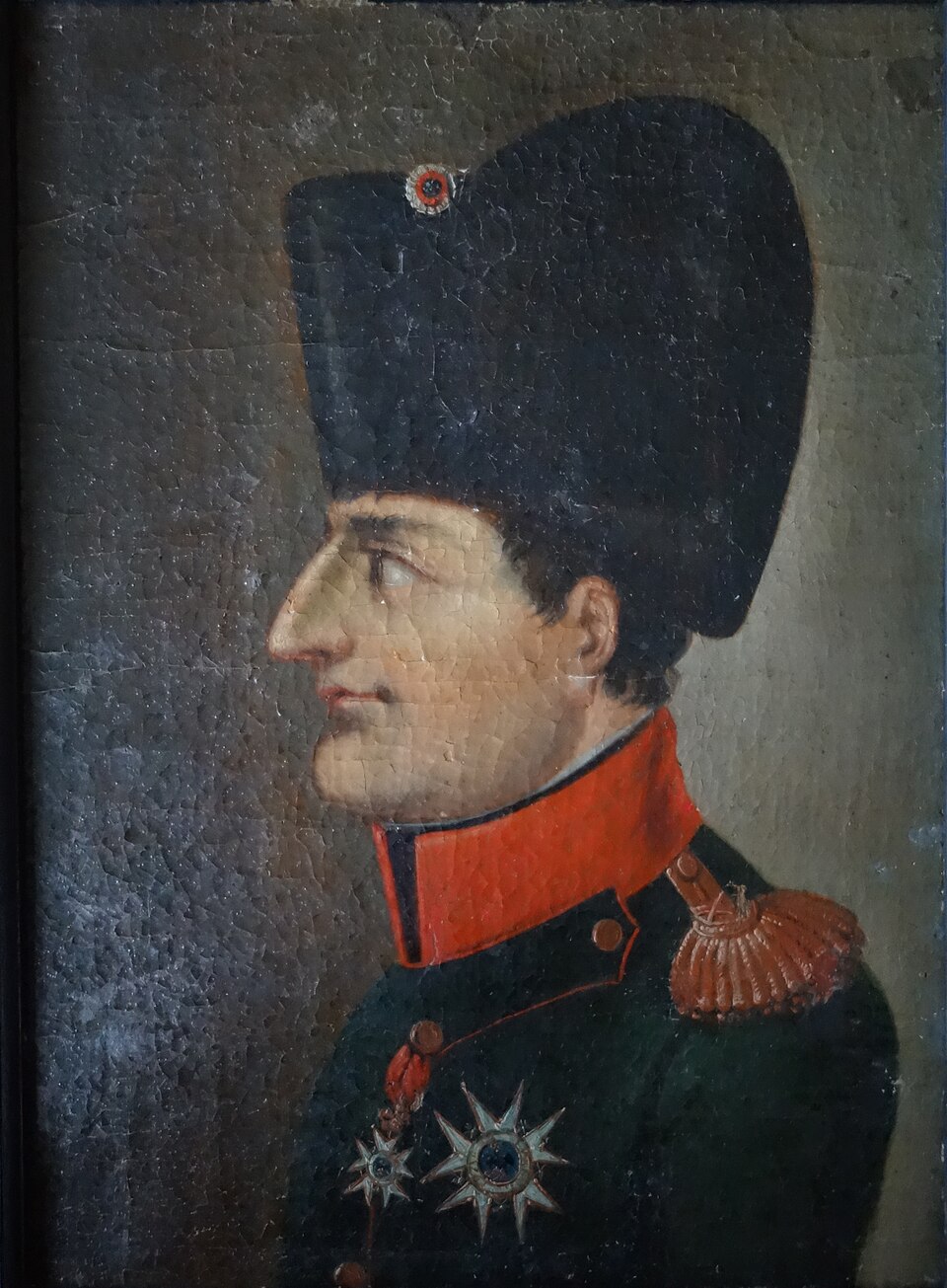
—How did you concretely preside over the drafting of this Code?
At the Council of State, not from a throne. I sat there entire afternoons, sometimes six or eight hours at a stretch, questioning the jurists article by article. I was not the most learned in law — Cambacérès, Portalis were far more so — but I had the common sense of the soldier who asks: will an ordinary citizen understand this sentence? The Civil Code opens with a seemingly modest rule: laws are binding only from the moment their promulgation could have been known. That seems like nothing. It is everything: a secret law is not a law, it is a trap. I wanted a clear, accessible law, rid of the Latin of the old parliaments. Centralization, my prefects instituted in 1800, served the same idea: that authority be legible down to the last village.
—On December 2, 1804, at Notre-Dame, why did you seize the crown from the pope's hands yourself?
Because I held it from no one. Pius VII had come from Rome; his presence sanctified the ceremony, and I needed it — the Concordat of 1801 had reconciled me with a still deeply Catholic France, and it was necessary to honor that pact. But make no mistake: this coronation was not a gift from the Church to a vassal. I had raised France from the revolutionary void; the crown, I had conquered it on battlefields and in councils, not received by heavenly grace. So I took it and placed it myself, then crowned Joséphine kneeling before me. A gesture of a few seconds, under the vaults of Notre-Dame, but all of Europe understood: here is an emperor who owes himself to himself alone.
Here is an emperor who owes himself to himself alone.
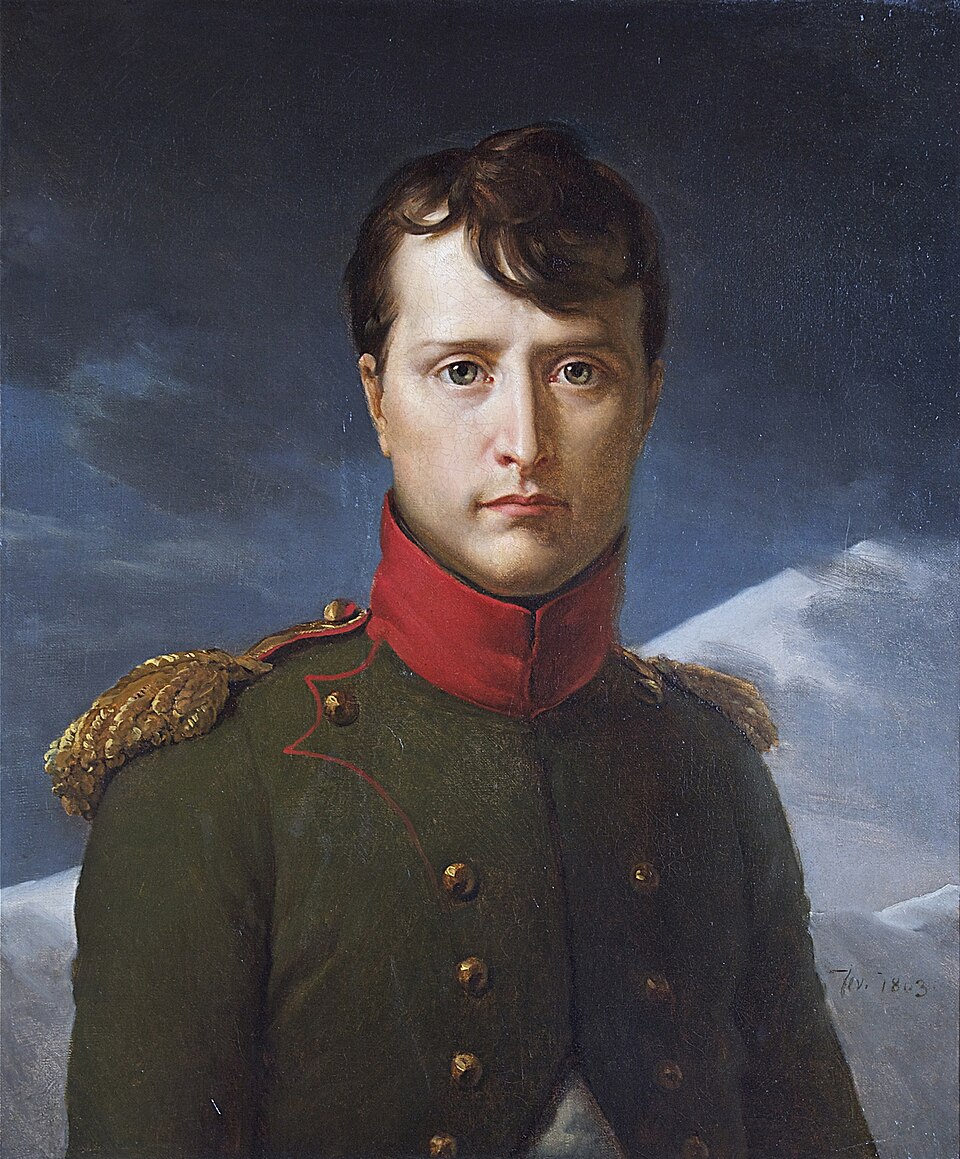
—Was this reconciliation with the Church, after the upheavals of the Revolution, a conviction or a calculation?
The two are not opposed in a statesman. The Revolution had sold the clergy's property, driven out priests, set consciences against each other. A country divided over its altars is an ungovernable country. The Concordat signed with Pius VII in 1801 settled the issue of sold property, gave a status to the clergy, brought peace to villages where Mass had deserted. Calculation? No doubt. But a calculation that restored families to harmony is not contemptible. I never believed that one governs men against what consoles them. Religion, for the legislator, is not a question of heaven but of earthly order: it holds together what fear and ambition would separate.
—On this rock of St. Helena, how do you spend your days?
Dictating. Morning follows a bath that no longer has the sweetness of my campaign bathtubs, and I dictate. My companions in exile — Las Cases, Montholon — collect what I deliver to them of my life, day after day. England locked me on this wind-battered rock, thousands of leagues from anywhere, thinking to erase me. She is mistaken. One can imprison a man; one does not imprison a story. These Memoirs I dictate will travel where my armies will go no more. Waterloo took a throne from me in June 1815; it will not take the last battle, that of memory, which is won with words and patience. I no longer have a Grande Armée — I have a voice left, and time.
One can imprison a man; one does not imprison a story.
—Have you expressed a final wish as to the place of your rest?
Only one, and it does not concern this lost rock of the Atlantic. I wrote that it was my desire that my ashes rest on the banks of the Seine, among this French people I loved so much. That is all. Not under the dome of a palace, but beside that river which flows through Paris, among my own. If I could imagine being read a century hence, I would like to believe that one day France will come to fetch me here and bring me home. A man may die in exile, assassinated slowly by the air and boredom; he truly dies only on the day his people cease to claim him. My ashes ask only one thing: to return.
A man truly dies only on the day his people cease to claim him.
This imaginary interview was generated by artificial intelligence from sources documented in Napoleon Bonaparte's profile. It dramatises what the figure might have said based on what we know about them, but does not constitute attested historical testimony. For primary sources and factual documentation, refer to the full profile.