Imaginary interview with Neferneferuaten
by Charactorium · Neferneferuaten (1400 av. J.-C. — 1400 av. J.-C.) · Politics · Spirituality · 6 min read
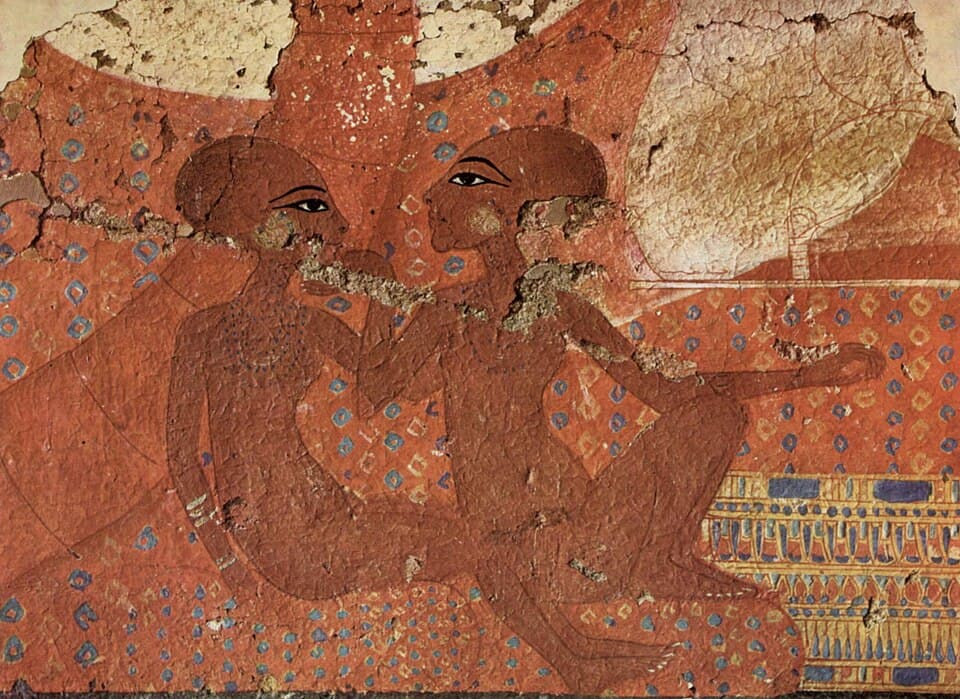
The sun rises over Akhetaten, and the great roofless temple is already filling with light. In a room of the Hout-Aten palace, with walls painted with reeds and ducks in flight, a woman with a measured voice agrees to speak — she whose name was chiseled out, whose face remains an enigma. She receives us between two rituals, the sistrum still placed beside her.
—They say your identity has never been established with certainty. Who are you really?
That is precisely the question that will pursue men after me. Was I the one called Nefertiti, the Great Royal Wife, having taken a new name to gird the double crown? Or one of the daughters born of the sun, Meritaten perhaps? I will answer you what I know: my cartouche bears the name Ankhetkheperure Neferneferuaten, and that name was real, carved in the stone of Amarna, presented before Aten. That my successors scratched it, hammered it, erased it until doubt gnaws at you — that changes nothing of what my hand raised toward the disk was. One does not erase the light of a reign by breaking a cartouche; one only makes it mysterious.
One does not erase the light of a reign by breaking a cartouche; one only makes it mysterious.
—How do you feel about the idea that your successors wanted to condemn you to oblivion?
For us, the erasure of the name is the worst death — worse than the empty tomb. A man whose cartouche is hammered ceases to exist before the gods; he can no longer be named in the offering, no longer be called upon in the morning. Those who came from Thebes after me knew this: by striking my inscriptions, they sought not only to remove me from the throne but to remove me from eternity. What they will later call damnatio memoriae, I saw fall upon our entire house, upon the very city we had built. And yet here you are, pronouncing my name. See the irony: their relentless silence made me an enigma that three thousand years have not unraveled.
By striking my inscriptions, they sought not only to remove me from the throne but to remove me from eternity.
—What did it mean for a woman to reign alone as pharaoh of Egypt?
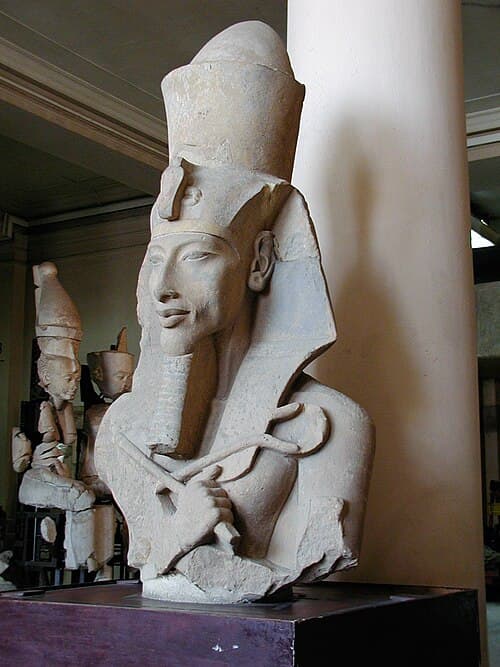
Shortly before me, only Hatshepsut had dared to fully bear the title of per-aâ, the great house. When my husband Akhenaten passed away, around 1334 before your count, I did not content myself with being a shadow behind a child-king: I girded the Sekhemty crown, the white of Upper and the red of Lower Egypt united on my brow. I held crossed upon my chest the scepter and the nekhekh flail, those insignia that no one bears unless they are the guarantor of Ma'at. Understand what that meant: in the order of the world, the pharaoh is the intermediary between humans and the divine. For a woman to hold this office was to affirm that the blood of the sun also flows in the daughters of Aten.
I girded the Sekhemty crown, the white of Upper and the red of Lower Egypt united on my brow.
—Your reign name carried a special meaning. What did it say about you?
Neferneferuaten — 'Beautiful are the beauties of Aten'. This was not an ornament of vanity, understand this well: it was a profession of faith inscribed in my very person. My name spoke of the disk, its splendor, its radiance over all the land. I also bore the epithet 'Useful for her husband', and perhaps that is what troubled those who came to sift through our ruins: how does a consort become king? But in our thought, serving Aten and serving the pharaoh were one and the same gesture. My coronation name, Ankhetkheperure, sealed this before the god. A name, among us, is not a label — it is a part of being, as alive as the breath that Aten slips into our nostrils.
A name, among us, is not a label — it is a part of being.
—Do you remember your mornings at the Great Temple of Aten?
Every dawn, yes. Our temples resembled no others: no roof, no darkness, no holy of holies plunged into shadow like in the temples of Amun's priests. The great temple of Akhetaten opened entirely to the sky, so that nothing would stop the rays. I stood, arms raised toward the eastern horizon, while the disk rose and its rays — you have seen them depicted, ending in little hands — came to place the ankh upon our faces. The silence was broken only by hymns and the tinkling of the sistrum I shook. We were, my husband and I, the only ones authorized to speak directly to the god. It was both a vertigo and a burden: to hold the door between the sun and humans.
The great temple opened entirely to the sky, so that nothing would stop the rays.
—How would you describe the god you served, this faceless Aten?
This is what so disconcerted the people of my time: Aten has neither the body of a man nor the head of an animal. He is neither Horus with the falcon's beak nor Anubis with the black snout. He is the disk, the life-giving light itself, and that is all. It was sung of him that he appears beautiful on the horizon of the sky, that he fills every land with his beauty as soon as he rises in the east. This song, this great hymn, my husband had composed as one carves truth into granite. Aten did not allow himself to be enclosed in a statue that one feeds and dresses: he had to be worshiped in the open sky, under his own rays. To serve a god one can neither sculpt nor hide — that was the whole novelty, and the whole scandal.
To serve a god one can neither sculpt nor hide — that was the whole novelty, and the whole scandal.
—Tell us about this city of light you inhabited.
Akhetaten, 'the horizon of Aten'. My husband had made it rise from virgin soil, where no ancient god had ever cast his shadow — for he owed nothing to others. At the city's limits, he had large boundary stelae carved into the rock, bearing his vows before the disk, swearing to build there for his father Aten. And our palace, the Hout-Aten, stretched along the Nile for hundreds of cubits, with its pools and gardens. What I remember best are the walls of our apartments: painted with living marshes, ducks bursting from reeds, fish under clear water. No Egyptian hand had ever painted nature like that, like a moment stolen at the river's edge.
A city risen from virgin soil, where no ancient god had ever cast his shadow.
—How do you feel knowing that this city was abandoned after you?
We had intended it to be eternal, and it lasted only a breath. After my disappearance, the court returned north, to Memphis and ancient Thebes; the workshops fell silent, the gardens dried up, the sand reclaimed its rights over our faience friezes. Imagine: an entire capital, built for a god, deserted within a generation. The walls painted with reeds flaked away in silence. I believe it is this, more than death, that grips my heart — not that I die, but that Akhetaten dies with me, as if the light we had raised was only a mirage between two reigns of shadow. And yet the sand, in covering it, may have preserved it for your eyes.
Not that I die, but that Akhetaten dies with me.
—The closing of the ancient temples shook all of Egypt. How did you experience it?
You must understand the scope of what we dared. The temples of Amun, the great god of Thebes, were closed; its wealth seized, its clergy stripped, its very name sometimes erased from walls. During my time, only one god received the offering: the disk. This was not a cautious reform, it was an earthquake — we were taking from people the gods of their fathers, those they prayed to in birth and in death. I knew, as I raised my arms at dawn, that a fury was brewing behind me: the dispossessed priests, the faithful deprived of their familiar statues. One does not take away people's ancient gods with impunity. What we called purification, many lived as a tearing away.
One does not take away people's ancient gods with impunity.
—So you knew the reaction would come. How did you imagine the aftermath?
A queen who officiates each dawn before the sun learns to read the signs. The clergy of Amun had not disappeared; it waited, lurking in Thebes, its wealth hidden but its rancor intact. I sensed that the child who would follow me — the one you call Tutankhaton before he became Tutankhamun — would be brought back into the fold of the ancient gods, and that the temples we had sealed would be reopened. What I could not imagine was the fury with which they would seek to undo us: not only restore Amun but erase every trace of our passage, hammer our cartouches one by one. If I could dream that I would be read in a thousand years, I would say this: they broke the stone, but the enigma they created made me more alive than the stone.
They broke the stone, but the enigma they created made me more alive than the stone.
Read further

This imaginary interview was generated by artificial intelligence from sources documented in Neferneferuaten's profile. It dramatises what the figure might have said based on what we know about them, but does not constitute attested historical testimony. For primary sources and factual documentation, refer to the full profile.