Imaginary dialogue between Georg Joachim Rheticus and Nicolas Copernicus
by Charactorium · Nicolas Copernicus (1473 — 1543) · Sciences · 5 min read
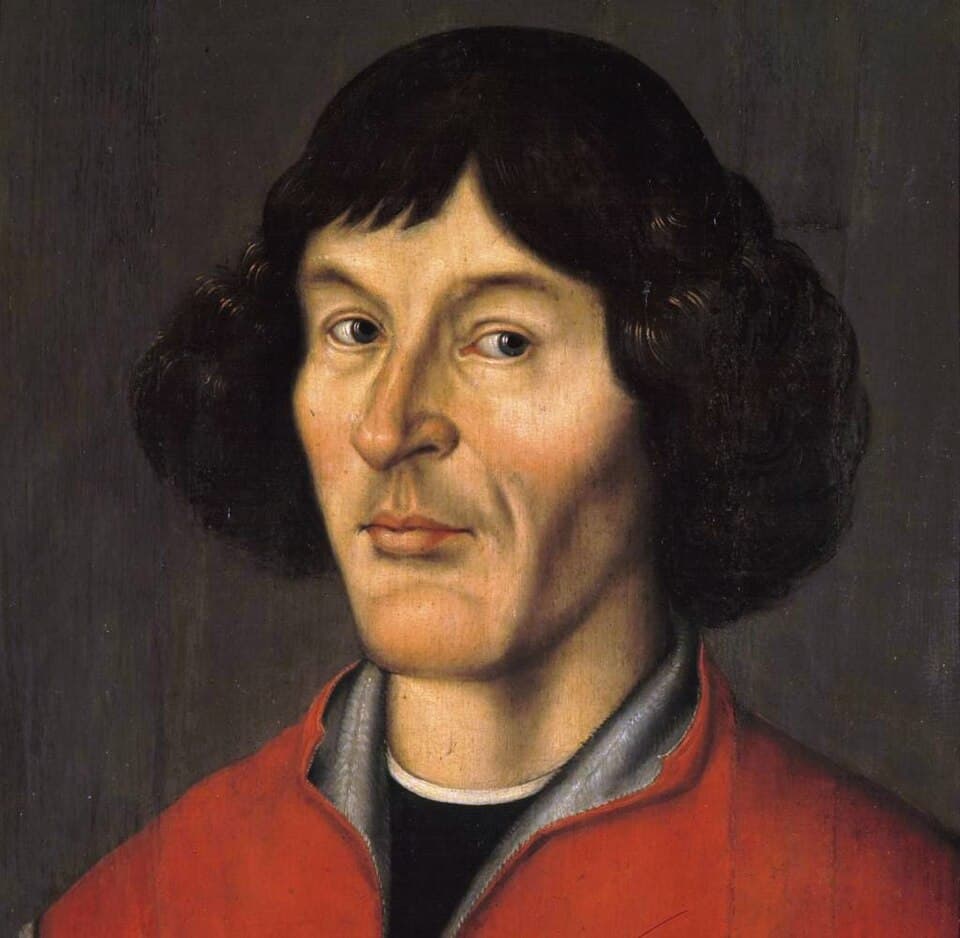
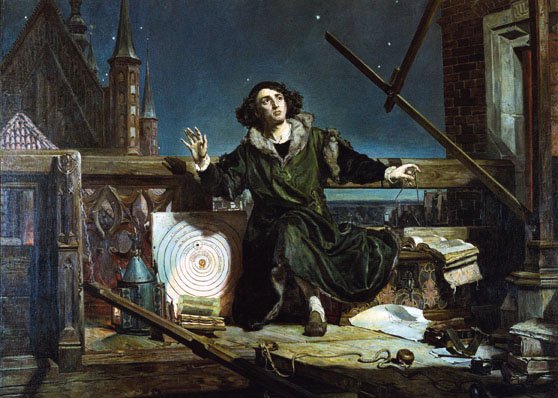
It is in the icy turret of the cathedral of Frombork, in this late autumn of 1540, that Georg Joachim Rheticus finds his old master, bent over his tables covered with figures. The slanting evening light filters through the narrow window, and in the distance one hears the surf of the Baltic against the ramparts. It has been a little over a year since the young mathematician from Wittenberg came knocking at his door, and long nights of study have brought them together. Rheticus, who has just had the Narratio Prima printed, burns to wrest from the canon the great work he keeps hidden.
—Master, when I arrived here last year, I found you among the chapter registers, not the stars. How do you manage so many duties at once?
You saw it well, Georg, on arriving: astronomy does not fill my days, it only snatches the margins. The morning belongs to the office and the accounts of the chapter of Warmia — someone must watch over the lands and the dues. In the afternoon, I tend to those in the town who suffer, for I learned medicine in Padua and it is expected of me to serve. It is only at nightfall, when all sleep, that I become again what you think you see in me. Do not be mistaken: I am a canon before being an observer of the sky. The Sun is my concern only in the hours when men no longer need me.
Astronomy does not fill my days, it only snatches the margins.
—You took me up, that first evening, to your turret. I saw your instruments — that wooden triquetrum. Did you really shape them with your own hands?
With my own hands, yes, that triquetrum with its three jointed arms, as you touched it. We have here neither the workshops of Nuremberg nor the bronzes of princes; I had to carve my own rules and graduate my astrolabe. You were surprised that I work with so little — remember that night when we waited together for the Moon to pass the wall. The sky does not yield quickly: it takes years of patient measurements, taken from this same window, to dare to correct Ptolemy. I have no better tool than time and the rigor of calculation. What my crude instruments cannot grasp, my geometry must restore.
The sky does not yield quickly: it takes years of patient measurements.
—You have studied the Almagest so much. What in Ptolemy became unbearable to you, to the point of overturning everything?
I venerated Ptolemy, Georg, and I still venerate him as one respects an ancient master. But by dint of piling up epicycles and deferents to save the appearances, his edifice had become a monster: a system so complicated that it had lost all harmony. Now I believe that God did not build the world in disorder. When I placed the Sun motionless at the center, and made the Earth revolve among the planets, everything ordered itself, as if by a mathematical grace. At the center of all things resides the Sun; who, in this temple so beautiful, could place this lamp in a better place? It was not pride that guided me, but the desire for a simplicity finally regained.
His edifice had become a monster: a system so complicated that it had lost all harmony.
—For nearly thirty years you have carried this theory without giving it to the world. What still holds you back, master?
Fear, I admit without evasion. From the Commentariolus, a good twenty-five years ago, I had set down my seven principles; but to have them printed is another matter. I have long hesitated to publish these meditations, so much did I dread the contempt that, they say, is due to those who advance things contrary to received opinions. They will take me for a madman: to make the Earth move, which everyone feels motionless under their feet! The philosophers will mock me, and perhaps worse. You know my hesitation better than anyone, you who urge me every day. Does a work of a lifetime deserve to be thrown to mockery? That is what holds my pen, since my manuscript has lain completed in this chest.
They will take me for a madman: to make the Earth move, which everyone feels motionless under their feet!
—When I left Wittenberg to come to you, you did not expect me. Why did you welcome an unknown young Lutheran, you a Catholic canon?
I admit, your arrival surprised me as much as it delighted me. A young man come from so far, from Wittenberg, to hear an old canon on the Baltic — who makes such a journey for numbers? Your letters, your fervor, your knowledge of mathematics disarmed me. The faith of each does not enter into the tracing of an orbit; the sky is the same for the Catholic and the Reformed. You understood my calculations when so many others would have fled them, and you knew, through your Narratio, to tell the world what I dared not say myself. Without you coming here, I believe my work would have died with me in this chest.
The faith of each does not enter into the tracing of an orbit.
—I had printed this year my Narratio Prima, that first summary of your system. Did I do well to deliver it thus, before the great work?
You did, Georg, what I dared not: you threw a stone into the water to see the ripple spread. Your Narratio Prima speaks of my system without compromising me entirely — it sounds out the scholars, it prepares minds. And I admit that seeing the reception it has in Nuremberg and elsewhere, my fear lightens a little. You have served me as a scout, as one sends an advance guard to feel the terrain before the main body advances. If the world has not cried out against your summary, perhaps it will tolerate the whole work. You have given me back, by this writing, the courage that age and prudence had taken from me.
You have served me as a scout, as one sends an advance guard to feel the terrain.
—Many will object that if the Earth turned, we would be swept away, the clouds left behind. What do you answer them, master?
That is the objection always served to me, and which you yourself have heard in the schools. But think: the motion of the Earth is so vast, so uniform, so gentle, that nothing in us betrays it. The sailor gliding on a calm sea thinks the shore flees, when it is he who advances; the air, the clouds, the waters participate in the motion of the Earth that carries and envelops them. Why attribute to the entire sky, immense, a mad daily race, when it suffices to make a single small globe turn? It is wiser to lend motion to the Earth than to the entire universe. That is what reason teaches me, against what the senses claim.
It is wiser to lend motion to the Earth than to the entire universe.
—If you finally decide, to whom will you dedicate the work? You will need a protector to shield you from the outcry.
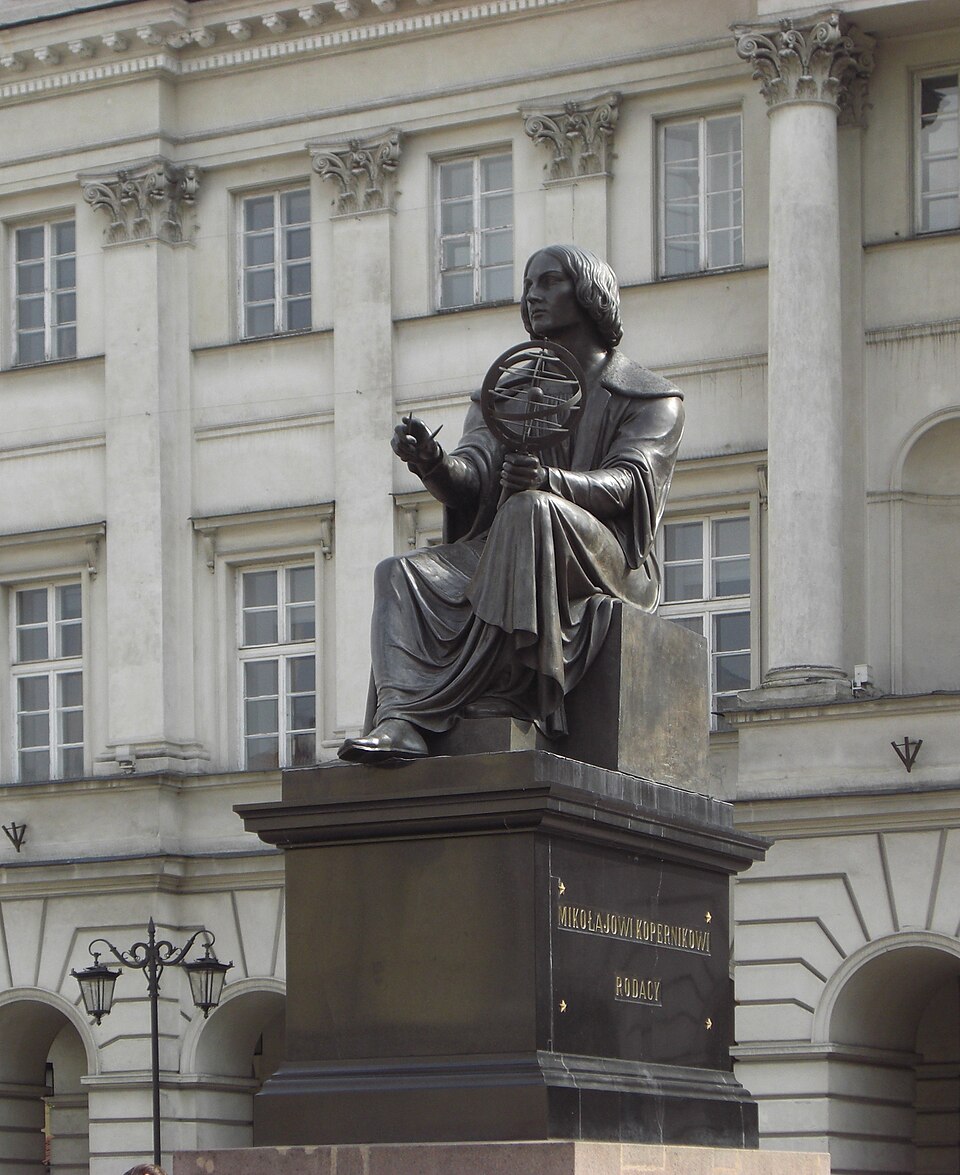
I think about it, and I believe I will address it to the Holy Father himself, to Paul III. Who better than a learned pope, a friend of letters, to cover with his name a work that will be called rash? In my dedicatory letter, I will frankly state my long hesitation, and I will leave to the reader the care of judging calculations rather than opinions. If the Church sees that I seek neither to disturb the faith nor to humiliate the Scriptures, but only to better measure the motions of the sky, it will not condemn me. I am not a man of quarrel, Georg, you know that; I am a geometer who seeks order. Placing my book under such protection is giving it its best armor.
I will leave to the reader the care of judging calculations rather than opinions.
—You have told me, some evenings, about the calendar reform that was asked of you long ago. Why did you refuse to work on it?
I was consulted for that, yes, many years ago, at the time of the Lateran Council. But I answered what I still think: the length of the year and the motions of the Sun are not yet known with enough accuracy to base a calendar without error. What good is it to reform the months if one builds on false measurements? One must first redo all of astronomy, patiently, before pretending to regulate the time of men. You see there, Georg, the thread that links all my pains: this need to measure correctly before asserting anything. It is the same scruple that makes me, alas, delay publishing — and that made me, that day, decline the honor offered to me.
What good is it to reform the months if one builds on false measurements?
—One last thing, master. After so many nights in the cold of this tower, what do you hope, at bottom, to leave to those who come after?
I do not hope for glory, Georg — an old canon has no use for it. What I would like to leave is a better-ordered sky, more accurate tables, and the idea that one can question ancient knowledge without despising it. If, in this turret swept by the winds of the Baltic, I have, with my poor wooden rules, shaken an edifice fourteen centuries old, then others will come after me who will see farther and clearer. I bequeath to them less an answer than a method: observe, measure, calculate, and never believe a thing true by force of habit alone. The rest — my fame, my rest — matters little to me. Let the Sun keep its place at the center, and I will be content.
I bequeath to them less an answer than a method: observe, measure, calculate.
This imaginary interview was generated by artificial intelligence from sources documented in Nicolas Copernicus's profile. It dramatises what the figure might have said based on what we know about them, but does not constitute attested historical testimony. For primary sources and factual documentation, refer to the full profile.