Kids interview Nicolas Copernicus
by Charactorium · Nicolas Copernicus (1473 — 1543) · Sciences · 5 min read
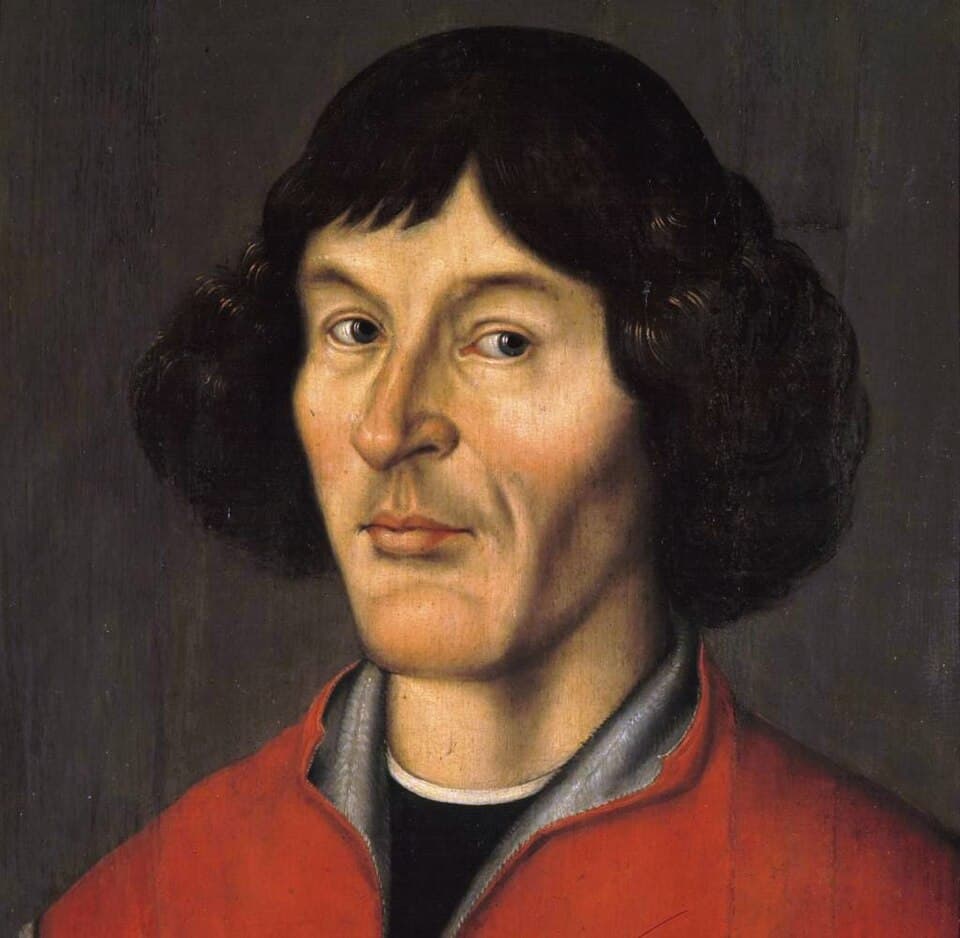
Two twelve-year-old students visit an old cathedral on the Baltic Sea that morning. High up in a stone turret, a man in a dark robe awaits them, a strange instrument in his hand. It's Nicolaus Copernicus, and he has agreed to answer all their questions.
—What's that little tower up there? Did you climb it at night?
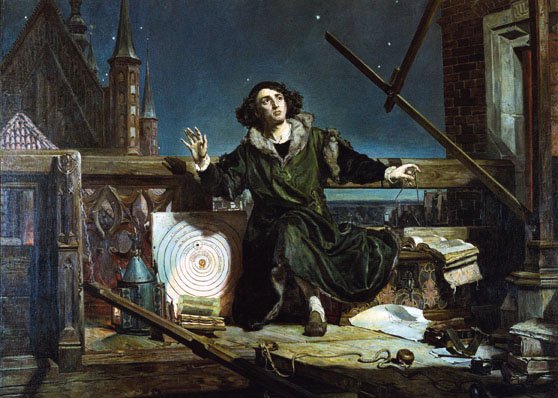
Yes, my child, it was my secret corner. In Frombork, I had a turret attached to the cathedral's rampart. When night fell, and the sky was very dark and clear, I would climb up there. Imagine: not a single light around, just the stars and the sound of the wind. I held a triquetrum, a long three-branched ruler I had made myself with my own hands. With that, I measured where the Moon and planets were. No telescope to magnify the sky, you see — it didn't exist yet. Only my eyes, my wood, and a lot of patience.
No telescope to magnify the sky: only my eyes and a lot of patience.
—But weren't you cold, all alone up there in the dark?
Oh, yes! The cold of the Baltic stings your fingers, you know. In winter, I would wear a fur hat and a thick dark wool robe. My hands would sometimes tremble on the instrument. But I stayed. Why? Because a star doesn't wait for you. If you go back to warm up, you miss the moment when a planet passes through the exact spot you wanted to measure. So I would note everything on my parchment, with a quill, blowing on my frozen fingers. Those little cold nights, strung together over years, were worth more than all the gold in the world.
—So you were an astronomer, that was your job?
No, and that might surprise you! My real work was being a canon — a churchman attached to the cathedral. I sang the office, managed the accounts and lands of the chapter, wrote official papers. I was also a bit of a doctor: I treated the people of the town of Frauenburg when they fell ill. Astronomy? It was my secret garden, what I did in my spare time. Imagine a very busy man all day, who in the evening finally rushes to the thing he loves most. That's who I was.
Astronomy was my secret garden, what I did in my spare time.
—What did you eat in the morning before going to observe the sky?
In the morning, I wasn't thinking about the stars yet, you know! I got up early to go pray with the other canons. Then, a simple table: dense rye bread, sometimes fish from the nearby sea — herring, salted cod. In my time, we respected the fasting days set by the Church: those days, we ate little and lean. No feasting for me. I was a man of duties before being a dreamer. The planets, they waited patiently for the night for me to finally attend to them.
—Is it true that before you, everyone believed the Sun revolved around the Earth?
Exactly, my child. For nearly fourteen hundred years, people followed a Greek scholar, Ptolemy, and his great book the Almagest. It was called geocentrism: the Earth motionless in the middle, and everything — the Sun, the Moon, the stars — revolving around it. To explain the strange zigzags of the planets in the sky, people imagined small circles on big circles, called epicycles. It was as complicated as a clock with too many gears! For my part, watching the sky night after night, I felt something was wrong. The world had to be simpler than that.
—And you said the opposite? How did you dare?
I started very slowly. Around 1514, I wrote a little notebook, the Commentariolus, which I passed in secret to a few learned friends. In it, I explained an idea that was crazy for the time. I wrote this: "All the spheres revolve around the Sun as around their midpoint, and therefore the Sun is at the center of the universe." You see? I put the Sun in the middle, and I made the Earth move! But I invented nothing without proof: I demonstrated it with numbers, angles, geometry. The sky finally became clear and harmonious.
—Why did you wait so long before publishing your great book?
Ah, that is my great weakness. I kept my magnum opus in a drawer for almost thirty years! I was afraid, quite simply. Afraid of being mocked, afraid of being taken for a madman. In the letter I later wrote to Pope Paul III, I confessed it frankly: "I have long hesitated to publish these meditations, so much did I fear the contempt deserved by those who make new proposals contrary to received opinions." That is the truth of a cautious man. Telling the whole world it has been wrong for a thousand years, my child, makes your knees tremble.
Telling the whole world it has been wrong for a thousand years makes your knees tremble.
—And who convinced you, in the end, to show it to others?
A young man full of fire. In 1539, a mathematician named Rheticus made a very long journey just to come see me, here, at the edge of the Baltic. He looked at my calculations, and his eyes shone. He wouldn't let go of me! The following year, he himself published a short summary of my ideas, the Narratio Prima, so that the scholars of Europe would finally talk about them. Without him, you see, my book might have remained forever in my dusty drawer. Sometimes, a courageous young man must come to shake an overly timid old man. I owe him a great deal.
—And the Church, did it bother you for your ideas?
Not at all during my lifetime, believe it or not! On the contrary: in 1516, the Church leaders consulted me to reform the calendar, which had drifted over time. I answered cautiously, as an honest man: "The length of the year and the movements of the Sun are not yet determined with enough precision to establish a calendar without error." I was respected! It was much later, in 1616, more than seventy years after my death, that my book was banned. I was no longer there to see it. Men's fear often comes too late.
—If you came back today, what would make you most proud?
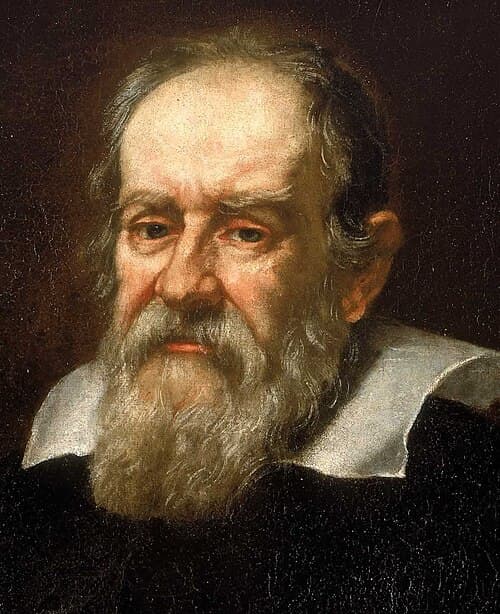
To know that my idea held, my child. My great book, De revolutionibus, I hardly saw it: they say the first printed pages were brought to me on the very day of my death, in 1543. I could hold it in my hands, and then I passed away. In it, I had written these words: "At the center of everything resides the Sun." After me came Galileo, Kepler, and many others, who continued the path. That is what makes me proud: not having been right alone, but having opened a door that no one has ever been able to close again.
I opened a door that no one has ever been able to close again.
This imaginary interview was generated by artificial intelligence from sources documented in Nicolas Copernicus's profile. It dramatises what the figure might have said based on what we know about them, but does not constitute attested historical testimony. For primary sources and factual documentation, refer to the full profile.