Imaginary interview with Pierre de Ronsard
by Charactorium · Pierre de Ronsard (1524 — 1585) · Literature · 5 min read
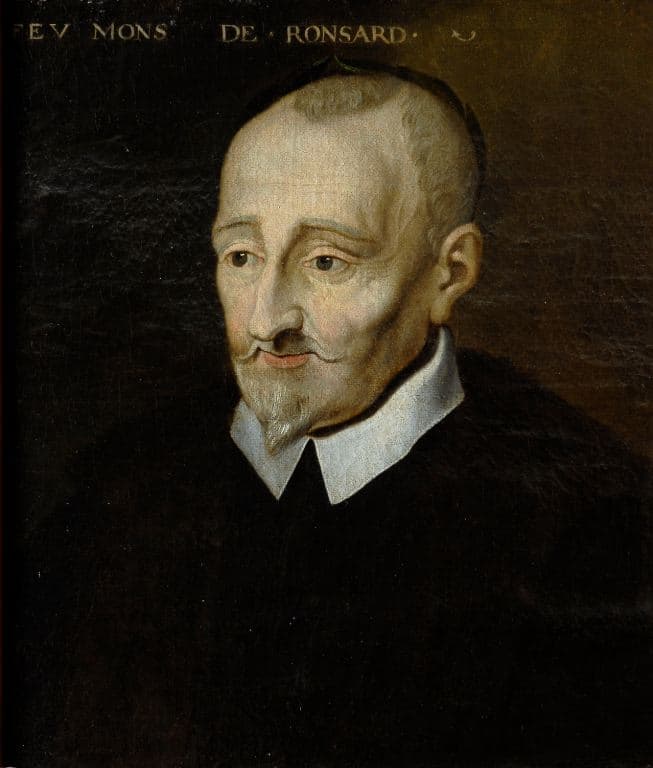
October 1584. At the priory of Saint-Cosme, near Tours, a half-deaf old man greets us in his garden, a withered rose still between his fingers. He says he slept poorly, but smiles as soon as the word poetry is spoken; in the distance, one hears the water of the Loire and, closer, the scratching of a quill on paper.
—Do you remember the journey that tore you away from your Vendômois as a child?
I was twelve, barely out of the walls of the château de la Possonnière, when I was sent overseas to serve as page to Princess Madeleine de France, who was leaving to marry the king of Scotland. Imagine a boy from the Loire countryside thrown into a court of mists, tartans, and rough tongues! I learned there that the world was vaster than my forest and that learned lords savored music and verse like a rare delicacy. That cold kingdom gave me my first appetite for refinement; I returned with my soul stirred, convinced that a gentleman could serve his prince otherwise than with the sword.
That cold kingdom gave me my first appetite for refinement.
—How could a youthful illness, you say, have made you a poet?
Around my fifteenth year, a violent fever left my ear half-dead, and nothing more could be done. For a boy who dreamed of embassies and diplomatic rides, it was a brutal halt: how to negotiate in the king's name when you barely grasp what is whispered to you? The world of affairs closed, but another opened, more silent, where noise has no sway — that of books and verse. Even today, when conversation grows muddled, I send for a secretary and dictate my stanzas rather than torment my ears. My deafness stole a career and gave me a vocation; I know not which of the two gods to thank.
My deafness stole a career and gave me a vocation.
—What did your time at the Collège de Coqueret under Jean Dorat mean to you?
It was my second birth. At the Collège de Coqueret, around 1540, Jean Dorat opened up Pindar, Homer, and Horace for us like chests of ancient gold; we read Greek until dawn, du Bellay, Baïf, and I, drunk on syllables. One day my master placed in my hands the Odes of Horace, and I understood at once what I must do with my life: not translate these Ancients, but resurrect them in our language. We considered ourselves heirs to a treasure buried for a thousand years. It was there, between two vigils, that the dream later called the Pléiade was born.
Not translate the Ancients, but resurrect them in our language.
—Why were you so keen to write in French when Latin ruled the learned world?
Because I refused that our language remain a servant. In 1549, du Bellay launched our manifesto, urging young poets to leave old rhyme to provincial contests and equal the Greeks and Latins. A year later, I published my Odes in Pindar's manner, with strophes, antistrophes, and epodes — a Pindaric ode in French, something deemed impossible! I was called presumptuous. But the Ordinance of Villers-Cotterêts had already made French the language of the kingdom's acts; it was necessary that it also become that of great works. The vernacular is not a poor man's Latin: it is a language capable of thunder and tenderness.
The vernacular is not a poor man's Latin: it is a language capable of thunder.
—Everyone knows your rose; what did you wish to tell young Cassandre?
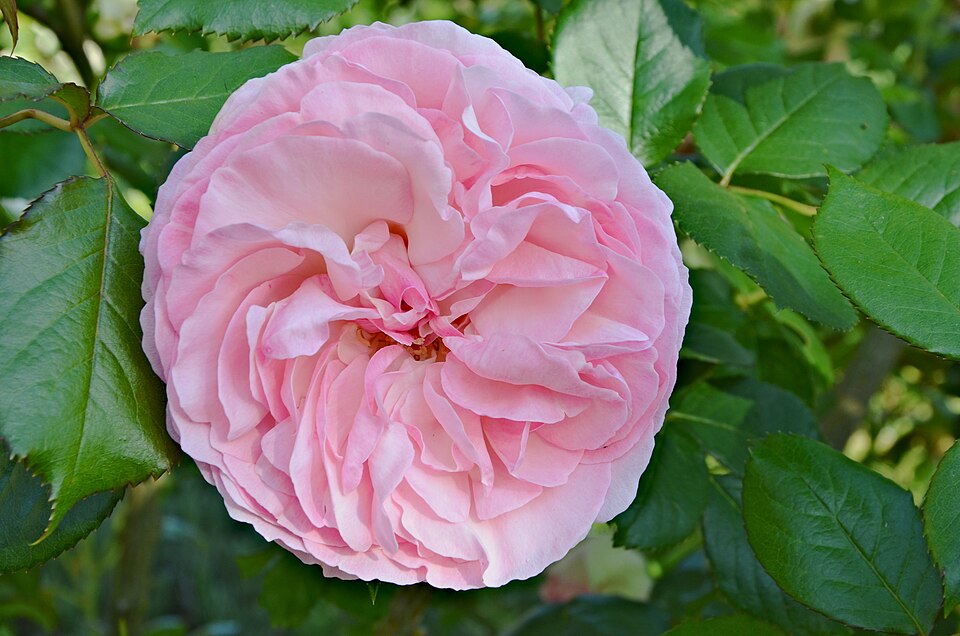
“Sweetheart, let us go see if the rose / That this morning unfurled / Its purple robe to the Sun…” That is how I led Cassandre Salviati into the garden, not to pay her a compliment, but a warning disguised as a stroll. The flower blooming at dawn lies withered by evening: so too her beauty, so too mine, so too all living things. The Ancients called this carpe diem, and I never ceased repeating it in a thousand forms. It is not idle gallantry: it is the very anguish of passing time, which I wished to make sweet as a caress so it might sink deeper into the heart.
A warning disguised as a stroll.
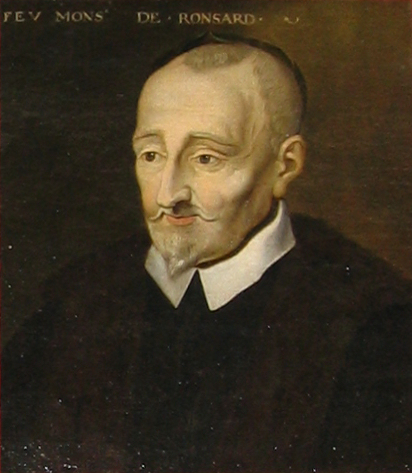
—At the twilight of your life, what did you wish to offer Hélène de Surgères?
A strange promise, almost a tender threat. In my Sonnets pour Hélène, I imagine this lady grown old, in the evening, by candlelight, spinning her wool by the fire: “You will say, singing my verses, marveling: Ronsard celebrated me when I was beautiful.” I tell her, in sum: your beauty will fade like Cassandre's rose, but my verses will keep it alive when you are nothing but ashes. That is the bargain every poet offers to time. At Saint-Cosme, already ill, I knew I could promise nothing more to anyone — except this paper immortality that I still sign with a weary hand.
My verses will keep her alive when she is nothing but ashes.
—When the kingdom was ablaze between Catholics and Reformers, why did you take up your pen in the fray?
Because a poet cannot sing of the rose while the house is burning. From 1562, seeing the Wars of Religion tearing France apart, I wrote my Discours des misères de ce temps. I no longer spoke of love: “I see the Turk armed against the Christians, / I see the Christians armed against themselves…” This spectacle of Frenchmen butchering each other sickened my heart. I am blamed for taking the side of the Catholics and my king; I own it. But my true fight was against disorder, against a people dying of hunger while the soldier lived off another's land. Civic poetry is also courage.
A poet cannot sing of the rose while the house is burning.
—Protestant poets attacked you harshly; how did you endure this war of pens?
With bitterness, I confess. Agrippa d'Aubigné and the Huguenot rhymers painted me as a gilded court lackey, a faithless priest living fat on his ecclesiastical benefices. The quarrel was bitter: we exchanged libels as one exchanges sword blows. And when the horror of the St. Bartholomew's Day Massacre occurred in 1572, I saw everything my Discours had feared come true — blood spilled in mountains that no verse could wash away. I answered my adversaries, because a man defends his honor; but no victory of the pen consoles one for seeing a kingdom devour itself. I would have preferred a hundred times to sing Hélène than to polemicize against enemy brothers.
We exchanged libels as one exchanges sword blows.
—King Charles IX visited you even in your retreat; what does that memory inspire?
A pride mixed with melancholy. I was already aged and ailing, retired to my priory of Saint-Cosme, tending my garden and endlessly correcting my verses, when Charles IX came in person to find me. Imagine: a king traveling for an infirm poet! He loved my verses so much that he called me his master in the music of words; it was he who wanted me to write La Franciade, that epic of the Trojan origins of the Franks that I never could finish. I lived on Church benefices without being a priest, in the calm of my priories. To be called “prince of poets” by one's sovereign is the laurel crown the Ancients dreamed of — and it weighs heavier than one thinks.
Imagine: a king traveling for an infirm poet!
—If you could imagine being read a century from now, what would you wish to remain?
What audacity to ask me that, I who already weep for what disappears! I sang the forest of Gastine in my Vendômois, and when the woodcutters felled it, I wrote against them as one mourns a friend: the trees fell, and with them a piece of my childhood. Everything passes, the rose, the forest, the poet. If I must dream of being read in a distant future, I would ask for neither glory nor statue: only that a reader, in the evening, by candlelight, feel beneath my verses the trembling of fleeing time, and that he go, as I did, to see if the rose in the garden has not lost its robe. That would be enough immortality for a man.
The trees fell, and with them a piece of my childhood.

This imaginary interview was generated by artificial intelligence from sources documented in Pierre de Ronsard's profile. It dramatises what the figure might have said based on what we know about them, but does not constitute attested historical testimony. For primary sources and factual documentation, refer to the full profile.