Kids interview Pierre de Ronsard
by Charactorium · Pierre de Ronsard (1524 — 1585) · Literature · 5 min read
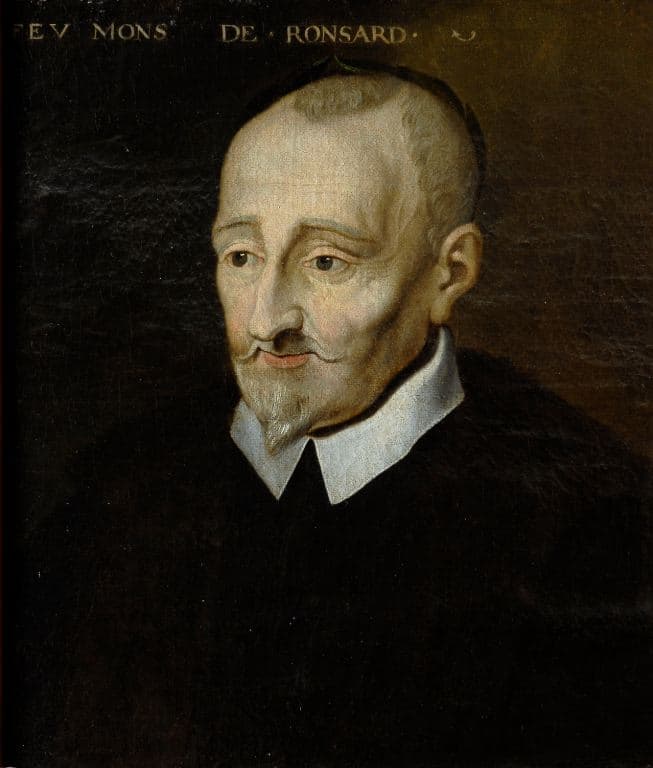
Two young visitors on a school trip push open the door of the Priory of Saint-Cosme, near Tours. An old poet with a tired smile waits for them in his garden. He sets down his quill and beckons them to sit beside him.
—How old were you when you first went abroad alone?
You know, my child, I was barely twelve years old. They sent me to Scotland as a page to a French princess, Madeleine, who had just married King James V. Imagine a little boy crossing the sea, far from his home in the Vendômois, toward a land of mist and castles. There I saw a refined court, cultured people, languages I didn't understand. It was frightening and magnificent at once. That journey opened my eyes: the world was larger, more beautiful than my village. Without knowing it, I was already becoming a poet who observes everything.
At twelve, I crossed the sea, and the world suddenly grew larger.
—Is it true you went deaf? Did it make you sad?
Yes, it's true. Around fifteen, a serious illness left me half-deaf for life. Imagine hearing voices as through a thick wall: you guess, but you no longer grasp everything. I wept a lot, because I dreamed of being a diplomat, serving the king by traveling. That career I had to renounce — a man who cannot hear ambassadors well cannot negotiate. So I turned to books, to the silence of written words. My ear had closed, but another door opened: that of poetry.
My ear closed, and poetry opened.
—How does one learn to become a poet? Was there a school for that?
Almost! Around 1540, I entered the Collège de Coqueret in Paris. I had an extraordinary master, Jean Dorat, who taught us Greek and Latin. Imagine whole days reading the ancient poets by candlelight, until we forgot to eat. Dorat even gave me a book of the odes of the poet Horace: I wore that book out from reading it so much. Beside me studied my friends du Bellay and Baïf. They called it humanism: believing that by reading the Ancients, one becomes a better person. That's where our great common dream was born.
We believed that by reading the Ancients, we became better.
—Why did you call your group of friends 'the Pléiade'?
What a lovely question! In 1549, with my poet friends, we formed a group. We called it the Pléiade, like the seven stars that shine together in the winter sky — you can look for them at night, they are always there. We were seven poets, and we wanted to shine just as brightly. Our mission? To defend the French language. In my time, scholars despised French and wrote only in Latin. We swore the opposite: to show that our language could be as beautiful as that of the Greeks and Romans. Seven stars to light up French: that's what we were.
Seven stars to light up the French language.
—What is your most famous poem? The one people still recite?
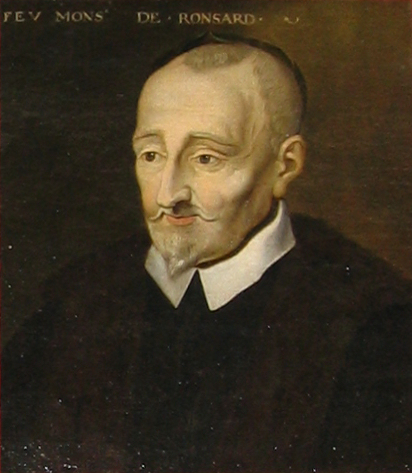
Ah, you mean the rose! I wrote it for a young girl, Cassandre: Mignonne, allons voir si la rose... 'Mignonne,' in my day, was a tender word for 'my pretty one.' In that poem, I invite a young girl to look at a rose that opened in the morning. Why? Because by evening, its petals are already falling. It's a gentle and slightly sad lesson: beauty does not last, so enjoy each day. The Ancients called it carpe diem, 'seize the day.' A flower that fades, and all of life is in it.
The rose opens in the morning and falls by evening: that is all of life.
—Did you write to become famous, or for something else?
Deep down, my child, I wrote against time. You see, everything passes: youth, beauty, even us. In my Sonnets for Hélène, I wrote to a lady that one day, old, sitting by the fire, she would remember my verses. That is my real magic: a poem does not age. The body fades like the rose, but the verse remains alive. Think about it: we are talking today, and I have been dead a long time — yet my words still touch you. That's why I wrote. Not for the glory of a day, but to never quite die.
The body fades like the rose, but the verse remains alive.
—What were the Wars of Religion? Were you afraid?
It was an immense sadness. From 1562, the French tore each other apart: Catholics against Protestants, whom they called Huguenots. Imagine neighbors, families, killing each other in the name of God. I saw my country bleed. So I wrote my Discourse on the Miseries of This Time. In it, I describe a people dying of thirst in their homes, soldiers pillaging the countryside. Yes, I was afraid — afraid that everything would collapse. A poet does not carry a sword, but he can cry out the pain of the people. That was my way of fighting for peace.
A poet does not carry a sword, but he cries out the pain of the people.
—Were there people who hated you because of that?
Oh yes! When you take sides, you make enemies. Because I had defended the Catholics, Protestant poets attacked me very violently, especially a certain Agrippa d'Aubigné. They wrote verses against me, hard as stones. It hurt me, I admit. But I answered with my own weapons: poems. You see, in my time, we also fought with pens, not only with swords. The worst massacre came in 1572, the night of St. Bartholomew's Day, when so many Protestants were killed in Paris. That horror was exactly what I had feared.
In my time, we also fought with pens.
—Is it true that a king came to visit you at home?
Yes, and I am still moved by it! King Charles IX loved me so much that he came all the way to my retreat, here at the Priory of Saint-Cosme, near Tours. I was already old and ill. Imagine: the King of France traveling to greet a bedridden poet! They called me the 'prince of poets.' They even placed a laurel crown on my head, as for the poets of Antiquity — the laurel was the sign of glory. But you know, the most precious thing was not the crown. It was seeing that a king respected words as much as armies.
A king who respects words is worth more than a laurel crown.
—What did you do with your days when you were old?
Gentle days, my child. In the morning, I rose before dawn — I loved the silence, when you hear only the wind and the birds, no wheels on the cobblestones. I reread my verses from the day before to correct them. In the afternoon, I tended my garden at my priories. I loved trees like friends: I even wept in a poem over the forest of Gastine, near my home, which had been cut down. In the evening, my poems were read aloud, sometimes sung with a lute. A simple life, among flowers, books, and verses.
I loved trees like friends.
—If someone came back a very long time from now, what would remain of you?
That is the most beautiful question to end with. My body rests here at Saint-Cosme since 1585. Castles fall, crowns rust, kings are forgotten. But listen: you came to me, and you already know my rose, my Mignonne, allons voir... That is what remains. Not stone, not gold — words. As long as a child recites my verses, I will be a little alive. That is the promise I made all my life. So learn poems, my child, and share them. It is the only thing in the world that time cannot destroy.
As long as a child recites my verses, I will be a little alive.
This imaginary interview was generated by artificial intelligence from sources documented in Pierre de Ronsard's profile. It dramatises what the figure might have said based on what we know about them, but does not constitute attested historical testimony. For primary sources and factual documentation, refer to the full profile.