Imaginary interview with Ramesses II
by Charactorium · Ramesses II (1302 av. J.-C. — 1212 av. J.-C.) · Politics · 5 min read
Pi-Ramesses, in the eastern Delta, at the hour when scribes light the lamps and the river turns copper. The old pharaoh, stooped but still sharp-eyed, receives in a hall where his own colossi stand guard. He agrees to speak of his wars, his stones, and his endless reign.
—What really happened the day you found yourself almost alone before the Hittites?
The Orontes flowed behind me, and my divisions of Amun and Ra had let themselves scatter like grains in the wind. The chariots of Muwatalli burst from the flank, and I found myself almost alone, my khopesh raised against a tide of enemies. I called upon my father Amun, like a son calling in the night, and my hand trembled no more. On the walls of Abu Simbel, I had engraved what my scribes saw: 'His Majesty galloped and plunged into the mass of Hittite enemies, she was alone, no other was with her.' The fifth year of my reign taught me that a king is measured not by the number of his spears, but by what he does when all have abandoned him.
—Why did you have that battle engraved on so many walls, from one end of Egypt to the other?
My chariot was light, two wheels, two horses I had named myself — they held when the men fled. I was not fooled: the Battle of Kadesh was not the crushing victory I had sung in stone. But the story, that had to conquer. I had the Poem of Pentaur incised at Karnak, at Luxor, at Abydos, all the way to Nubia, wherever a gaze could lift. My scribes noted that I was 'surrounded by two thousand five hundred chariots' — and it is that number, more than the terrain, that discouraged the very idea of attacking me. The khopesh cuts once; an engraved poem cuts for a thousand years.
The khopesh cuts once; an engraved poem cuts for a thousand years.
—How did you come to sign peace with an enemy you had fought for so long?
Sixteen years after the Orontes, I understood that neither of the Two Great Houses would bend the other. Hattusili III now ruled the Hittites, and we were two old men weary of counting our dead. We had our agreement engraved in Akkadian, the language of kings, on tablets of silver — not on sandstone that crumbles, but on metal that endures. 'Ramesses, great king of Egypt, and Hattusili, great king of the land of the Hittites, have concluded a treaty of eternal alliance.' It was the twenty-first year of my reign. Defensive alliance, return of fugitives, mutual aid: the first time, I believe, that two empires chose ink over blood.
—You later married a Hittite princess. What did that alliance by marriage represent?
Silver engraves, but it is flesh that seals. A few years after the treaty, Hattusili sent me his daughter across mountains and deserts, escorted like a state treasure. I took her as great royal wife and gave her an Egyptian name, for a princess of the land of the Hittites thus became a daughter of the Nile. In the evening, in my apartments, my scribes read me letters from Assyria, from Mitanni, from everywhere — and that one was worth all campaigns. They wrote even to Ugarit that I demanded 'a friendship, a peace, and a brotherhood forever.' A marriage costs neither chariot nor emptied granary, and it binds two thrones better than any oath.
—What drove you to carve entire temples into the Nubian cliff?
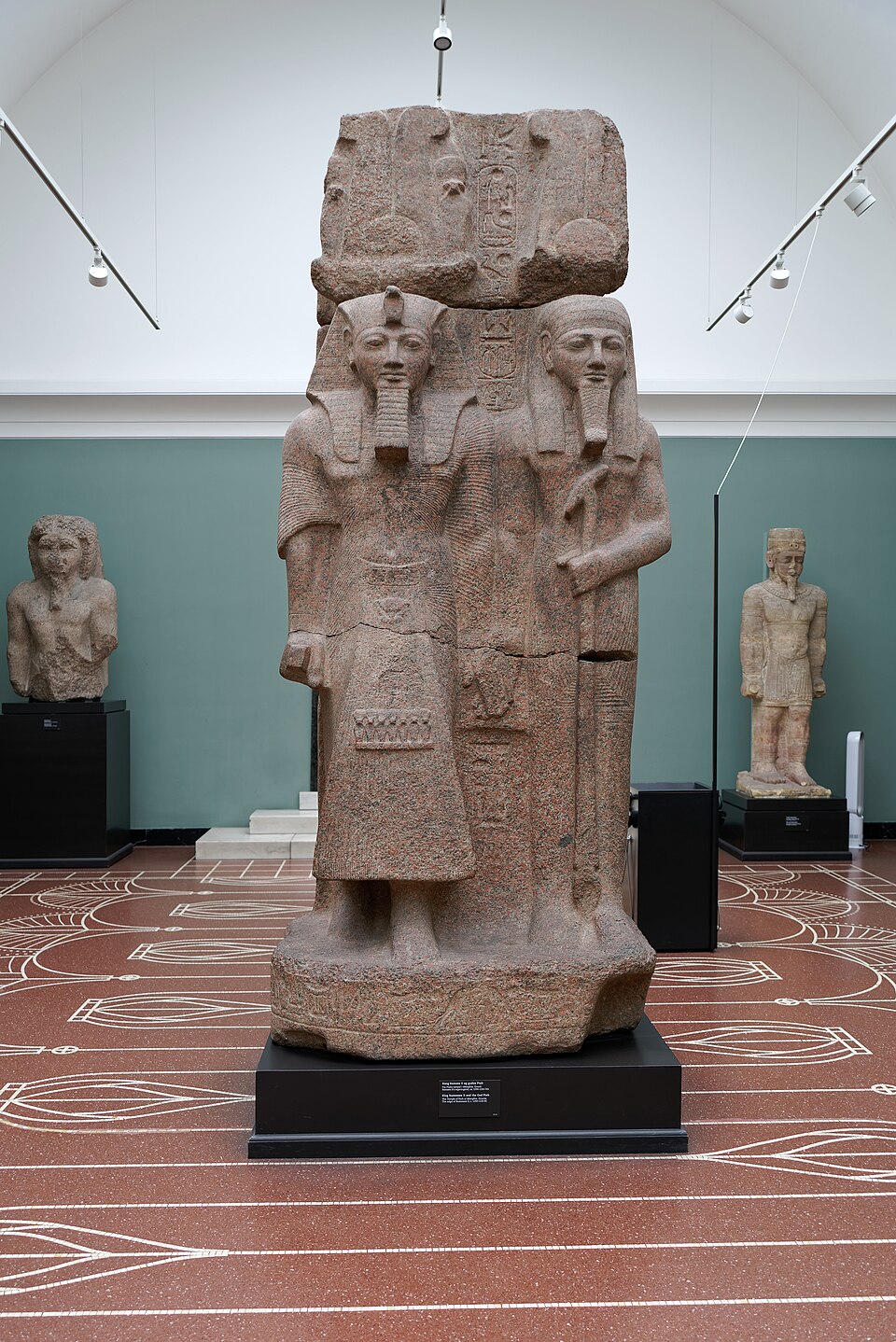
In Nubia, the sandstone of the cliff had been waiting since the dawn of the world to be given a face. I wanted it to be mine. Four colossi as tall as ten men stacked one upon another, seated facing east, so that the sun itself might greet me in the sanctuary's depths. I had inscribed: 'I have built for you a dwelling carved in the mountain of Nubia... My statues stand there like mountains, for eternity.' It was not only piety toward Amun, Ra, and Ptah: a traveler from the south, lifting his eyes to these giants, understood without a word who ruled the river. Stone speaks to the illiterate better than any herald.
Stone speaks to the illiterate better than any herald.

—You also built a temple for your wife Nefertari, a rare thing for a queen. Why?
Beside the great temple, I excavated a second, smaller one, for Nefertari, my beloved. A rare thing: on the façade, her colossi stand as tall as mine, and I had inscribed that it was for her that the sun rose. A queen raised almost to the rank of a living goddess — Nubia, that land of Kush rich in gold, had to see that the house of Ramesses was great even in its women. Governing the distant marches is not only posting garrisons there; it is planting gods there who bear your name and that of your wife, so that gold may flow up the Nile without having to raise a lance.
—You are accused of having engraved your name on the monuments of your predecessors. What do you answer?
I know it, and I do not hide it. A name carved in stone is an endless cord that holds the sovereign in existence; erasing the name is killing a second time. So I had my cartouches cut deep, so deep that no usurper's chisel could remove them after me — a lesson I myself had learned by looking at the ancients. On a thousand monuments, from the temples of my fathers to forgotten statues, my name watches. Let posterity judge me grasping or far-sighted: I know that one truly rules only over what one has marked the surface of.
—The great hall of Karnak, you completed it after your father. How do you see this sharing of the work?
At Karnak, my father Seti I had begun a hall whose columns were to imitate the papyrus forest of the first morning of the world. He died before seeing it closed; I finished his one hundred and thirty-four columns, and I placed my name beside his — not to steal it, but because a son extends the father's hand. Five thousand square cubits of stone where one gets lost as in a sacred marsh: no one, before or in my time, had erected such a hall. When the faithful of Amun entered under that canopy of granite, they could no longer distinguish Seti's work from mine — and that was as it should be: a dynasty speaks with one voice.
—You reigned longer than any pharaoh before you. What did such a long life teach you?
The gods granted me what they refuse almost all: time. Sixty-six Nile floods under my scepter, and I saw a dozen of my eldest sons die before they could touch the throne — I had to name heir after heir. They say I have more than a hundred children, born of the harem where I retire in the evening; I did not count them all. My bones ache, my teeth betray me, and the Heqa scepter weighs on my hand as never before. Ruling old means burying those you have begotten and yet continuing to wear the double crown. Maat does not stop because a king has sore knees.
—You did everything to endure in stone. How do you imagine your own eternity, once passed into the other world?
When my breath joins the West, my embalmers will make my body a dwelling for my ka, as was done for my fathers in the Valley of the Kings. I want to believe that my colossi at Abu Simbel will stand when my priests themselves have been forgotten — did I not have it engraved that my statues would stand 'like mountains, for eternity'? If I could imagine being looked upon still in a thousand years, I would ask only one thing: that my name be spoken. For a dead man whose name is uttered does not die entirely. The rest — my gold, my granaries, my treaties — already belongs to the sand.
A dead man whose name is uttered does not die entirely.
Read further
This imaginary interview was generated by artificial intelligence from sources documented in Ramesses II's profile. It dramatises what the figure might have said based on what we know about them, but does not constitute attested historical testimony. For primary sources and factual documentation, refer to the full profile.