Imaginary dialogue between La reine de Saba and Solomon
by Charactorium · Solomon (989 av. J.-C. — 930 av. J.-C.) · Mythology · 5 min read
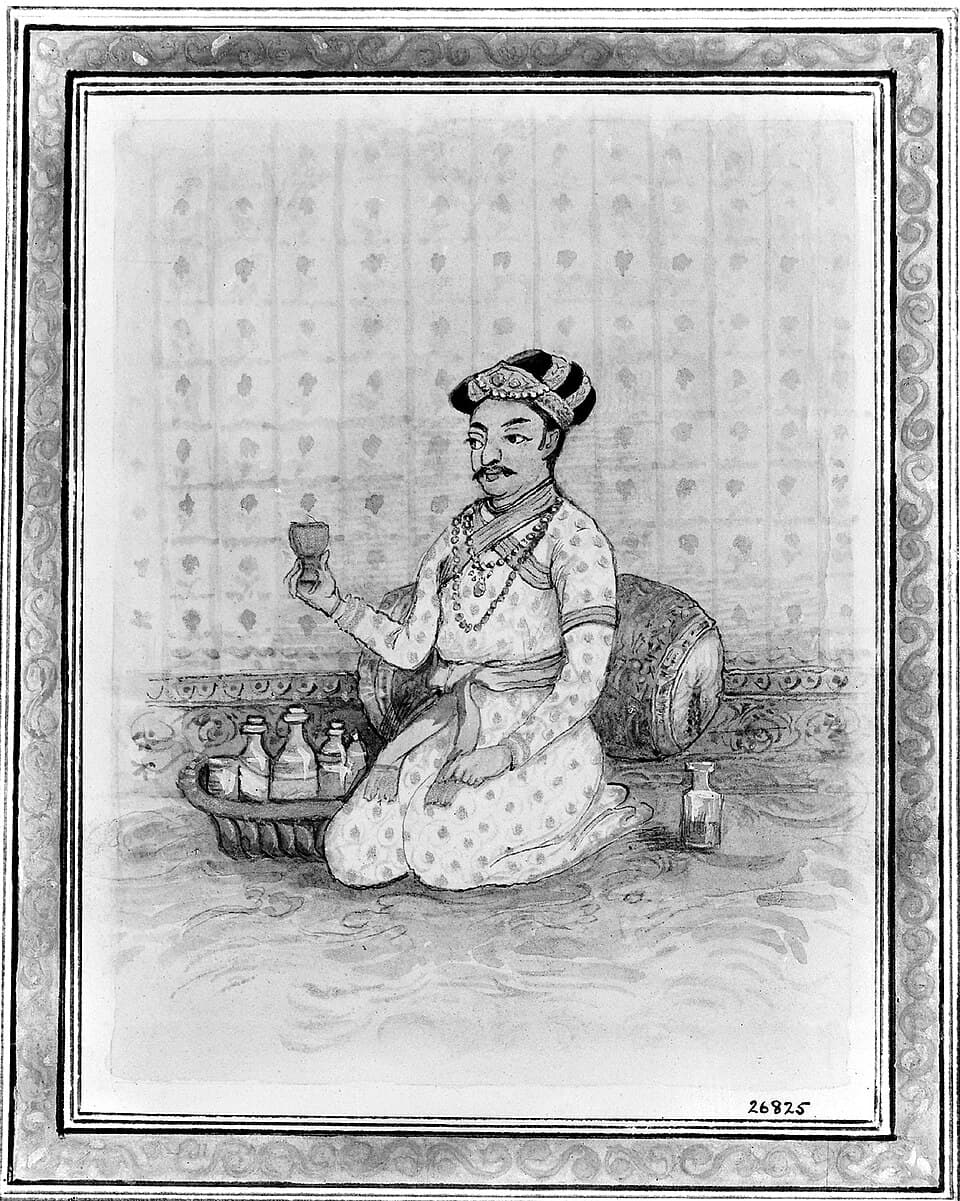
It is under the cedar porticoes of the palace of Jerusalem, in this year 935 BC, that the queen of Sheba meets Solomon at the end of the long journey of caravans from southern Arabia. The air is heavy with incense and myrrh, the perfumes she has brought as gifts, and the evening light glides over the ivory of the royal throne. She has come from afar to test with riddles the wisdom whose fame has reached her lands, and the king welcomes her as a sovereign equal to himself.
—King Solomon, I have crossed the deserts to test you with my riddles. But tell me first: how did this wisdom come to you?
Queen, you did well to come and test it yourself rather than believe the rumor. At the beginning of my reign, when I succeeded my father David, I felt like a child who does not know how to go out or come in before this immense people. God appeared to me and told me to ask for whatever I wanted. I asked neither for long life, nor riches, nor the death of my enemies: I asked for a discerning heart to judge my people and to distinguish good from evil. And the rest — this throne, these caravans, even your journey — was given to me in addition. That is why I listen to you: a riddle is a way of seeking truth together.
I asked neither for riches nor long life, but a heart able to discern good from evil.
—The story of the two women arguing over a child is told even in my land. How did you unravel such a lie, having no witness?
You already know the story, so you know how hopeless it was: two mothers, one living infant, no proof, their word against each other's. I ordered a sword to be brought and the child to be cut in two, half for one, half for the other. The real mother's heart yearned: she begged that the child be given alive to her rival rather than see it die. The other woman accepted the division. Truth had betrayed itself. You see, Queen, I do not read hearts: I set a trap where true love cannot help but speak. Judgment is not about knowing, but about bringing forth what is hidden.
I do not read hearts: I set a trap where love cannot help but speak.
—Upon arriving, I saw your Temple rising. Seven years of construction, they say. Why devote so many men and riches to this dwelling?
You saw it with your own eyes, Queen, and it is said to have taken your breath away. Seven years, yes, and tens of thousands of workers, stonecutters, and carriers. My father David dreamed of building this house, but the honor fell to me. The Temple of Jerusalem is not a palace for me: it is the dwelling I offer to the Name of my God, and the place where the Ark of the Covenant, the sacred chest of the Tablets of the Law, finally rests. What pride to claim to enclose Heaven within walls! Yet I did it, knowing that the heavens of heavens cannot contain Him. It is the heart of my kingdom — not because it is rich, but because it is holy.
The heavens of heavens cannot contain Him, yet I built Him a house.
—These cedar beams, these precious woods I do not have at home — where do you get them for such a vast dwelling?
From Tyre, Queen, the Phoenician city on the sea. Its king was my father's friend and has remained mine. I send him wheat and oil from my fields, and his lumberjacks cut down for me the cedars of Lebanon, those immense trees that no one knows how to hew like them. The trunks are tied into rafts and dragged by sea to the coast, then hauled up to Jerusalem. You see, no greatness is built alone: I needed stone from my hills, gold from my roads, and wood from a neighbor. You who rule a land of incense know that a kingdom prospers as much by what it exchanges as by what it possesses.
No greatness is built alone: I needed stone from my hills and wood from a neighbor.
—My caravans took weeks to reach your court. How do your goods reach the distant southern seas?
Through Ezion-Geber, Queen, my port at the head of the gulf, where the Red Sea opens the route to your lands and beyond. I have had ships built there, and the sailors of Tyre, who know the waters better than anyone, sail with mine. They return laden with gold, rare woods, precious stones. That is why your visit rejoices me: you bring not only riddles, but the incense and perfumes that my Temple thirsts for its offerings. Between your country and mine opens a road where riches pass, as do words of wisdom. An alliance sealed by trade is sometimes worth more than one sealed by arms.
An alliance sealed by trade is sometimes worth more than one sealed by arms.
—I wanted to judge for myself what is reported of your court. Tell me: what did you expect from my visit before I appeared?
I admit, Queen: I was told that a sovereign was coming from the south with a brilliant retinue and questions sharper than blades. I expected a merchant; I received a rival in intellect. You pressed me with riddles, and I left none unanswered — not out of vanity, but because wisdom, when it remains silent, is but a buried treasure. I believe you sought to know if rumor lied, as any prudent sovereign who believes only what he has seen. Now tell me if half of what you were told was true. I like to be put to the test: that is how one distinguishes the wise king from the flattered king.
Wisdom, when it remains silent, is but a buried treasure.
—I am told you compose thousands of proverbs and songs. What do you hope to convey through these written words?
I love assembling proverbs, Queen, those brief sayings that hold an entire lesson: the fear of God is the beginning of knowledge, pride goes before a fall, better a dish of herbs with love than a fattened ox with hatred. They are weapons for everyday life, sometimes more useful than an army. But I have also written songs about love, about the beauty of a wife, for the heart is not nourished by maxims alone. And I have meditated, more darkly, on the vanity of human endeavors — everything passes, the wind returns upon its course. A well-struck word travels through the ages when gold scatters. That is what I want to leave: not riches, but words that still judge when the king is no more.
A well-struck word travels through the ages when gold scatters.
—On your hand shines a ring engraved with a seal. It is whispered that it grants you hidden powers. What is the truth of it?
Men love to embroider, Queen, and my figure serves as their cloth. They say my seal commands spirits, that no secret resists it, that it seals and loosens invisible powers. I will tell you neither yes nor no, for a king gains by letting what is imagined of him linger. What I know is that true mastery is not over demons but over oneself: ruling one's own desires is the most difficult magic. My throne of ivory and gold dazzles ambassadors; my ring makes storytellers dream. But behind these emblems, there is only a man who asks God each day not to be intoxicated by his own legend.
Ruling one's own desires is the most difficult magic.
—Your court overflows with women from all kingdoms, they say, and countless riches. Does this abundance not weigh on your reign?
You touch there, Queen, on what sometimes troubles me in the silence of the evening. I have accumulated gold, horses, wives from all nations to seal my alliances. It is the custom of the great kings of the East, and no one founds his power without these ties. Yet I know the warning: a heart drawn toward too many foreign gods strays far from its own. Prosperity is a water that rises quickly and drowns those who fall asleep in it. I have built, traded, judged, but I know my kingdom holds only by faithfulness, not by opulence. If my sons forget it after me, all this splendor will shatter like an overloaded vase. That is my fear, which I confess only to a sovereign, never to my scribes.
Prosperity is a water that rises quickly and drowns those who fall asleep in it.
—Before I take the road south again, tell me, wise king: what, in your eyes, is the mark of a just reign?
Queen, since you have come so far for this answer, I give it to you plainly. A just reign is measured neither by the temples one raises nor by the ships one launches, but by the widow who has not been exploited and the child whose true mother has been recognized. A king is first a judge: if his scales tip, all his gold weighs nothing. I asked God for a listening heart, and that is still what I ask for each morning, for wisdom is not a treasure one possesses once, but a spring to which one must return to drink. Take your road in peace, and may your people, like mine, find in you someone who listens before deciding.
A king is first a judge: if his scales tip, all his gold weighs nothing.
This imaginary interview was generated by artificial intelligence from sources documented in Solomon's profile. It dramatises what the figure might have said based on what we know about them, but does not constitute attested historical testimony. For primary sources and factual documentation, refer to the full profile.