Imaginary interview with Seti I
by Charactorium · Seti I (1322 av. J.-C. — 1278 av. J.-C.) · Politics · Military · Spirituality · 5 min read
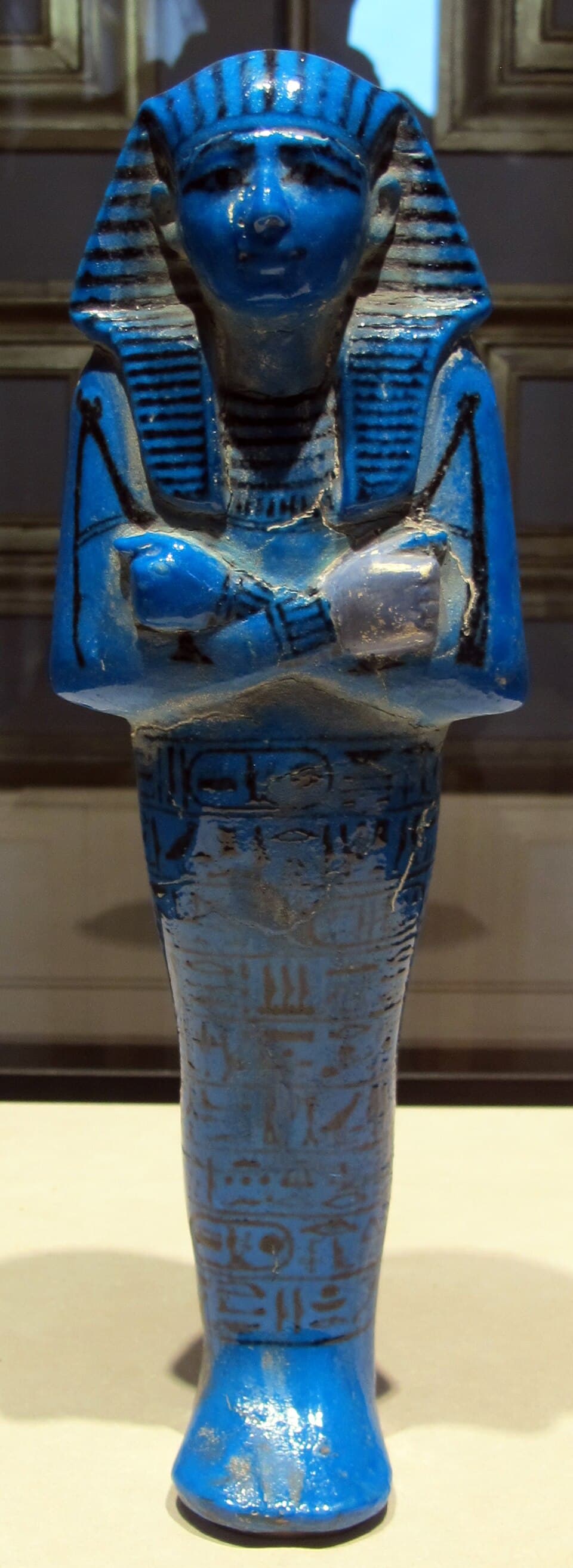
We are received in the incense-scented twilight of the temple of Abydos, where seven chapels each open onto a god brought back from the darkness of oblivion. Pharaoh Seti I, between two offerings, consents to speak — the low voice of a man who governs the living and already negotiates with the dead.
—When you ascended the throne, in what state did you find the gods of Egypt?
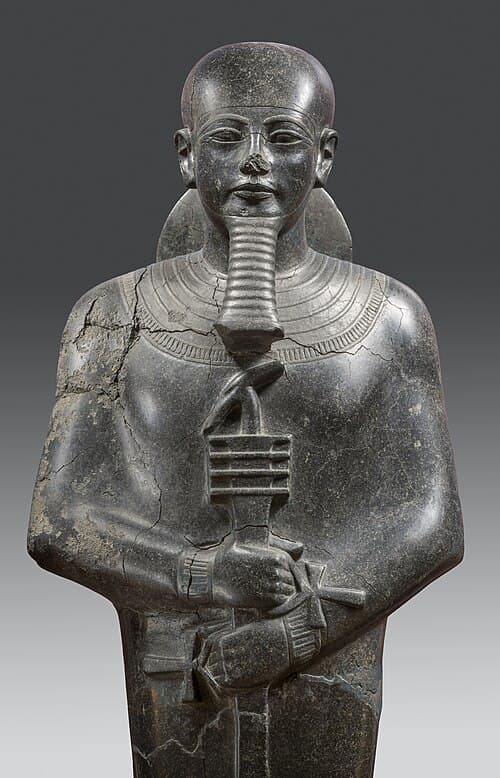
Silent. The sanctuaries of Amun walled up, the altars of Ptah cold at Memphis, the priests scattered like grain thrown to the wind. The heretic of Akhetaten had let only one disk shine, and the land was covered with Isfet, that chaos which gnaws at Maat as rust gnaws at bronze. My father Ramesses reigned only two seasons; it fell to me to reopen the doors. I restored the cults of Osiris, of Ptah, and even that of Seth, my patron. A god deprived of his carved name dies a second time, and that death, no mummy can heal. I gave back their names to the gods before thinking of my own.
A god deprived of his carved name dies a second time, and that death, no mummy can heal.
—On the King List engraved here at Abydos, certain rulers are missing. How did you choose whom to inscribe?
Come see the wall: seventy-six cartouches, and my son Ramesses at my side, his small hand offering to our legitimate fathers. I had the kings who served Maat engraved — and I left emptiness where others reigned. Akhenaten, the woman who followed him, the child Tutankhamun: their names do not enter my stone. This is not rancor, it is surgery. One does not memorialize a wound; one cuts it away. What the scribes call sfkh, the erasure, is not cruelty — it is cosmic justice. Without a name, the soul no longer finds its offering table; it dissolves. I condemned the heretics to silence so that Egypt, for its part, might find its voice again.
One does not memorialize a wound; one cuts it away.
—Your very name ties you to Seth, the god of the desert and disorder. Isn't that a strange burden for a king who restores order?
Men tremble at the name of Seth; I wear it as one wears the khepresh, the blue war crown. For here is what they forget: each night, when the barque of Ra descends into the twelve hours of darkness, it is Seth who stands at the prow and harpoons the serpent Apophis before it can swallow the sun. The god of chaos is also the guardian of the nocturnal sun. That is my name: 'he who belongs to Seth,' not the sower of disorder but he who pushes back disorder at the threshold of the world. When my composite bow pierces the enemy ranks in Canaan, I do no different than Seth at the edge of the abyss — I hold the night at bay from the day.
The god of chaos is also the guardian of the nocturnal sun.
—What does your throne name, Men-Maat-Ra, which your artisans engrave everywhere, mean to you?
'Enduring is the Maat of Ra' — that is not flattery, it is a burden I impose on myself. Maat, you see, is not only the justice of courts; it is the order that holds the stars in their places and the Nile in its bed. My cartouche, that golden oval that encircles my name, represents the cosmos that the king girds with his arms to protect it from Isfet. Each morning the sun rises, each temple reopened, each column erected at Karnak is proof that Maat still endures through my hand. A pharaoh who lets chaos enter is no longer a king, only a man under a crown too heavy.
Maat is not only the justice of courts; it is the order that holds the stars in their places.
—This temple of Abydos where we speak, why did you devote the most ambitious work of your reign to it?
Because Abydos is the gate. Beneath these slabs rests, tradition says, the very body of Osiris, murdered then raised — and whoever builds here builds on the threshold of the underworld. I wanted seven chapels, seven gods, so that no power of heaven or earth would be missing from the roll call. At the great festivals, I myself preside over the raising of the djed pillar, that column which is the spine of Osiris: they lay it down, symbol of the dead god, then they raise it, and all Egypt lives again with him. The flint knife, the stone from before time, cuts the offerings in the chapel of mysteries. I am not building a monument. I am building my own passage to resurrection.
I am not building a monument. I am building my own passage to resurrection.
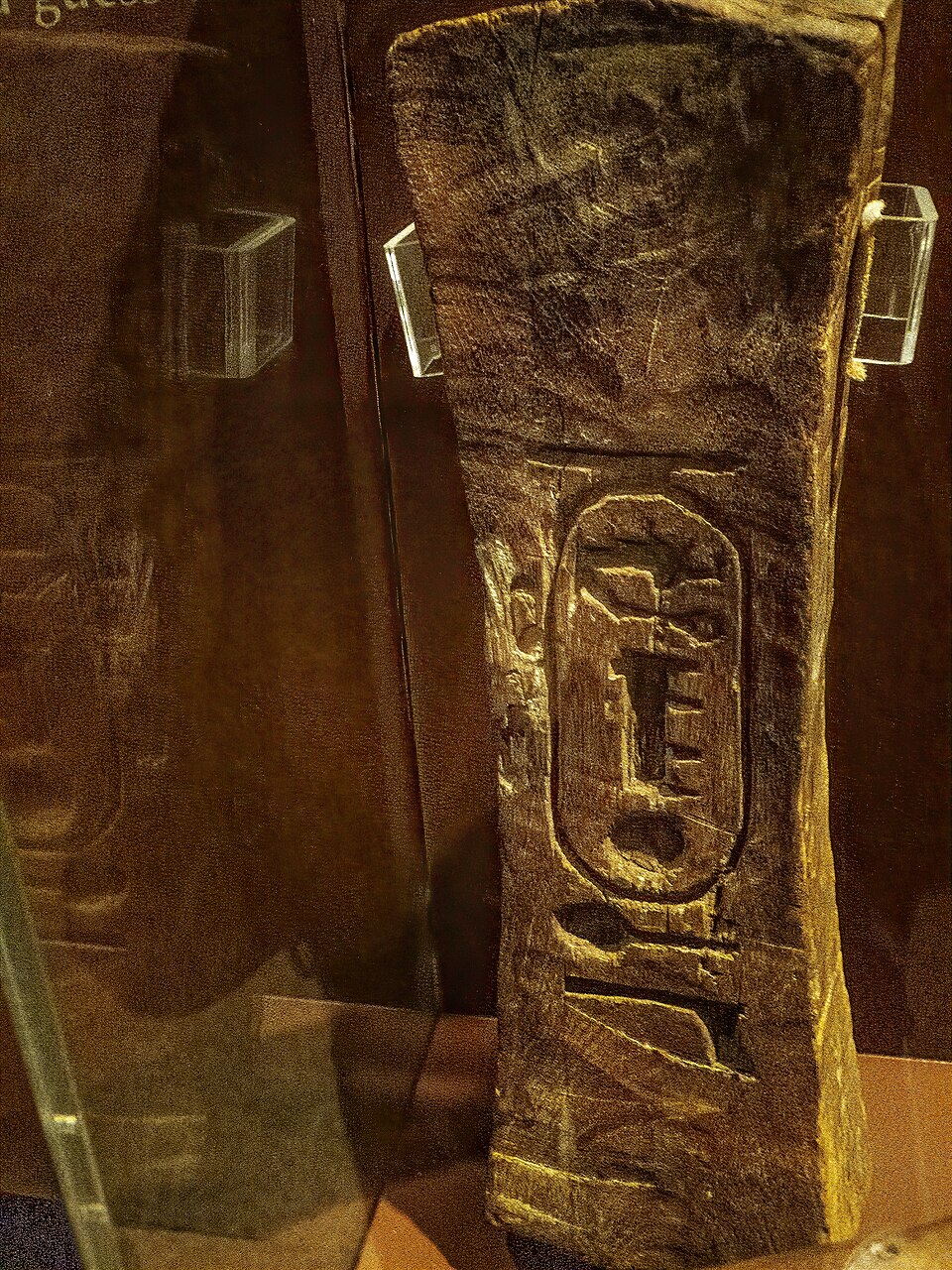
—You speak of resurrection as a daily affair. What place do these rites hold in your day as sovereign?
Before dawn, when other kings still sleep, I am already up. The pharaoh is the high priest of all the gods: he must open the sanctuary, wash the divine statue, clothe it, burn for it the kyphi, that incense of fifteen essences whose recipe sleeps in the secret of the temples. In the provinces, my priests perform these gestures in my name; here, at Abydos, I do them with my own hands. In the evening, when the harps fall silent and Ra plunges to the west, my scribes intone the litanies of the setting — for each twilight is a small death, and each dawn a small resurrection. To live as king of Egypt is to endlessly repeat the journey of the sun.
Each twilight is a small death, and each dawn a small resurrection.
—They say your tomb in the Valley of the Kings surpasses all others. What did you want to inscribe there?
Everything. The Amduat in its entirety — 'that which is in the afterlife' — and the Book of Gates, and even the Book of the Celestial Cow. One hundred thirty-seven meters of galleries sinking into the mountain, every wall covered with the twelve hours of the night, every terrifying guardian named, every door drawn. Why? Because the soul that descends must know the path as a pilot knows the shallows of the Nile. To mistake an hour, to ignore the right word before a guardian, is to be lost forever. I made my burial a complete map of the night, so that nothing, at my death, would be unknown to me. One reads there not my glory, but my itinerary toward the solar morning.
I made my burial a complete map of the night.
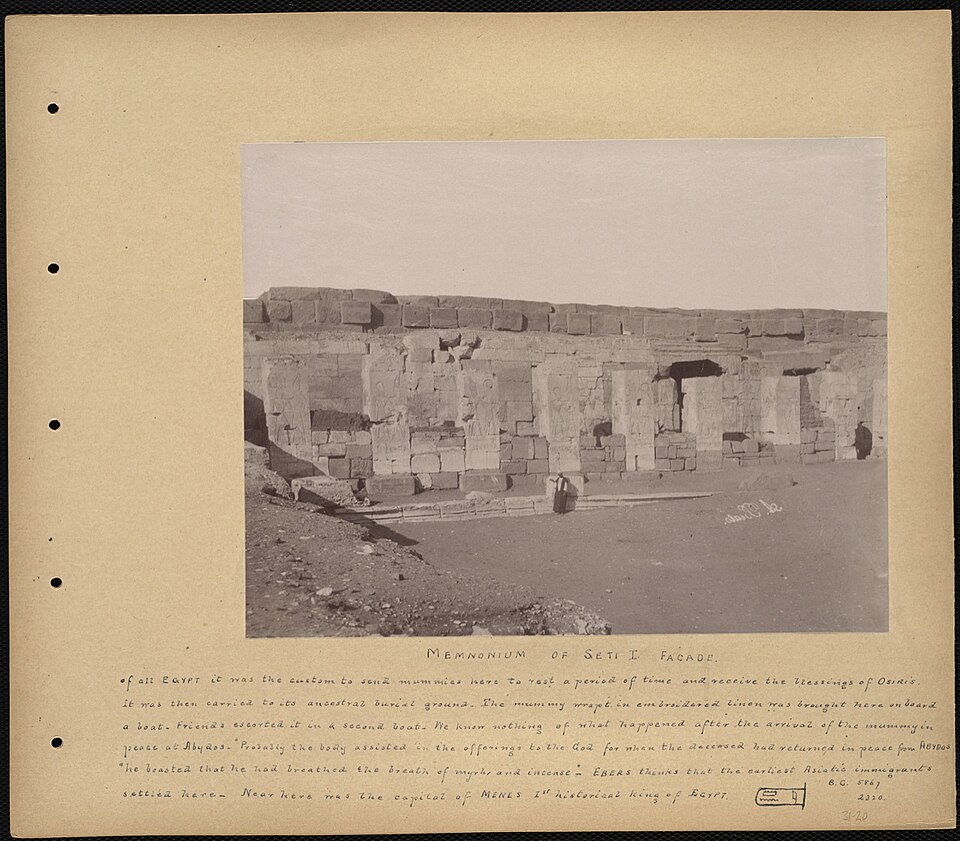
—Do you fear that journey your painters describe with such care?
Fear would be to depart without preparation. See these walls: the barque of Ra glides from hour to hour, confronts serpents, crosses guarded gates, and at the end of twelve hours is reborn in the east, scarlet. That is my hope: to accomplish the same journey, to be regenerated like the sun. For this I have prepared everything — the tomb at Luxor for my body, the mortuary temple of Gournah on the west bank for my cult, and Abydos for my inner Osiris. A man dies once; a well-prepared king crosses the night and rises again. I do not dread the darkness, I have mapped it. What would wear me down would be the thought that one day my name might be erased as I erased that of the heretics.
I do not dread the darkness, I have mapped it.
—From the first year of your reign, you waged war in Canaan. What did you go there to seek?
What the heresy had let slip: the roads, the tributes, respect. In my first season I marched on Canaan, broke the Shasu of the desert, retook Gaza and Yenoa, planted a garrison at Beth-Shean where two stelae still record my victory. On the north face of the hypostyle hall at Karnak, my reliefs show the giant king, standing on his chariot, the composite bow drawn, the gods Amun and Ra-Horakhty granting him victory. This is not boasting: a border one does not assert, one loses. To the north Muwatalli and his Hittites were already rumbling; I retook Qadesh, though I could not hold it. I gave back to Egypt its Levantine marches, and I left to my son an empire to defend, not to reconquer.
A border one does not assert, one loses.
—You mention your son. How did you prepare the young Ramesses to bear this burden?
Not in palaces, but on chariots. I associated him with the throne, gave him troops, took him to see with his own eyes the horned-helmet Sherden who form my guard, and to feel the dust of campaigns. One does not shape a king with scribal words; one tempers him as one tempers bronze. Already, on the Abydos List, his small hand makes the offering at my side — I wanted the gods and men to see him as heir before my death. The Hittites will not sleep; Qadesh remains an open wound. I know he will have to return there one day. So I gave him everything: the bow, the crown, and the names of the gods to thank. The rest, it is for him to engrave.
One does not shape a king with scribal words; one tempers him as one tempers bronze.
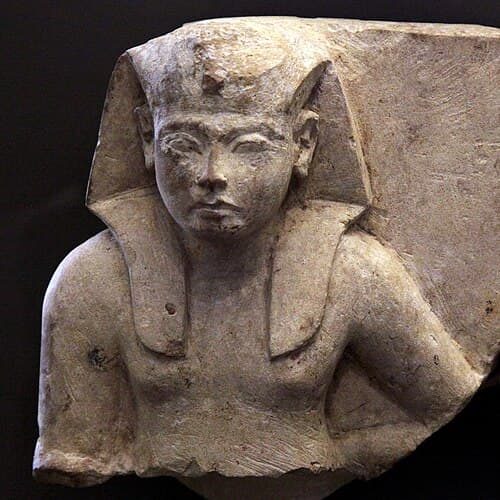
This imaginary interview was generated by artificial intelligence from sources documented in Seti I's profile. It dramatises what the figure might have said based on what we know about them, but does not constitute attested historical testimony. For primary sources and factual documentation, refer to the full profile.