Kids interview Sophocles
by Charactorium · Sophocles (495 av. J.-C. — 405 av. J.-C.) · Literature · 5 min read
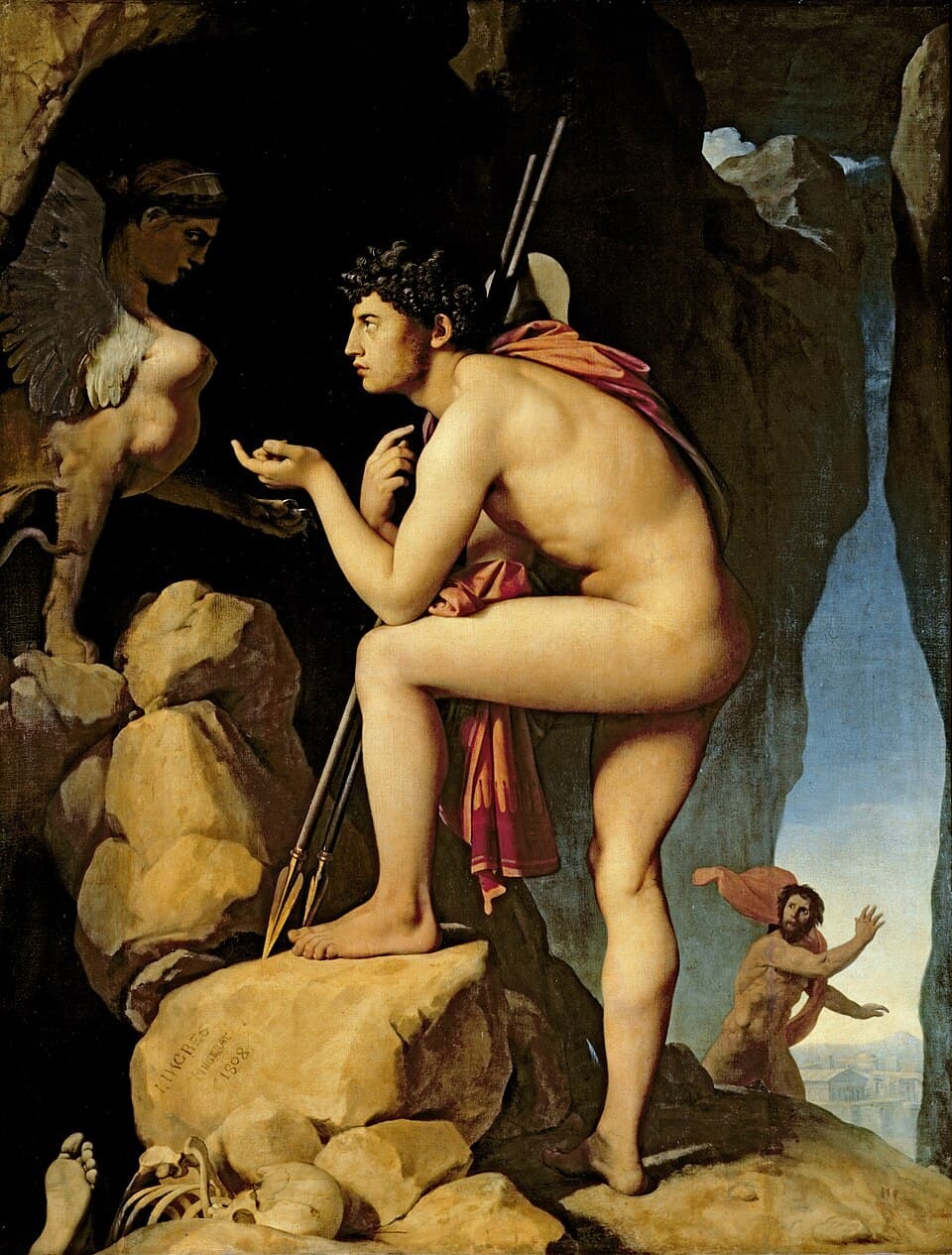
Two young visitors on a class trip push open the door of an old house in Athens. A very old man is waiting for them, sitting near a sunny courtyard. He smiles: he looks as if he has the entire fifth century in his eyes.
—What were your actors like? Did they show their real faces on stage?
Oh no, my child, never! Each actor wore a theater mask made of stiffened linen, covering the entire face. Imagine a large painted face, bigger than the head, with an open mouth. Why? Because the tiers were enormous. Way in the back, you couldn't see a smile or a tear. But a mask, that you could see from afar. A sad mask for Antigone, a hard mask for King Creon. And since one man could change masks, he played several roles in the same play. Theater, in my time, was first and foremost a great game of faces.
Theater was first and foremost a great game of faces.
—They say you changed theater. What exactly did you do?
You know, before me, there were only two actors on stage. Two! Always the same face-off, one against the other. I added a third actor. It seems like a small thing, but it changes everything. Imagine you always play with two, and one day a third friend joins: suddenly, one can argue while the other listens and betrays. The story becomes livelier, more surprising. That's when what we call peripeteia appears: the moment when everything suddenly turns, when happiness becomes misfortune. With three voices, these reversals become possible. And the chorus, that group that sings, can finally comment on the real storm of the characters.
Adding a third actor seems like a small thing, but it changes everything.
—How many plays did you write in your whole life?
Many, my child... about one hundred twenty-three plays, they say! I wrote almost all my life, on papyrus rolls, those long sheets you unroll to read. But I must tell you something a little sad. Of all these plays, only seven have come down to you. Seven out of one hundred twenty-three. Imagine a great library catching fire: only a few pages remain in the ashes. Papyrus, you see, is fragile. It burns, rots, tears. So when you still read Antigone today, tell yourself it's almost a miracle. These words have crossed more time than you can imagine.
Seven plays out of one hundred twenty-three: what remains of me is almost a miracle.
—And did you often win the theater contests? Were you the best?
Ha! I often won, it's true, more than twenty times at the great festivals of the Dionysia. In Athens, theater wasn't just entertainment: it was a contest, like a competition. Several authors presented their plays, and the audience, thousands of people, judged. The winner received a laurel crown, those green leaves placed on the head. You know what I felt the first time? I was barely thirty, and I beat Aeschylus, the master everyone admired. My heart was beating so hard. But believe me: the crown dries up in a few days. What lasts is the story you managed to tell.
The laurel crown dries up in a few days; the story remains.
—In Antigone, why does your heroine disobey the king? Isn't she afraid?
Yes, she is afraid, of course. But she has something stronger than fear. Listen to the story. King Creon has forbidden burying Antigone's brother, as a punishment. Now, in our culture, not burying a dead person is a horror, an offense to the gods. Antigone must choose: obey the king, or obey what she feels is right deep inside. And she chooses her heart. In my play, she says this terrible thing to the king: "I did not think your edicts had enough force to compel a mortal to transgress the unwritten and unchanging laws of the gods." You see? There are laws that no king can erase.
There are laws that no king can erase.
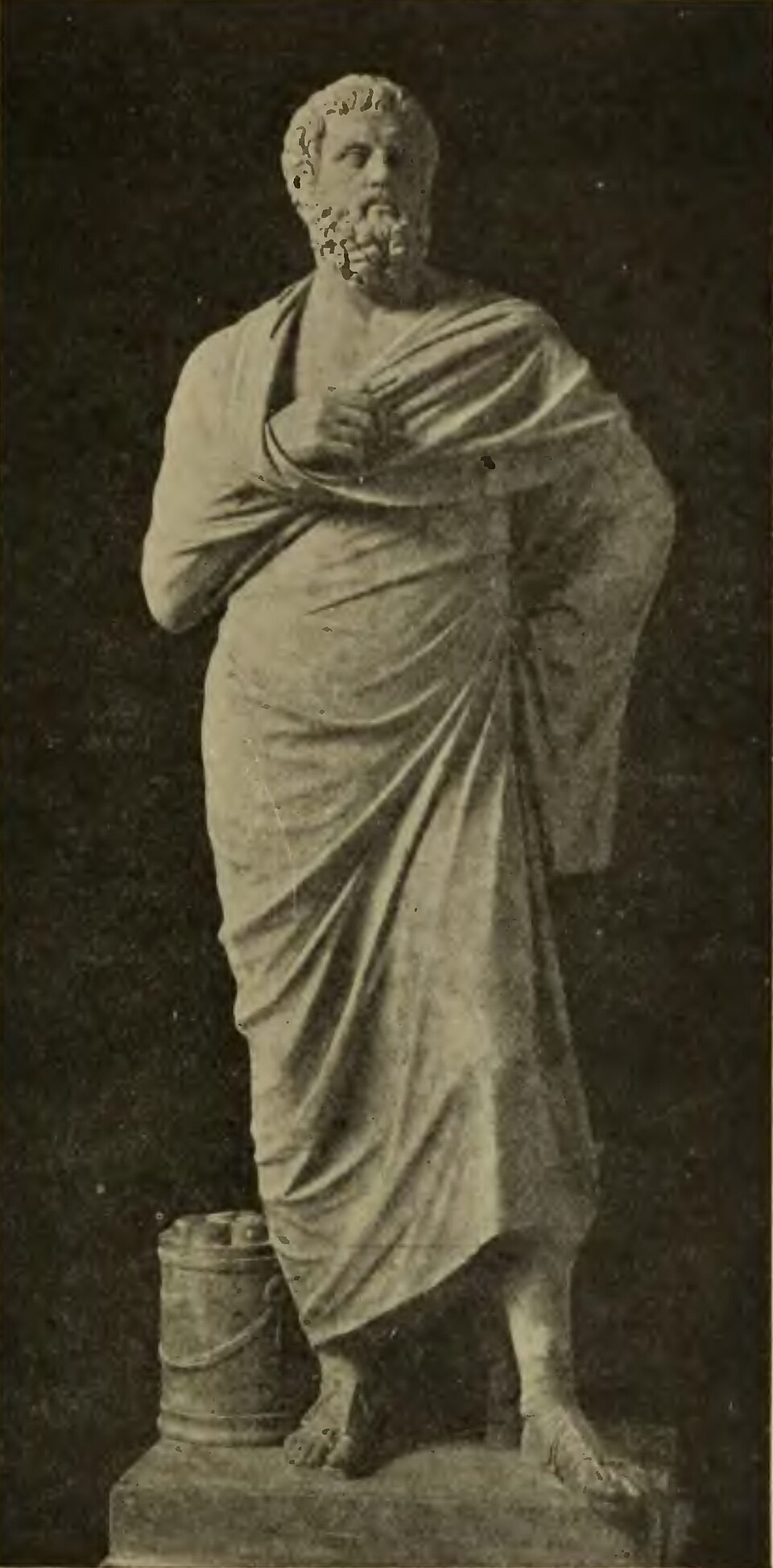
—But then, who is right? The king or Antigone?
Ah, that's the hard question! And I'm going to disappoint you a little: I don't give you the answer. That's what a tragedy is. Both have some right on their side. King Creon wants to protect the order of the city, and that's not stupid. Antigone wants to respect the gods and her brother, and that's not stupid either. The misfortune is that Creon won't let go of anything. We call that hubris: excessive pride, when you think you are stronger than everything. And hubris, in my plays, always ends up crushing you. It's up to you, my child, to think: how far must one obey? That's what theater is for.
A tragedy doesn't give the answer: it forces you to think.
—Who is Oedipus? Why is his story so famous?
Oedipus is a king who seeks the truth... without knowing that the truth is himself. A terrible curse hangs over his city. So he investigates, he wants to find the culprit. And the more he advances, the closer he gets to a horrible secret: the culprit, the monster he seeks, is himself. In the end, he understands everything at once. We call this moment anagnorisis, recognition: the instant when the hero discovers the hidden truth. He cries out: "I have unwittingly committed the crimes you destined for me." Imagine that vertigo: searching for the culprit everywhere, and finding him in your own mirror. That's why Oedipus is unforgettable.
Oedipus searches for the culprit everywhere, and finds him in his own mirror.
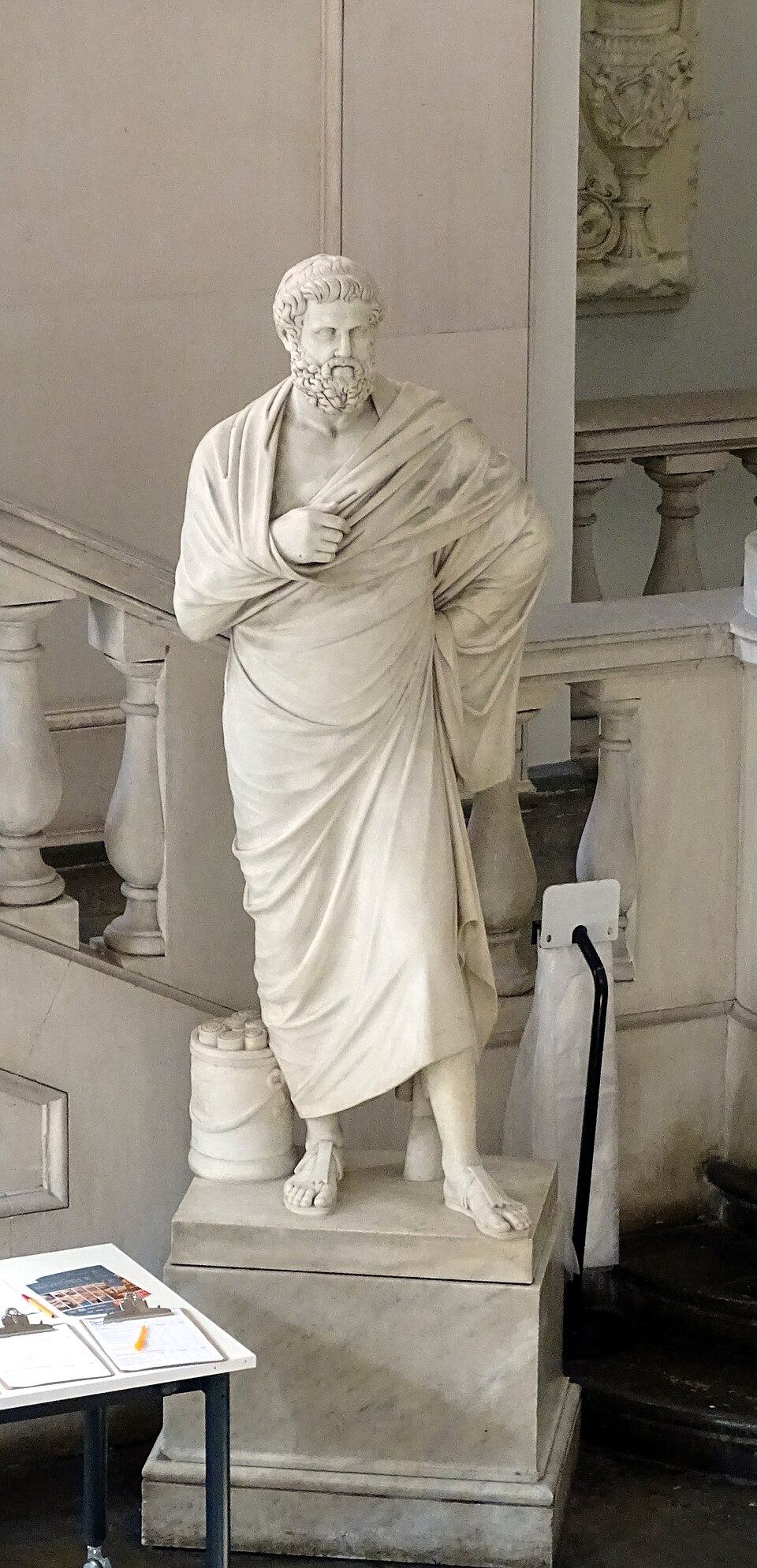
—But if he knew it was his destiny, couldn't he avoid it?
That is precisely the question that makes one tremble, my child. For us Greeks, there exists fate, also called Moira: an invisible force that decides in advance. Oedipus tried everything to escape his curse. He fled, he ran far away. And it is precisely by fleeing that he ran straight into it. That's what makes the heart ache. Do you know what the spectator feels watching this? Pity and terror mixed together. And when the play ends, these emotions cleanse him, relieve him. We call this catharsis. We weep for Oedipus, and in weeping, we feel strangely lighter, more human.
It is by fleeing his destiny that Oedipus ran straight into it.
—Is it true that you weren't just a writer? You were also a general?
Yes, it's true, and it always surprises people! In Athens, a citizen did not have just one job. In the morning you could discuss on the agora, the great public square, and later serve your city as a soldier. I was chosen as a strategos, that is, a general. I bore this responsibility alongside Pericles, the greatest statesman of my time. Imagine: writing tragedies about fate in the evening, and commanding ships during the day. I was not a better general than a poet, I admit. But in our culture, we thought a man should serve his city in every possible way. Speech and action, together.
Writing about fate in the evening, commanding ships during the day.
—Did you still write plays even when you were very old? Weren't you tired?
My child, I think I never really stopped! I lived almost ninety years, which was immense for my time. I lived through the wars against the Persians, the greatness of Athens, then the long and sad Peloponnesian War. And all along, I kept writing. My last play, Oedipus at Colonus, is about a tired old man who finally finds peace. Colonus is the village where I was born. You see, I ended where I began. If I were to leave you with one thing, it would be this: you can create until your last breath. Age takes your legs, but it does not take your imagination.
Age takes your legs, but it does not take your imagination.
This imaginary interview was generated by artificial intelligence from sources documented in Sophocles's profile. It dramatises what the figure might have said based on what we know about them, but does not constitute attested historical testimony. For primary sources and factual documentation, refer to the full profile.