Kids interview Thomas Hobbes
by Charactorium · Thomas Hobbes (1588 — 1679) · Philosophy · Politics · 5 min read
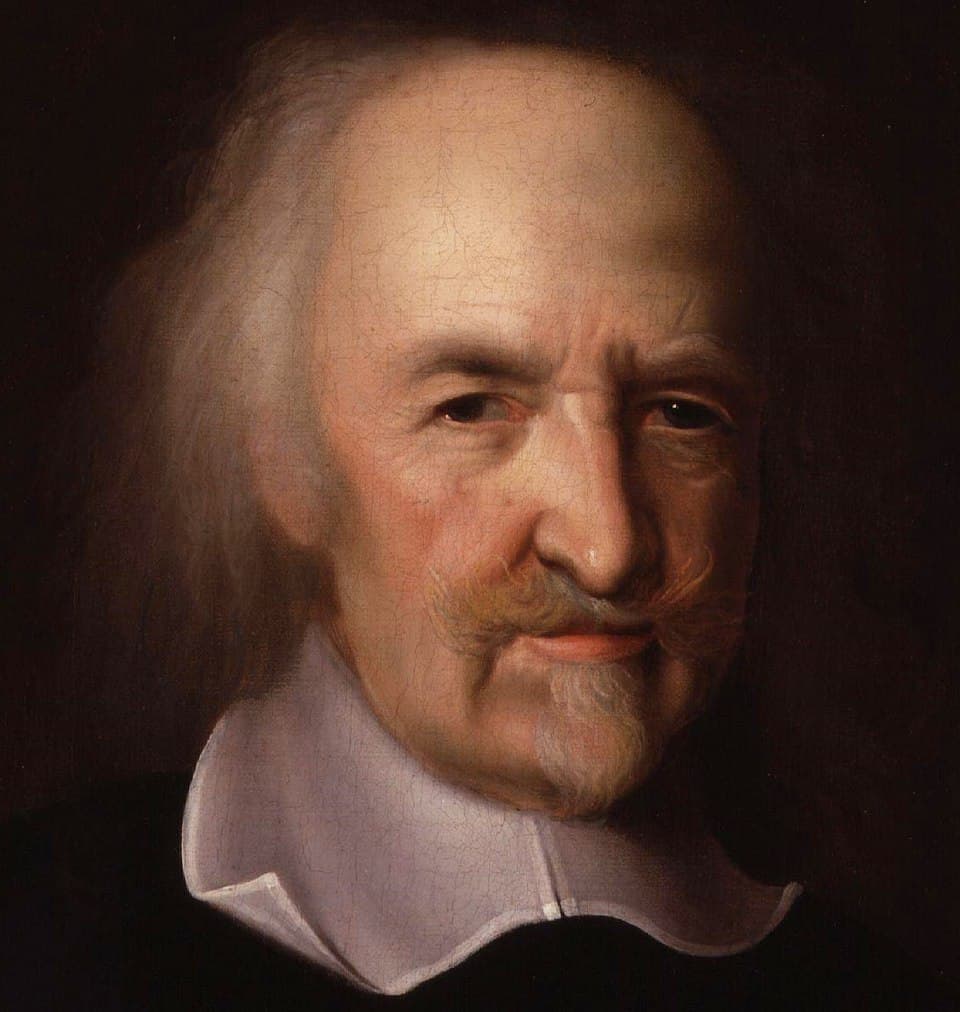
Two 12-year-old students, on a class trip, push open the door of an old candle-lit study. A 91-year-old man awaits them, a quill in his hand. Thomas Hobbes sets down his book and smiles: he has so much to tell them.
—How old were you when you had to flee England?
I was 52 years old, my child, and I was very afraid. It was in 1640. Imagine a country where neighbors begin to hate each other, where people already talk of taking up arms against the king. I felt the storm coming. So I packed my bags and crossed the sea to take refuge in Paris. You know, leaving like that at my age was not a joyful adventure. It was fleeing to avoid death. But that fear taught me a great deal. In the calm of France, I began to reflect on a single question: how to prevent men from killing one another?
I fled to avoid death, and fear taught me everything.
—Did you write your great book in Paris?
Yes, exactly. It was during my Parisian exile, between 1640 and 1651, that I wrote Leviathan. Does the title seem strange to you? It's the name of a huge monster mentioned in the Bible. I chose this name to speak of the State: an immense power that must keep all men in awe. Imagine a street in my time, without any engine noise, just horses and the cries of merchants. In the evening, I would lock myself in and write by candlelight. My book was published in 1651. Many hated it. But I knew one thing: without a strong power, men become wolves again.
Without a strong power, men become wolves again.
—What is this story about a "war of all against all"?
Ah, that is the heart of my thought! Listen carefully. Imagine there were no laws, no king, no police. No one to protect you. That is what I call the state of nature. In this situation, everyone fears everyone. You steal from your neighbor because you think he will steal from you first. In my book, I wrote that it is then « a war of each against each ». Not a great battle, no: a permanent mistrust, day and night. You can neither sleep peacefully nor cultivate your field. That is why men need a common master.
Without law, everyone fears everyone, day and night.
—So why do we agree to obey a leader if we are free?
Good question, really! Imagine a parchment that all men would sign together. They say: « I am willing to give up a little of my wild freedom, provided you give it up too. » And they all entrust this power to a single person, the sovereign. I call this agreement the social contract. You lose the right to take justice into your own hands, granted. But in exchange, you gain something immense: peace and security. You can sleep, eat, grow up without trembling. It's not a bad deal, you know. Total freedom is also total fear.
Total freedom is also total fear.
—Is it true you were the teacher of a future king?
It is true! During my exile in France, I taught mathematics to a young prince: the future Charles II of England. Imagine, my child: me, the son of a modest country vicar, giving lessons to one who would become king. All my life, I lived among great families, especially the Cavendishes, at Hardwick Hall and Chatsworth. I was their tutor, sometimes their secretary. They housed me, fed me, lent me their leather-bound books. In return, I taught them and I thought. Being close to the powerful showed me up close how power really works.
The son of a vicar gave lessons to a future king.
—Did you talk with other famous scholars?
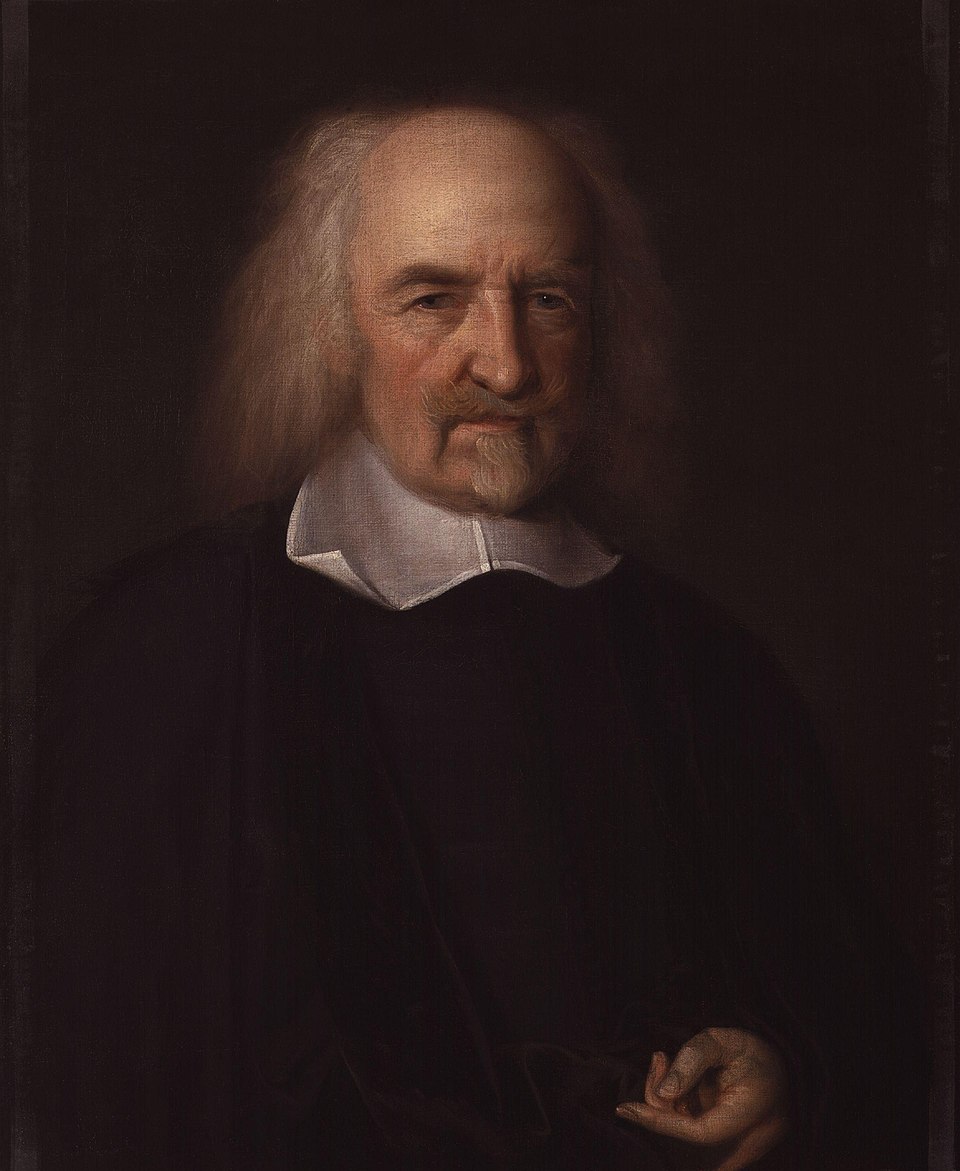
Yes, and I was proud of it. In Paris, I debated with the greatest minds of my time. I even exchanged letters with Descartes, the great French philosopher, around 1641. We did not always agree, he and I! You know, two stubborn thinkers always end up squabbling a little. But what a joy to be able to dispute ideas with someone of your level. For me, philosophy is not reciting old books: it is reasoning, building step by step, like building a house. You start with simple things and rise toward great truths.
Two stubborn thinkers always end up squabbling.
—Did you see terrible things happen in London?
Oh yes, and I was already very old. I saw my country tear itself apart. In 1649, they cut off the head of King Charles I: imagine the shock, a king executed like a thief! Then later, two catastrophes struck London one after the other. In 1665, a great plague emptied the streets: they carried away the dead by the cartload. The next year, in 1666, a huge fire burned almost the entire city for days. I even wrote a book, Behemoth, to tell the story of these civil wars. Believe me: when you have seen chaos up close, you understand why I valued order so much.
A king executed like a thief: imagine the shock.
—What was a normal day like for you?
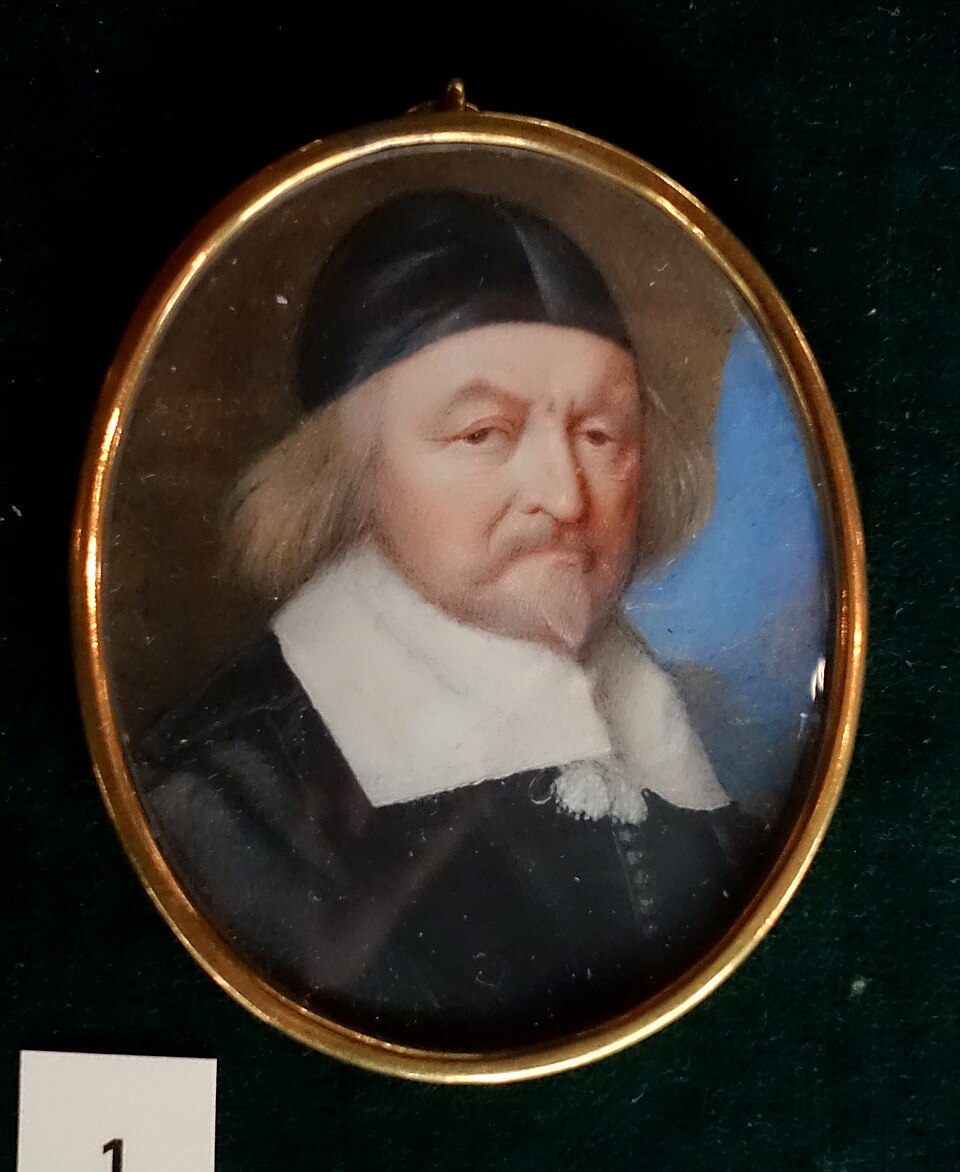
Simpler than you might think! I got up early, around six o'clock, in a room heated by the fireplace. For breakfast, I had bread, butter, and a little beer — yes, in my time we distrusted water, we found it dirty! In the afternoon, I liked to walk outside for exercise: I believed that moving kept the body healthy. In the evening, I dined early, then returned to my study to write by candlelight. A quiet life of a scholar, punctuated by the pen, books, and long walks.
Walking every day: I believed the body is kept like an idea.
—Is it true you were still working when you were very, very old?
Ha! You heard right. Many people my age sit by the fire doing nothing. Not me. At 87, I translated into English the Iliad and the Odyssey, the great poems of old Homer, the Greek poet. Imagine the work: thousands of verses! And at 90, I even wrote the story of my own life, in Latin verse to boot. You see, my child, the mind does not age like the legs. As long as you are curious, you remain young somewhere. I kept my pen in hand almost until my last day, in 1679.
The mind does not age like the legs.
—If we remember only one thing about you, what would it be?
If you must keep only one idea from this old gentleman, keep this one. Men are neither angels nor monsters: they are afraid, and fear makes them dangerous. That is why they invented the State, that great Leviathan. Not to crush them, but so that they can live together without tearing each other apart. Do you think I see men too darkly? Perhaps. But I had seen civil war, plague, fire. I wanted, with all my strength, to find the path to peace. My books made thinkers reflect for centuries. That is my way, my own, of continuing to speak to you.
Men are neither angels nor monsters: they are afraid.
Read further
This imaginary interview was generated by artificial intelligence from sources documented in Thomas Hobbes's profile. It dramatises what the figure might have said based on what we know about them, but does not constitute attested historical testimony. For primary sources and factual documentation, refer to the full profile.