 flip
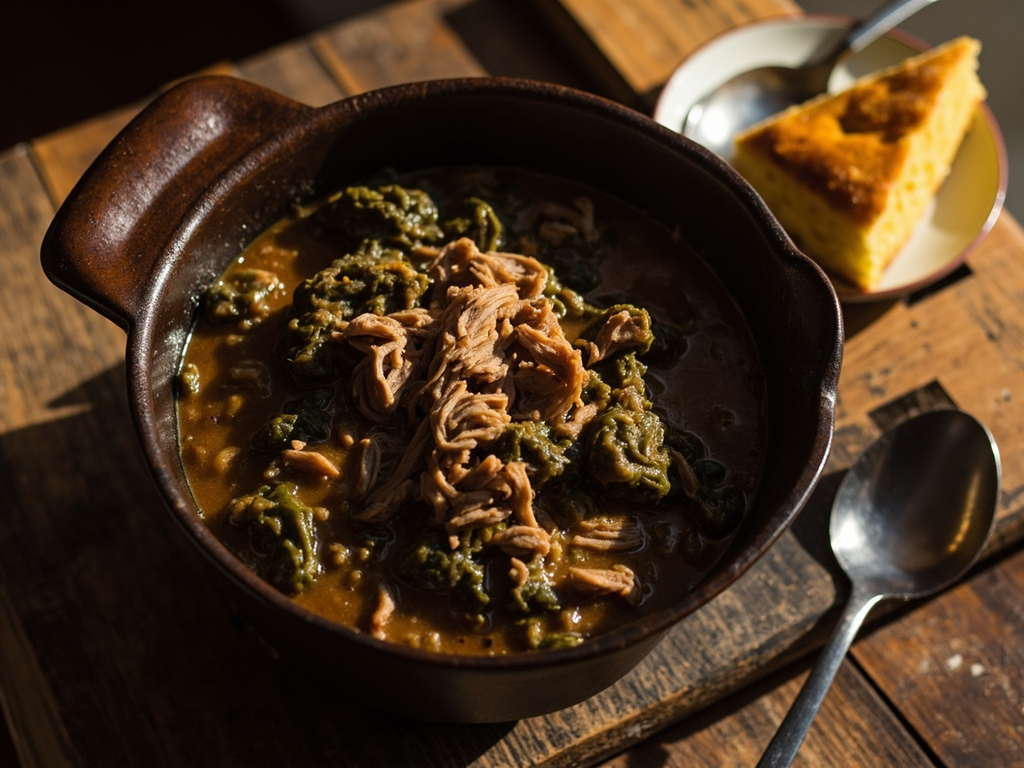
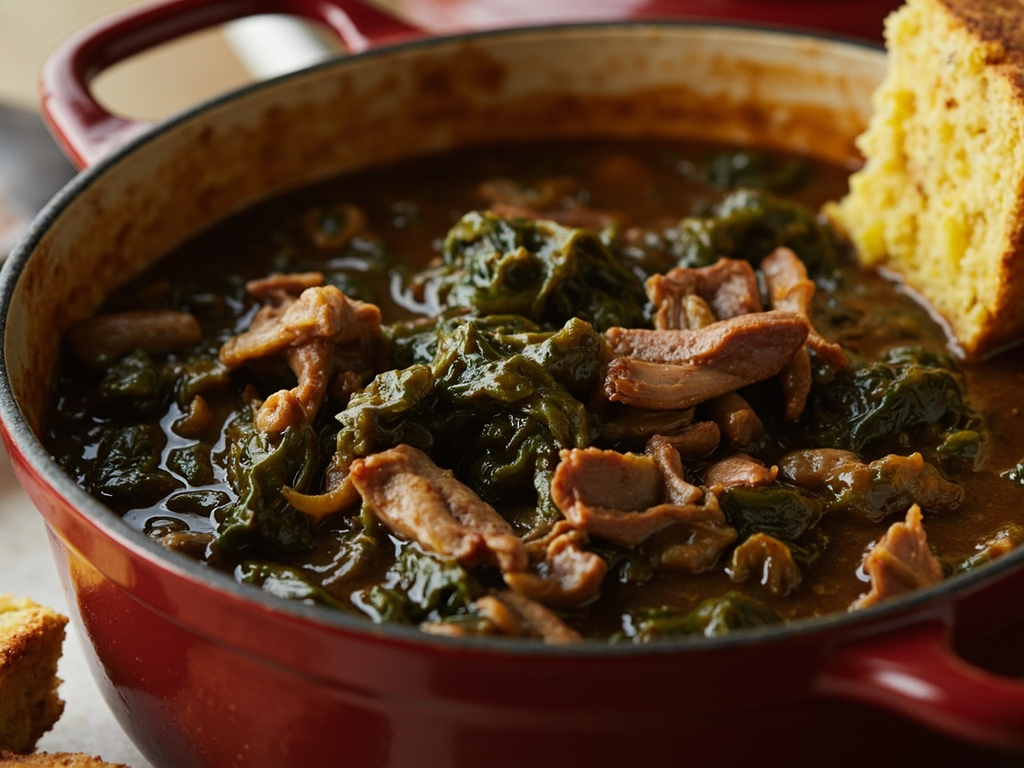
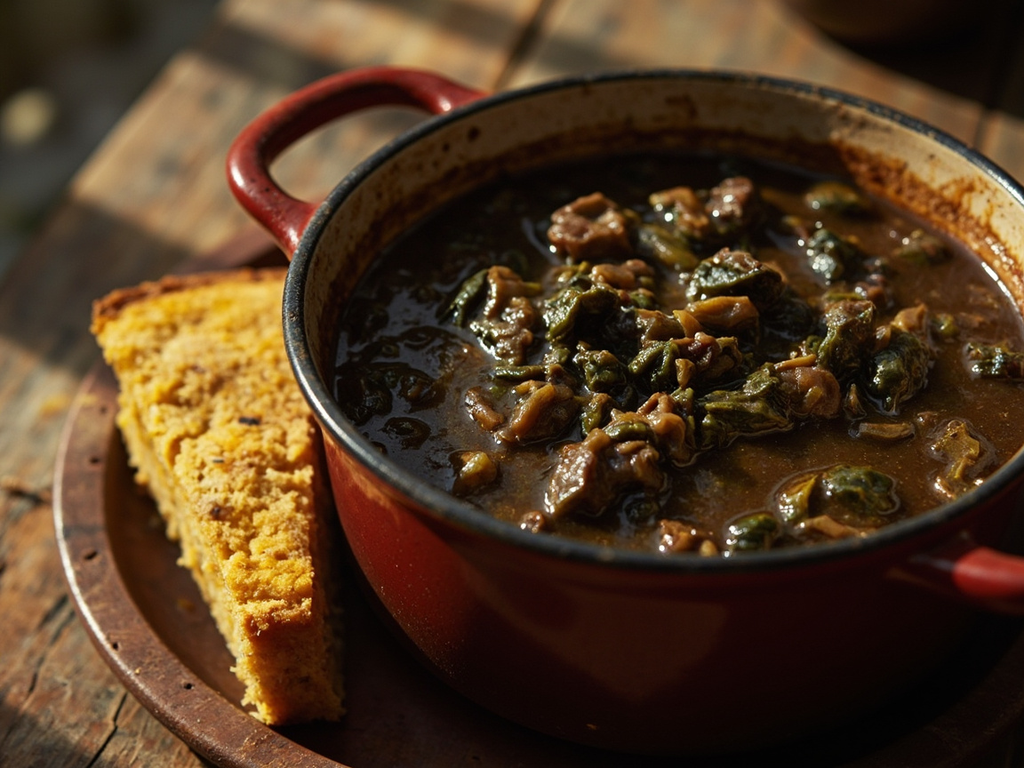
flipSlow-Cooked Collard Greens with Smoked Ham Hock and Cornbread
Slow-Cooked Collard Greens with Smoked Ham Hock and Cornbread
Why this dish? Born in Crescent City, Florida, Randolph grew up in a modest, deeply religious Black Southern family, where collard greens and cornbread were everyday fare. After moving to Harlem, he maintained a sober and temperate diet, remaining faithful to these 'simple, nutritious meals of modest restaurants' rather than luxurious tables: this dish is exactly that.
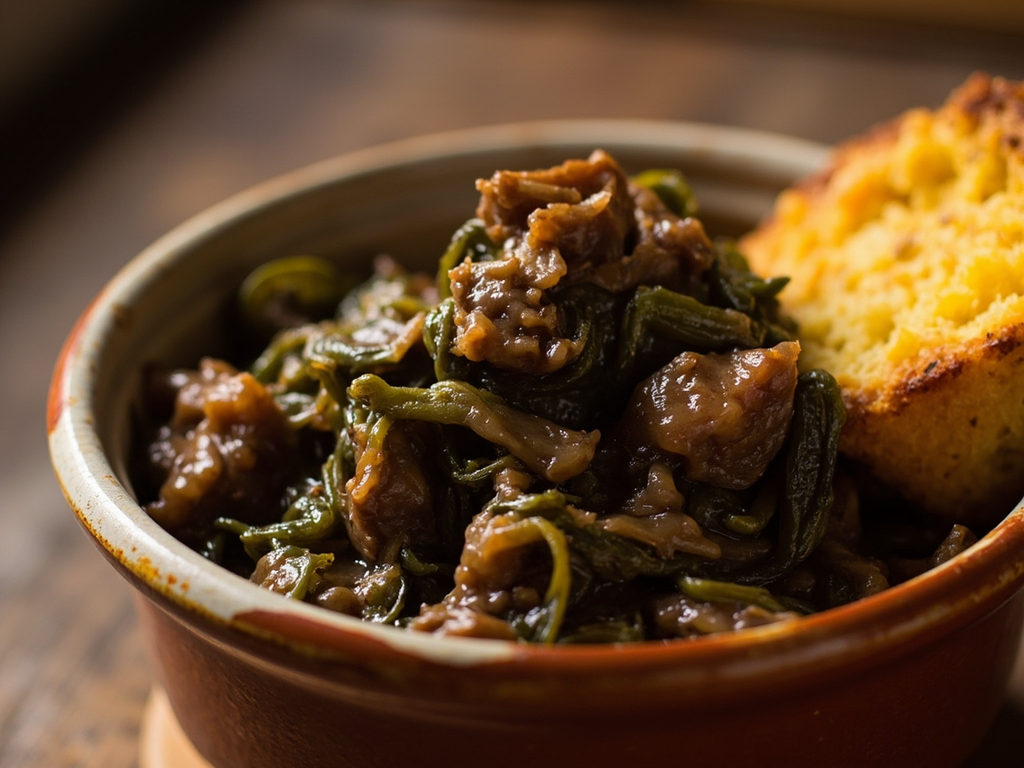
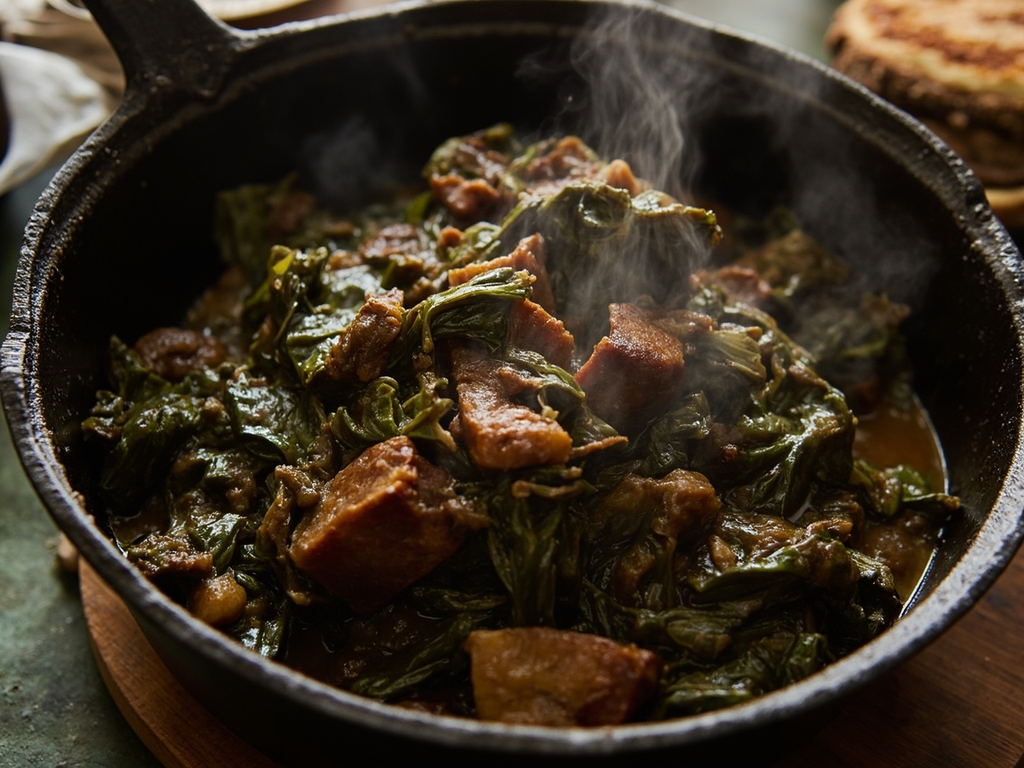
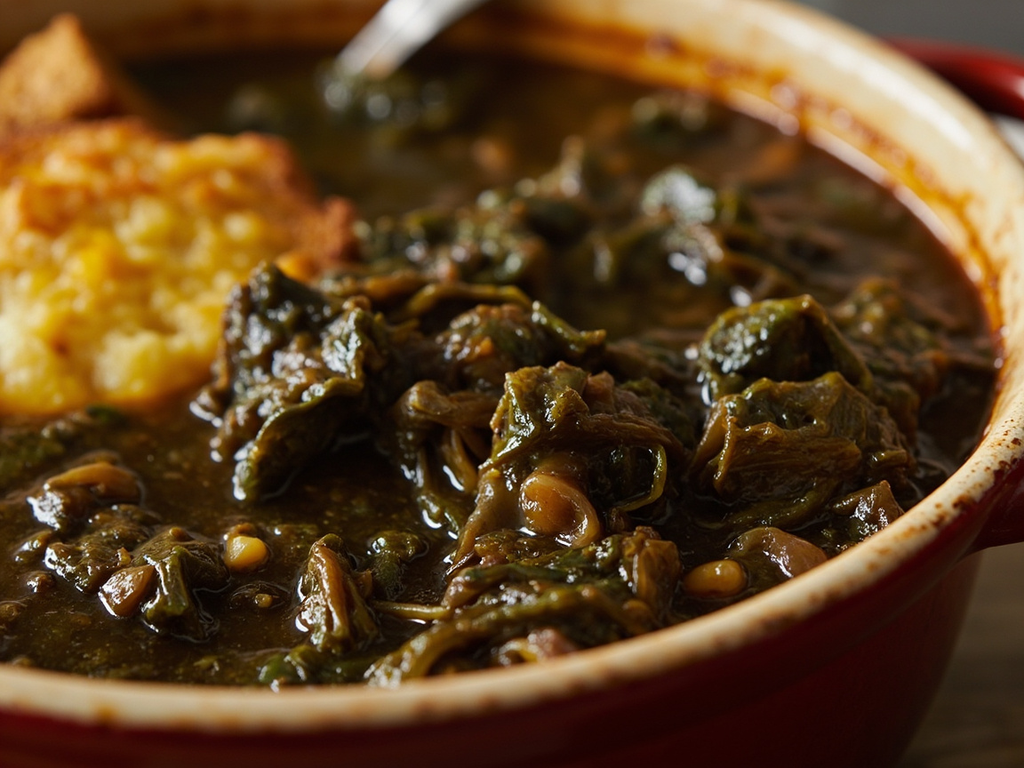
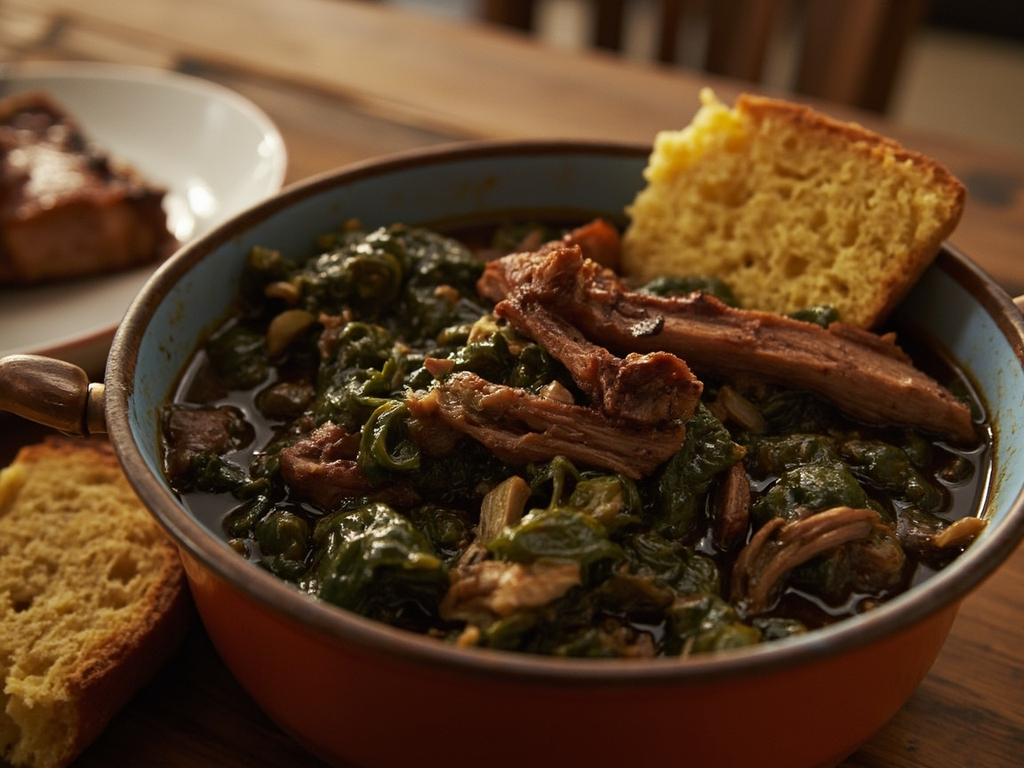
Large collard leaves melted for hours with a piece of smoked pork until yielding that famous 'pot likker.' Served with a slice of golden cornbread, perfect for sopping up the juice.
Allow me to present the dish of my Florida childhood, the one my mother would sing over on the stove from morning till night. One chooses the sturdiest leaves, washes them three times for the Southern soil clings to them, then abandons them to a patient fire with a smoked bone—patience, you see, is here a virtue as much as a method. Never throw away the juice: that 'pot likker' is the treasure of the pot, and one dips one's cornbread into it as one gathers an inheritance. This was the table of the humble, and I never believed a richer table was a worthier table.
- •Collard greens or turnip greens — a large armful (staple vegetable)
- •Smoked ham hock or pork jowl — one piece (smoked fat)
- •Onion — one (aromatic base)
- •Apple cider vinegar — a splash (brightens bitterness)
- •Cornmeal, lard, buttermilk — by feel (for cornbread)
Slow-Cooked Collard Greens with Smoked Ham Hock and Cornbread
Large collard leaves melted for hours with a piece of smoked pork until yielding that famous 'pot likker.' Served with a slice of golden cornbread, perfect for sopping up the juice.
Why this dish? Born in Crescent City, Florida, Randolph grew up in a modest, deeply religious Black Southern family, where collard greens and cornbread were everyday fare. After moving to Harlem, he maintained a sober and temperate diet, remaining faithful to these 'simple, nutritious meals of modest restaurants' rather than luxurious tables: this dish is exactly that.
Allow me to present the dish of my Florida childhood, the one my mother would sing over on the stove from morning till night. One chooses the sturdiest leaves, washes them three times for the Southern soil clings to them, then abandons them to a patient fire with a smoked bone—patience, you see, is here a virtue as much as a method. Never throw away the juice: that 'pot likker' is the treasure of the pot, and one dips one's cornbread into it as one gathers an inheritance. This was the table of the humble, and I never believed a richer table was a worthier table.
Ingredients (period version)
- Collard greens or turnip greens — a large armful (staple vegetable)
- Smoked ham hock or pork jowl — one piece (smoked fat)
- Onion — one (aromatic base)
- Apple cider vinegar — a splash (brightens bitterness)
- Cornmeal, lard, buttermilk — by feel (for cornbread)
Ingredients
- Collard greens (or kale/chard) — 1 kg (staple vegetable)
- Smoked ham hock (or smoked pork belly) — 300 g (smoked umami)
- Sliced onion — 1 large (aromatic base)
- Chicken broth — 1 liter (simmering liquid)
- Apple cider vinegar — 2 tbsp (balancing acidity)
- Cornmeal — 200 g (cornbread)
- Buttermilk — 240 ml (tender cornbread)
- Egg + baking powder + 50 g melted butter — 1 egg, 1 tsp, 50 g (binder and leavening)
Method
- Sauté the onion, add smoked ham hock, and cover with broth. Simmer 45 minutes to infuse the liquid.
- Strip the collard leaves from the tough stems, tear roughly, and add to the pot.
- Cover and simmer 1 to 1½ hours on low heat until leaves are tender and the liquid is flavorful.
- Add vinegar at the end, season lightly with salt (the pork is already salty).
- For the cornbread: mix cornmeal, baking powder, egg, buttermilk, and melted butter; pour into a greased pan and bake 25 minutes at 200°C.
- Serve greens with their pot likker in a deep bowl, cornbread on the side for sopping.
How it was made : In the Black South, this dish descends directly from plantation cooking, where discarded cuts and garden greens were simmered all morning on the wood stove. The pot likker, rich and nourishing, was drunk separately so nothing was wasted.
The contemporary twist : A few drops of vinegar-based hot sauce in the bowl and a spoonful of pot likker served separately as a 'Southern consommé,' rehabilitating this juice as a chic amuse-bouche.
Sources : Adrian Miller, Soul Food: The Surprising Story of an American Cuisine (2013) · Jessica B. Harris, High on the Hog: A Culinary Journey from Africa to America (2011)
A. Philip Randolph · Charactorium