 flip
flipQuince Paste (Cotignac)
Quince Paste (Cotignac)
Why this dish? The office at Chantilly was stocked with dry preserves, those long-lasting sweets offered to guests and placed on the table alongside hypocras. Cotignac, a firm and fragrant quince paste, was among those refined gifts that La Bruyère saw circulating in the courtly world he so keenly sketched.
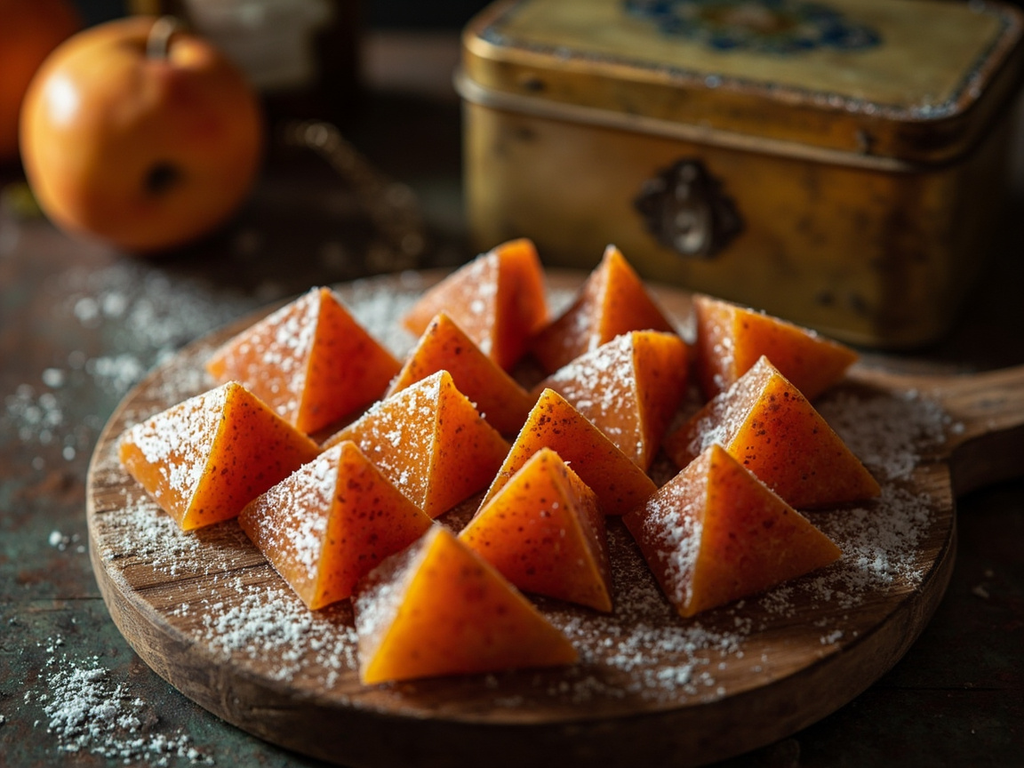
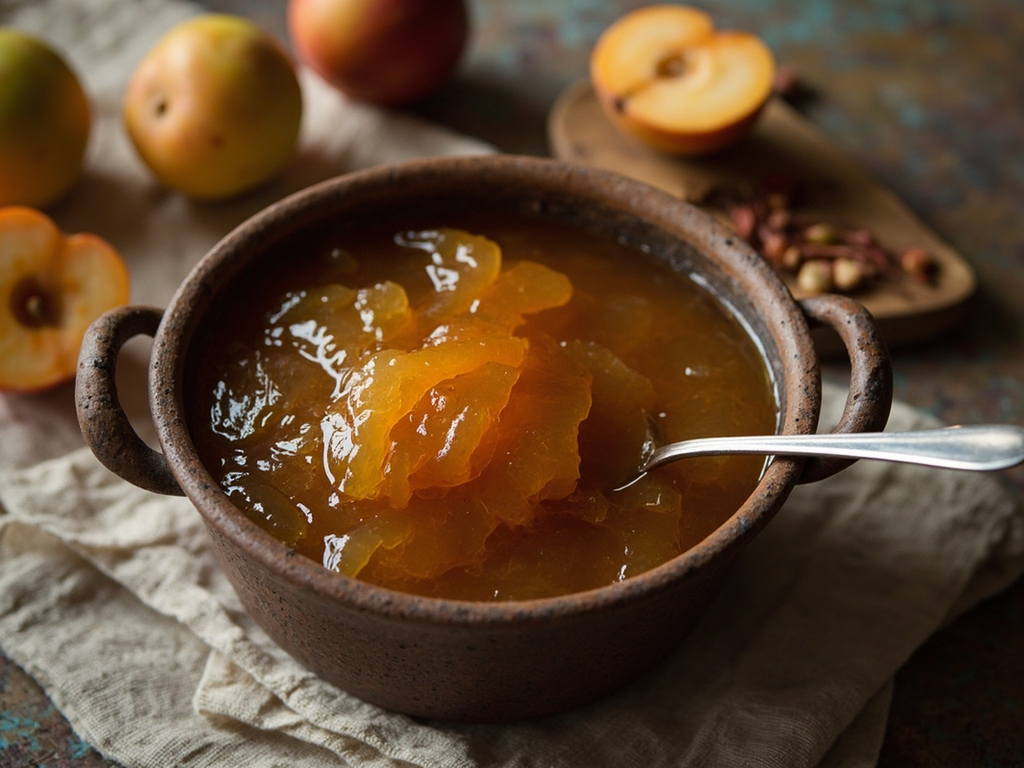
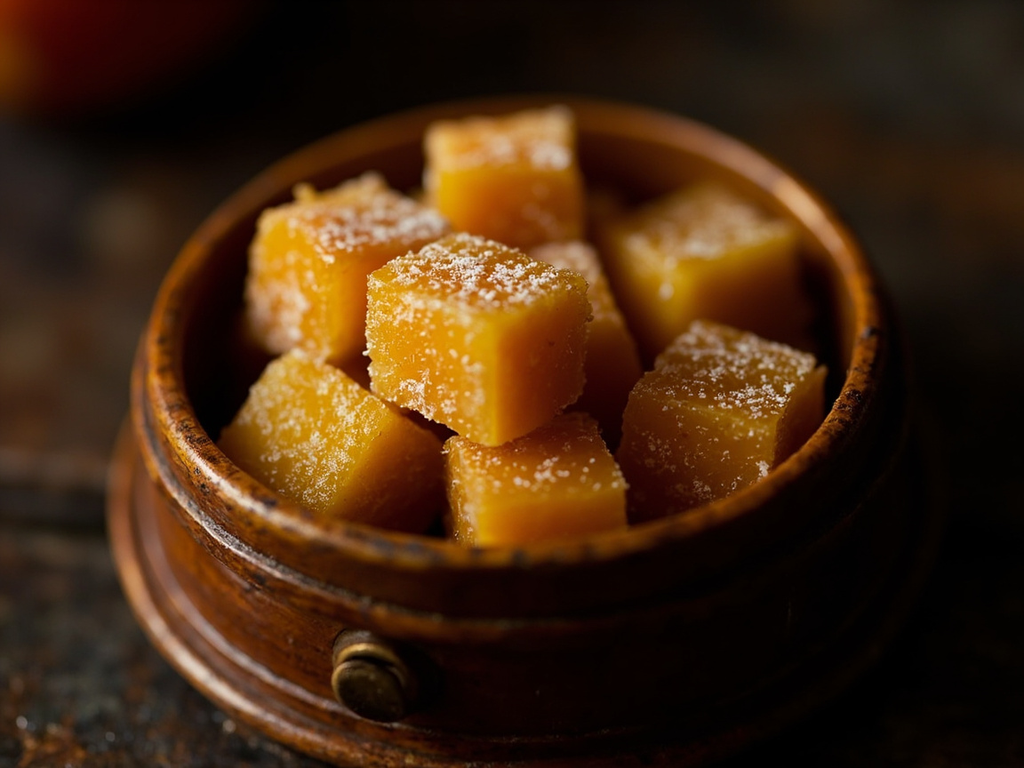
A dense, amber, tangy quince paste, cut into small cubes: keeps for months, perfect for gifting or snacking.
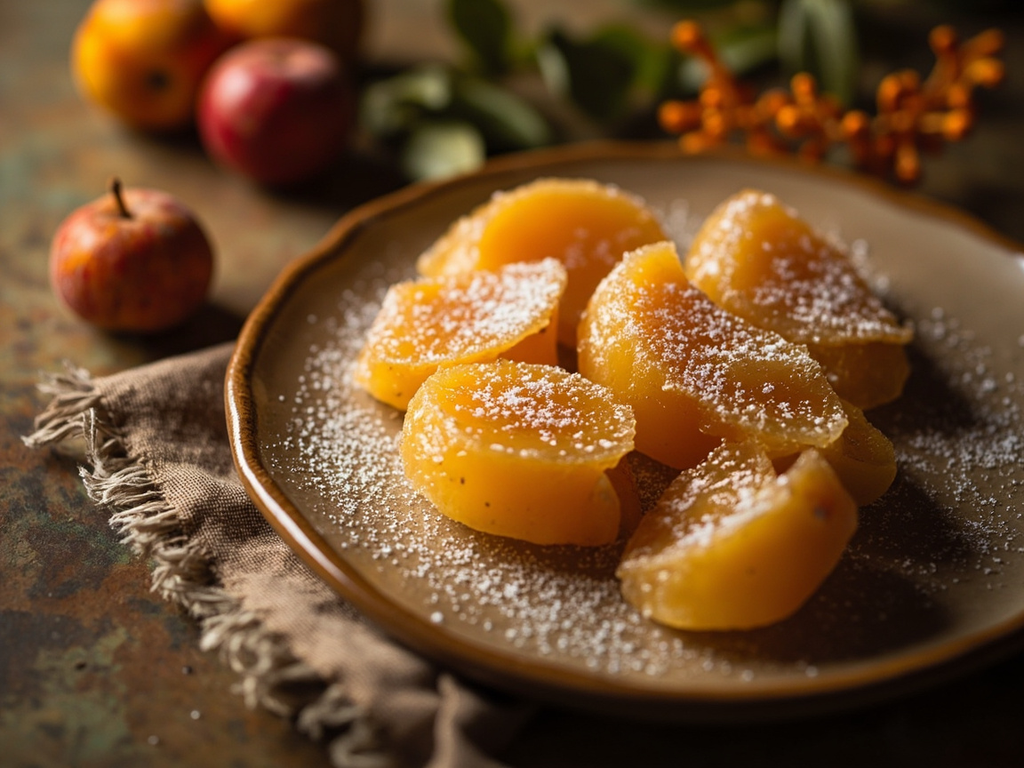
The quince, that harsh fruit one cannot eat raw, becomes through cooking the sweetest of delicacies. It is boiled long with an equal weight of sugar, until the paste holds to the knife and takes on that beautiful amber color. It is kept for whole months in boxes: here is a sweetness that does not spoil, as a good reputation should. I gladly offer it to my visitors; it is a modest gift that says more than a long compliment.
- •Quinces — several, well-ripened (base fruit)
- •Sugar — about the weight of the pulp (preservation and sweetness)
- •Lemon juice or verjus — a dash (acidity, helps setting)
Quince Paste (Cotignac)
A dense, amber, tangy quince paste, cut into small cubes: keeps for months, perfect for gifting or snacking.
Why this dish? The office at Chantilly was stocked with dry preserves, those long-lasting sweets offered to guests and placed on the table alongside hypocras. Cotignac, a firm and fragrant quince paste, was among those refined gifts that La Bruyère saw circulating in the courtly world he so keenly sketched.
The quince, that harsh fruit one cannot eat raw, becomes through cooking the sweetest of delicacies. It is boiled long with an equal weight of sugar, until the paste holds to the knife and takes on that beautiful amber color. It is kept for whole months in boxes: here is a sweetness that does not spoil, as a good reputation should. I gladly offer it to my visitors; it is a modest gift that says more than a long compliment.
Ingredients (period version)
- Quinces — several, well-ripened (base fruit)
- Sugar — about the weight of the pulp (preservation and sweetness)
- Lemon juice or verjus — a dash (acidity, helps setting)
Ingredients
- Quinces — 1 kg (yields ~600 g cooked pulp) (fruit)
- Sugar — same weight as cooked pulp (preservation and setting)
- Lemon juice — 1/2 lemon (acidity, fixes the flavor)
Method
- Wash the quinces, rub off the fuzz. Cook them whole in simmering water for 30 to 40 minutes until tender.
- Peel, remove cores and seeds, then pass the flesh through a sieve or blend to a smooth purée. Weigh the pulp.
- Place the pulp with an equal weight of sugar and the lemon juice in a heavy-bottomed saucepan.
- Cook over low heat for 30 to 45 minutes, stirring constantly, until the paste pulls away from the sides and a spoon leaves a clean furrow.
- Spread to 1.5 cm thickness on parchment paper. Let dry for 24 to 48 hours, then cut into cubes and roll in sugar.
How it was made : Cotignac (from the old name for quince, "coing" coming from Cydonia) is a dry preserve attested since the Middle Ages; the one from Orléans, sold in round boxes, was famous. In the 17th century, dry preserves were a full-fledged art of the "office," the room dedicated to sweets, and a common diplomatic gift. Sugar, still precious, made it a luxury of preservation.
The contemporary twist : Serve the cotignac cubes with a pressed cheese (Iberian "membrillo" style): the quince-cheese pairing is a classic revived on modern charcuterie boards.
Sources : La Varenne, Le Confiturier françois, 1660 · Nicolas de Bonnefons, Les Délices de la campagne, 1654
Jean de La Bruyère · Charactorium