 flip
flipRedcurrant jam for long journeys
Redcurrant jam for long journeys
Why this dish? An émigrée for twelve years across Europe (Italy, Austria, Russia, Germany), Vigée Le Brun knew the itinerant life. Jams, which keep for months in pots, were the quintessential 18th-century travel and pantry sweet — a burst of French fruit to carry far from Paris.
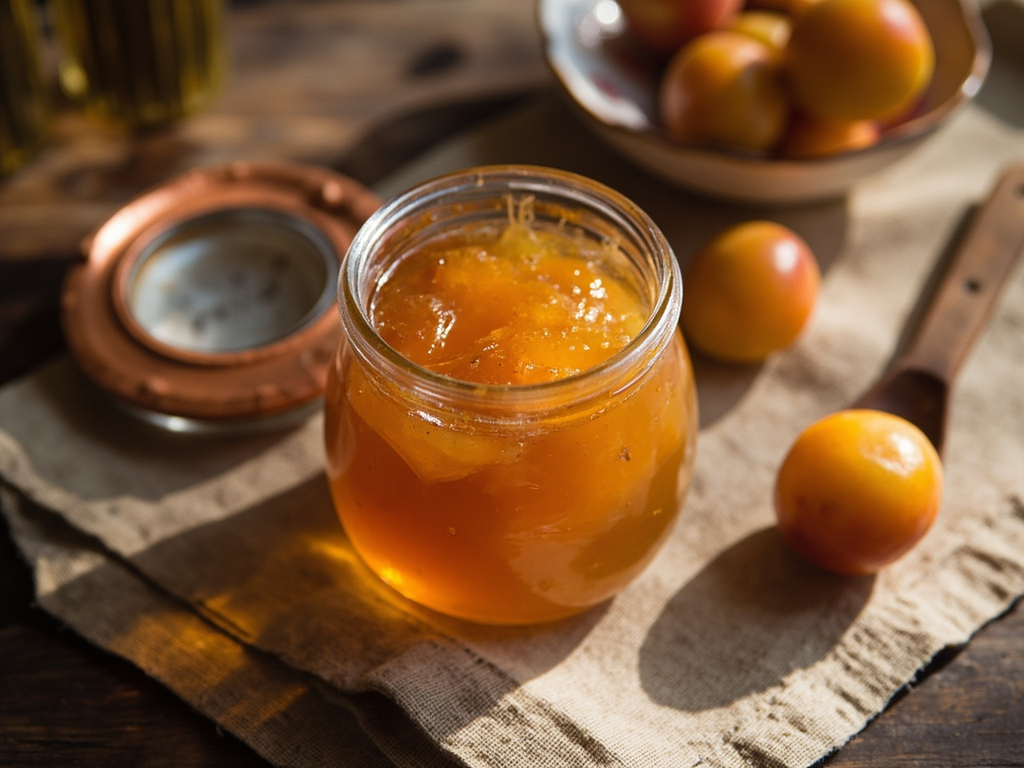
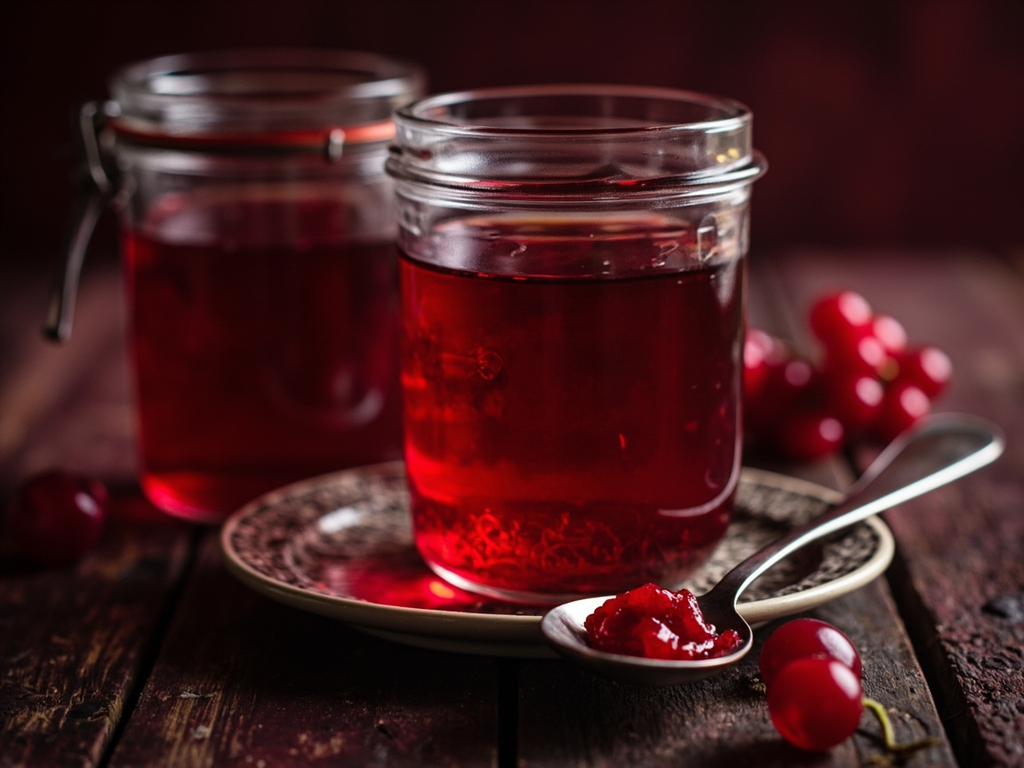
Redcurrants cooked with sugar until they form a bright, tangy jelly that keeps for a long time in a pot — the reserve sweet of households and travelers of yesteryear.
In my long wanderings far from France, nothing reminded me better of home than a pot of redcurrant jam. You choose the berries well red and firm, cook them with their weight of clarified sugar until a drop sets on a cold plate, then fill the pots and keep them cool in the pantry. This vermilion jelly, clear as a ruby, kept for entire seasons and followed me from court to court. I offered it to my hosts: it was a little piece of my country that I carried with me.
- •Redcurrants — as many as desired, well ripe (fruit)
- •Clarified sugar — equal weight to fruit (preservation and sweetness)
Redcurrant jam for long journeys
Redcurrants cooked with sugar until they form a bright, tangy jelly that keeps for a long time in a pot — the reserve sweet of households and travelers of yesteryear.
Why this dish? An émigrée for twelve years across Europe (Italy, Austria, Russia, Germany), Vigée Le Brun knew the itinerant life. Jams, which keep for months in pots, were the quintessential 18th-century travel and pantry sweet — a burst of French fruit to carry far from Paris.
In my long wanderings far from France, nothing reminded me better of home than a pot of redcurrant jam. You choose the berries well red and firm, cook them with their weight of clarified sugar until a drop sets on a cold plate, then fill the pots and keep them cool in the pantry. This vermilion jelly, clear as a ruby, kept for entire seasons and followed me from court to court. I offered it to my hosts: it was a little piece of my country that I carried with me.
Ingredients (period version)
- Redcurrants — as many as desired, well ripe (fruit)
- Clarified sugar — equal weight to fruit (preservation and sweetness)
Ingredients
- Redcurrants — 1 kg (fruit)
- Granulated sugar — 800 g (preservation and sweetness)
- Juice of half a lemon — optional (helps jelly set)
Method
- Strip the currants from their stems and put them in a preserving pan with the sugar; let macerate for 1 hour.
- Bring gently to a boil, stirring until the sugar dissolves.
- Cook over high heat for 10–15 minutes, skimming, until a drop sets on a cold plate (the wrinkle test).
- For a clear jelly, strain through a fine sieve to remove seeds, then bring back to a boil.
- Immediately pour into sterilized jars, seal, and turn upside down; store in a cool, dark place.
How it was made : In the 18th century, jams were the art of the pantry, distinct from cooking: one mastered sugar cooking to preserve fruits out of season. The redcurrant, a fruit of northern France, yielded a jelly renowned for its beautiful color and acidity — served at dessert or offered as a gift. Sugar, still costly, made it a quality sweet.
The contemporary twist : Present the jelly in a small jar sealed with a square of fabric and a ribbon, like a traveler's gift, with a handwritten label "Redcurrants of France."
Sources : Menon, *La Cuisinière bourgeoise* (1746) · Élisabeth Vigée Le Brun, *Souvenirs* (1835–1837)
Élisabeth Vigée Le Brun · Charactorium