 flip
flipSawiq with Dates — The Pilgrim's Flour
Sawiq with Dates — The Pilgrim's Flour
Why this dish? The sheikh's path is one of travel: Zabid, Aden, and above all the great journey to Mecca. Sawiq—roasted barley or wheat flour mixed with water and sweetened with dates—was the classic viaticum of the Muslim traveler and pilgrim: light, filling, non-perishable. A handful in a waterskin sufficed for a stage.
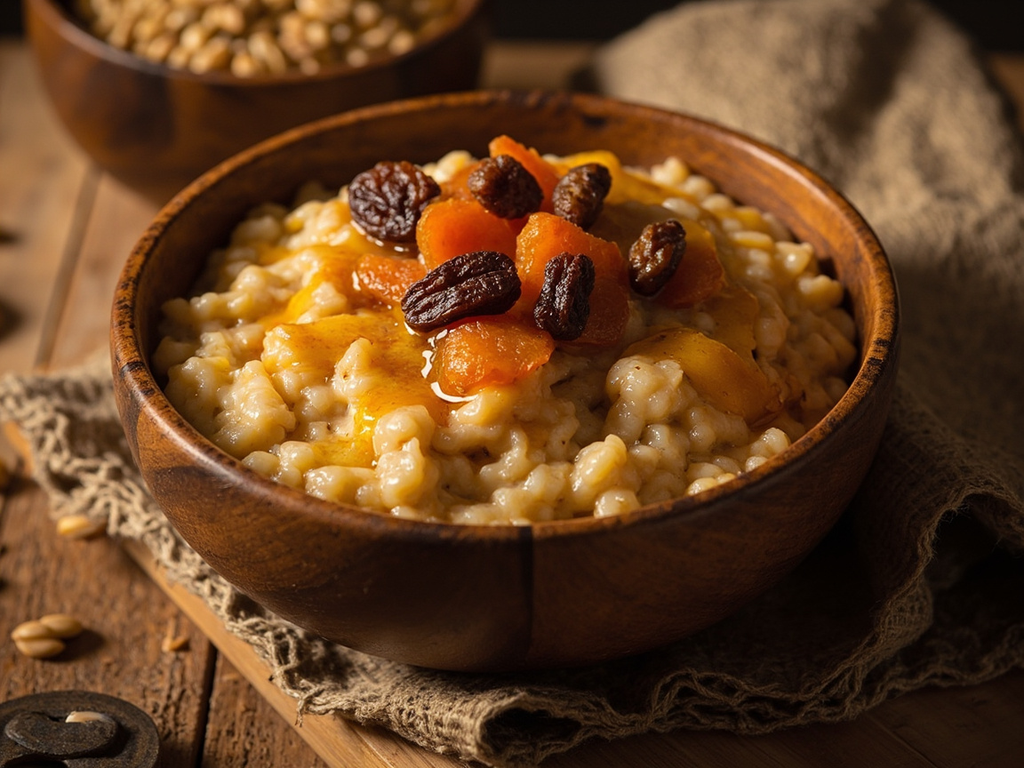
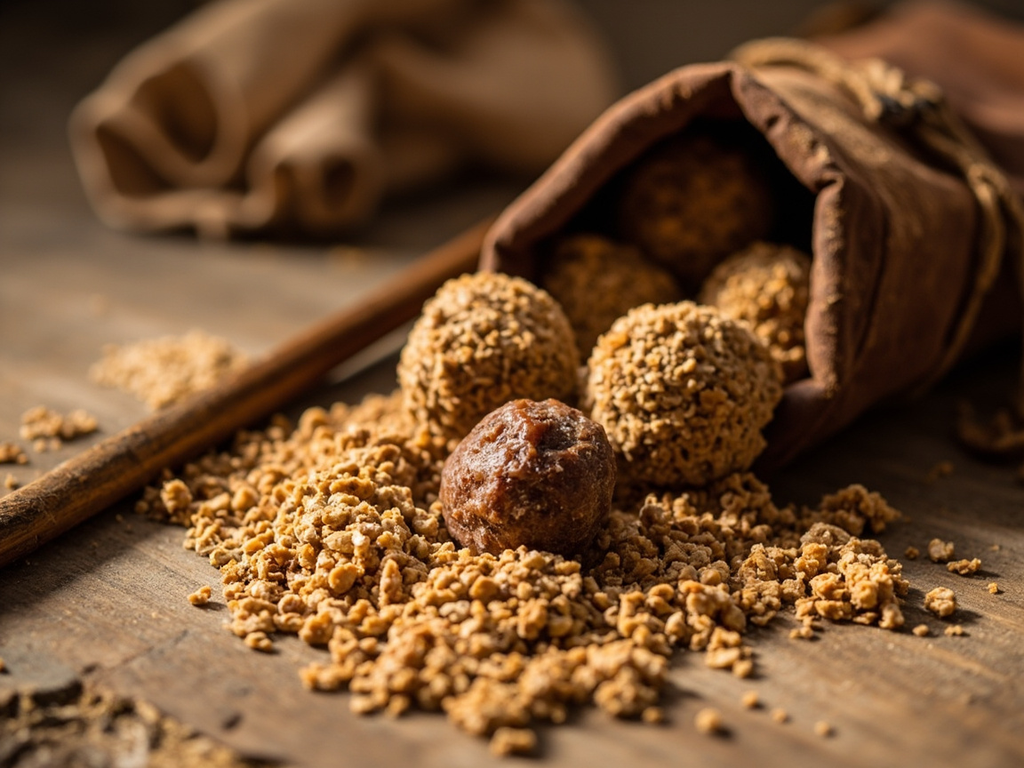
A dry, fragrant flour of roasted grains, carried in a pouch. When it is time to eat, it is mixed with a little water (or milk) and enriched with crushed dates: this yields a sweet, nourishing paste, ready in an instant without fire.
When I take the road to the Sacred House, I carry little: a waterskin, my staff, and a bag of sawiq. See, the grain is roasted then ground—it does not spoil, it weighs nothing. At the halt, I pour a little water on it, mix in dates kneaded between my fingers, and I am satisfied without lighting a fire. The light traveler walks closer to God.
- •Roasted and ground barley (or wheat) grains — enough to fill the pouch (dry base, long-lasting)
- •Dates — a handful (sweetness and energy)
- •Water (or milk) — as needed at the halt (rehydration)
- •Clarified butter or fat — a little, if available (occasional enrichment)
Sawiq with Dates — The Pilgrim's Flour
A dry, fragrant flour of roasted grains, carried in a pouch. When it is time to eat, it is mixed with a little water (or milk) and enriched with crushed dates: this yields a sweet, nourishing paste, ready in an instant without fire.
Why this dish? The sheikh's path is one of travel: Zabid, Aden, and above all the great journey to Mecca. Sawiq—roasted barley or wheat flour mixed with water and sweetened with dates—was the classic viaticum of the Muslim traveler and pilgrim: light, filling, non-perishable. A handful in a waterskin sufficed for a stage.
When I take the road to the Sacred House, I carry little: a waterskin, my staff, and a bag of sawiq. See, the grain is roasted then ground—it does not spoil, it weighs nothing. At the halt, I pour a little water on it, mix in dates kneaded between my fingers, and I am satisfied without lighting a fire. The light traveler walks closer to God.
Ingredients (period version)
- Roasted and ground barley (or wheat) grains — enough to fill the pouch (dry base, long-lasting)
- Dates — a handful (sweetness and energy)
- Water (or milk) — as needed at the halt (rehydration)
- Clarified butter or fat — a little, if available (occasional enrichment)
Ingredients
- Roasted barley flour (or barley flour dry-toasted in a pan) — 100 g (base)
- Pitted dates — 6 to 8 (sweetness)
- Water or milk — 100 ml approx (rehydration)
- Ghee — 1 tsp (optional) (richness)
- Cinnamon — 1 pinch (optional) (fragrance)
Method
- If the flour is not already roasted, dry-toast it in a pan, stirring until fragrant and slightly browned; let cool.
- Mash the dates into a paste with a fork.
- Mix the toasted flour and date paste in a bowl.
- Add water or milk little by little, working until you get a pliable, tender paste.
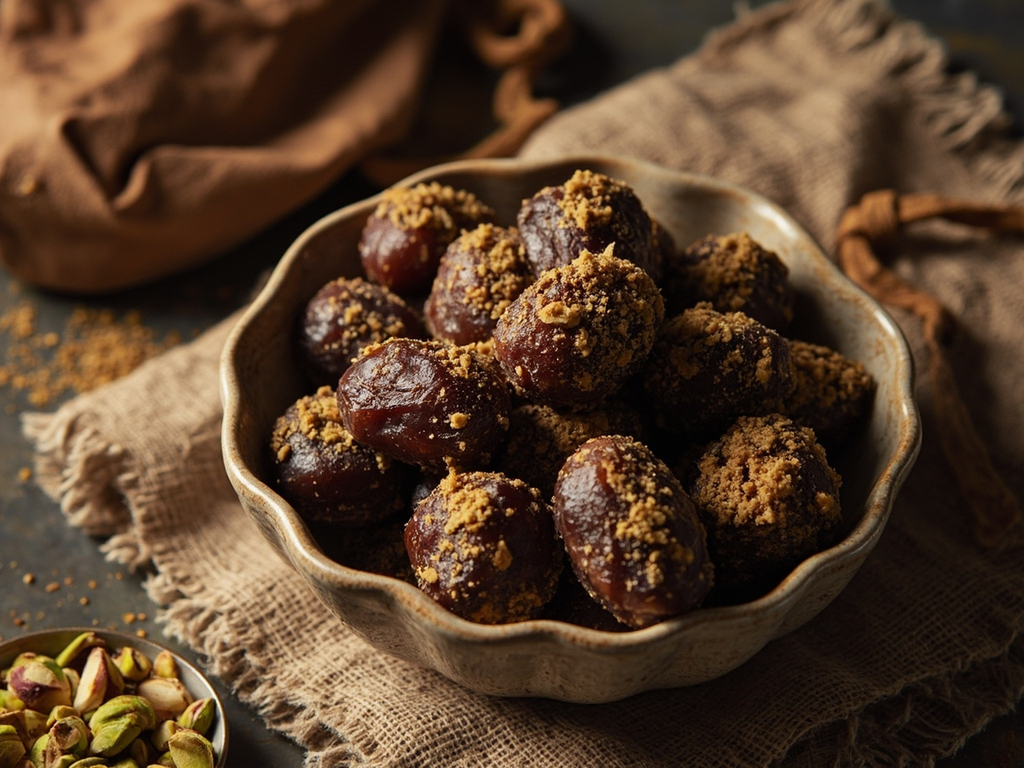
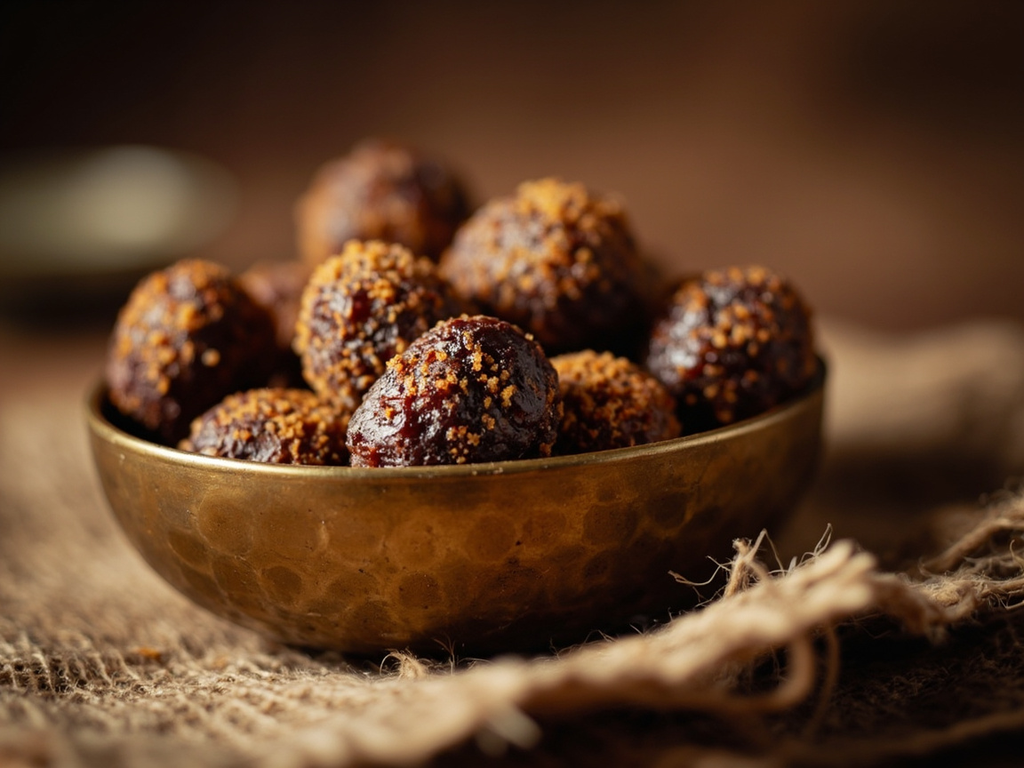
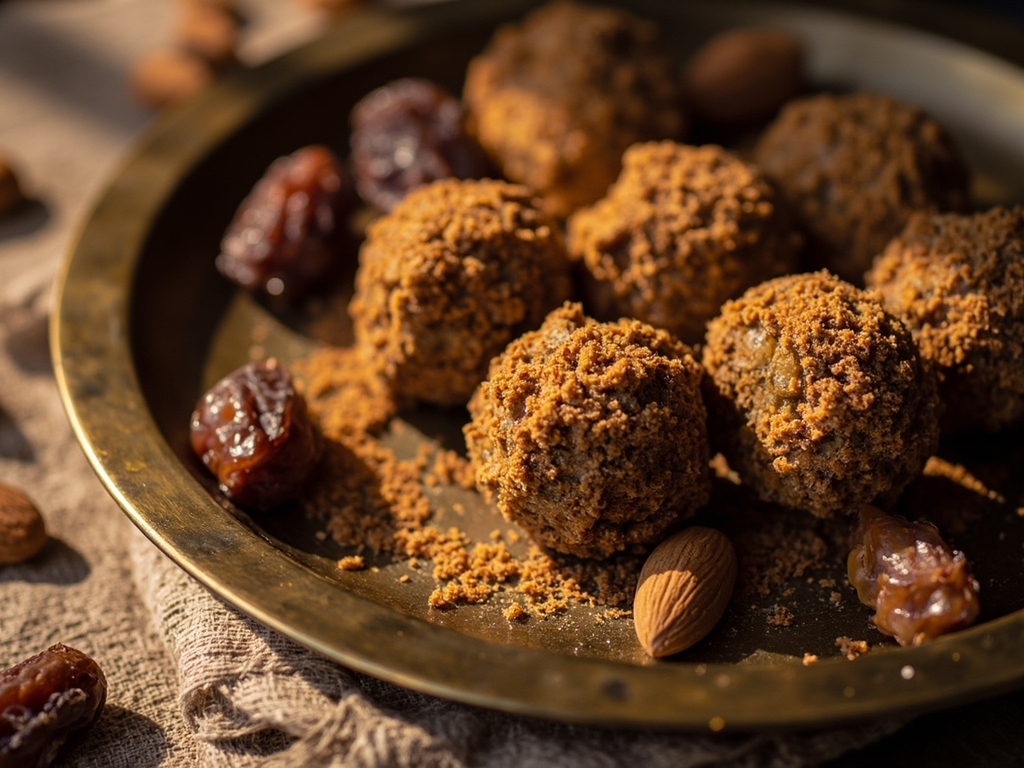
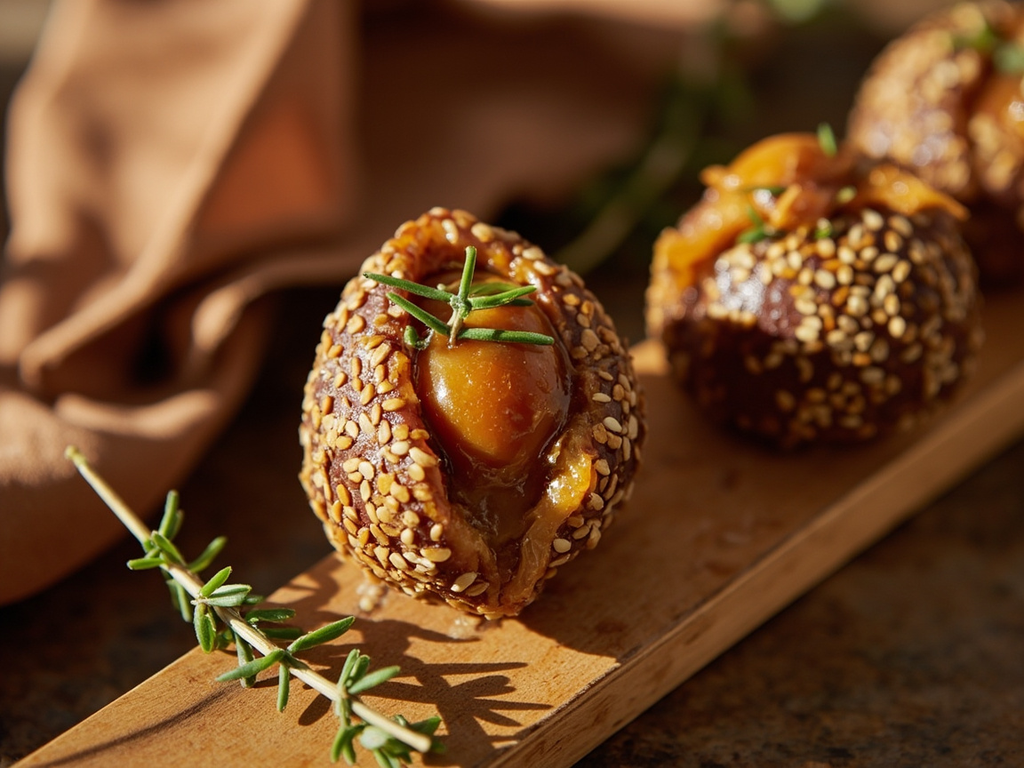
- Incorporate a touch of ghee and cinnamon if desired, shape into balls, and enjoy.
How it was made : Sawiq (roasted cereal flour) is a travel food attested throughout Arabia since pre-Islamic times and throughout the Middle Ages: it appears in accounts of caravans and pilgrimages. Roasted, the grain keeps for weeks and is prepared without fire—a decisive advantage on the trail.
The contemporary twist : Rolled into small balls with a bit of ghee, 'pilgrim energy balls': a historically accurate hiking snack.
Abdal Hayy ibn Mawlud · Charactorium