 flip
flipSeville Orange Marmalade
Seville Orange Marmalade
Why this dish? Marmalade on toast is the unchanging ritual of the British breakfast, and Chaplin, who became rich in America then settled in Switzerland, remained attached to the English tastes of his childhood. The jar of marmalade — made once a year with bitter January oranges — embodies the English anchor he carried all the way to the Manoir de Ban.
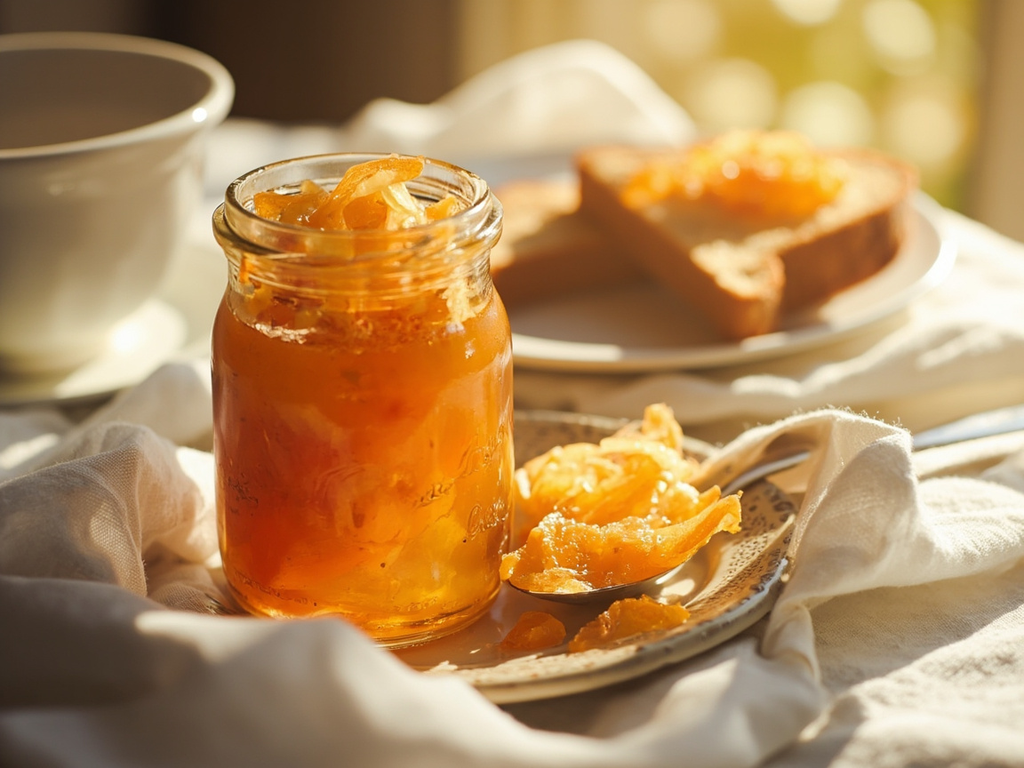
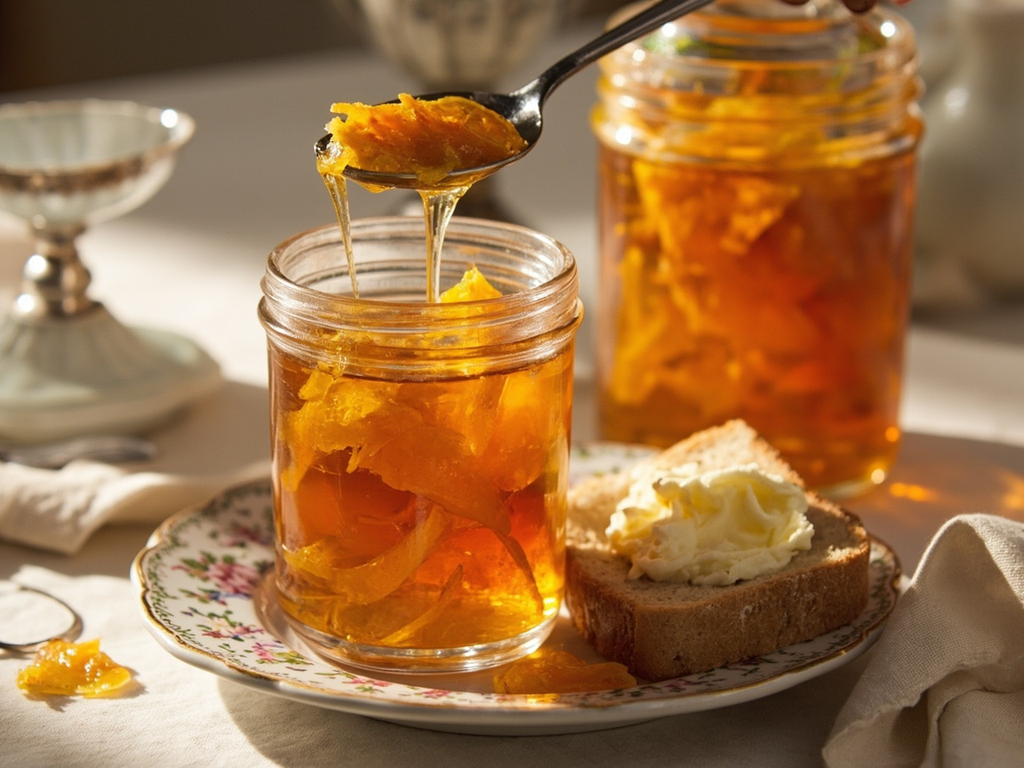
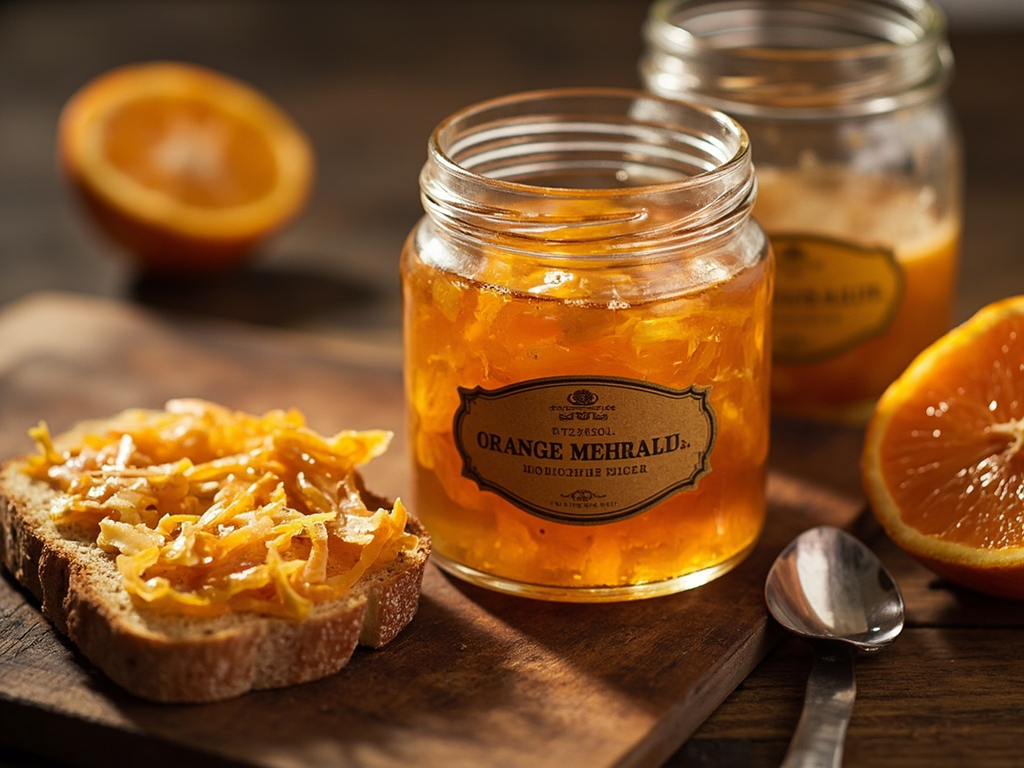
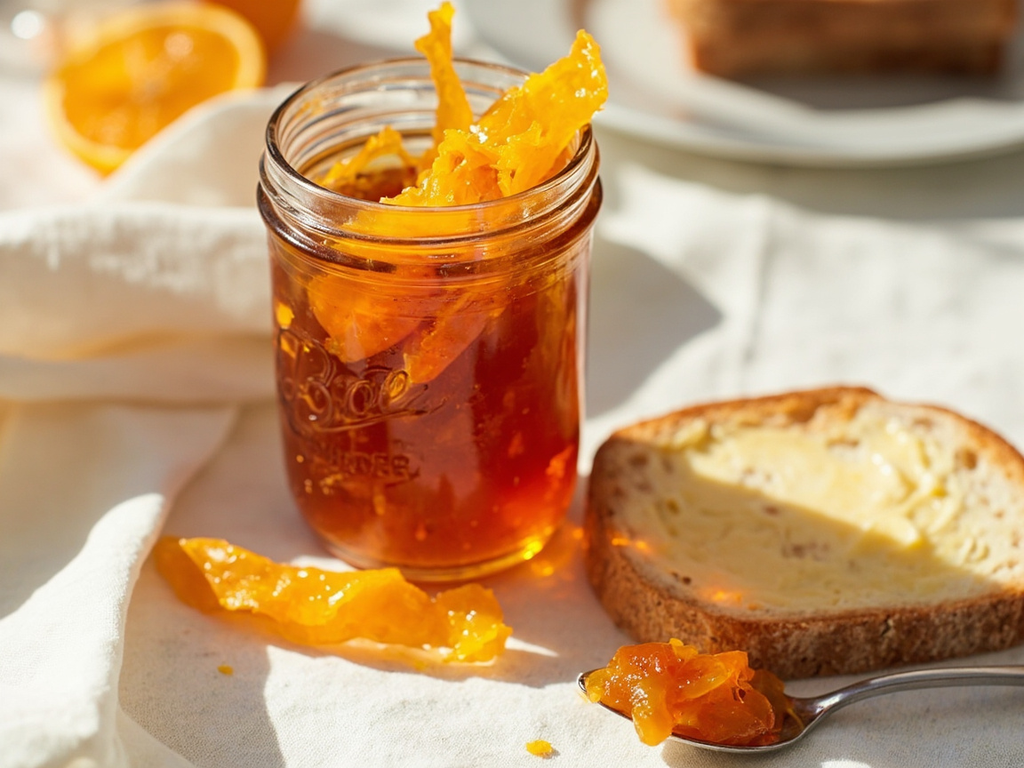
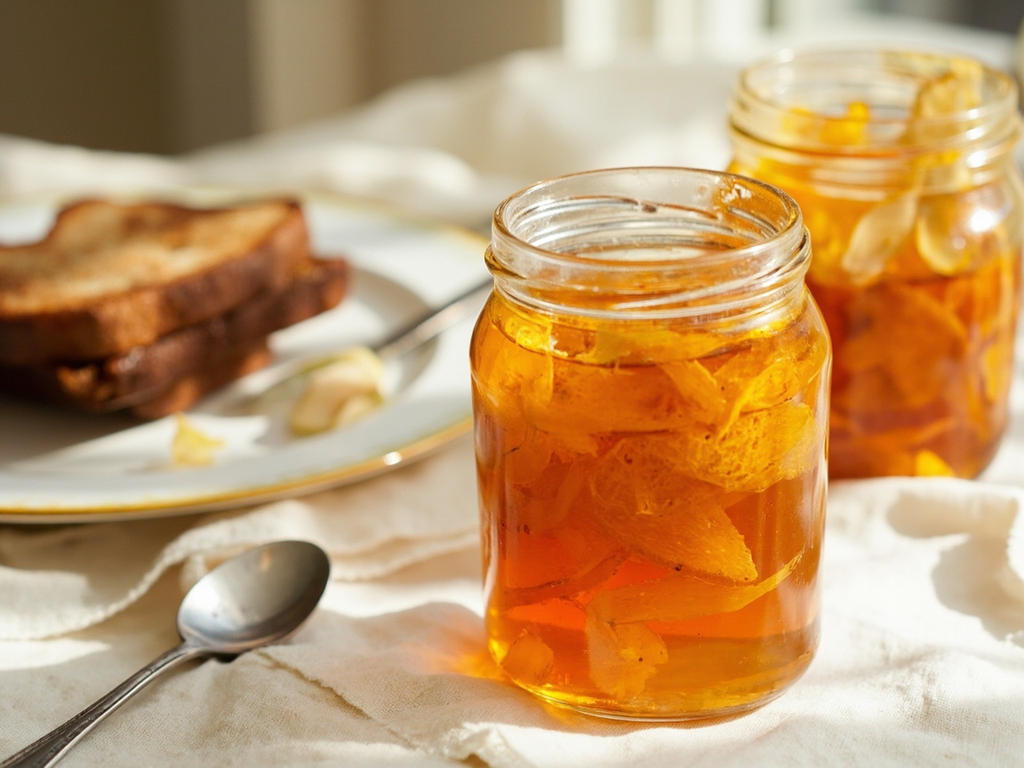
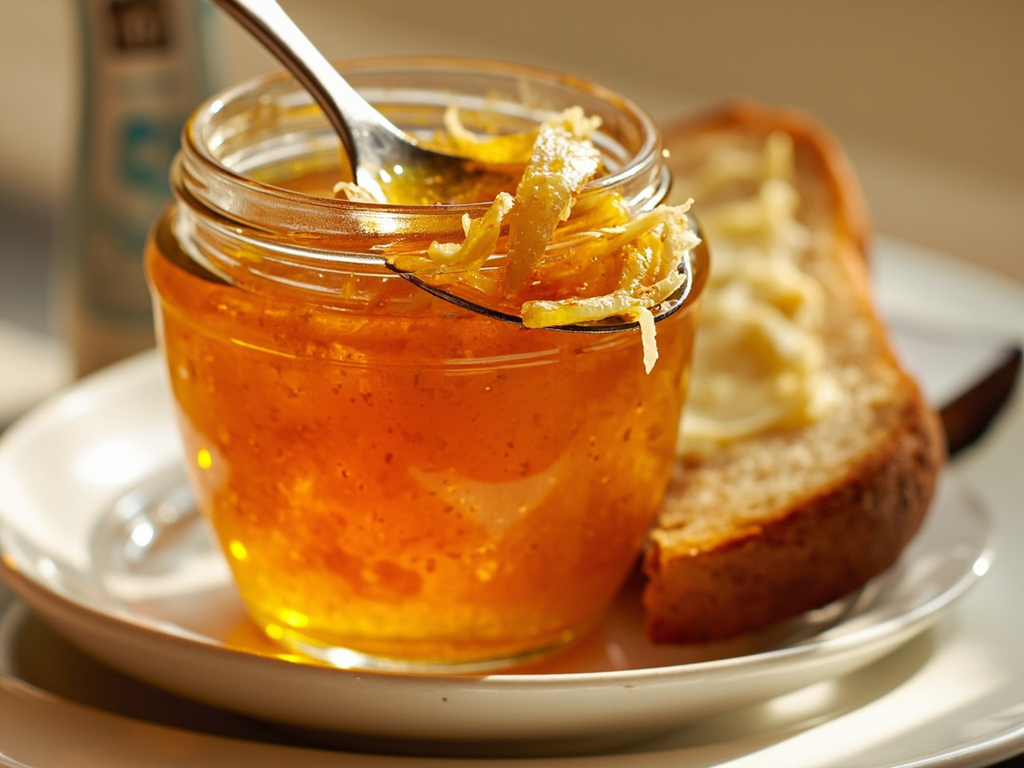
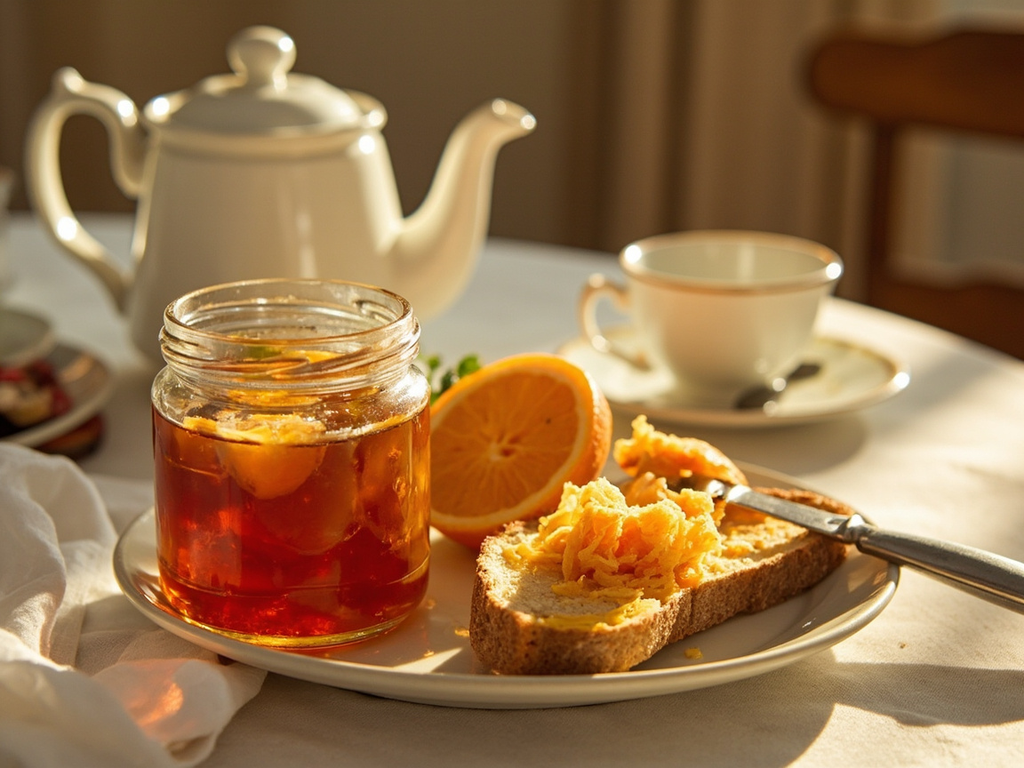
A preserve of bitter Seville oranges, cooked with their peel in fine shreds, at once bitter, tangy and sweet. A large batch is made in winter to spread on toast all year round.
An Englishman may leave England, but England never leaves his breakfast. Wherever fortune took me, I needed my toast and bitter orange marmalade — that mix of bitter and sweet that wakes you better than a telegram. It's made in January, when the Seville oranges arrive, and the jar keeps you company all year. It's a small thing, and it's a whole homeland.
- •Seville bitter oranges — a crate (fruit)
- •Lemons — a few (acidity, set)
- •Sugar — generous amounts (preservation)
- •Water — enough (cooking)
Seville Orange Marmalade
A preserve of bitter Seville oranges, cooked with their peel in fine shreds, at once bitter, tangy and sweet. A large batch is made in winter to spread on toast all year round.
Why this dish? Marmalade on toast is the unchanging ritual of the British breakfast, and Chaplin, who became rich in America then settled in Switzerland, remained attached to the English tastes of his childhood. The jar of marmalade — made once a year with bitter January oranges — embodies the English anchor he carried all the way to the Manoir de Ban.
An Englishman may leave England, but England never leaves his breakfast. Wherever fortune took me, I needed my toast and bitter orange marmalade — that mix of bitter and sweet that wakes you better than a telegram. It's made in January, when the Seville oranges arrive, and the jar keeps you company all year. It's a small thing, and it's a whole homeland.
Ingredients (period version)
- Seville bitter oranges — a crate (fruit)
- Lemons — a few (acidity, set)
- Sugar — generous amounts (preservation)
- Water — enough (cooking)
Ingredients
- Seville bitter oranges — 1 kg (fruit)
- Lemons — 2 (juice) (acidity, set (pectin))
- Granulated sugar — 2 kg (preservation)
- Water — 2.5 L (cooking)
Method
- Wash the oranges, cut in half, squeeze the juice and reserve the pips (rich in pectin) in a muslin bag.
- Slice the peels into fine shreds.
- Put the peels, juice, muslin bag and water in a large pot; soak overnight.
- Simmer for about 2 hours until the peels are very tender; remove the muslin bag.
- Add the sugar and lemon juice, stir to dissolve, then boil rapidly until setting point (105°C, or cold plate test).
- Pour into sterilized jars, seal immediately and turn upside down to create a vacuum.
How it was made : Bitter orange marmalade became a British preserve because Seville oranges, too tart to eat raw, arrive only in midwinter: so a large annual batch was made, and the sugar ensured several months' preservation without refrigeration. The natural pectin in the pips and peel allows it to set.
The contemporary twist : On hot buttered toast with strong tea — but a spoonful in a duck roast sauce also reveals its noble bitterness in a modern bistro style.
Charlie Chaplin · Charactorium