 flip
flipBitter Orange Marmalade for Breakfast
Bitter Orange Marmalade for Breakfast
Why this dish? The English breakfast that Rutherford took at Cambridge was never without his toast spread with bitter orange marmalade — an unchanging institution of college tables and Edwardian British mornings.
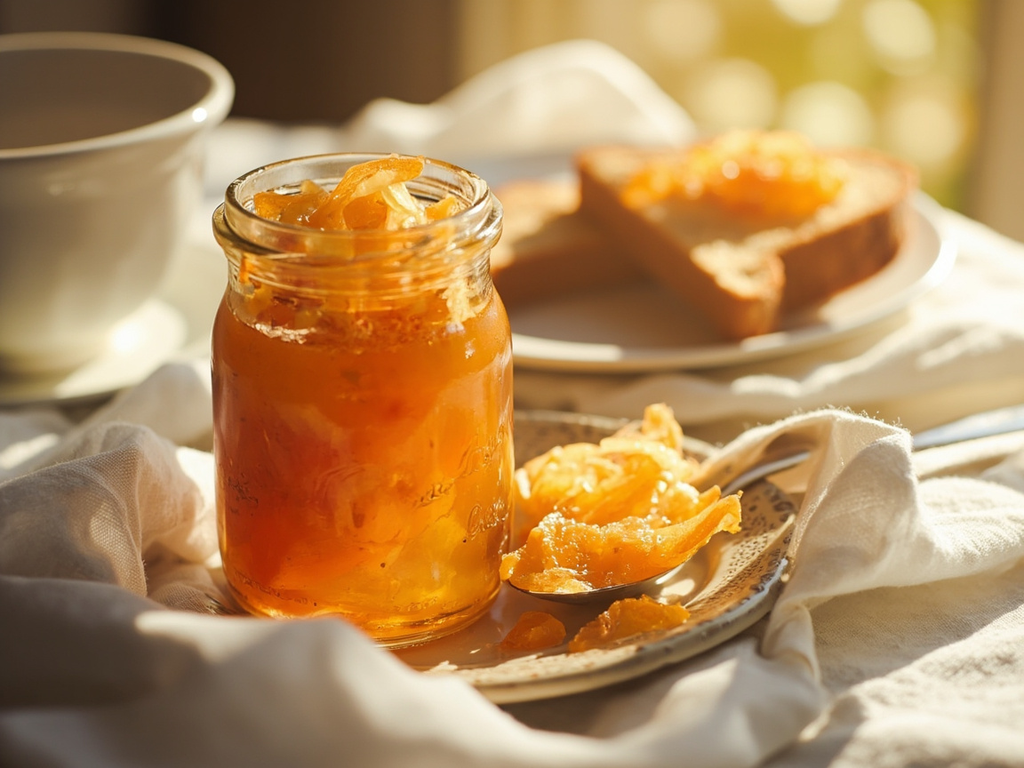
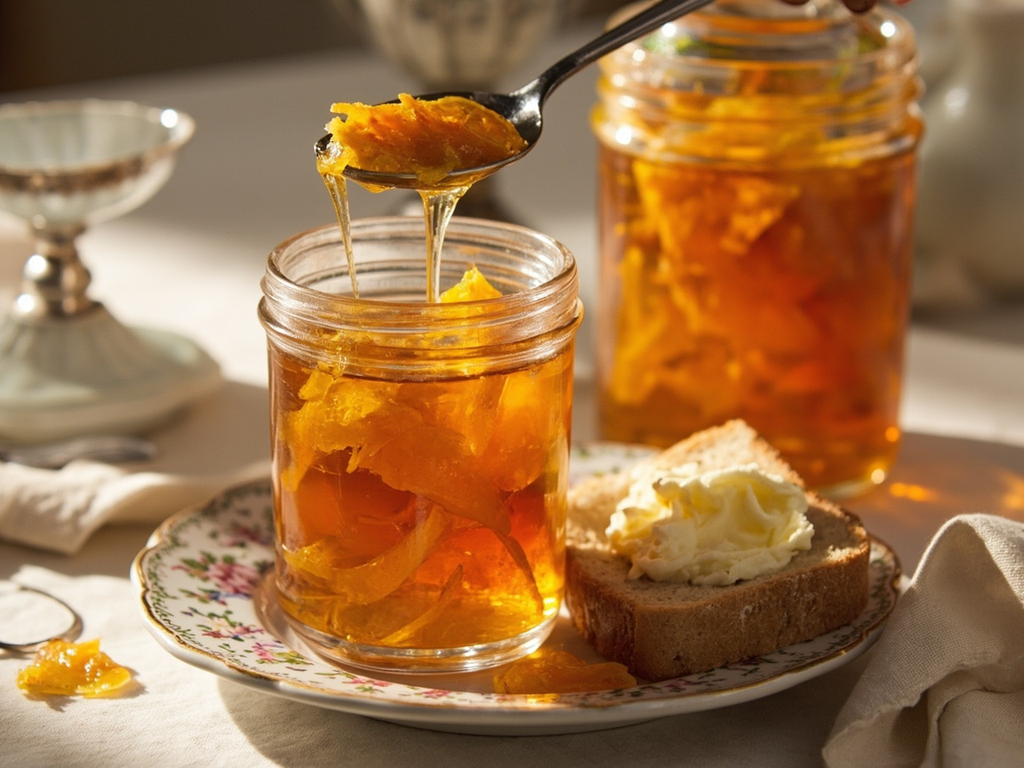
A translucent jam of bitter Seville oranges, with fine ribbons of candied peel floating in it, blending the sharp bitterness of the citrus with sugar. The quintessential breakfast preserve, which keeps for months in jars.
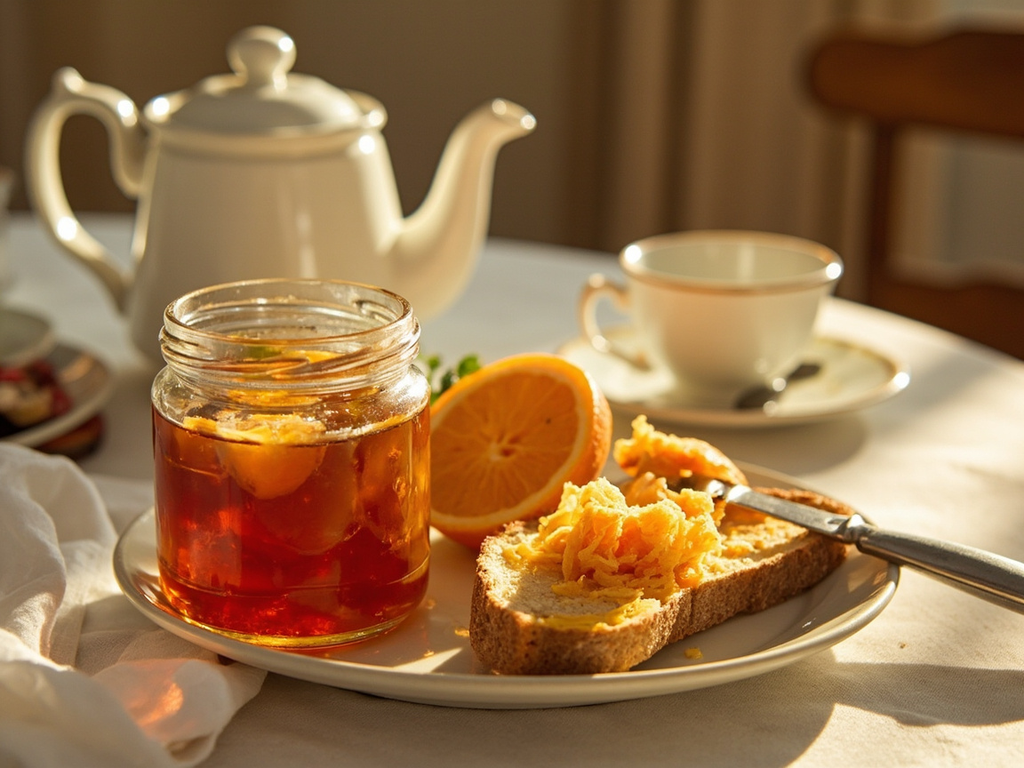
In the morning, you see, an Englishman — or a New Zealander who has adopted the ways — cannot start the day without his marmalade on toast. This one is made with bitter Seville oranges, which arrive only in the dead of winter; we take the opportunity to boil large cauldrons of it, and it lasts the year. The peel is cut into fine strips — that is all the work, and believe me, I would rather measure particles! But what a fragrance, afterwards, on toasted bread, with a cup of hot tea.
- •Bitter Seville oranges — a basket (fruit, bitterness and pectin)
- •Lemons — one or two (acidity and set)
- •Sugar — equal weight to fruit (preservation, sweetness)
- •Water — in proportion (extraction)
Bitter Orange Marmalade for Breakfast
A translucent jam of bitter Seville oranges, with fine ribbons of candied peel floating in it, blending the sharp bitterness of the citrus with sugar. The quintessential breakfast preserve, which keeps for months in jars.
Why this dish? The English breakfast that Rutherford took at Cambridge was never without his toast spread with bitter orange marmalade — an unchanging institution of college tables and Edwardian British mornings.
In the morning, you see, an Englishman — or a New Zealander who has adopted the ways — cannot start the day without his marmalade on toast. This one is made with bitter Seville oranges, which arrive only in the dead of winter; we take the opportunity to boil large cauldrons of it, and it lasts the year. The peel is cut into fine strips — that is all the work, and believe me, I would rather measure particles! But what a fragrance, afterwards, on toasted bread, with a cup of hot tea.
Ingredients (period version)
- Bitter Seville oranges — a basket (fruit, bitterness and pectin)
- Lemons — one or two (acidity and set)
- Sugar — equal weight to fruit (preservation, sweetness)
- Water — in proportion (extraction)
Ingredients
- Bitter Seville oranges — 1 kg (fruit, bitterness and pectin)
- Lemon — 1 (juice) (acidity and set)
- Granulated sugar — 2 kg (preservation, sweetness)
- Water — 2.5 litres (extraction)
Method
- Scrub the oranges, cut them in half and squeeze the juice. Reserve the seeds and membranes in a muslin bag (they contain pectin).
- Slice the peel into thin strips. Put juice, peel, water, and the seed bag into a large pot.
- Let soak overnight, then simmer for about 1 h 30 until the peel is very tender.
- Remove the seed bag, pressing it over the pot. Add the sugar, dissolve over low heat, then bring to a rolling boil.
- Cook until setting point is reached (105°C, or the wrinkle test on a cold plate), about 15-25 min.
- Let cool for 10 min, stir to distribute the peel, pour into sterilized jars and seal immediately.
How it was made : "Modern" orange marmalade originated in Dundee, Scotland, in the 18th century. Its production was strictly seasonal: bitter Seville oranges arrived only in January-February, and households would then make their annual supply. The seed bag replaced industrial pectin to ensure the set.
The contemporary twist : A spoonful of marmalade on a scone, or as a glaze for an Earl Grey tea cake: the bitterness of the citrus bounces off the bergamot notes.
Sources : C. Anne Wilson, The Book of Marmalade, 1985 · Isabella Beeton, Mrs Beeton's Book of Household Management, 1861
Ernest Rutherford · Charactorium