 flip
flipPanforte of Siena
Panforte of Siena
Why this dish? Panforte is the sweet glory of Siena, Chigi's hometown. Dense, packed with spices and candied fruits, it kept for weeks: it was given as gifts, carried on journeys, brought to the pope. For a Sienese banker turned prince of Rome, it was a piece of homeland that kept.
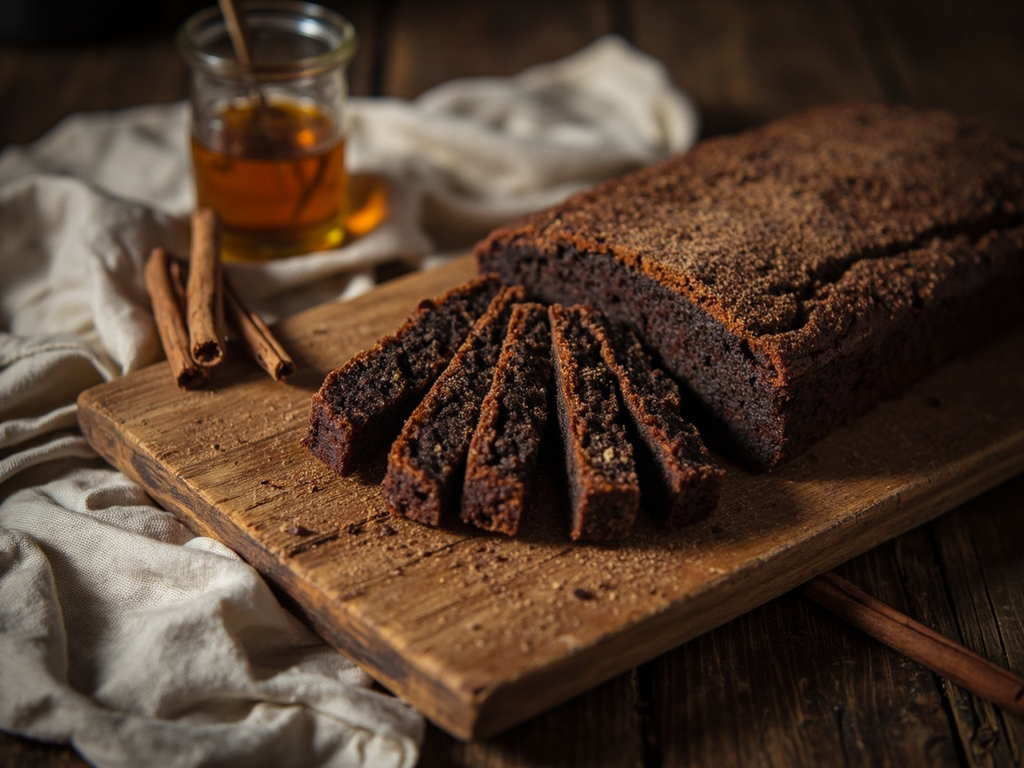
A dense, flat spiced bread, kneaded with honey, almonds, candied fruits, and an avalanche of spices — cinnamon, cloves, nutmeg, pepper, coriander. So concentrated it keeps for a long time: the ultimate travel and storage treat.
Ah, panforte! Bite into it and you hold all of Siena between your teeth. At home we knead it tight — honey, sugar, almonds, candied citron, and all the spices the Levant sends us, as many as needed to make it 'strong.' We bake it on a wafer so it does not stick, dust it with sugar, and it keeps for whole moons. I send some to the Holy Father; and when I ride toward Siena, I always slip one into my saddlebags: it is my homeland traveling with me.
- •Honey — a good measure (binder and preservative)
- •Sugar — a generous hand (sweetness and preservation)
- •Almonds — two handfuls (body and crunch)
- •Candied citron and melon — a handful, chopped (fruitiness)
- •Wheat flour — as needed to bind (binder)
- •Cinnamon, cloves, nutmeg, pepper, coriander — a full measure of spice (aromatic signature)
- •Wafer / unleavened bread — for the base (non-stick support)
Panforte of Siena
A dense, flat spiced bread, kneaded with honey, almonds, candied fruits, and an avalanche of spices — cinnamon, cloves, nutmeg, pepper, coriander. So concentrated it keeps for a long time: the ultimate travel and storage treat.
Why this dish? Panforte is the sweet glory of Siena, Chigi's hometown. Dense, packed with spices and candied fruits, it kept for weeks: it was given as gifts, carried on journeys, brought to the pope. For a Sienese banker turned prince of Rome, it was a piece of homeland that kept.
Ah, panforte! Bite into it and you hold all of Siena between your teeth. At home we knead it tight — honey, sugar, almonds, candied citron, and all the spices the Levant sends us, as many as needed to make it 'strong.' We bake it on a wafer so it does not stick, dust it with sugar, and it keeps for whole moons. I send some to the Holy Father; and when I ride toward Siena, I always slip one into my saddlebags: it is my homeland traveling with me.
Ingredients (period version)
- Honey — a good measure (binder and preservative)
- Sugar — a generous hand (sweetness and preservation)
- Almonds — two handfuls (body and crunch)
- Candied citron and melon — a handful, chopped (fruitiness)
- Wheat flour — as needed to bind (binder)
- Cinnamon, cloves, nutmeg, pepper, coriander — a full measure of spice (aromatic signature)
- Wafer / unleavened bread — for the base (non-stick support)
Ingredients
- Honey — 120 g (binder)
- Sugar — 120 g (sweetness)
- Whole almonds (blanched, toasted) — 200 g (body)
- Candied citron and orange peel — 150 g, chopped (fruitiness)
- Flour — 80 g (binder)
- Cinnamon/cloves/nutmeg/pepper/coriander mix — 2 teaspoons total (spices)
- Unleavened bread sheet (wafer) or parchment paper — 1 (base)
- Powdered sugar — for dusting (finish)
Method
- Preheat oven to 150°C. Line a shallow round mold with unleavened bread (or parchment paper).
- Mix toasted almonds, chopped candied fruits, flour, and spices.
- Gently melt honey and sugar until syrupy (soft-ball stage, about 115°C), then immediately pour over the dry mixture.
- Work quickly (the dough is sticky and hardens), press firmly into the mold to a thickness of 1.5–2 cm.
- Bake for 30–35 minutes: the panforte will be soft when removed and hardens as it cools.
- Unmold when cold and dust generously with powdered sugar. Store in an airtight container: it keeps for weeks.
How it was made : Panforte ('strong bread,' for its intense spice flavor) is documented in Siena since the Middle Ages; a payment in 'peppered bread' (pane pepato) owed to nuns is mentioned in the 13th century. Its density of honey, sugar, and candied fruits made it a very long-lasting pastry, ideal as a gift or travel provision. It was traditionally baked on a sheet of unleavened bread (ostia).
The contemporary twist : Cut into thin triangles served with a sweet wine, it becomes a refined end-of-meal mignardise — the Renaissance version of 'truffle and coffee.'
Sources : Documented tradition of Sienese panforte (medieval mention of 'pane pepato') · Pellegrino Artusi, La scienza in cucina e l'arte di mangiar bene (1891)
Agostino Chigi · Charactorium