 flip
flipMostarda of Lombard Fruits
Mostarda of Lombard Fruits
Why this dish? During his long Milanese years, Leonardo frequented the Lombard table, where fruits were preserved in a syrup spiked with mustard to keep them from season to season. A tangy and pungent condiment that accompanied cheeses and herb dishes — ideal for a vegetarian.
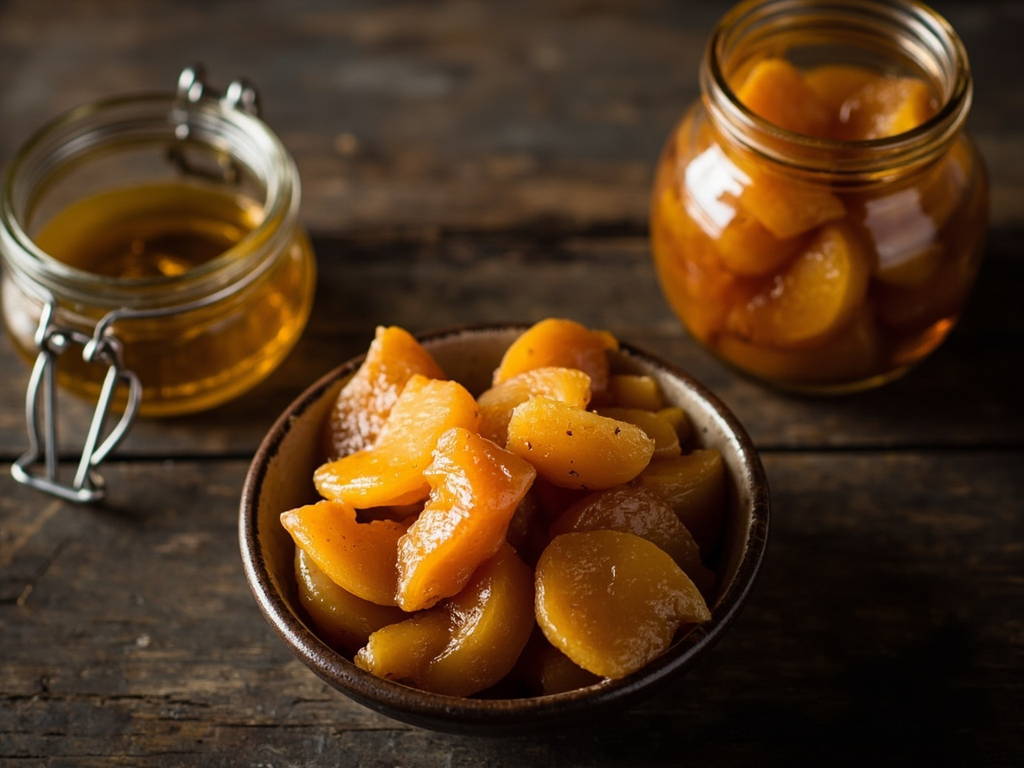
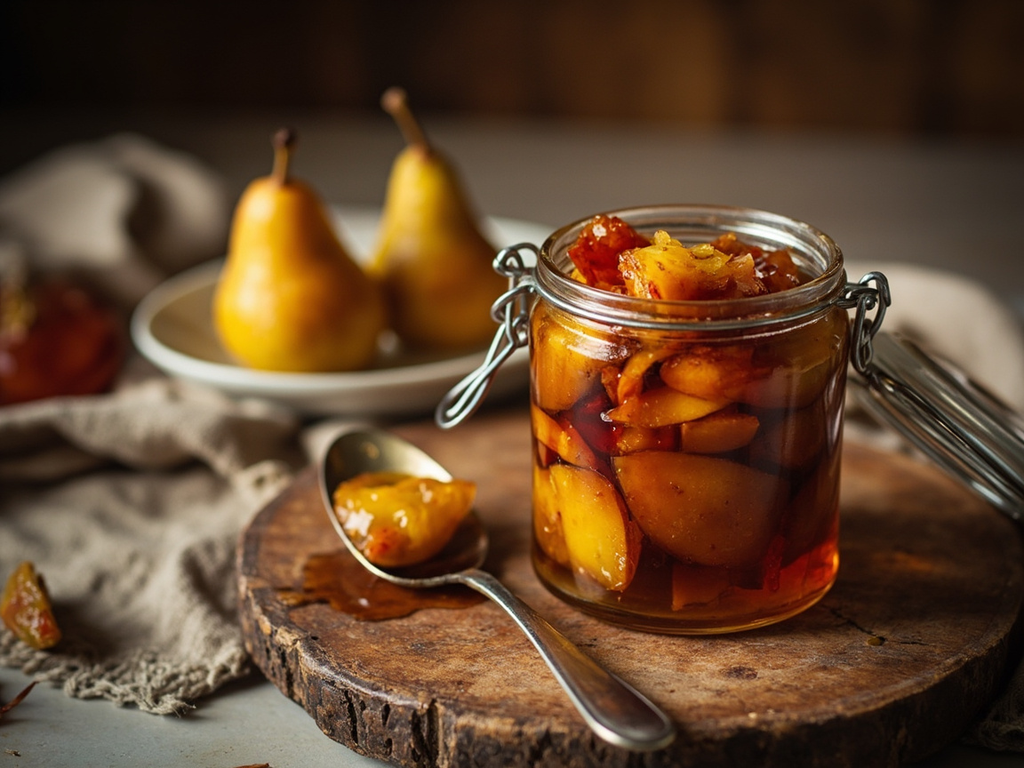
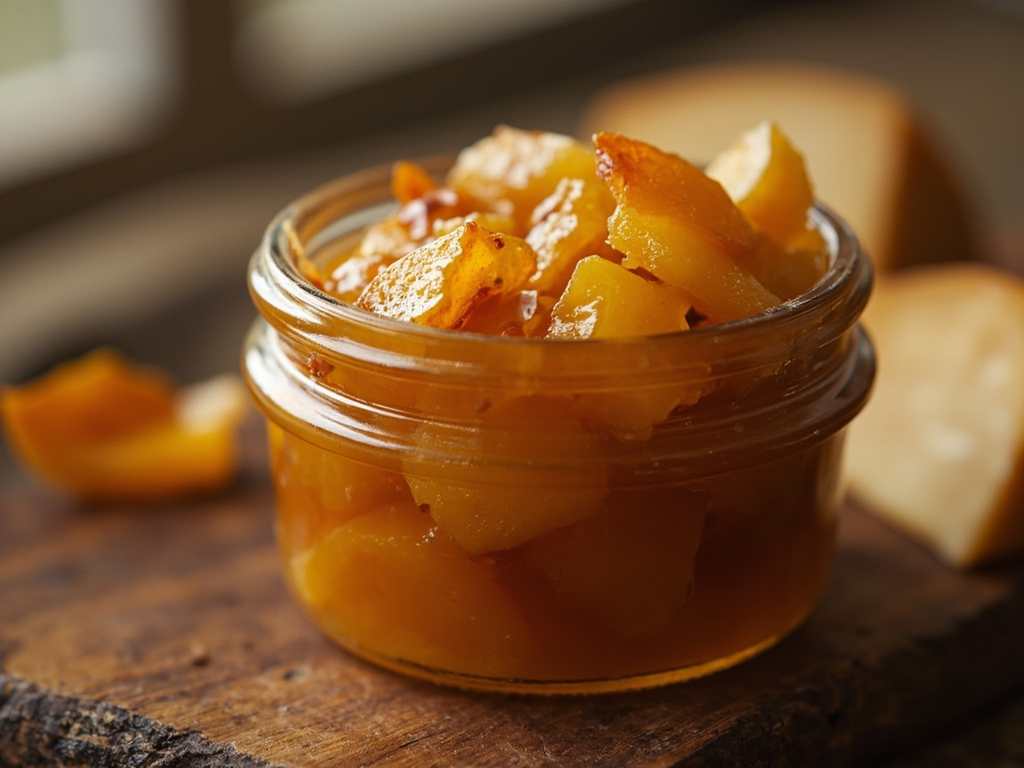
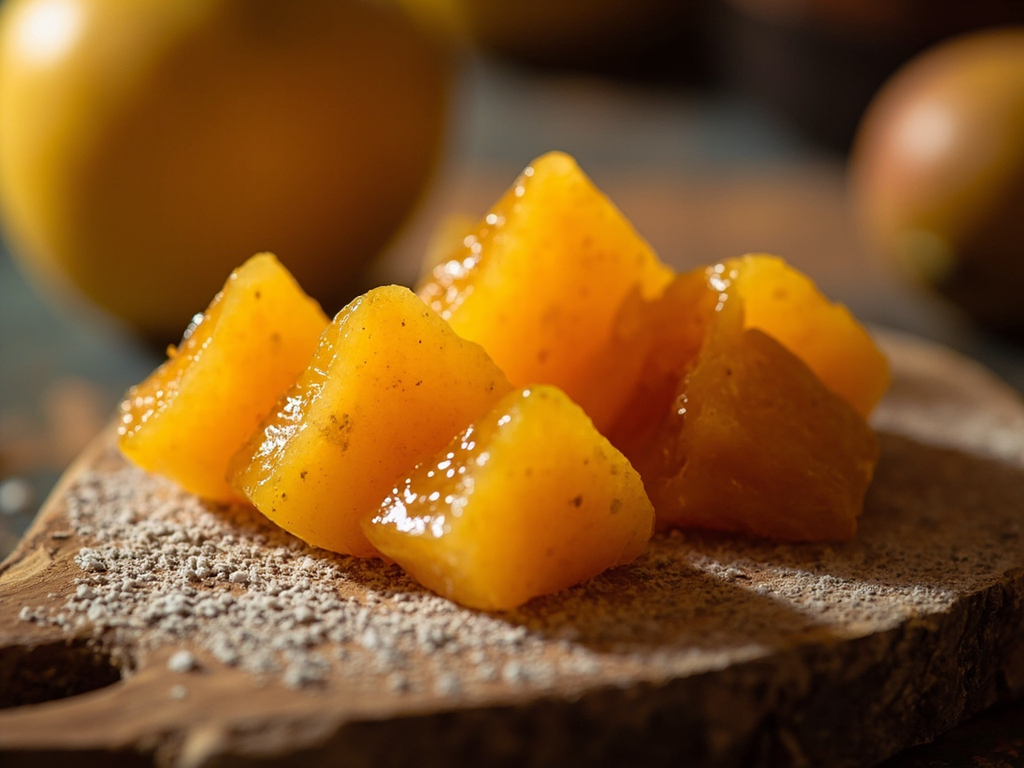
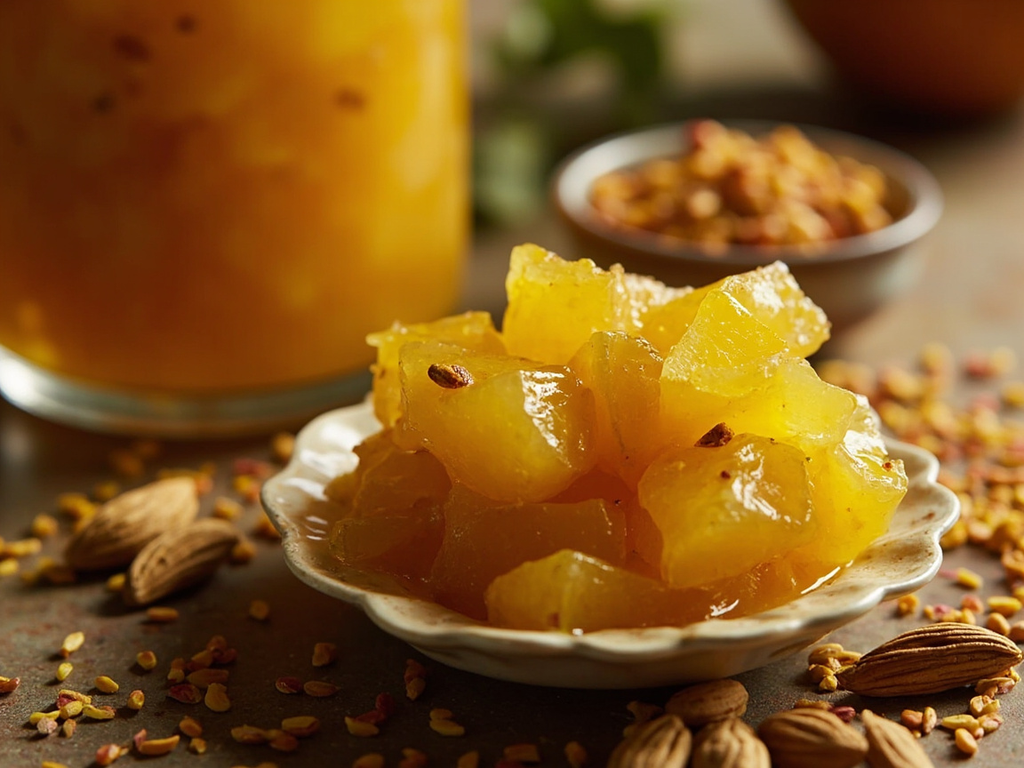
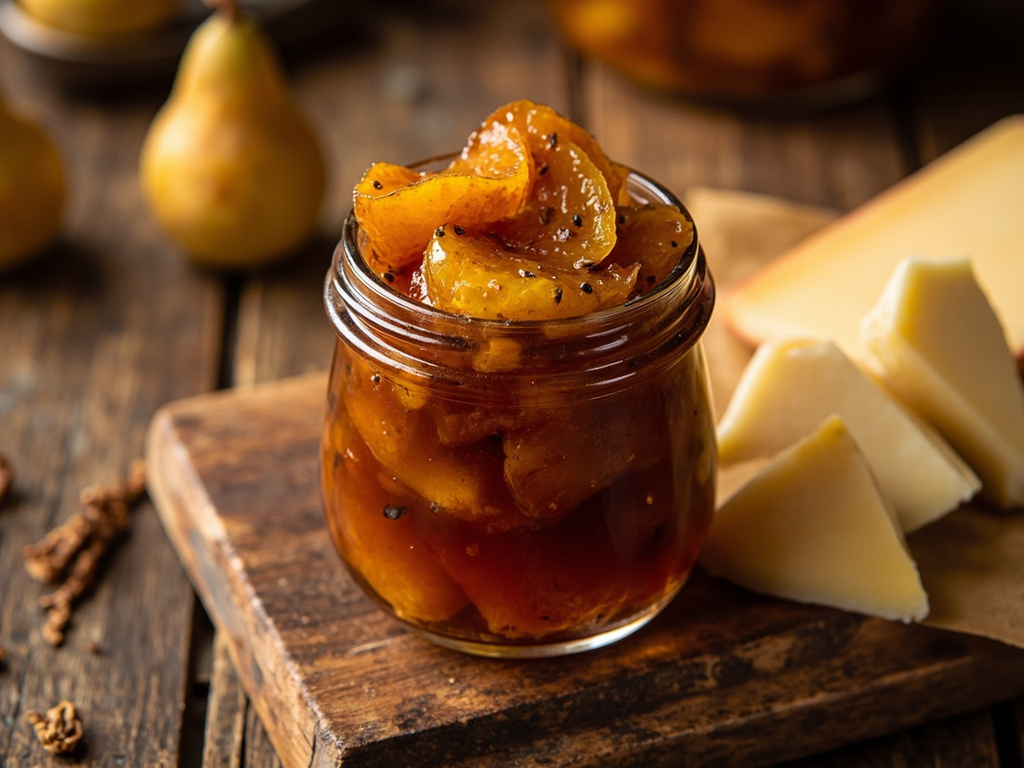
Fruits (pears, quinces, apples) candied in a sweet syrup powerfully perfumed with mustard essence: a preserve that is sweet, tart, and biting, and lasts for months.
Fruits last only a season, but the wise know how to keep them. Here is how they do it in Lombardy: one candies pears and quinces in a syrup, then mixes in the pungent soul of mustard, which stings the nose as much as the palate. I keep a pot in the cellar; a spoonful on fresh cheese, and the sweet, the sour, and the biting vie for the tongue. Nothing is wasted, you see: that is all the wisdom of nature, which never throws anything away.
- •Firm fruits (pears, quinces, apples) — what the orchard gives (base)
- •Sugar or honey — in generous portions (preservation and sweetness)
- •Mustard seeds — according to desired strength (signature pungency)
- •White wine or agresto — a little (acidity)
Mostarda of Lombard Fruits
Fruits (pears, quinces, apples) candied in a sweet syrup powerfully perfumed with mustard essence: a preserve that is sweet, tart, and biting, and lasts for months.
Why this dish? During his long Milanese years, Leonardo frequented the Lombard table, where fruits were preserved in a syrup spiked with mustard to keep them from season to season. A tangy and pungent condiment that accompanied cheeses and herb dishes — ideal for a vegetarian.
Fruits last only a season, but the wise know how to keep them. Here is how they do it in Lombardy: one candies pears and quinces in a syrup, then mixes in the pungent soul of mustard, which stings the nose as much as the palate. I keep a pot in the cellar; a spoonful on fresh cheese, and the sweet, the sour, and the biting vie for the tongue. Nothing is wasted, you see: that is all the wisdom of nature, which never throws anything away.
Ingredients (period version)
- Firm fruits (pears, quinces, apples) — what the orchard gives (base)
- Sugar or honey — in generous portions (preservation and sweetness)
- Mustard seeds — according to desired strength (signature pungency)
- White wine or agresto — a little (acidity)
Ingredients
- Firm pears (and/or quinces, apples) — 1 kg (base)
- Sugar — 400 g (syrup / preservation)
- Yellow mustard seeds — 2 tbsp (or 10-15 drops mustard essential oil, with caution) (pungency)
- Dry white wine — 10 cl (acidity)
- Lemon juice — 1 (syrup stability)
Method
- Peel and cut fruits into large wedges, macerate overnight with sugar to release their juice.
- Next day, collect the syrup, bring to a boil, then pour back hot over the fruits; repeat this process for 3 consecutive days (the fruits candy without falling apart).
- On the last day, cook everything gently for a few minutes, add white wine and lemon juice.
- Off the heat, stir in crushed mustard seeds (or, very cautiously, a few drops of mustard essential oil).
- Pack into sterilized jars, seal well, and store in a cool place.
How it was made : Mostarda (from *mustum ardens*, 'burning must') takes its name from grape must and mustard. It was both a preservation technique and a condiment: candying fruits in sugar or honey protected them for months in an age without refrigeration. The mostarda of Cremona, in Lombardy, remains famous today.
The contemporary twist : Serve a quenelle of mostarda alongside fresh cheese and a drizzle of olive oil: a revisited 'credenza' platter, sweet-pungent, always surprising guests.
Sources : Bartolomeo Scappi, Opera dell'arte del cucinare, 1570 · Culinary tradition of Cremona (mostarda di Cremona)
Leonardo da Vinci · Charactorium