 flip
flipNán (馕) — oven-baked flatbread
Nán (馕) — oven-baked flatbread
Why this dish? As a child, Ai Weiwei followed his father, the poet Ai Qing, into exile in Xinjiang, where the family lived for nearly twenty years, sometimes in a hole dug in the earth. Nán, the daily Uyghur bread that keeps for days, is the taste of that long displaced childhood.
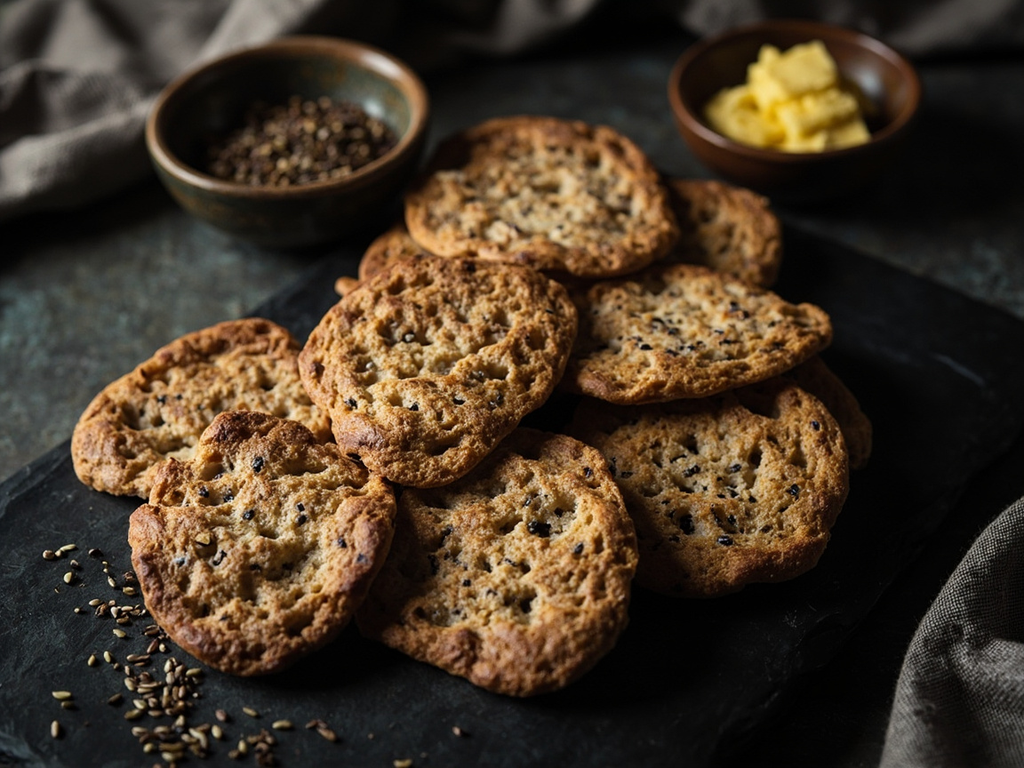
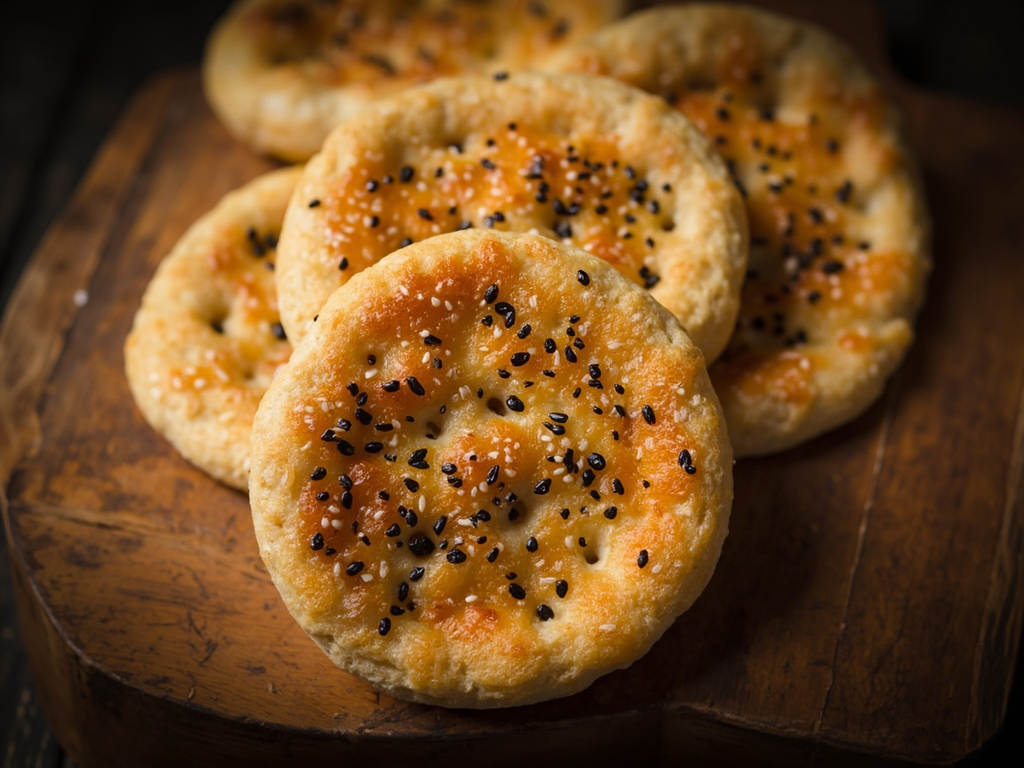
A leavened flatbread, golden and crispy on the edges, thin and dimpled in the center, sprinkled with onion and sesame seeds — the bread that keeps and is shared.
In Xinjiang, bread is not a detail: it decides whether the day will hold. We baked it pressed against the scorching wall of the earthen oven, and it could keep for days without losing anything — when you have little, you learn not to waste. Prick the center well before baking, otherwise it puffs up and cheats. This bread taught me that exile too has a taste, and that it can be good.
- •Wheat flour — for the table (base)
- •Sourdough or yesterday's dough — a piece (leavening)
- •Water, salt — to taste (dough)
- •Minced onion — a handful (flavor)
- •Sesame seeds — a pinch (garnish)
- •Mutton fat — a little (softness)
Nán (馕) — oven-baked flatbread
A leavened flatbread, golden and crispy on the edges, thin and dimpled in the center, sprinkled with onion and sesame seeds — the bread that keeps and is shared.
Why this dish? As a child, Ai Weiwei followed his father, the poet Ai Qing, into exile in Xinjiang, where the family lived for nearly twenty years, sometimes in a hole dug in the earth. Nán, the daily Uyghur bread that keeps for days, is the taste of that long displaced childhood.
In Xinjiang, bread is not a detail: it decides whether the day will hold. We baked it pressed against the scorching wall of the earthen oven, and it could keep for days without losing anything — when you have little, you learn not to waste. Prick the center well before baking, otherwise it puffs up and cheats. This bread taught me that exile too has a taste, and that it can be good.
Ingredients (period version)
- Wheat flour — for the table (base)
- Sourdough or yesterday's dough — a piece (leavening)
- Water, salt — to taste (dough)
- Minced onion — a handful (flavor)
- Sesame seeds — a pinch (garnish)
- Mutton fat — a little (softness)
Ingredients
- All-purpose flour (T65) — 500 g (base)
- Active dry yeast — 7 g (leavening)
- Warm water — 300 ml (dough)
- Salt — 1 tsp (seasoning)
- Oil — 2 tbsp (softness)
- Finely minced onion — 1 small (flavor)
- Sesame seeds and nigella seeds — 2 tbsp (garnish)
- Milk or egg for wash — a little (glaze)
Method
- Knead flour, yeast, salt, oil, and water into a soft dough; let rise covered for 1 hour.
- Divide, shape into thick disks, and let rest for 20 minutes.
- Using fingers or a stamp, press and prick the center of each flatbread densely so it stays flat.
- Brush with glaze, sprinkle with onion and seeds.
- Bake in a very hot oven (250°C) for 12–15 minutes until edges puff and brown. Cool on a rack: the bread keeps for several days.
How it was made : Nán is traditionally baked in a tonur (earthen oven), slapped against the hot wall. A quintessential travel bread along the Silk Road, it accompanied caravans and fieldwork because it keeps for a long time when well baked.
The contemporary twist : Stack the flatbreads like sculpted disks and stamp them with a pattern: the bread becomes a surface, almost a print.
Ai Weiwei · Charactorium