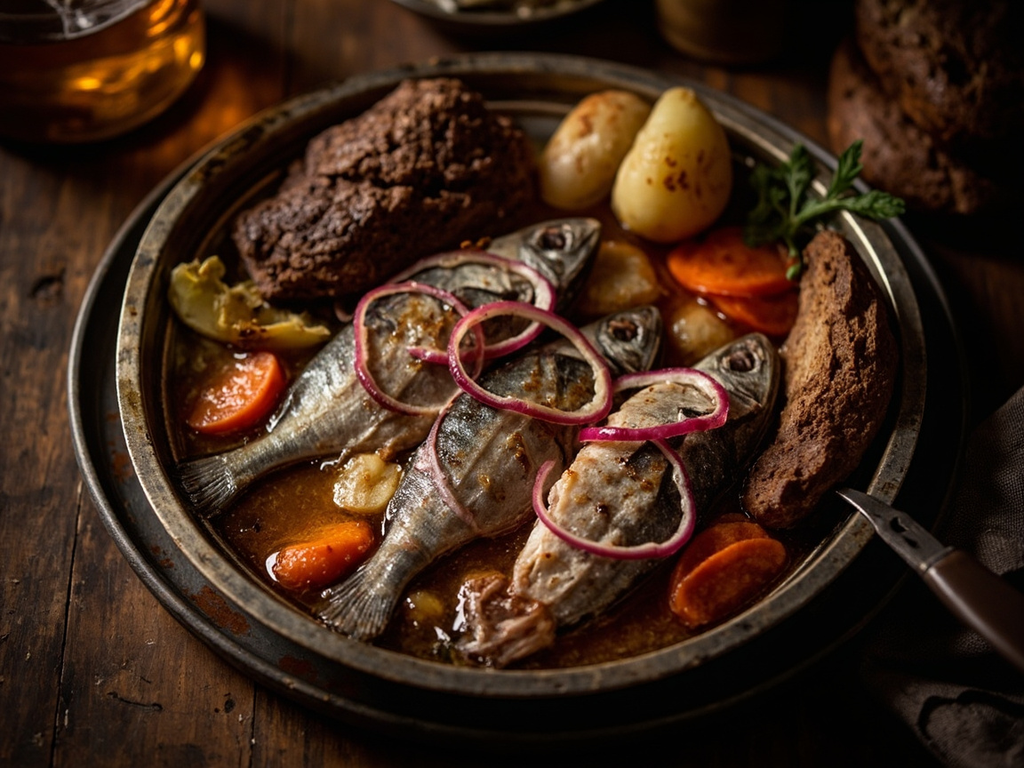
 flip
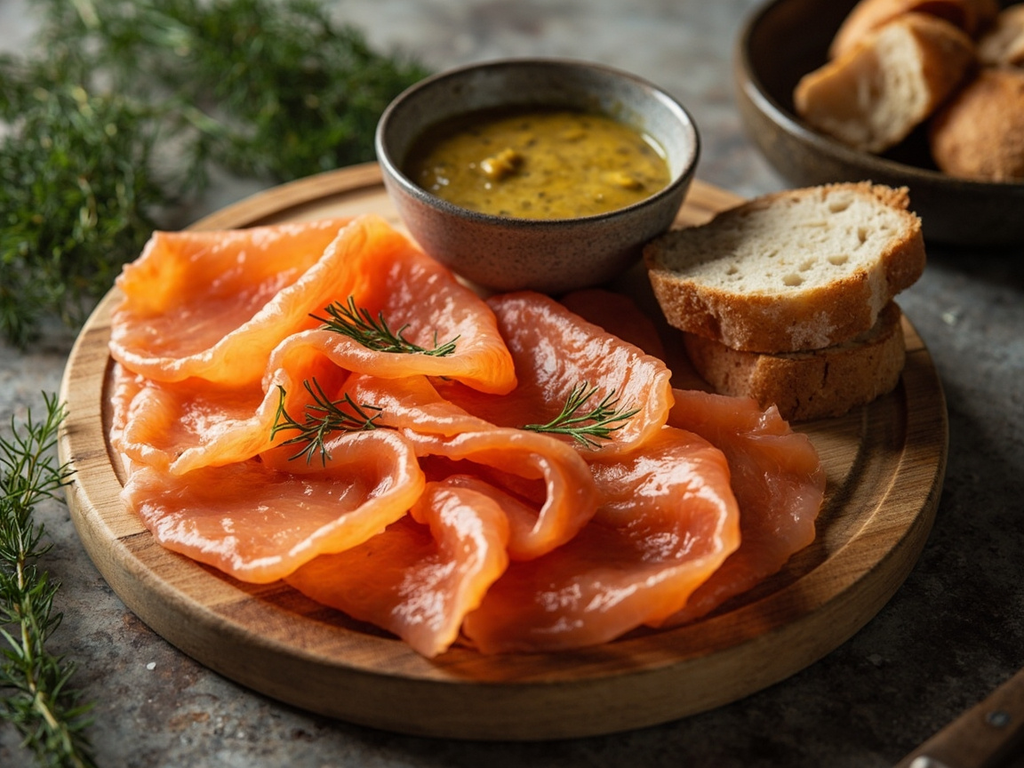
flipGravlax med hovmästarsås — dill-cured salmon with mustard sauce
Gravlax med hovmästarsås — dill-cured salmon with mustard sauce
Why this dish? A centerpiece of Swedish festive tables, gravlax is prepared days in advance — a cuisine of patience and precision that resonates with the work of experimentalist Anne L'Huillier, where one prepares at length to seize the right moment.
A raw salmon fillet buried in a mixture of salt, sugar and dill, aged three days in the cold until silky and translucent. Thinly sliced, served with a sweet-tart mustard sauce.
Here's a dish that teaches me patience, that virtue of every experimenter. You bury the salmon in salt and dill, and then — you wait. For three days, the salt works the flesh in silence, like an experiment left to mature before measurement. The Swedish word "gravlax" means "buried salmon": in the old days they actually buried it in cold sand. Slice very thin, and taste: patience has a flavor.
- •Very fresh salmon fillet — a nice piece with skin (base)
- •Coarse salt — two parts (curing and preservation)
- •Sugar — one part (cure balance)
- •Fresh dill — a large bunch (signature flavor)
- •Crushed pepper — to taste (spice)
Gravlax med hovmästarsås — dill-cured salmon with mustard sauce
A raw salmon fillet buried in a mixture of salt, sugar and dill, aged three days in the cold until silky and translucent. Thinly sliced, served with a sweet-tart mustard sauce.
Why this dish? A centerpiece of Swedish festive tables, gravlax is prepared days in advance — a cuisine of patience and precision that resonates with the work of experimentalist Anne L'Huillier, where one prepares at length to seize the right moment.
Here's a dish that teaches me patience, that virtue of every experimenter. You bury the salmon in salt and dill, and then — you wait. For three days, the salt works the flesh in silence, like an experiment left to mature before measurement. The Swedish word "gravlax" means "buried salmon": in the old days they actually buried it in cold sand. Slice very thin, and taste: patience has a flavor.
Ingredients (period version)
- Very fresh salmon fillet — a nice piece with skin (base)
- Coarse salt — two parts (curing and preservation)
- Sugar — one part (cure balance)
- Fresh dill — a large bunch (signature flavor)
- Crushed pepper — to taste (spice)
Ingredients
- Salmon fillet with skin, extra fresh — 1 kg (base)
- Coarse salt — 80 g (cure)
- Sugar — 60 g (cure)
- Fresh dill — 1 large bunch, chopped (flavor)
- Crushed white pepper — 1 tsp (spice)
- Sweet mustard + strong mustard — 2 + 1 tbsp (sauce)
- Vinegar and neutral oil — 1 tbsp + 100 ml (emulsified sauce)
- Sugar (sauce) — 1 tbsp (sauce balance)
Method
- Mix salt, sugar and pepper. Spread a layer of dill in a dish, place salmon skin-side down, cover with the mixture and remaining dill.
- Cover with plastic wrap, place a weight on top, refrigerate 2 to 3 days, turning the fillet morning and evening.
- Rinse quickly, dry, slice very thinly on the bias, leaving the skin.
- For the sauce, whisk mustards, sugar and vinegar, then drizzle in oil while whisking until emulsified. Add some dill.
- Serve gravlax with sauce and rye bread.
How it was made : Gravlax descends from a medieval preservation technique: Scandinavian fishermen salted salmon and buried it in cold sand above the tide line, where it fermented slightly. The modern version, simply salt-sugar cured in the cold, retains the name ("buried salmon") but abandons prolonged fermentation.
The contemporary twist : A splash of gin or a citrus zest in the cure for a contemporary Nordic note.
Sources : Smörgåsbord — traditions of the Swedish cold table · ICA — gravlax and hovmästarsås recipe
Anne L'Huillier · Charactorium