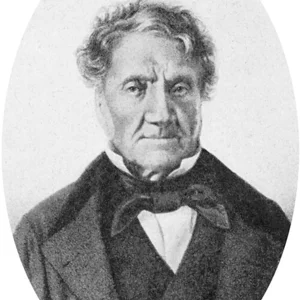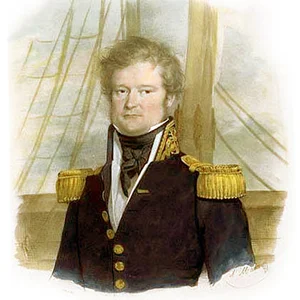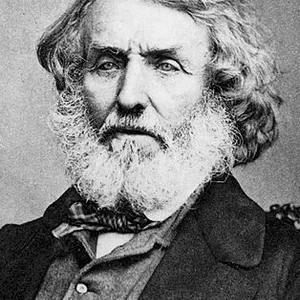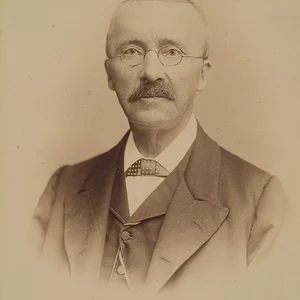

A self-taught German archaeologist (1822–1890), he devoted his fortune to finding the Homeric Troy. His excavations at Hisarlik in Turkey revealed several superimposed cities, one of which he identified — incorrectly — as the Troy of the *Iliad*.
Heinrich Schliemann(1822 — 1890)
Heinrich Schliemann
États-Unis, Empire russe, grand-duché de Mecklembourg-Schwerin
8 min read
Frequently asked questions
Famous Quotes
« I have gazed on the face of Agamemnon.»
« All my life I have been guided by Homer.»
Key Facts
- 1871: start of excavations at Hisarlik (Turkey), the site he identified as Troy
- 1873: discovery of the “Treasure of Priam,” a collection of gold jewelry and objects
- 1876: excavations at Mycenae, discovery of shaft graves and gold masks
- 1822–1890: life of Schliemann, a self-taught man who became a millionaire before devoting himself to archaeology
- His excavation methods, widely criticized as destructive, nonetheless laid the foundations of European prehistoric archaeology
Works & Achievements
Schliemann's first archaeological work, recounting his exploratory travels through Greece. In it, he develops his conviction that the Homeric sites are real and can be located.
A detailed report on the first major excavation campaigns at Hisarlik, including an account of the discovery of the 'Treasure of Priam.' The work sparked both enthusiasm and controversy in the European scholarly world.
An account of the excavations at Mycenae, including the discovery of the royal tombs and the 'Mask of Agamemnon.' The work established the existence of a pre-Hellenic civilization that would come to be known as Mycenaean.
A major synthesis of the excavations at Troy, presenting the nine successive layers of occupation and the objects uncovered. Schliemann argues his case for identifying the second layer (Troy II) with Homeric Troy.
A study of the excavations of the Mycenaean palace at Tiryns, conducted with architect Wilhelm Dörpfeld. This work helped define the characteristics of Bronze Age palatial architecture in Greece.
Anecdotes
Schliemann had a prodigious memory and an exceptional gift for languages: he learned eighteen over the course of his life, including ancient Greek, by reading Homer aloud for hours on end. He claimed to have memorized much of the Iliad and the Odyssey from childhood, after hearing his father recount the adventures of Troy.
When he discovered in 1873 a collection of jewels and gold objects at Hisarlik, Schliemann halted the excavations and sent his workers away on a pretext. Together with his wife Sophia, he secretly unearthed the treasure and smuggled it out of Turkey concealed beneath their clothing. He photographed Sophia adorned with the golden diadems, calling her 'Helen of Troy' — but the treasure would prove to be far older than Homeric Troy.
At Mycenae in 1876, Schliemann unearthed a golden funeral mask within a circle of royal tombs. Convinced he had found the burial place of King Agamemnon, he immediately telegraphed the King of Greece: “I have gazed upon the face of Agamemnon.” Modern analysis has since shown that the mask dated to approximately three centuries before the Trojan War.
Schliemann had such a passion for Greek mythology that he gave his children Homeric names: his son was called Agamemnon and his daughter Andromache. His second wife, Sophia Engastroménos, was a young Greek woman he had selected from a photograph, having first made sure she knew and loved Homer.
Schliemann's excavation methods were often destructive by modern standards: by digging vertically to reach the deepest layers of Hisarlik, he partly destroyed the levels dating from the supposed period of the Trojan War. The archaeologist Wilhelm Dörpfeld, who joined him from 1882 onward, gradually taught him rigorous stratigraphic methods.
Primary Sources
I have searched for Troy all my life. I am convinced that Hisarlik is the hill on which stood the city immortalized by Homer, and my excavations have proved it.
On 31 May 1873, while I was continuing the excavations, I noticed a copper object of an unusual shape. Looking more closely, I saw that it lay just below the enclosure wall, at a depth of about 5 feet. Fearing that my workers might seize the treasure, I called a break and dismissed the men.
I discovered great tombs within the funerary circle, containing the remains of persons covered with gold ornaments. This discovery proves that the Homeric tradition rests upon real historical facts.
The excavations revealed not one but nine successive cities superimposed upon one another. The second city, destroyed by a fierce fire, is the one I identify as the Troy of Homer, whose ruins bear witness to a sudden and terrible catastrophe.
The Cyclopean walls of Tiryns, of which Homer himself speaks, are the remains of a Mycenaean royal palace of unsuspected grandeur. Their study confirms that the civilization described in the Homeric epics was indeed real.
Key Places
Schliemann's birthplace, where his father first told him the legends of Troy. It was here that his irrepressible passion for Homeric antiquity was born.
The site of the Troy excavations, where Schliemann unearthed nine superimposed cities between 1871 and 1890. This UNESCO World Heritage Site is now recognized as the location of ancient Troy.
Site of the 1876 excavations where Schliemann discovered the Mycenaean royal tombs and their treasures of goldwork. These finds revealed the existence of a brilliant Bronze Age civilization in Greece.
Schliemann's main residence in the last decades of his life. He had a neoclassical palace built there, the Iliou Melathron ("Palace of Ilion"), adorned with mosaics and frescoes on Homeric themes.
The city where Schliemann died on December 26, 1890, carried off by an inner ear infection that had developed into encephalitis, while on his way to Berlin for surgery. His death cut short new excavation projects he had been planning.
Typical Objects

Schliemann read passages from the Iliad in ancient Greek every morning. This epic text was the guiding light of his entire life and the driving force behind his excavations at Hisarlik, which he sought to reconcile with archaeological reality.

The tools of the 19th-century archaeologist, which Schliemann wielded alongside his teams of local workers. His sometimes brutal methods — digging deep without sparing the upper layers — destroyed some of the very remains he was searching for.

Among the objects discovered in 1873, this diadem made of thousands of gold links was photographed on the head of Sophia Schliemann. It is now held at the Pushkin Museum in Moscow, where it was transferred in 1945 by the Soviet army.

Discovered at Mycenae in 1876, this beaten gold mask covered the face of a Mycenaean king. Schliemann believed he had found the face of King Agamemnon, but it actually dates to the 16th century BC, three centuries before the Trojan War.

Schliemann kept detailed journals in multiple languages, recording every discovery, measurement, and observation. These notebooks are valuable primary sources for modern archaeologists.

Topographic maps of the Hisarlik region, annotated by Schliemann, helped him identify locations mentioned in the Iliad. He tried to match every geographical detail of the poem with the actual terrain.
School Curriculum
Vocabulary & Tags
Key Vocabulary
Tags
Daily Life
Morning
Schliemann rose very early, before dawn, and began each day by reading passages from the *Iliad* or the *Odyssey* in ancient Greek. He recorded his thoughts in his multilingual diary — often writing in several languages on the same day. During excavation seasons, he would join the dig site at first light, personally supervising the workers.
Afternoon
In the field at Hisarlik or Mycenae, Schliemann spent his afternoons examining newly unearthed objects, taking precise measurements, and dictating his observations to his assistants. He compared each find against the Homeric texts, searching for correspondences between the archaeological evidence and the epic descriptions. The days of digging were exhausting, in the summer heat of Anatolia or Greece.
Evening
Evenings were devoted to writing scientific reports and carrying on an extensive correspondence with archaeologists, philologists, and journalists from across Europe. At his Athenian villa, Schliemann regularly received scholars, diplomats, and curious visitors eager to discuss his discoveries. He relished learned debate and defended his theories with passion.
Food
Schliemann had simple eating habits, shaped by his years of itinerant life. During excavations, he often shared modest meals with his colleagues — bread, olives, cheese, and Greek wine. At his Athens villa, meals were more elaborate, in the European style, but he remained largely indifferent to gastronomy, preferring to channel his energy into his work.
Clothing
On site, Schliemann wore practical, hard-wearing clothes: sturdy trousers, an open-collared shirt, and a wide-brimmed hat to shield himself from the Mediterranean sun. In learned circles or on his travels through Europe, he adopted the bourgeois dress of his day — a dark suit, top hat — reflecting his social success and his desire for recognition by the academic world.
Housing
In Athens, Schliemann had the Iliou Melathron ("Palace of Ilion") built between **1878** and **1880** — a grand neoclassical mansion in the heart of the city. Designed by architect Ernst Ziller, it was adorned with floor mosaics depicting Homeric scenes, painted wall frescoes, and Greek inscriptions. During excavation campaigns, he lodged in far more spartan conditions, in rented houses close to the sites.
Historical Timeline
Period Vocabulary
Liens externes & ressources
Références
Œuvres
Ithaque, le Péloponnèse et Troie
1869
Trojanische Alterthümer (Antiquités troyennes)
1874
Mycenae: A Narrative of Researches and Discoveries
1878
Ilios: The City and Country of the Trojans
1880
Tiryns: The Prehistoric Palace of the Kings of Tiryns
1886