 flip
flipFeast-Day Locro
Feast-Day Locro
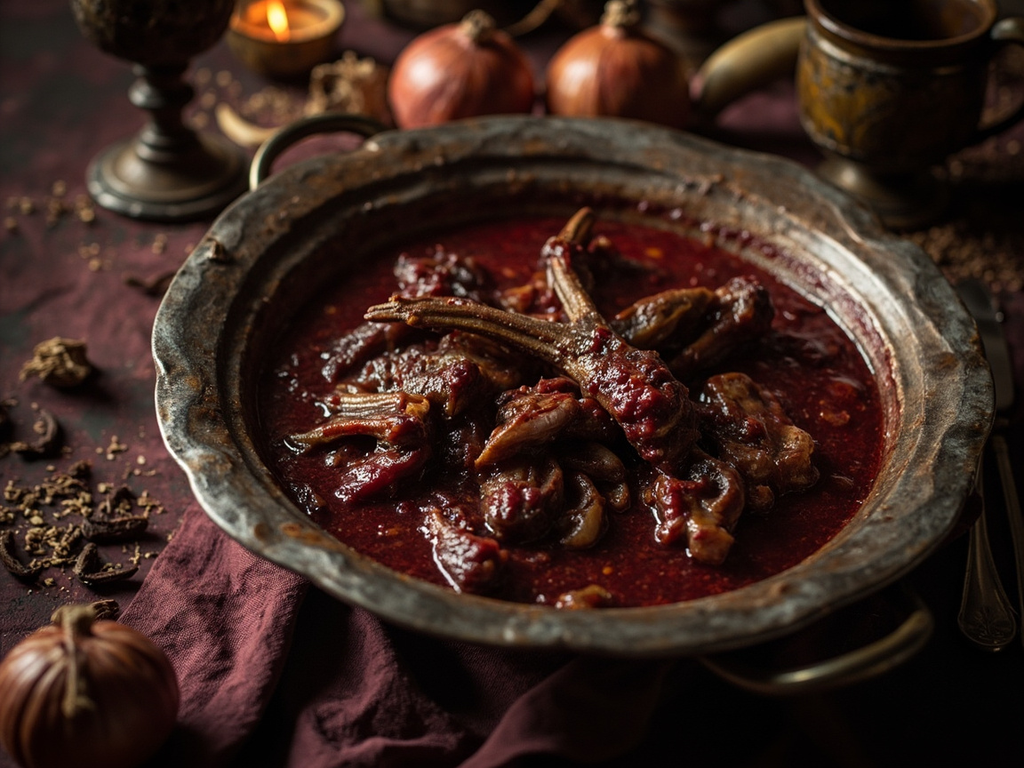
Why this dish? In the estancias and villages of the Litoral where Bonpland lived, locro was the great pot for patron saint festivals and harvests. The naturalist, who became a landowner at Santa Ana, inevitably shared these Creole tables.
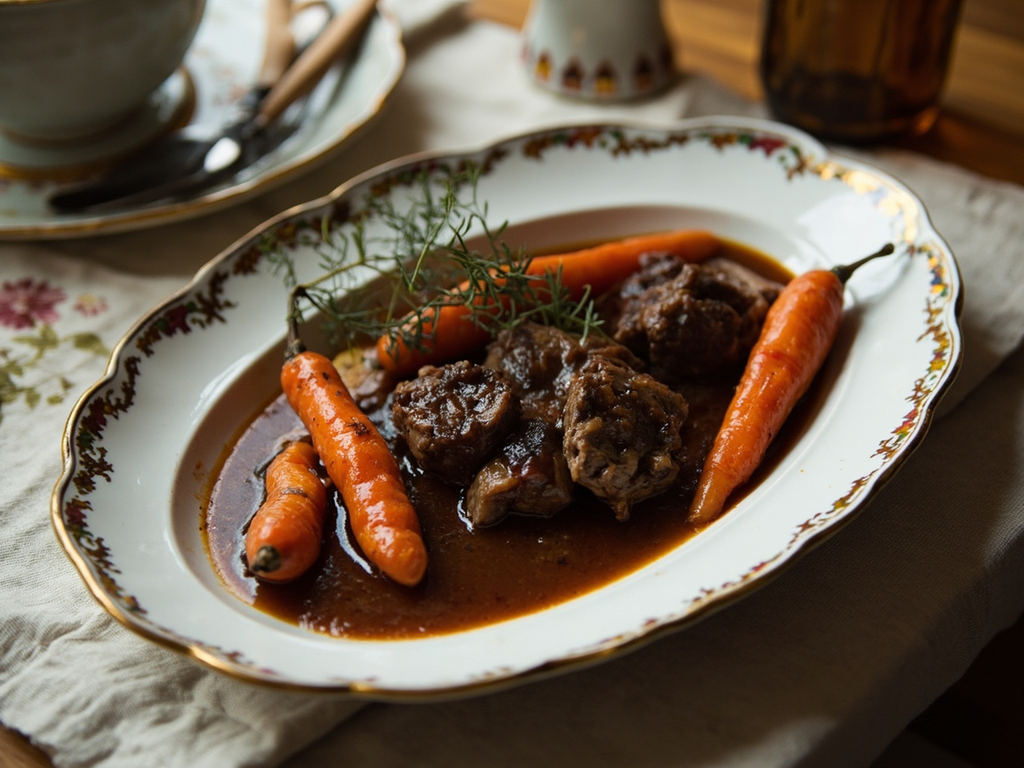
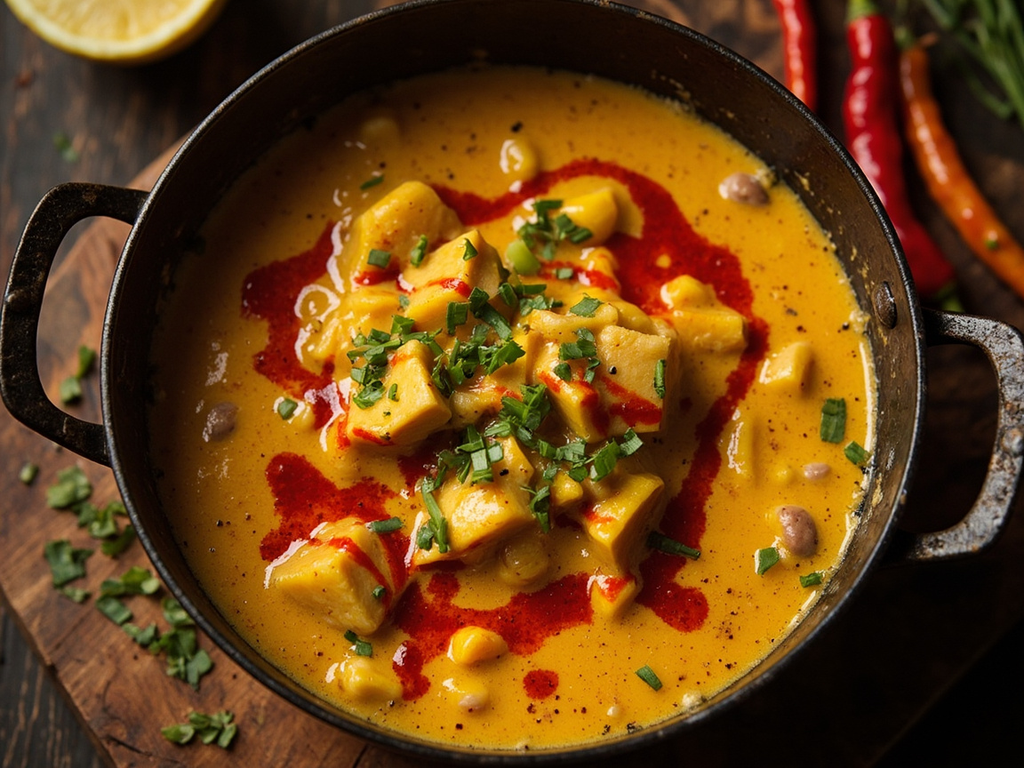
A thick stew long-simmered with corn, squash, and meat, perfumed with a red oil of mild chili (quiquirimichi). Comforting and generous, it is prepared in a large pot and served piping hot on cold days or celebrations.
For the village's patron saint festival, the great cast-iron pot is set over the fire at dawn, and nothing touches it for the rest of the day. In go the corn soaked the night before, the squash from the garden, the meat and offal — everything the house can offer — and the whole simmers until it blends into a creamy mass. I pour over it, at serving, this oil reddened with mild chili that the Creoles call quiquirimichi. Believe a man who has known the famines of the Orinoco: there is no truer feast than a plate of locro shared among neighbors.
- •Soaked cracked white corn — a full bowl (starchy base)
- •Squash (zapallo) — a quarter piece (sweet binder)
- •Beef meat and offal, bacon — as much as desired (richness)
- •Dried mild chili, onion, garlic — as needed (seasoning)
Feast-Day Locro
A thick stew long-simmered with corn, squash, and meat, perfumed with a red oil of mild chili (quiquirimichi). Comforting and generous, it is prepared in a large pot and served piping hot on cold days or celebrations.
Why this dish? In the estancias and villages of the Litoral where Bonpland lived, locro was the great pot for patron saint festivals and harvests. The naturalist, who became a landowner at Santa Ana, inevitably shared these Creole tables.
For the village's patron saint festival, the great cast-iron pot is set over the fire at dawn, and nothing touches it for the rest of the day. In go the corn soaked the night before, the squash from the garden, the meat and offal — everything the house can offer — and the whole simmers until it blends into a creamy mass. I pour over it, at serving, this oil reddened with mild chili that the Creoles call quiquirimichi. Believe a man who has known the famines of the Orinoco: there is no truer feast than a plate of locro shared among neighbors.
Ingredients (period version)
- Soaked cracked white corn — a full bowl (starchy base)
- Squash (zapallo) — a quarter piece (sweet binder)
- Beef meat and offal, bacon — as much as desired (richness)
- Dried mild chili, onion, garlic — as needed (seasoning)
Ingredients
- White corn for locro (or cracked corn) — 300 g, soaked overnight (base)
- Butternut squash — 500 g, diced (binder and sweetness)
- Stewing beef + smoked brisket — 600 g (richness)
- Onion, garlic — 2 onions + 2 cloves (aromatic base)
- Sweet paprika + a pinch of chili — 2 tbsp + to taste (red oil (quiquirimichi))
- Oil, salt, cumin — as needed (seasoning)
Method
- Soak the corn overnight, then drain.
- In a large pot, sauté onion and garlic, add the meat cut into pieces and brown.
- Add the drained corn and cover generously with water; simmer gently for about 1.5 hours, stirring occasionally.
- Add the diced squash and continue cooking for 45 minutes to 1 hour, until it breaks down and thickens the stew.
- Season with salt and a little cumin; the locro should be thick and creamy.
- Prepare the quiquirimichi: heat the oil, remove from heat and stir in paprika and chili; drizzle over each plate when serving.
How it was made : Locro is a pre-Columbian dish from the Andes, spread throughout the Southern Cone. Simmered for hours in an iron or clay pot over the fire, it fed large gatherings. All its ingredients — corn, squash, chili — are of American origin and thus perfectly consistent with the period in this context.
The contemporary twist : Serve in individual bowls with a swirl of quiquirimichi and some sliced spring onions — a popular classic revisited as comfort food.
Aimé Bonpland · Charactorium