 flip
flipMarennes oysters with lemon and buttered rye bread
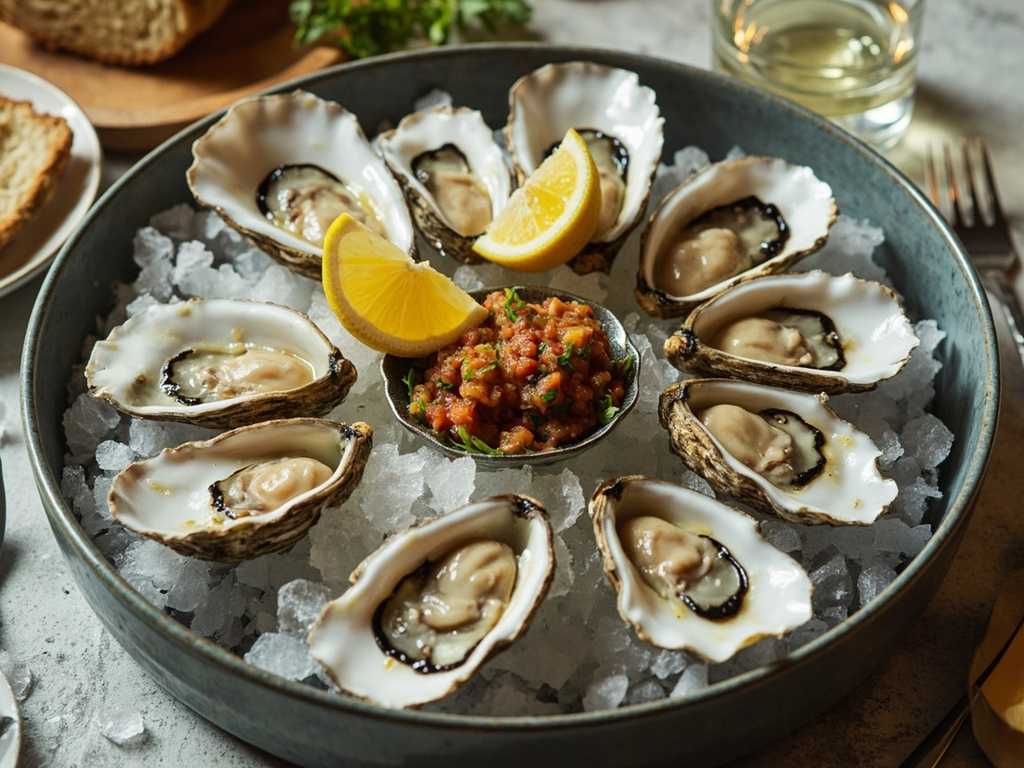
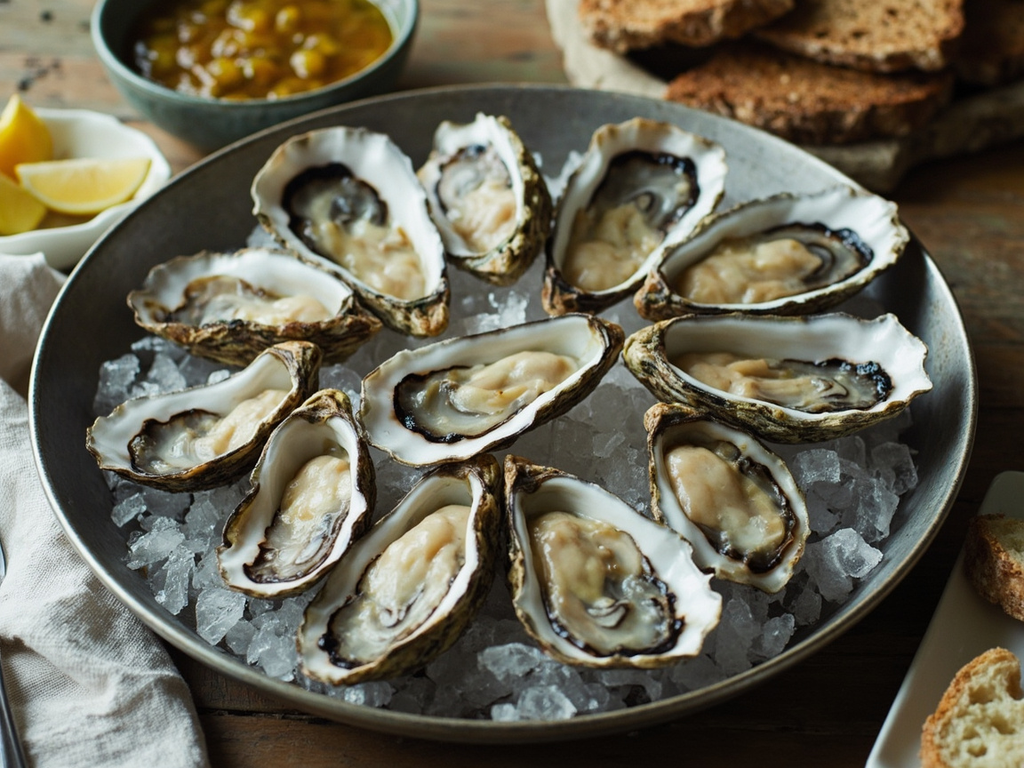
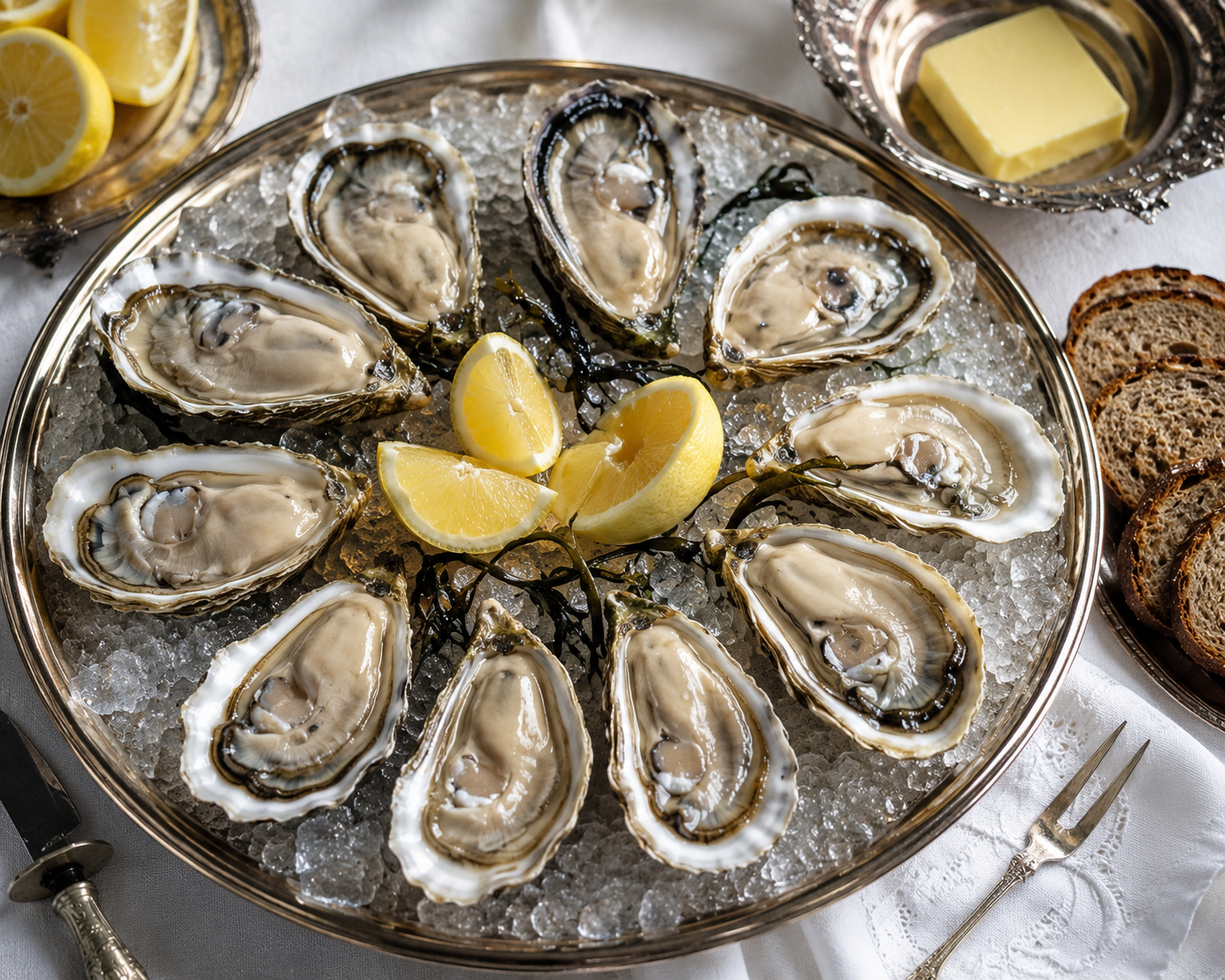
Marennes oysters with lemon and buttered rye bread
Why this dish? Debussy had a taste for the pleasures of the table and adored oysters and fine wines — a dish that was indeed served as an opening at grand Parisian dinners, in brasseries and at home on the Avenue du Bois-de-Boulogne.
A dozen live oysters, served on a bed of ice, brightened with a squeeze of lemon, accompanied by fine slices of buttered rye bread. Pure sea iodine, unadorned, like a sustained note.
You see, I hold the oyster to be the most honest of dishes: it does not lie, it does not disguise itself under talkative sauces like so many pretentious dishes. At my table, they were opened at the last moment, a squeeze of lemon, fresh butter on rye, and above all nothing more — the sea does not need correcting. I found in it the same thing as in a beautiful harmony: a clear, fresh sensation that needs no explanation.
- •Marennes oysters — a dozen per guest (the heart of the course, living iodine)
- •Lemon — a few wedges (touch of acidity)
- •Rye bread — as needed (support, earthy sweetness)
- •Fine Normandy butter — a lump (fresh fat that softens the iodine)
- •Crushed ice — a dish (presentation and freshness)
Marennes oysters with lemon and buttered rye bread
A dozen live oysters, served on a bed of ice, brightened with a squeeze of lemon, accompanied by fine slices of buttered rye bread. Pure sea iodine, unadorned, like a sustained note.
Why this dish? Debussy had a taste for the pleasures of the table and adored oysters and fine wines — a dish that was indeed served as an opening at grand Parisian dinners, in brasseries and at home on the Avenue du Bois-de-Boulogne.
You see, I hold the oyster to be the most honest of dishes: it does not lie, it does not disguise itself under talkative sauces like so many pretentious dishes. At my table, they were opened at the last moment, a squeeze of lemon, fresh butter on rye, and above all nothing more — the sea does not need correcting. I found in it the same thing as in a beautiful harmony: a clear, fresh sensation that needs no explanation.
Ingredients (period version)
- Marennes oysters — a dozen per guest (the heart of the course, living iodine)
- Lemon — a few wedges (touch of acidity)
- Rye bread — as needed (support, earthy sweetness)
- Fine Normandy butter — a lump (fresh fat that softens the iodine)
- Crushed ice — a dish (presentation and freshness)
Ingredients
- Cup oysters (Marennes-Oléron preferred) — 6 to 12 per person (the heart of the dish)
- Lemons — 1 to 2 (acidity)
- Rye bread — 4 thin slices (accompaniment)
- Salted butter — 50 g (to spread)
- Crushed ice — 1 bag (plating)
- Shallot + wine vinegar (optional) — 1 shallot, 3 tbsp (optional mignonnette)
Method
- Keep the oysters cool, flat side up, until the last moment.
- Open each oyster with a special knife, protecting your hand with a towel; cut the muscle and discard the first water.
- Arrange on a bed of crushed ice, keeping them flat to retain the second water.
- Generously butter thin slices of rye bread.
- Serve immediately with lemon wedges and, if desired, a shallot-vinegar mignonnette.
How it was made : In the Belle Époque, oysters opened bourgeois dinners and brasserie suppers. They were counted by the dozen, served on ice, and buttered rye bread was the classic accompaniment — the shallot mignonnette was already known.
The contemporary twist : Serve the oysters on a large black plate, crushed ice and a single dried seaweed print slipped under the edge — a nod to the Japanese prints the composer loved.
Claude Debussy · Charactorium