 flip
flipMaza, the warriors' barley griddle cake
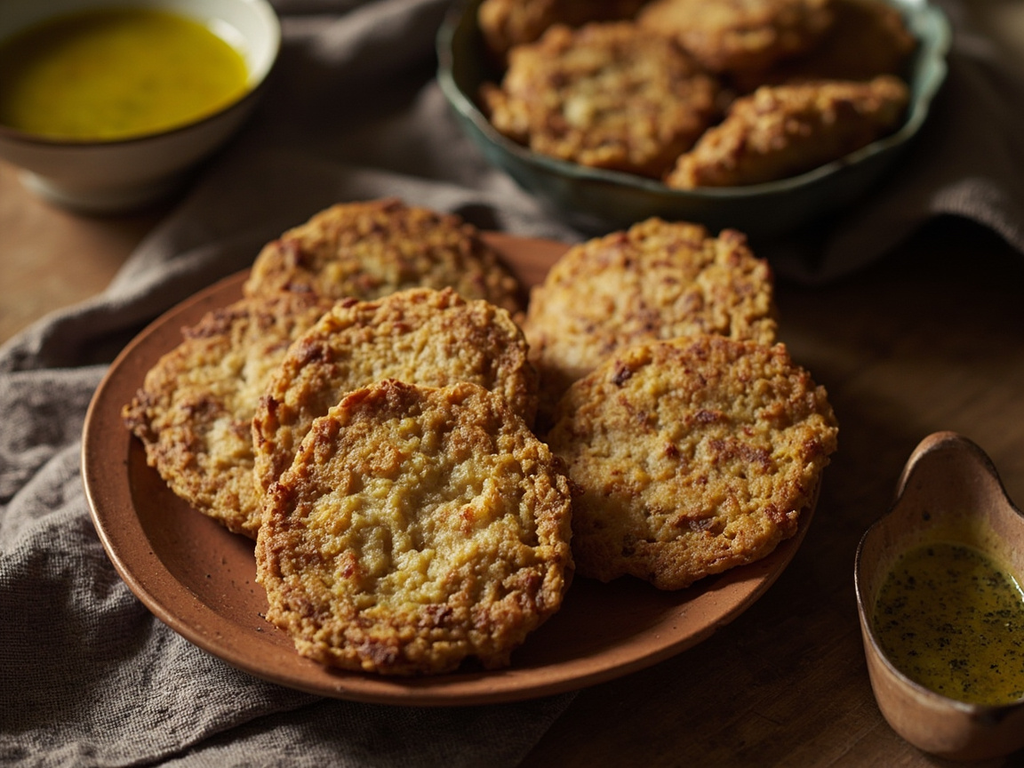
Maza, the warriors' barley griddle cake
Why this dish? Ajax is the bulwark of the Achaeans, the stubborn everyday man who holds the line. Maza is exactly that at the table: the daily bread, made from barley rather than costly wheat, which feeds the army camped before Troy for ten years of siege.
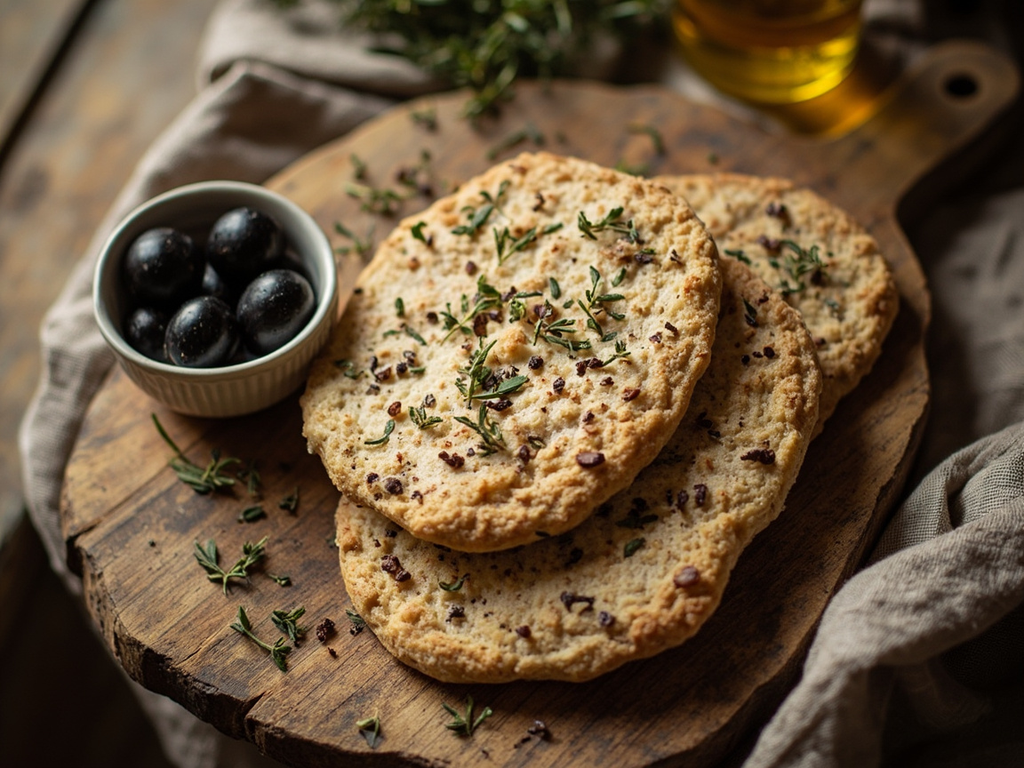
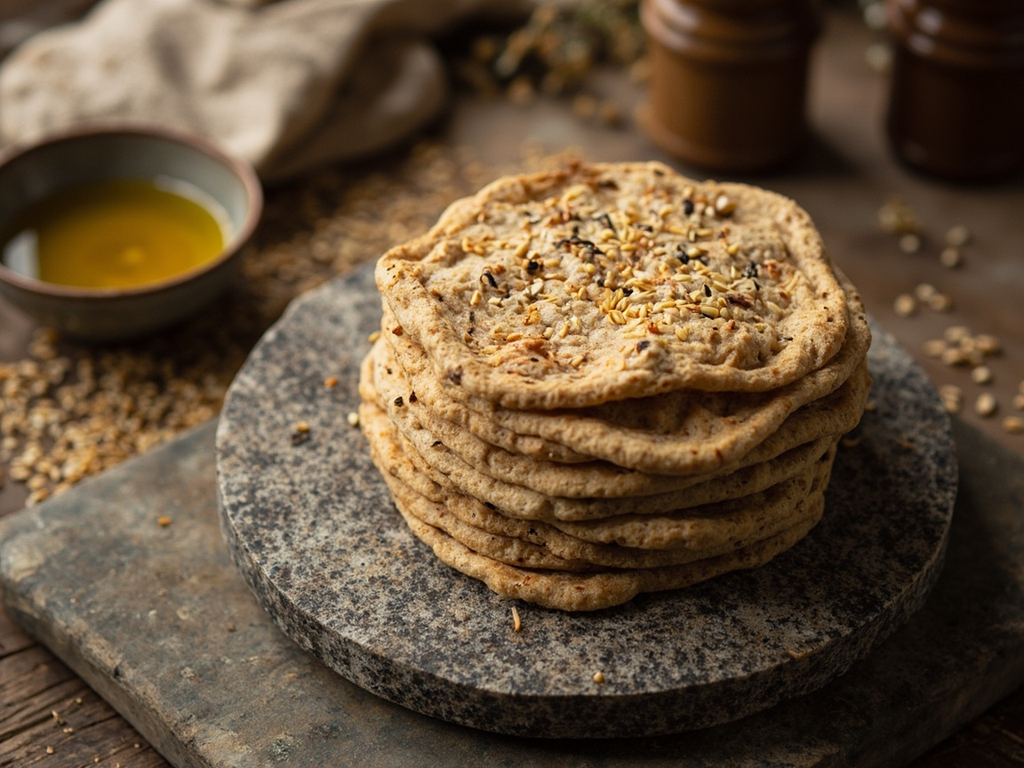
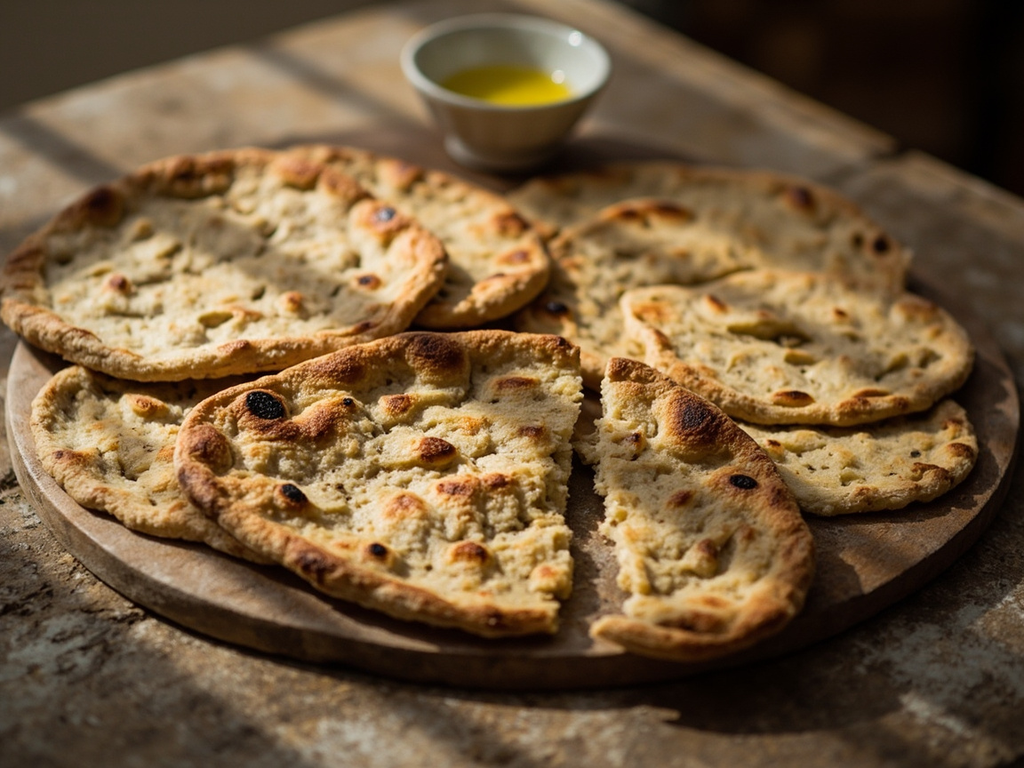
A dense griddle cake of toasted barley flour kneaded with water and oil, cooked on a hot stone or under the ashes. The ordinary bread of heroic Greece, the foundation of every meal, to be broken and dipped.
Do you think we wage war on meat every day? No, stranger: it is barley that keeps a man standing in the trench for ten years of siege. We toast the grains, crush them, knead with a little water and oil, and cook the cake on the hot stone near the fire. It is heavy, it is rough, like me — but break off a piece, dip it in wine, and you will feel strength enter your arms.
- •Toasted barley flour — enough to fill a bowl (base of the cake)
- •Water — as needed to bind (kneading liquid)
- •Olive oil — a drizzle (softness and flavor)
- •Salt — a pinch (seasoning)
Maza, the warriors' barley griddle cake
A dense griddle cake of toasted barley flour kneaded with water and oil, cooked on a hot stone or under the ashes. The ordinary bread of heroic Greece, the foundation of every meal, to be broken and dipped.
Why this dish? Ajax is the bulwark of the Achaeans, the stubborn everyday man who holds the line. Maza is exactly that at the table: the daily bread, made from barley rather than costly wheat, which feeds the army camped before Troy for ten years of siege.
Do you think we wage war on meat every day? No, stranger: it is barley that keeps a man standing in the trench for ten years of siege. We toast the grains, crush them, knead with a little water and oil, and cook the cake on the hot stone near the fire. It is heavy, it is rough, like me — but break off a piece, dip it in wine, and you will feel strength enter your arms.
Ingredients (period version)
- Toasted barley flour — enough to fill a bowl (base of the cake)
- Water — as needed to bind (kneading liquid)
- Olive oil — a drizzle (softness and flavor)
- Salt — a pinch (seasoning)
Ingredients
- Barley flour — 250 g (base)
- Warm water — 120 to 150 ml (kneading liquid)
- Olive oil — 2 tablespoons (binder and flavor)
- Salt — 1 teaspoon (seasoning)
Method
- If you have barley grains, toast them dry in a pan for a few minutes before grinding — that gives the characteristic flavor.
- Mix the barley flour and salt, add the oil then the water little by little until a firm, non-sticky dough forms.
- Knead for a few minutes, divide into balls, and flatten into cakes about 1 cm thick.
- Cook on a hot stone or a cast-iron pan, without fat, for 4 to 5 minutes on each side until golden spots appear.
- Serve warm, broken by hand, to accompany meat, cheese, or to dip in wine.
How it was made : Barley (krithê) was the most common and cheapest cereal in ancient Greece; wheat (and therefore leavened wheat bread) remained rarer and more prestigious. The maza was often not even baked in an oven: they ate a paste of toasted and crushed barley, simply moistened, or cooked it on a stone. It was the 'sitos', the staple food, as opposed to 'opson', everything that accompanies it.
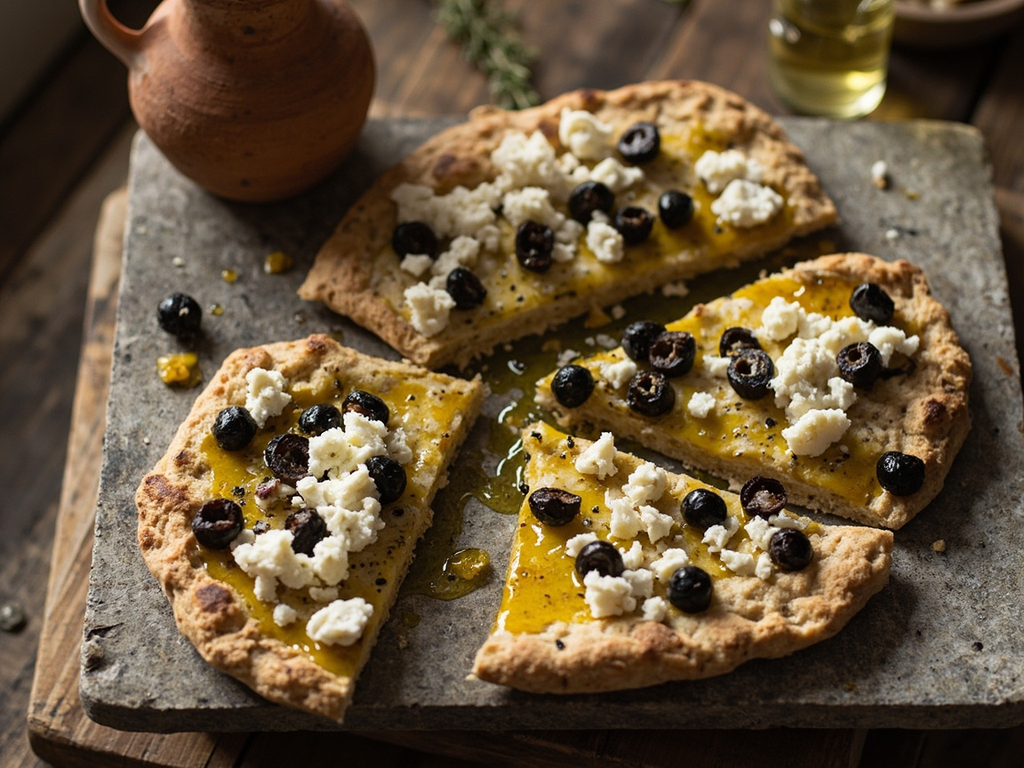
The contemporary twist : Sprinkle the freshly cooked cake with a little dried thyme and drizzle with new olive oil — the 'defender's maza', to serve with a modern meze.
Sources : Homer, Iliad and Odyssey (recurring mentions of barley and sitos) · Andrew Dalby, Siren Feasts: A History of Food and Gastronomy in Greece (1996)
Ajax · Charactorium