 flip
flipSheer Birinj — Saffron Rice Pudding, Inspired by Shrine Offerings
Sheer Birinj — Saffron Rice Pudding, Inspired by Shrine Offerings
Why this dish? Akbar was devoted to the Sufi saint Salim Chishti: as a pilgrim at Sikri, he is said to have received the blessing announcing the birth of his heir, and there he built Fatehpur Sikri. Around Sufi shrines, rice sweets were distributed as tabarruk (blessed food) and in the langar (shared kitchen). This recipe is inspired by — without reproducing a sacred ritual — this living tradition.
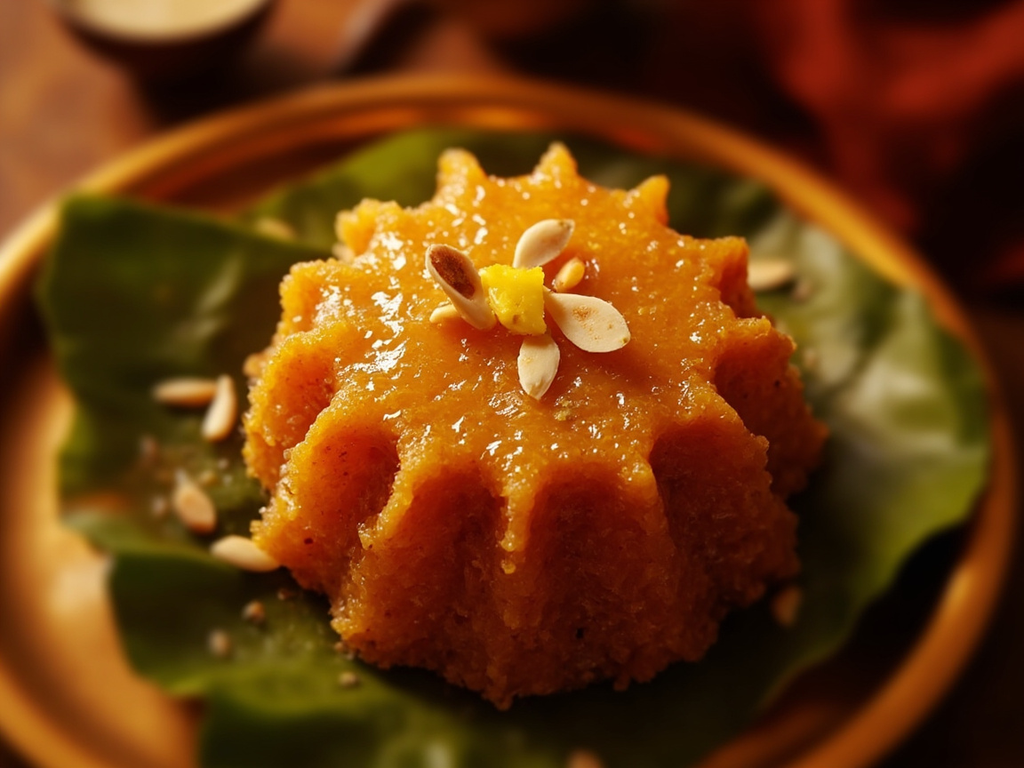
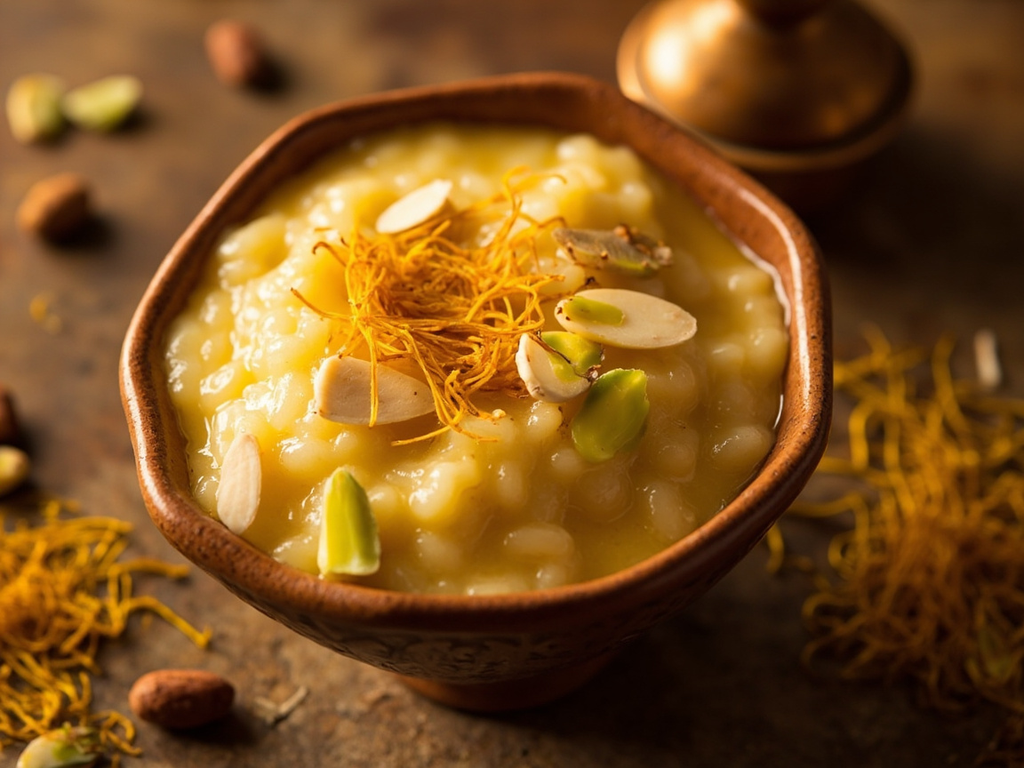
A rice slowly melted in milk, gilded with saffron, perfumed with cardamom and rose water, strewn with almonds and pistachios. A creamy, soothing sweet, of the kind shared as a sign of gratitude.
Let me confide what I owe to the saint of Sikri. Without child and heavy-hearted, I went on foot to his retreat, and his word announced the heir heaven had denied me. On that blessed site I raised an entire city. And when joy overflows, do you know what is shared at the doors of shrines? This saffron-colored rice, sweet and perfumed with rose, offered to the humble and the prince alike. Taste it, thinking that gratitude, too, is given as food.
- •Rice — a small measure (base)
- •Milk — abundant (creamy cooking)
- •Sugar — to taste (sweetness)
- •Saffron — a pinch of filaments (color and perfume (signature))
- •Cardamom — a few crushed seeds (perfume)
- •Rose water — a few drops (floral perfume)
- •Almonds and pistachios — a handful (garnish)
Sheer Birinj — Saffron Rice Pudding, Inspired by Shrine Offerings
A rice slowly melted in milk, gilded with saffron, perfumed with cardamom and rose water, strewn with almonds and pistachios. A creamy, soothing sweet, of the kind shared as a sign of gratitude.
Why this dish? Akbar was devoted to the Sufi saint Salim Chishti: as a pilgrim at Sikri, he is said to have received the blessing announcing the birth of his heir, and there he built Fatehpur Sikri. Around Sufi shrines, rice sweets were distributed as tabarruk (blessed food) and in the langar (shared kitchen). This recipe is inspired by — without reproducing a sacred ritual — this living tradition.
Let me confide what I owe to the saint of Sikri. Without child and heavy-hearted, I went on foot to his retreat, and his word announced the heir heaven had denied me. On that blessed site I raised an entire city. And when joy overflows, do you know what is shared at the doors of shrines? This saffron-colored rice, sweet and perfumed with rose, offered to the humble and the prince alike. Taste it, thinking that gratitude, too, is given as food.
Ingredients (period version)
- Rice — a small measure (base)
- Milk — abundant (creamy cooking)
- Sugar — to taste (sweetness)
- Saffron — a pinch of filaments (color and perfume (signature))
- Cardamom — a few crushed seeds (perfume)
- Rose water — a few drops (floral perfume)
- Almonds and pistachios — a handful (garnish)
Ingredients
- Short-grain rice (or basmati) — 100 g (base)
- Whole milk — 1 liter (cooking)
- Sugar — 80 g (to taste) (sweetness)
- Saffron — 1 pinch infused in 2 tbsp warm milk (color and perfume)
- Ground green cardamom — 1/2 tsp (perfume)
- Rose water — 1/2 tsp (floral perfume)
- Slivered almonds and chopped pistachios — 40 g total (garnish)
Method
- Rinse rice and soak 20 min.
- Bring milk to a simmer, add drained rice, and cook on low heat, stirring often to prevent sticking.
- When grains are very tender and milk thickened (40–50 min), add sugar, cardamom, and saffron milk.
- Cook a few more minutes until creamy, then perfume with rose water off heat.
- Serve warm or chilled, sprinkled with almonds and pistachios.
How it was made : Saffron-sweetened rice pudding has long belonged to Indo-Persian cuisines; it was prepared in large cauldrons for festivals and charitable distribution. Around Sufi shrines, these sweets cooked in common symbolized sharing across ranks — a value that resonated with Akbar's policy of tolerance.
The contemporary twist : Serve in small individual cups with a sheet of edible silver leaf (vark) and a saffron strand on top — the spirit of tabarruk in refined form.
Sources : K.T. Achaya, Indian Food: A Historical Companion · Abu'l-Fazl, Ain-i-Akbari (sweets and desserts of imperial cuisine)
Akbar the Great · Charactorium